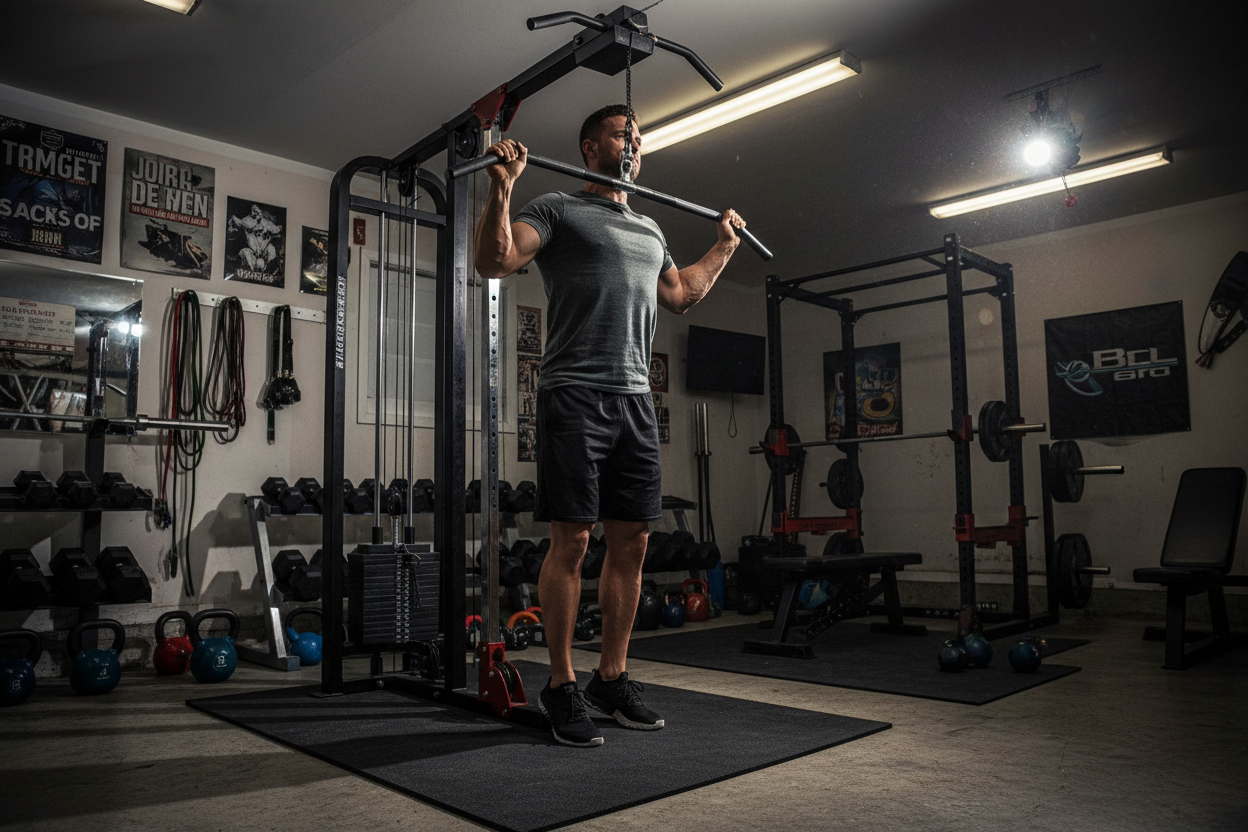
Lat Pulldown Machine Review: Is It Worth the Garage Space?
Building a wide, thick back at home often hits a wall when you rely solely on barbell rows and pull-ups. Eventually, you need vertical pulling volume that you can easily scale, which is exactly why you are probably searching for a reliable lat pulldown machine review. Whether you are dealing with a cramped basement or outfitting a two-car garage, adding a dedicated cable machine is a massive step up for your hypertrophy goals.
But with options ranging from cheap, wobbly attachments to massive commercial-grade selectorized towers, making the right choice is critical. In this guide, we break down exactly what makes a pulldown machine worth your hard-earned cash and floor space.
Key Takeaways
- Weight System: Plate-loaded machines save money, while selectorized weight stacks offer faster drop sets and convenience.
- Pulley Ratio: Look for a 1:1 ratio for heavy lat pulldowns to ensure the weight on the stack matches the resistance you feel.
- Height Clearance: Most quality standalone units require at least 82 to 85 inches of ceiling clearance.
- Seat and Knee Pads: Adjustable, high-density foam knee rollers are non-negotiable for locking yourself in during heavy pulls.
What to Look For in a Lat Pulldown Tower
Plate-Loaded vs. Selectorized Stacks
The biggest decision you will make is how the machine generates resistance. Plate-loaded options are incredibly budget-friendly and utilize the Olympic plates you likely already own. However, if you do a lot of drop sets or share the gym with a partner of a different strength level, the premium price of a selectorized weight stack pays for itself in sheer convenience and saved time.
Cable Smoothness and Build Quality
A jerky cable ruins a back workout. You want aluminum pulleys rather than cheap plastic, paired with a nylon-coated aircraft cable. When consulting various garage gym reviews lat pulldown enthusiasts post online, you will notice that pulley quality is the number one differentiator between a machine you use daily and one that collects dust.
Fitting a Pulldown Into Your Home Gym
Ceiling Clearance and Footprint
North American garage gyms and basements often have restrictive ceiling heights. A standard commercial lat pulldown sits around 85 inches tall. If your basement ceiling is exactly 84 inches, you are going to have a bad time during assembly. Always measure twice. Additionally, factor in the floor footprint—usually around 4 feet by 5 feet—and leave room to load plates if you choose a plate-loaded model.
From Our Gym: Honest Take
We have tested dozens of cable machines, and I can tell you firsthand that the knee pad assembly makes or breaks the experience. At 6'2", I need a machine that allows for a full stretch at the top of the movement without the weight stack bottoming out. On our current studio model, the 84-inch height provides just enough cable travel for a full stretch, but the stock carabiners were too small for my preferred thick-grip attachments. I swapped them out for heavy-duty climbing carabiners—a $10 fix that completely transformed the machine. Also, after a year of heavy use in an uninsulated garage, keeping the guide rods lubricated with silicone spray has kept the 1:1 ratio feeling buttery smooth.
Frequently Asked Questions
Is a standalone lat pulldown worth the space?
If bodybuilding or hypertrophy is your primary goal, yes. A dedicated machine provides stability and a locked-in position that rack-attached pulleys simply cannot match, allowing you to isolate the lats much more effectively.
Can I just use a power rack attachment?
Rack attachments are excellent space-savers, but they often lack the heavy-duty knee rollers needed to keep you seated during pulls that exceed your own body weight. If you pull heavy, a standalone machine is vastly superior.
What is a good weight capacity for a home pulldown machine?
Look for a machine with a minimum weight capacity of 250 to 300 pounds. Even if you don't pull that much right now, a higher capacity indicates thicker steel (usually 11- or 12-gauge) and better overall structural integrity.