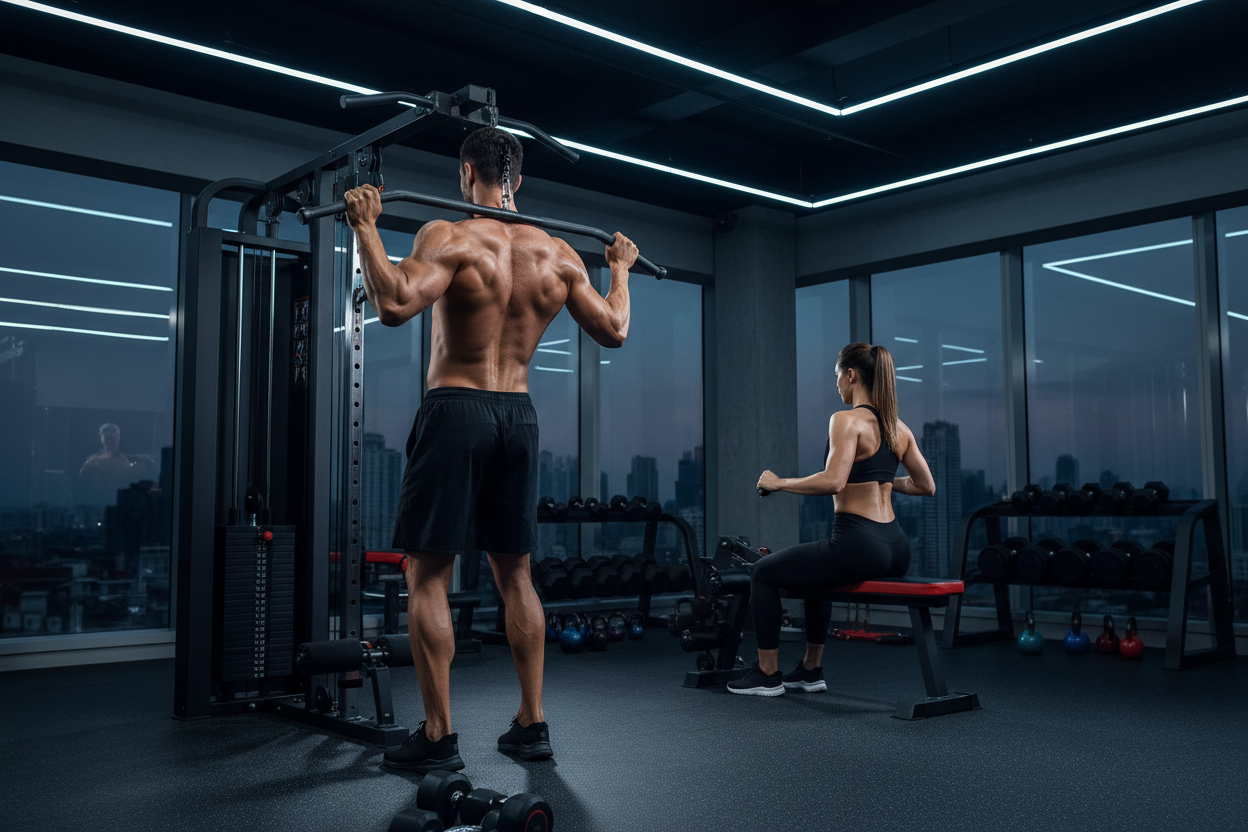
Lat Pulldown and Rowing Machine: The Ultimate Back Building Guide
Building a back that looks impressive from every angle requires a two-pronged approach: you need vertical pulling for width and horizontal pulling for thickness. Most lifters gravitate toward one or the other, but the magic happens when you understand the synergy between the lat pulldown and rowing machine. Whether you are looking to equip a home gym with a combo unit or simply trying to structure your commercial gym workout, understanding how these two movement patterns interact is crucial for complete posterior chain development.
Key Takeaways
- Vertical vs. Horizontal: Lat pulldowns primarily target the latissimus dorsi to build back width (the V-taper), while rowing machines target the rhomboids and traps for back thickness.
- The Combo Unit: A "cable row lat pulldown machine" is a space-saving 2-in-1 solution ideal for home gyms, though often requires setup adjustments between lifts.
- Synergy: Performing both movements in the same session ensures full scapular mobility—elevation/depression (pulldowns) and protraction/retraction (rows).
- Grip Matters: Varying your grip (wide, narrow, neutral) on both machines alters muscle recruitment significantly.
Width vs. Thickness: The Biomechanics
To build a complete back, you cannot rely on just one plane of motion. The muscles of the back are complex, with fibers running in various directions. Here is why you need both movements.
The Lat Pulldown (Vertical Pull)
The primary function of the lat pulldown is shoulder adduction and extension. When you pull the bar down vertically, you are specifically targeting the outer sweep of the lats. This is what creates the illusion of a smaller waist and a wider upper body. While it does engage the biceps and rear delts, the mechanical advantage here is purely for width.
The Rowing Machine (Horizontal Pull)
A pull down rowing machine setup allows for the horizontal pull. This movement focuses on scapular retraction—literally pinching your shoulder blades together. This targets the mid-back, including the rhomboids, middle traps, and the erector spinae. If you want a back that looks thick and powerful when you stand sideways, you must row.
The Equipment: Dedicated vs. Combo Machines
If you are training in a commercial facility, you likely have separate stations. However, the rise of the home gym has popularized the lat pulldown rowing machine combo unit.
These 2-in-1 machines use a single weight stack and adjustable cable routing. The main advantage is footprint efficiency. You get a high pulley for pull-downs and a low pulley for seated rows. However, be aware that the cable row lat pulldown machine often has a slightly different resistance curve than dedicated commercial units due to the pulley ratios.
Structuring the Perfect Back Session
Do not treat these as interchangeable exercises. They are complementary. Here is a standard approach to sequencing them:
- Start with the Lat Pulldown: Vertical pulling is generally more taxing on the shoulder joint and requires strict form to engage the lats without overusing the biceps. Do this while you are fresh.
- Transition to the Row: Once the lats are pre-exhausted, move to the heavy rowing. Since the row involves more synergistic muscles (traps, rear delts), you can often move significant weight even after pulldowns.
Common Technique Mistakes
Even with the best equipment, poor form kills gains. On the pulldown, stop pulling the bar behind your neck. It places unnecessary stress on the rotator cuff with zero added benefit to the lats. Pull to the upper chest.
On the rowing machine, avoid excessive momentum. If you have to swing your lower back violently to move the weight, you aren't training your lats or rhomboids; you're just straining your lumbar spine. Keep your torso relatively upright and drive the elbows back.
My Training Log: Real Talk
I have spent years training in both high-end commercial facilities and gritty garage gyms, and I have a love-hate relationship with the 2-in-1 combo machines. I currently use a plate-loaded lat pulldown rowing machine in my home setup.
Here is the unpolished truth: on most of these combo units, the footplate placement for the low row is awkward. On mine, the footplate is just a flat piece of steel that sits too low. When I go heavy on rows (anything over 200 lbs), I find my feet slipping or my shins scraping the metal edge because the geometry isn't perfect like a dedicated Cybex or Hammer Strength machine. Also, when switching from pulldowns to rows, if you don't route the cable perfectly through the bottom pulley, you get this gritty, friction-heavy feeling during the eccentric part of the rep. It’s annoying, but it forces you to control the weight rather than letting it snap back.
Conclusion
Mastering the lat pulldown and rowing machine is about more than just moving weight from point A to point B. It requires understanding the difference between vertical width-building and horizontal thickness-building. Use them together, respect the biomechanics, and whether you are on a commercial machine or a home gym combo unit, focus on the squeeze, not the ego.
Frequently Asked Questions
Can I do lat pulldowns and rows on the same day?
Absolutely. In fact, it is recommended. Doing both ensures you hit the back musculature from different angles, ensuring complete development of both the lats (width) and the rhomboids/traps (thickness).
Is a home gym combo lat pulldown/row machine worth it?
Yes, for space-saving purposes. While dedicated machines often feel smoother, a high-quality cable row lat pulldown machine allows you to perform two essential compound movements within a footprint of less than 15 square feet.
Which exercise should I do first, the pulldown or the row?
Generally, prioritize the movement that aligns with your main goal. If you lack width, start with pulldowns. If you lack thickness, start with rows. However, many lifters prefer starting with pulldowns to decompress the spine before doing heavy seated rows.