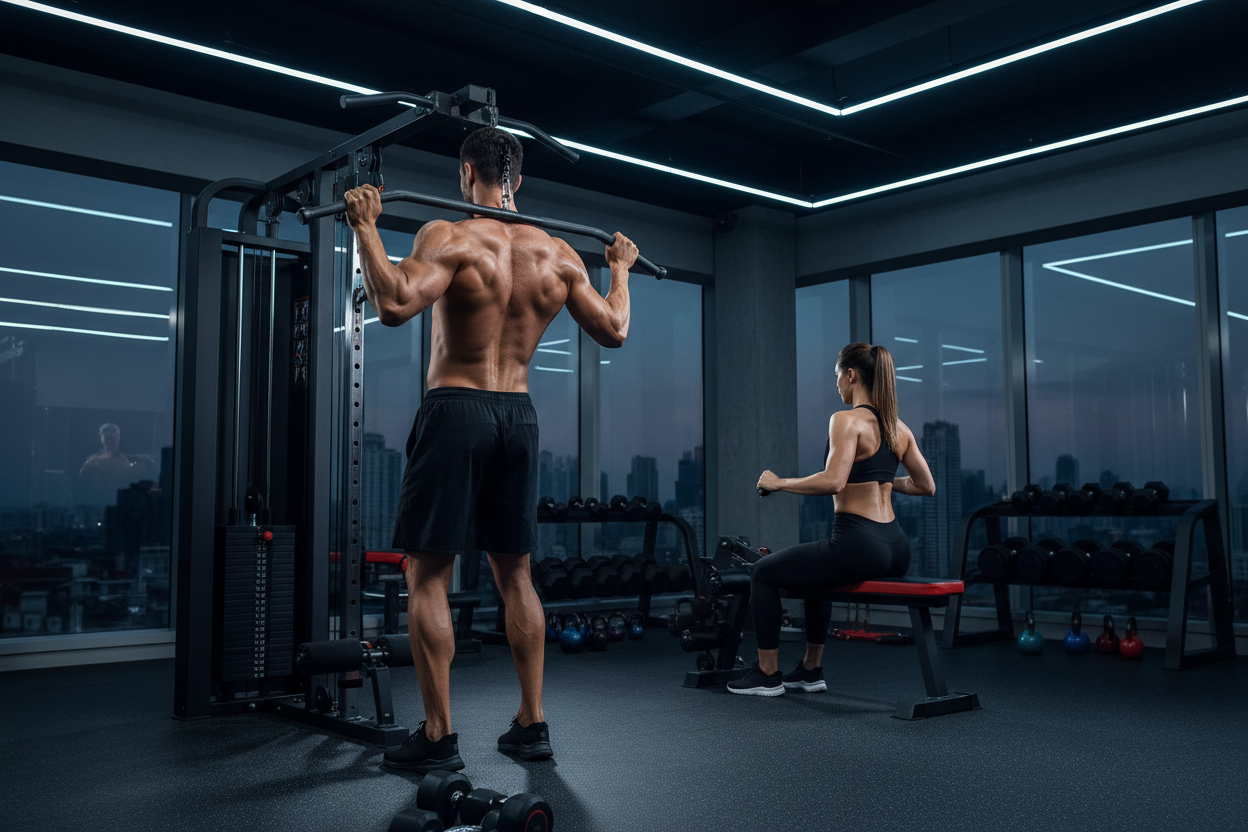
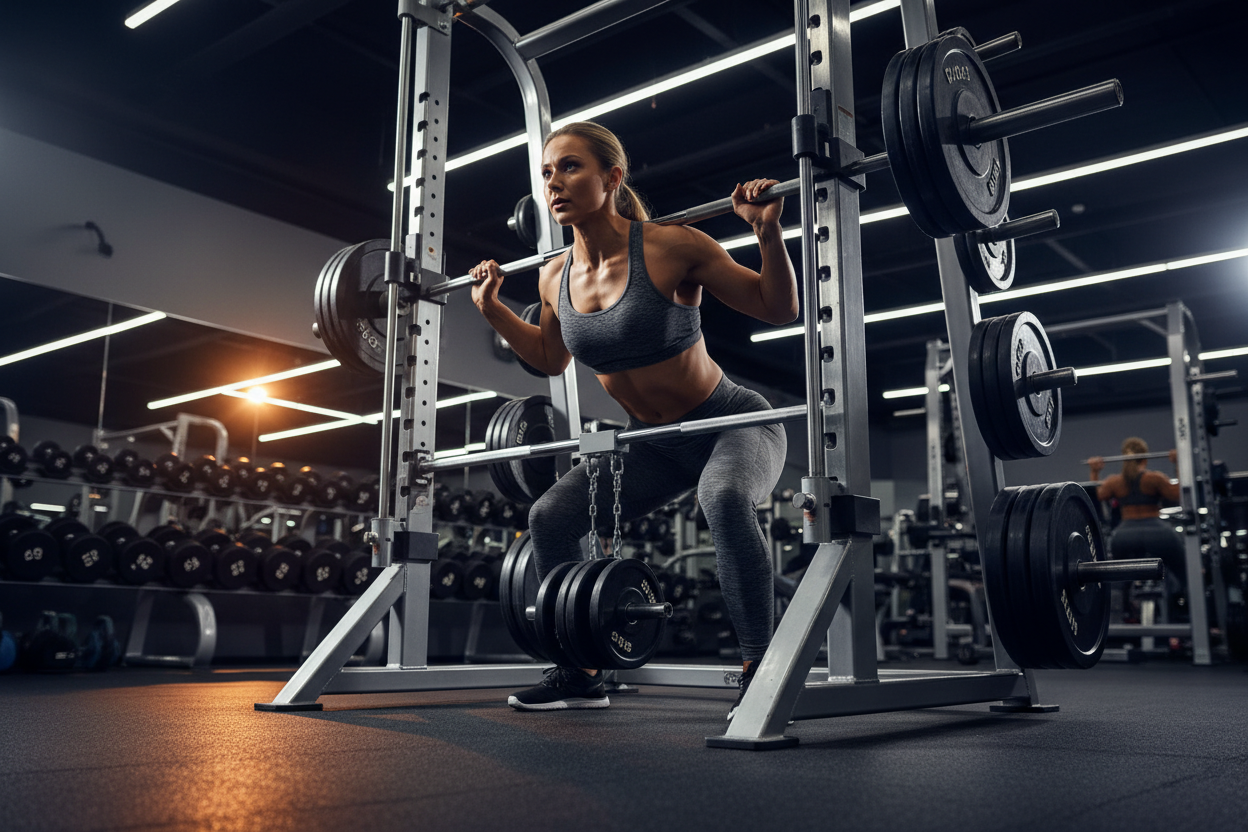
Is an All In One Home Gym System Actually Worth It? The Truth
You are tired of waiting twenty minutes for a squat rack. You are done with the commute, the grime, and the monthly fees that never seem to end. The idea of bringing fitness home is appealing, but space is tight. This is usually where the all in one home gym system enters the conversation.
It promises to replace an entire room of commercial equipment with a single footprint. But does it actually deliver on the biomechanics required for serious hypertrophy, or is it just a jack-of-all-trades that masters none? Let's break down the mechanics, the ROI, and the reality of training on a combined unit.
Key Takeaways
- Space Efficiency: An all in one training machine typically combines a power rack, functional trainer, and smith machine into a footprint less than 20 square feet.
- Cost Analysis: While the upfront home gym machine all in one price is high ($1,500–$4,000+), it usually pays for itself within 2-3 years compared to premium gym memberships.
- Versatility: These systems allow for compound lifts (squats, deadlifts) and isolation work (cable flys, lat pulldowns) without changing stations.
- Safety: Built-in spotting arms and Smith machine hooks make solo training significantly safer than free weights alone.
Defining the All In One Training Machine
When we talk about an all in 1 fitness machine, we aren't talking about those flimsy bow-flexing rods from the 90s infomercials. Modern systems are heavy-duty hybrids.
Most high-quality units integrate three core components:
- The Power Rack: For free-weight barbell movements.
- The Functional Trainer: Dual adjustable pulley systems for cable work.
- The Smith Machine: A guided barbell system for stability and isolation.
This combined gym equipment approach allows you to utilize mechanical tension—the primary driver of muscle growth—across various vectors. You can go from a heavy barbell bench press to a cable fly immediately, utilizing supersets that are nearly impossible to execute in a crowded commercial gym.
The Engineering: Cables vs. Free Weights
Many lifters worry that an all in one weight machine for home won't feel "heavy" enough. This is a valid concern regarding the pulley ratio. Most functional trainers on these units use a 2:1 ratio. This means 100lbs of plate weight feels like 50lbs of resistance.
However, the science of hypertrophy doesn't care about the number on the plate; it cares about tension on the muscle fiber. The constant tension provided by the cable systems on an all in one gym kit complements the peak-contraction curves of free weights. By having both in one unit, you fix the strength curve issues associated with using only one modality.
The Pull-Up Factor
Almost every unit features an all-in-one workout bar for pull-ups. Look for multi-grip options. Changing your grip from wide to neutral alters the recruitment of the latissimus dorsi versus the biceps, allowing for complete back development without needing extra attachments.
Analyzing the Investment
Let's talk numbers. The home gym machine all in one price tag can range wildly. Budget models start around $1,200, while premium commercial-grade units push past $5,000.
If you piece together a separate power rack, a standalone functional trainer, a leg press, and a smith machine, you are easily looking at double the cost and triple the floor space. If you are serious about all in one training, the initial sticker shock is offset by the sheer volume of exercises available per square foot.
Common Pitfalls to Avoid
Don't buy an all-in one workout rack that lacks standard sizing. Ensure the uprights are standard 2x2 or 3x3 inch steel with 1-inch or 5/8-inch holes. If you buy a proprietary size, you cannot buy third-party attachments (like jammer arms or leg rollers) later. You want an ecosystem, not a dead end.
My Personal Experience with All In One Home Gym Systems
I want to be transparent about what it's actually like to live with one of these beasts. I trained on a popular mid-range all-in-one unit exclusively for six months during a renovation.
Here is the gritty detail most reviews skip: The cable drag.
On week one, the pulleys were smooth as butter. By month three, I noticed a specific, gritty friction when doing single-arm tricep extensions. I hadn't lubricated the guide rods. Because these machines have so many moving parts condensed into a tight frame, dust and humidity affect them faster than commercial gear. I had to buy silicone spray and make it a monthly ritual to wipe down the rods.
Another thing? The internal depth. When I set up for squats inside the rack, I felt a bit claustrophobic compared to a standard four-post power rack. The Smith machine bar was always looming just a few inches behind my head. It didn't hinder the lift, but I had to be very precise with my walk-out. If you are over 6'2", this is something you absolutely need to check on the spec sheet before buying.
That said, being able to superset a heavy Smith machine shoulder press directly into a cable lateral raise without moving my feet? That pump was worth every penny of the investment.
Conclusion
An all in one home gym system is not just a space-saver; it is a workflow enhancer. It allows for high-volume, high-intensity training in a garage or spare room. If you respect the maintenance and choose a unit with standard sizing, it is likely the last piece of gym equipment you will ever need to buy.
Frequently Asked Questions
Is an all in one machine better than free weights?
It is not necessarily "better," but it is more versatile. It includes free weight capability (via the rack) while adding the safety of a Smith machine and the constant tension of cables, giving you the benefits of both styles.
How much ceiling height do I need for an all-in-one workout rack?
Most systems require between 83 and 90 inches of clearance. However, you must account for your head clearance when doing pull-ups. Ideally, you want at least 6 to 12 inches of space above the machine's highest point.
Can I build muscle with just an all in one gym kit?
Absolutely. Muscle growth requires progressive overload and mechanical tension. These machines allow you to load heavy weights safely and perform isolation movements to failure, which are the two main requirements for hypertrophy.