The Only Lower Body Weight Training Routine You Need for Growth
Most people treat leg day as a necessary evil. They rush through a few sets of leg presses, throw in some half-hearted calf raises, and call it a day. But if you are serious about building a physique that functions as well as it looks, a structured lower body weight training routine is non-negotiable.
Neglecting your lower half doesn't just leave you with an unbalanced look; it limits your total body strength and metabolic potential. This guide strips away the fluff and focuses on the mechanics and programming that actually drive hypertrophy and strength.
Key Takeaways
- Compound First: Always prioritize multi-joint movements like squats and deadlifts while your central nervous system is fresh.
- Unilateral Balance: Incorporate single-leg work to correct asymmetries and improve stability.
- Progressive Overload: consistently increase weight, reps, or improve form intensity week over week.
- Volume Management: Aim for 10–20 hard sets per muscle group per week for optimal growth.
- Rest Intervals: Allow 2–3 minutes of rest for heavy compound lifts to maintain force output.
The Philosophy Behind a Strong Lower Body
Before we touch a barbell, you need to understand the goal. A successful lower body strength workout gym session isn't about how much you sweat; it's about mechanical tension.
Your legs house the largest muscle groups in your body: the quadriceps, hamstrings, glutes, and calves. To stimulate them, you cannot rely on high-reps with light weights alone. You need to move heavy loads through a full range of motion. This triggers the hormonal response necessary for systemic growth, not just in your legs, but throughout your entire body.
The Core Components of the Routine
This isn't a list of random exercises. It is a system designed to cover knee-dominant, hip-dominant, and vertical/horizontal force vectors.
1. The Primary Squat Variation (Knee Dominant)
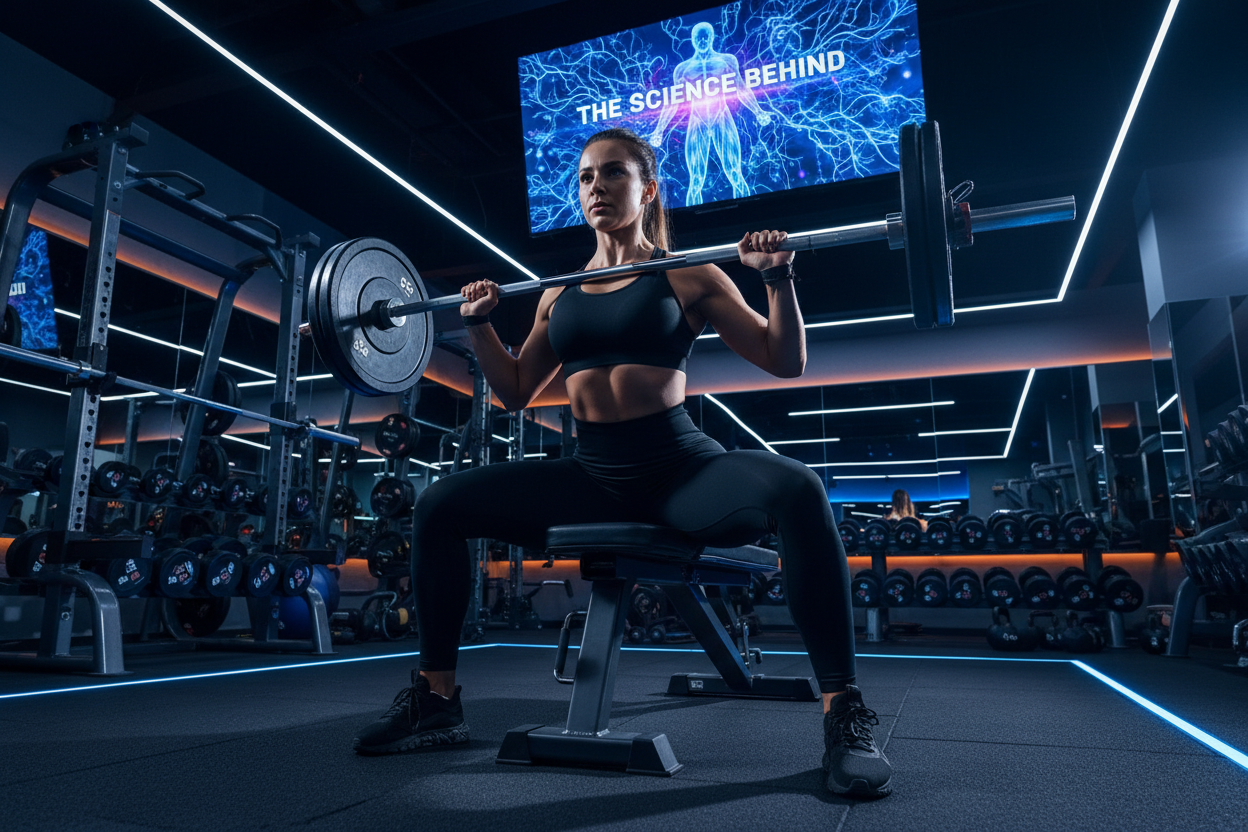
Every effective lower body lift workout starts here. Whether it's a high-bar back squat, a front squat, or a safety bar squat, this is your primary mass builder.
The science is simple: deep knee flexion under load recruits the maximum amount of motor units in the quadriceps and glutes. Don't cut depth. If you can't hit parallel, drop the weight. Ego lifting here is a one-way ticket to orthopedic issues, not gains.
2. The Heavy Hinge (Hip Dominant)
Once the heavy squats are done, we shift to the posterior chain. This usually means a Deadlift or a Romanian Deadlift (RDL). This is crucial for hamstring development and back thickness.
In many lower body weight training workouts, people rush the eccentric (lowering) phase. Don't. Control the weight on the way down, especially on RDLs. The stretch under load is where the hypertrophy magic happens.
3. Unilateral Work (The Stabilizer)
This is the "vegetables" of the workout—nobody likes eating them, but they keep you healthy. Exercises like Bulgarian Split Squats or Walking Lunges are essential.
Bilateral lifts (two legs) can hide imbalances. If your right quad is stronger than your left, the bar will tilt, or your hips will shift. Unilateral movements force the weaker side to catch up, preventing injury and increasing your total force output on the main lifts.
Structuring Your Lower Body Weight Lifting Workout
Here is a template you can apply immediately. This balances intensity with volume.
- Barbell Back Squat: 3 sets of 5–8 reps (Focus: Strength)
- Romanian Deadlift: 3 sets of 8–10 reps (Focus: Hypertrophy/Stretch)
- Bulgarian Split Squats: 3 sets of 10–12 reps per leg (Focus: Stability/Pain tolerance)
- Leg Press: 3 sets of 12–15 reps (Focus: Metabolic stress/Volume)
- Seated Calf Raises: 4 sets of 15–20 reps (Focus: Isolation)
Keep your rest periods honest. For the squats, take 3 minutes. For the isolation work at the end, 60 to 90 seconds is sufficient.
My Training Log: Real Talk
I want to be honest about what this routine actually feels like. I've been running a variation of this lower body weight training routine for years, and the "glamor" wears off around set two of the split squats.
There is a very specific, uncomfortable sensation when you are deep in the hole of a heavy squat. It’s not just muscle pain; it’s the pressure. I remember specifically one session last month where the knurling on the bar was digging into my traps so hard it felt like it was bruising the bone, and the waistband of my lifting belt was pinching my skin at the bottom of the rep.
But the worst part? The drive home. If you do this right, operating the clutch in your car becomes a genuine athletic endeavor. My legs usually have a subtle, involuntary tremor for about an hour post-workout. That wobble isn't weakness; it's the signal that you actually disrupted homeostasis enough to force growth. If you walk out of the gym feeling fresh, you didn't go hard enough.
Conclusion
Building legs requires a level of grit that upper body training rarely demands. It is physically taxing and mentally draining. However, sticking to a proven lower body weight training routine is the fastest way to change your physique.
Stop looking for shortcuts or fancy machines. Master the squat, respect the hinge, and don't skip your single-leg work. The results will follow.
Frequently Asked Questions
How often should I perform this lower body routine?
For natural lifters, hitting legs twice a week is usually the sweet spot. This allows you to split the volume (e.g., one heavy day, one volume day) and gives you 48–72 hours of recovery between sessions, which is critical for protein synthesis.
Can I replace squats with leg press?
You can, but it's not an equal trade. The leg press is an excellent builder for the quads, but it removes the core stabilization and systemic load of a barbell squat. If you have back injuries, the leg press is a great alternative. Otherwise, use it as an accessory, not a replacement.
What if I am too sore to walk the next day?
Delayed Onset Muscle Soreness (DOMS) is normal when starting a new lower body weight lifting workout. It does not mean you are injured. Keep moving—active recovery like walking or light cycling helps flush blood into the muscles and alleviate stiffness faster than sitting on the couch.