Kettlebell High Pull: How to Do It for Power and Upper Back
Quick answer: To do a kettlebell high pull, stand with feet shoulder width apart and a kettlebell on the floor between your feet. Hinge at the hips and grab the handle with one hand. Drive your hips forward explosively, like a kettlebell swing, and as the bell floats up, pull your elbow high and back so the bell comes to chest height with the elbow above the hand. Let the bell swing back down between your legs and repeat. Do 3–4 sets of 8–10 reps per arm. The kettlebell high pull builds power in the hips and strength in the upper back, shoulders and traps, and it's a stepping stone to the kettlebell snatch.
Key takeaways
- Hips drive the bell; the arm guides and finishes the pull.
- Elbow high and back, bell at chest height.
- Keep the bell close to the body.
- Learn the swing first.
- Moderate weight, crisp reps.
Muscles worked
| Muscle | Role |
|---|---|
| Glutes and hamstrings | Explosive hip extension |
| Upper traps and rhomboids | Pull the bell up and back |
| Rear and side delts | Lift the elbow |
| Lats | Control the bell on the way down |
| Core and grip | Stabilize and hold the bell |
Benefits
- Hip power plus upper back strength in one move.
- Conditioning: raises the heart rate quickly.
- Teaches the pull phase of the snatch and clean.
- One-sided training that challenges the core.
How to do a kettlebell high pull
- Set up: feet shoulder width, bell a little in front of you.
- Hike: hinge, grab the handle with one hand and hike the bell back between your legs.
- Drive: snap the hips forward and stand tall, as in a swing.
- Pull: as the bell rises, pull the elbow up and back, keeping the bell close; finish with the bell at chest height, elbow above the wrist.
- Return: extend the arm and let the bell fall back into the hike, hinging the hips back.
- Repeat for all reps, then switch arms.
Variations
| Variation | Description |
|---|---|
| Dead-stop high pull | Start each rep from the floor; easier to learn |
| Two-hand sumo high pull | Wide stance, both hands on the handle; see kettlebell sumo deadlift |
| Swing to high pull | One-arm swing into a pull |
| Barbell high pull | Heavier loading for power |
Common mistakes
| Mistake | Fix |
|---|---|
| Lifting with the arm only | Drive with the hips first |
| Bell drifting away from the body | Keep the elbow high and the bell close |
| Squatting instead of hinging | Push the hips back |
| Shrugging the neck | Pull the elbow back, not the shoulder up |
| Rounding the back at the bottom | Brace and keep the chest up |
Sample kettlebell power workout
| Exercise | Sets × reps |
|---|---|
| Kettlebell swing | 3 × 15 |
| Kettlebell high pull | 3 × 8 per arm |
| Kettlebell clean and press | 3 × 6 per arm |
| Goblet squat | 3 × 10 |
Who should be careful
- Shoulder impingement: keep the elbow below shoulder height or skip the move.
- Lower back pain: master the swing and deadlift first.
Choosing a kettlebell
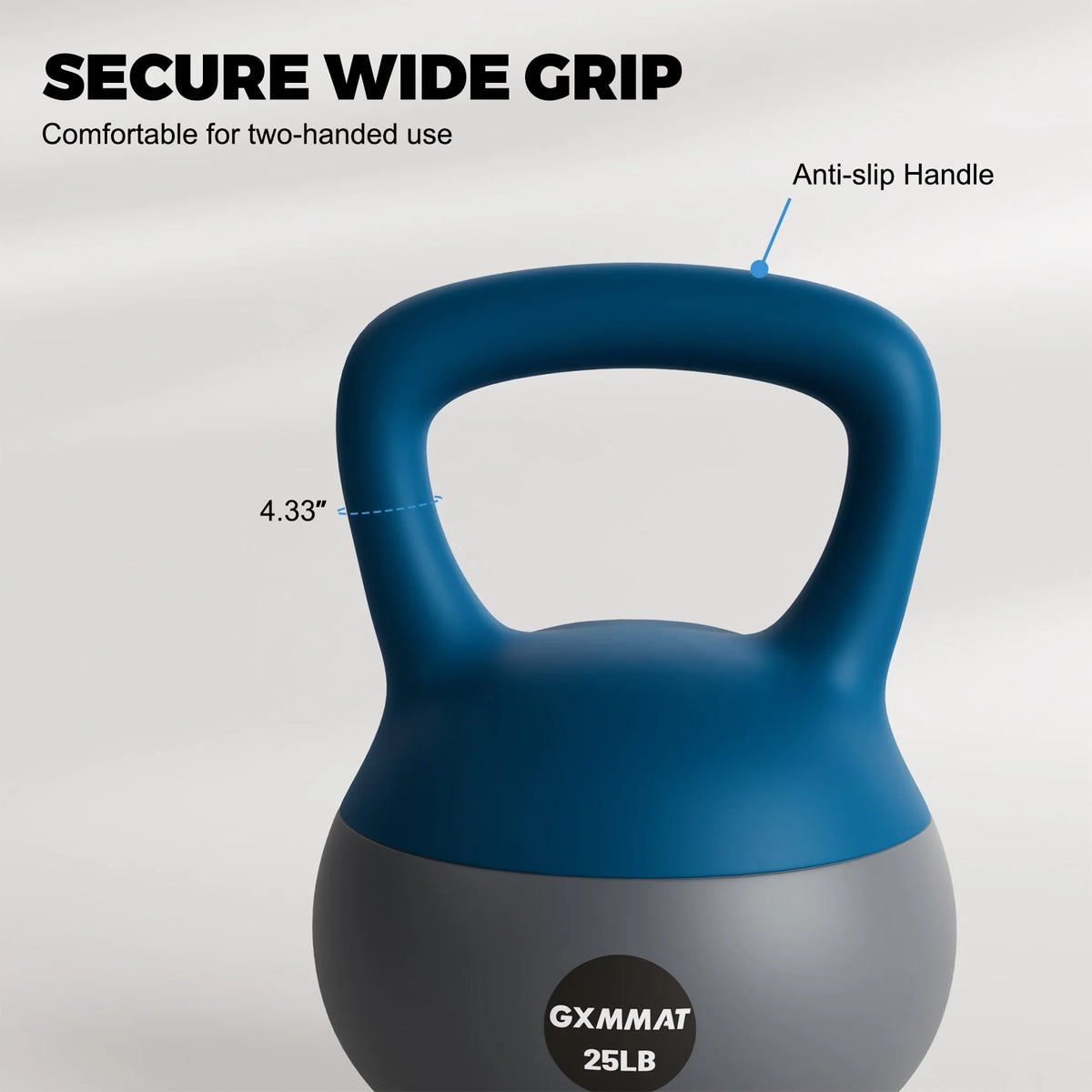
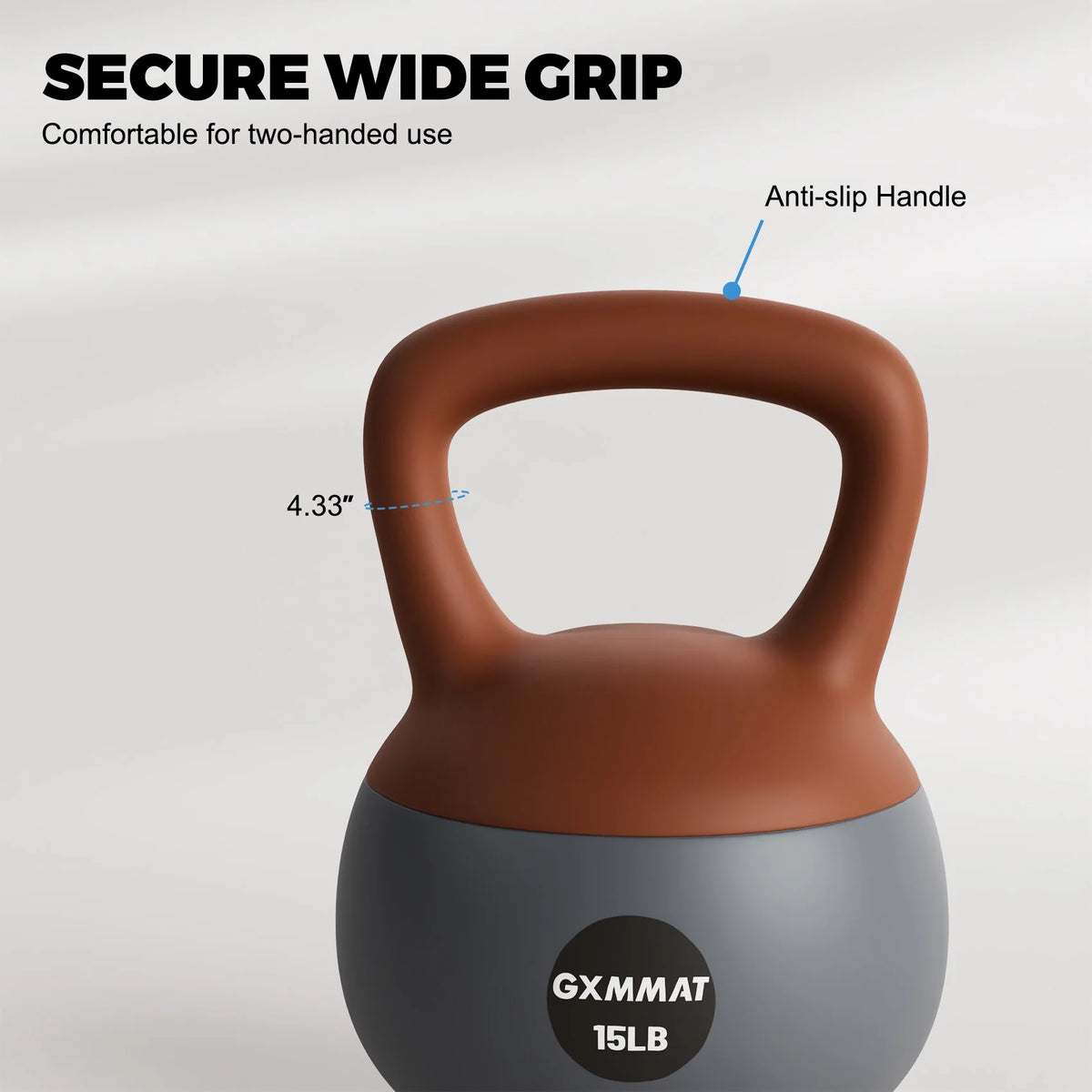
For high pulls, choose a bell you can swing comfortably. The GXMMAT soft kettlebell comes in 10, 15, 20 and 25 lb; many people start with 15–20 lb. Its soft shell is quieter and protects floors if you set it down between sets. Use a large exercise mat for grip, and see what size kettlebell should I get.
FAQ
What does the kettlebell high pull work?
The glutes, hamstrings, upper traps, rhomboids, delts and core.
Is the high pull the same as an upright row?
No. The high pull is driven by the hips and uses momentum; the upright row is a slow shoulder exercise.
What weight should I use?
Start with 15–20 lb and focus on hip drive and a high elbow.
Should I learn the high pull before the snatch?
Yes, it teaches the pull path the snatch uses.
How many reps should I do?
3–4 sets of 8–10 reps per arm.
Written by Yuvien Royer for GXMMAT. This article is general fitness information, not medical advice.