Is Your Home Gym a Mess? Here’s How to Organize Your Iron for Good
Nothing kills the momentum of a heavy leg day quite like tripping over a rogue plate or having to shuffle a stack of iron just to find the 10-pounders. If your workout space looks like a scrap metal yard exploded, you aren’t just hurting your aesthetic; you are actively hindering your progress. The solution isn't necessarily a bigger room, but rather a dedicated barbell weight rack. Getting your gear off the floor is the single most effective upgrade you can make for safety, efficiency, and the longevity of your expensive equipment. A disorganized gym is often a dangerous one, and correcting this foundation is where real training discipline begins.
The Hidden Dangers of Floor Storage
Many lifters start by buying a set of weights and leaving them in a pile in the corner. It seems harmless until you are mid-set and realize your footing is compromised by a stray change plate. Leaving equipment on the ground exposes it to moisture, dust, and accidental kicks. More importantly, it creates a tripping hazard that can lead to serious injury before you even touch a weight.
Beyond personal safety, your equipment suffers. Barbells are precision instruments. The sleeves contain bearings or bushings that allow the weight to spin. When a bar is left on the floor, dust and debris work their way into these mechanisms, causing them to seize up over time. Additionally, moisture from concrete floors can accelerate rust on the knurling. Utilizing a proper weight bar and rack system elevates the steel, allowing for air circulation and keeping the delicate internal mechanisms of your barbell clean.
A Lesson Learned the Hard Way
I spent the first three years of my lifting journey training in a single-car garage with zero organization. I told myself that "real" lifters didn't care about tidiness; we only cared about the weight on the bar. That philosophy worked until I finished a heavy set of deadlifts and dropped the bar, only for it to roll onto a 5-pound metal plate I had carelessly discarded earlier. The bar hit the plate at an awkward angle, scarring the sleeve deeply and damaging the spin mechanism permanently. That was a three-hundred-dollar mistake caused by laziness.
The very next week, I nearly broke a toe kicking a dumbbell that had rolled behind my bench. That was the breaking point. I invested in a proper barbell weight stand and a tree for my plates. The difference in my mental clarity was immediate. Walking into a clean, organized space made me want to train harder. It removed the friction of setup and teardown, allowing me to focus entirely on the lift. Don't wait for an injury or broken gear to force your hand.
Choosing the Right Storage for Your Space
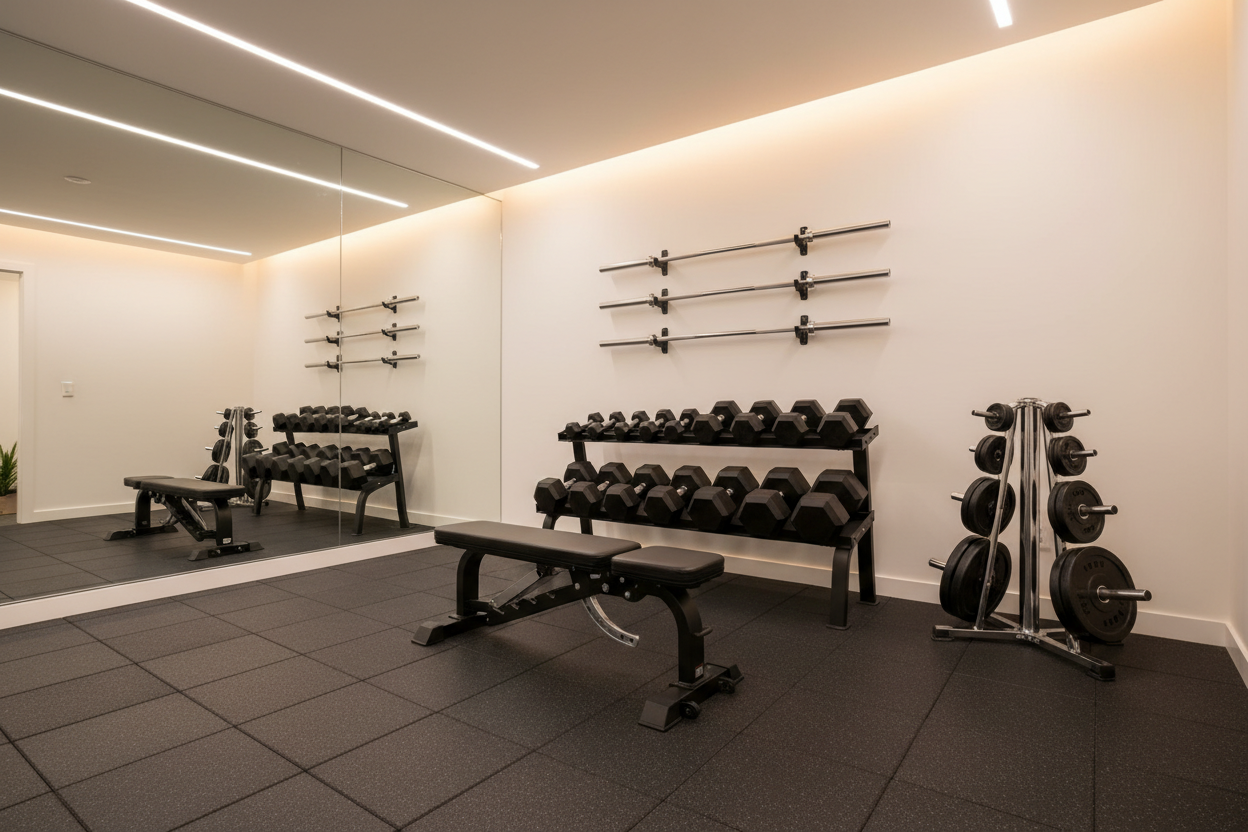
Not all storage solutions are created equal, and the footprint of your gym will dictate what you need. If you are working with a tight corner, vertical storage is your best friend. A "weight tree" usually has a central post with branches for plates and often includes vertical tubes to slide your barbells into. This is a compact weight and bar holder that centralizes everything in a two-foot square area.
For those with more wall space, horizontal gun racks are excellent. These mount to the studs and allow you to rack multiple bars horizontally. This is particularly good for maintaining the lubrication in the bar sleeves, as vertical storage can sometimes cause oil to pool at the bottom of the bar. If you have a variety of specialty bars, like a safety squat bar or a swiss bar, a heavy-duty weight lifting bar rack mounted on the wall keeps them accessible without eating up floor space.
Understanding Weight Capacity and Build Quality
When shopping for organization gear, you must respect the weight of your iron. A cheap plastic or thin-gauge steel rack might hold a few dumbbells, but it will buckle under the load of 400 pounds of calibrated plates. Look for a weight rack bar storage unit made from 11-gauge or 12-gauge steel. The welds should be clean, and the footprint should be wide enough to prevent tipping when you load plates on only one side.
Stability is paramount. If you are loading 45-pound bumper plates onto a high peg, you need to trust that the entire structure won't topple over. A high-quality weights bar holder will often have rubber feet to grip the floor and protect your flooring material. Furthermore, look for protective lining on the hooks or pegs. Plastic or rubber liners prevent metal-on-metal contact, keeping the finish on your barbell sleeves and the paint on your plates pristine.
Integration with Power Racks
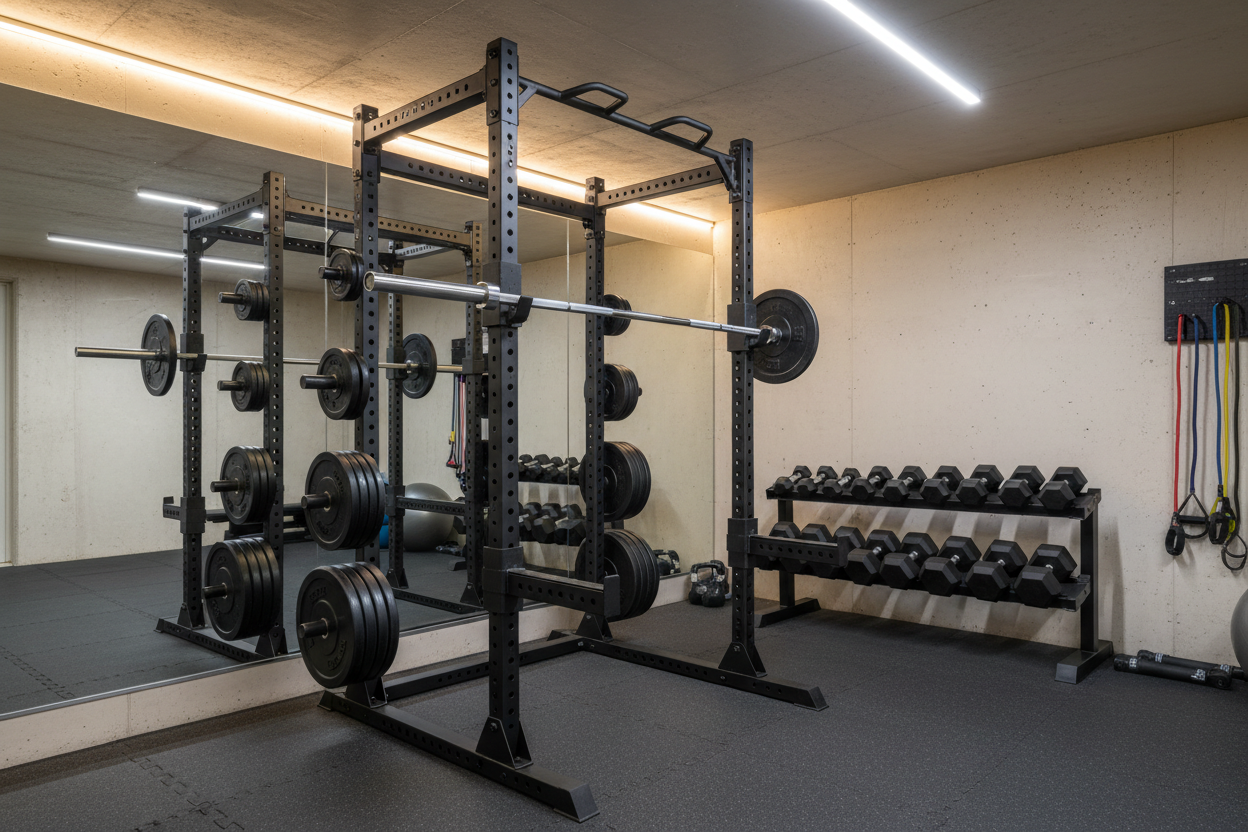
If you are extremely limited on space, look at your power rack. Many modern power cages are modular, allowing you to bolt storage pins directly onto the uprights. This turns your squat cage into an all-in-one station. You can attach a bar rack weights storage pin to the back uprights to hold your plates, and a vertical barbell holder to the side.
This setup is incredibly efficient for workflow. You don't have to walk across the room to grab a plate; it is right there at arm's length. However, be mindful of interference. Ensure that the stored plates do not get in the way of your bench press or squat movement patterns. A well-designed barbell weight rack attachment will position the weights low or far enough back to allow for a full range of motion inside the cage.
The Workflow Advantage
Organization is ultimately about workflow. When you are in the middle of a high-intensity interval session or a heavy pyramid set, you do not want to waste energy hunting for clips or plates. A dedicated station allows you to standardize your loading process. You know exactly where the 25s are; you know exactly where the collar clips live.
Think of your home gym like a professional kitchen. A chef practices "mise en place"—everything in its place. Your gym should be no different. A weight lifting bar rack isn't just a shelf; it is a tool that streamlines your workout, reducing downtime and keeping your heart rate in the target zone. When the workout is done, the cleanup is faster, making it less likely you will skip the cleanup altogether.
Protecting Your Investment
Gym equipment holds its value surprisingly well, but only if it is maintained. Rusty weights and bent bars lose value immediately. By using a proper weight rack bar storage solution, you are protecting the resale value of your gear. If you ever decide to upgrade or sell your equipment, a buyer will pay a premium for plates that haven't been chipped by concrete and bars that still spin freely.
Consider the finish of your equipment. Black oxide and zinc coatings wear off with abrasion. Cerakote is tougher but can still scratch. Storing your bars in a lined weight and bar holder ensures that the finish remains intact, preventing oxidation from taking hold on the bare steel underneath. It is a small investment in infrastructure that pays dividends in the lifespan of your gear.
Frequently Asked Questions
Is it better to store barbells vertically or horizontally?
Horizontal storage is generally preferred for the long-term health of the barbell, as it prevents lubricant from pooling in the sleeves. However, vertical storage is perfectly acceptable for most home gyms and saves significantly more floor space.
Can I leave weights loaded on the barbell when not in use?
No, you should never leave heavy plates loaded on a bar stored in a rack for extended periods. Over time, the static weight can cause the bar to bend permanently, ruining its structural integrity and performance.
Do I need to bolt my weight rack to the floor?
While not always mandatory, bolting your rack to the floor is the safest option, especially if you have children or pets. If bolting isn't possible, ensure you load the rack evenly from the bottom up to maintain a low center of gravity and prevent tipping.