Is Your Gym Routine for Shoulders Ignoring Half the Joint?
I spent years wondering why my overhead press felt like a shaky mess even though I was hammering my delts three times a week. I’d walk into my garage, load up the bar, and feel that familiar, annoying ‘click’ in my right AC joint. I thought a gym routine for shoulders just meant more pressing, more front raises, and more volume until the front of my shirt didn't fit.
I was wrong. I was treating my shoulders like a chest workout 2.0, focusing entirely on what I could see in the mirror. If you are struggling with nagging pain or a lift that hasn't budged in six months, your shoulder gym routine is likely missing the very thing that makes heavy pressing possible: posterior stability.
Quick Takeaways
- Stop treating shoulder day as a 'push-only' session to avoid impingement.
- Pairing heavy presses with heavy pulls creates a stable 'shelf' for the weight.
- Prioritizing the rear and medial delts fixes the 'gorilla posture' common in home gym lifters.
- Supersets are your best friend for a shoulder routine workout that actually fits into a busy schedule.
The Problem With 'Push-Only' Shoulder Days
Most of us figure out what to do on shoulder day by looking at what bodybuilders did in the 90s. We stack overhead presses, followed by dumbbell front raises, and maybe some lateral raises if we have time. This is a recipe for internal rotation and terrible posture. When you only train the front of the joint, you pull your humerus forward, leaving your rotator cuff screaming for help.
I’ve seen guys with 315-lb benches who can’t press 135 overhead without wincing. That’s because their shoulder weight lifting routine is fundamentally unbalanced. Your front delts already get smashed during every chest and tricep session. Adding more isolated front-loading to your shoulder day is like putting a lift kit on a truck with no suspension—it looks okay until you actually try to use it.
The goal shouldn't just be bigger muscles; it should be a shoulder lifting routine that lets you train for the next twenty years. If your shoulders roll forward and your palms face backward when you’re standing still, your programming is broken.
The Antagonist Advantage for Bulletproof Delts
The secret to a massive overhead press isn't just stronger triceps; it’s a thicker upper back. Biomechanically, your lats and rear delts act as the braking system for your presses. When you integrate a science based shoulder lifting routine, you realize that the scapula needs to be pinned down and back to create a stable platform.
I started seeing real growth when I began pumping up my lats and rear delts *before* I touched the barbell. It sounds counterintuitive, but a 'pumped' back acts like a hydraulic cushion. When the posterior muscles are engorged with blood, the shoulder joint sits deeper in the socket, making the heavy concentric phase of the press feel significantly more stable.
This isn't just about injury prevention. It’s about force transfer. If your back is soft, you leak power. If your back is tight and engaged, every ounce of effort goes directly into moving the bar upward.
Structuring Your New Program for Shoulder Workout Growth
To fix this, we stop doing straight sets. Instead, we use antagonist supersets. This means every time you push, you pull. It’s the most efficient quick weight lifting routine for anyone training in a garage with limited time.
I prefer using free weights for the heavy compound movements to build stabilizer strength, but I’m a huge fan of weight lifting machines for the isolation work. A cable tower or a dedicated rear-delt fly machine allows for constant tension that you just can't get with a dumbbell. Gravity only pulls down, but a cable pulls wherever you tell it to.
Superset 1: The Heavy Overhead Base
Start with a strict barbell press paired with weighted pull-ups or heavy barbell rows. Load the bar with a weight you can handle for 5-8 reps with zero body cheat. Immediately after you rack the bar, hit 8-10 reps of your pulling movement.
Rest for exactly 90 seconds. You need enough time for your ATP stores to recover, but not so much that your heart rate drops through the floor. This pairing ensures that your lats are firing and providing that 'shelf' for the barbell on every single rep of the press.
Superset 2: Medial Delts and Mid-Back Armor
Next, we move to the '3D' part of the program for shoulder workout success. Pair heavy dumbbell lateral raises with face pulls or rear delt flies. Most people go too light on lateral raises—grab the 30s or 35s and use a tiny bit of English if you have to, then move to the cable machine for the face pulls.
Face pulls are the single most underrated movement for shoulder health. They hit the rear delts, the traps, and the external rotators all at once. If you aren't doing these twice a week, you're leaving gains on the table and begging for a labrum tear.
The Complete Shoulder Weight Routine Blueprint
Here is your shoulder workout guide for the week. Perform this once, or twice if you have the recovery capacity. Focus on the mind-muscle connection, especially on the pulling movements.
- A1. Overhead Press: 4 sets of 6-8 reps.
- A2. Pendlay Rows: 4 sets of 8 reps.
- B1. Dumbbell Lateral Raises: 3 sets of 12-15 reps.
- B2. Face Pulls: 3 sets of 20 reps.
- C1. Dumbbell Shrugs: 3 sets of 10 reps (3-second hold at top).
- C2. Rear Delt Flyes: 3 sets of 15 reps.
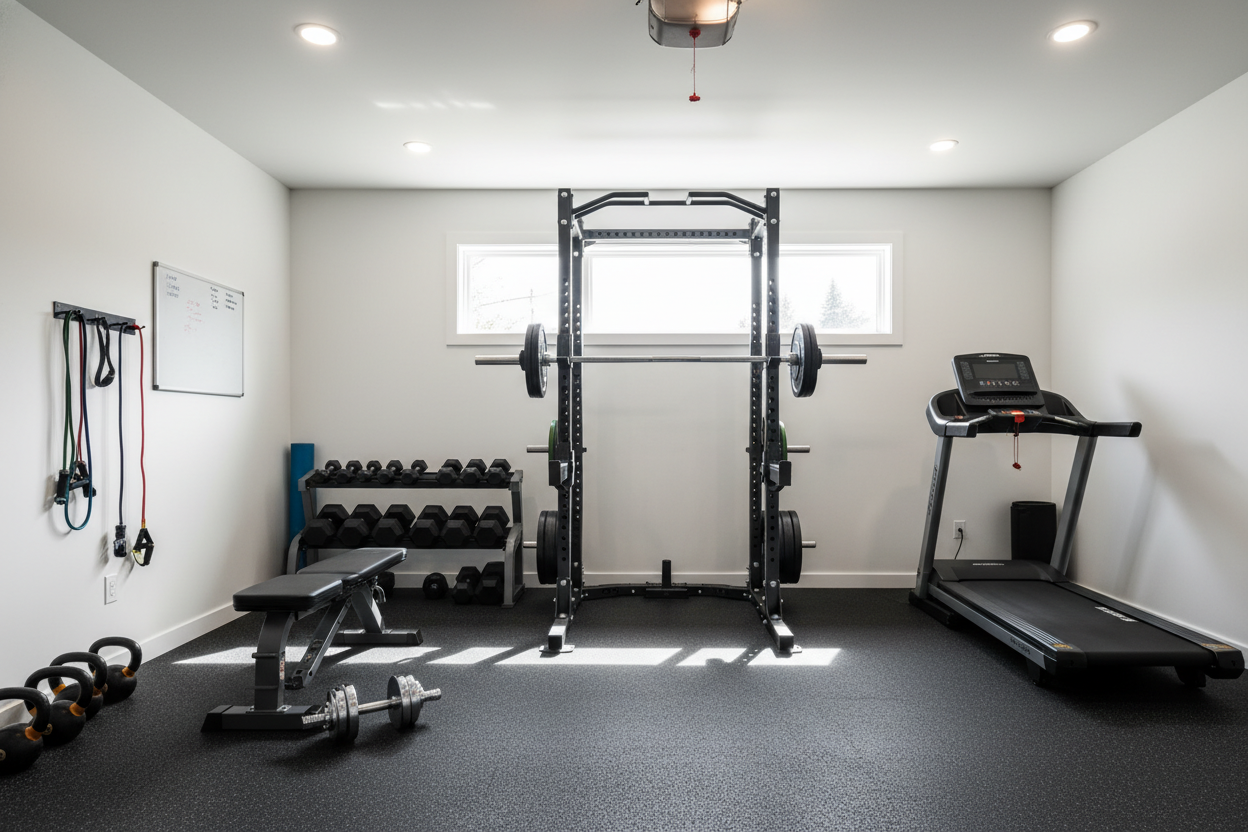
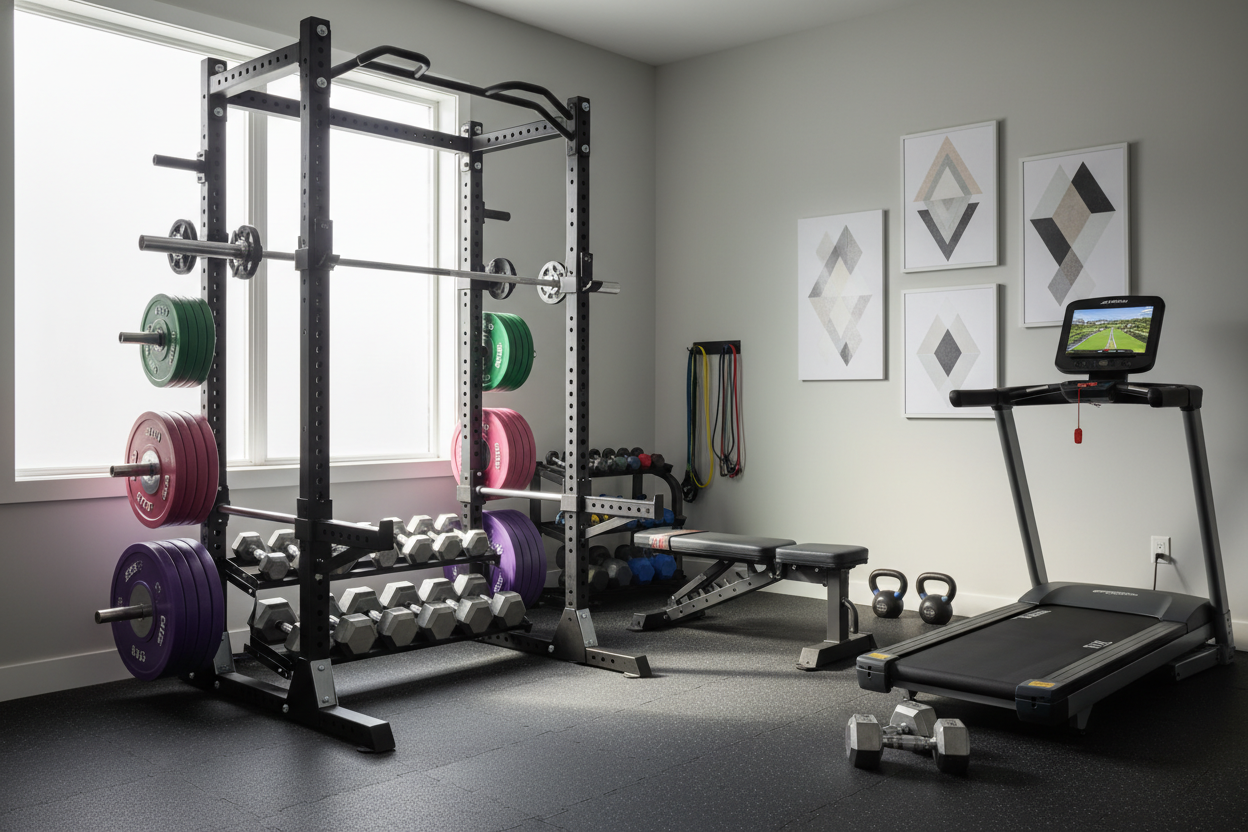
A quick tip for the home gym crowd: if you're doing heavy rows, make sure you have solid gym flooring for home workout. I once tried to max out my rows on a slick concrete garage floor and nearly ended up face-first in my power rack. Traction matters when you're moving heavy iron.
Personal Experience: My Shoulder Wake-Up Call
I used to be the guy who skipped rear delts because 'rows hit them anyway.' Then I hit a plateau on my overhead press at 165 lbs that lasted for a year. My shoulders looked flat from the side, and I had a constant ache in my front delt. I finally swallowed my pride, cut my pressing volume in half, and doubled my pulling volume. Within three months, my OHP jumped to 185 lbs and the pain vanished. I realized I wasn't weak; I was just unstable.
FAQ
How many times a week should I do a shoulder routine workout?
Twice is the sweet spot. One heavy day focused on the barbell, and one hypertrophy day focused on dumbbells and cables. Any more and you risk overtaxing the joints.
What is the best shoulder weight routine for mass?
Consistency and progressive overload. You need a mix of heavy compound presses and high-volume isolation work for the medial and rear delts to get that 'capped' look.
Should I do front raises on shoulder day?
Probably not. Your front delts get plenty of work from benching and overhead pressing. Spend that time on your rear delts instead—your posture will thank you.