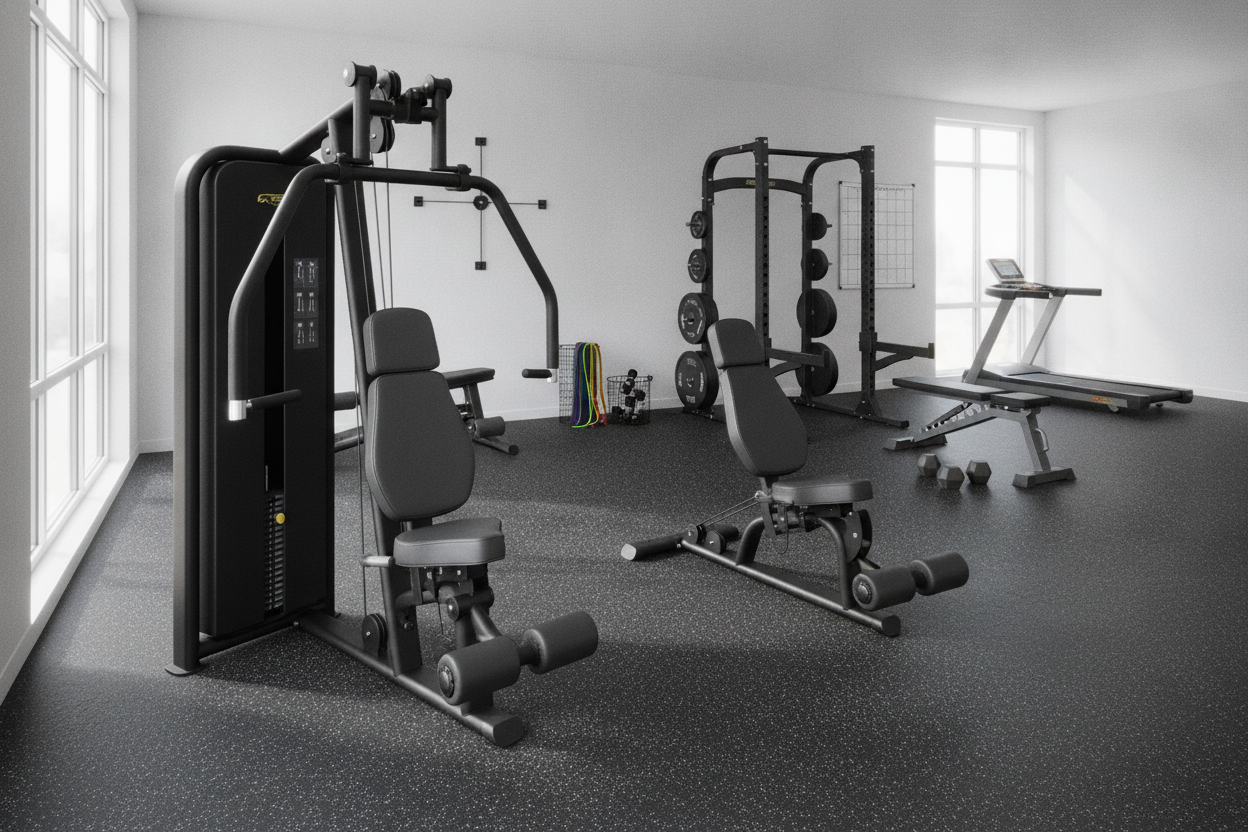
Is There Any Equipment Exercise Actually Worth the Setup?
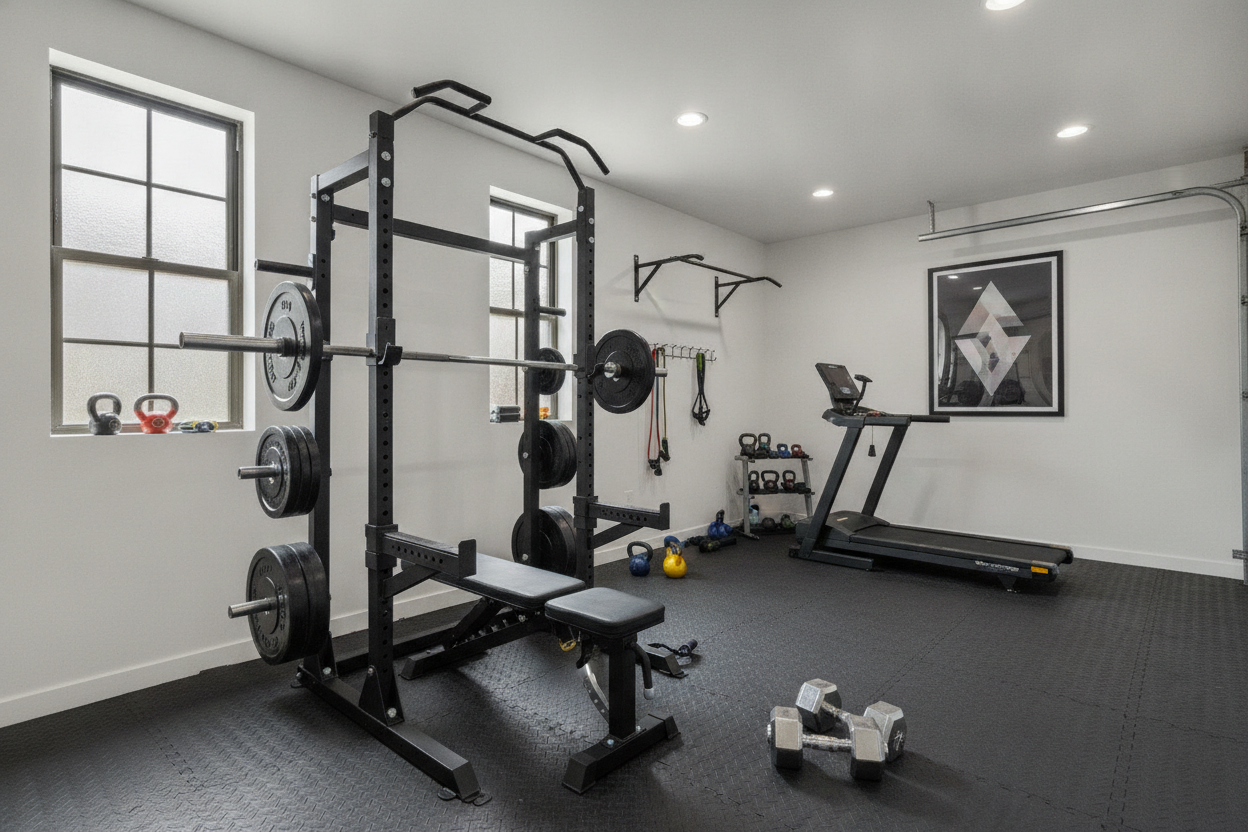
Last Tuesday, I stood in my garage for five minutes staring at a pile of steel. I wanted to do one specific equipment exercise—a cable fly—but my functional trainer was buried behind a lawnmower and the attachments were in a bin under a stack of bumper plates. I looked at my dumbbells, looked at the clock, and realized I was about to spend more time playing Tetris with my gear than actually lifting it.
We have all been there. You see a shiny new machine on Instagram and think it is the missing link in your hypertrophy chain. But in a garage gym, space and time are your most valuable currencies. If a piece of gear takes ten minutes to calibrate for a thirty-second set, it is usually just a very expensive clothes rack.
Quick Takeaways
- If the setup takes longer than two minutes, you probably won't do it consistently.
- Prioritize multi-purpose gear over hyper-specific machines.
- Protect your foundation; heavy attachments are the leading cause of cracked garage slabs.
- Free weights win for 80% of movements, but machines are king for isolation.
The Brutal Math of Setup Time vs. Actual Lifting
The biggest killer of gains isn't a bad program; it is friction. When you are training in a commercial gym, you just walk up to a machine and move a pin. In a home gym, every single-joint movement requires a logistics plan. I have seen guys spend fifteen minutes bolting jammer arms to their rack just to do three sets of mediocre presses. By the time they are ready to lift, their heart rate has dropped and their motivation is in the gutter.
You have to be honest about your psychology. If you know you are the type of lifter who skips the 'optional' accessory work when you're tired, adding complex fitness sports equipment to your routine is a mistake. I have found that the more I simplify my floor plan, the harder I actually train. If I can't get into the movement in under sixty seconds, I swap it for a dumbbell variation and move on.
Why I Stopped Buying Weird Sport Appliances
The fitness industry loves a gimmick. Every year, a new wave of sport appliances hits the market promising to 'isolate the lower-inner-quad' or some other nonsense. They usually involve a lot of plastic, proprietary pulleys, and a footprint that eats up half your floor. I used to fall for it, browsing through home gym equipment deals and clicking 'buy' on anything that looked high-tech.
Most of that sports equipment fitness gear is now listed on my local Marketplace for pennies on the dollar. The reality is that your body doesn't know if you are using a $3,000 selectorized machine or a $50 pair of rings. It only knows tension and load. When you are shopping, look for tools that solve a problem, not gadgets that add a step to your workflow. If it looks like it belongs in an infomercial, it doesn't belong in your rack.
The Only 3 Machine Lifts I Still Bother With
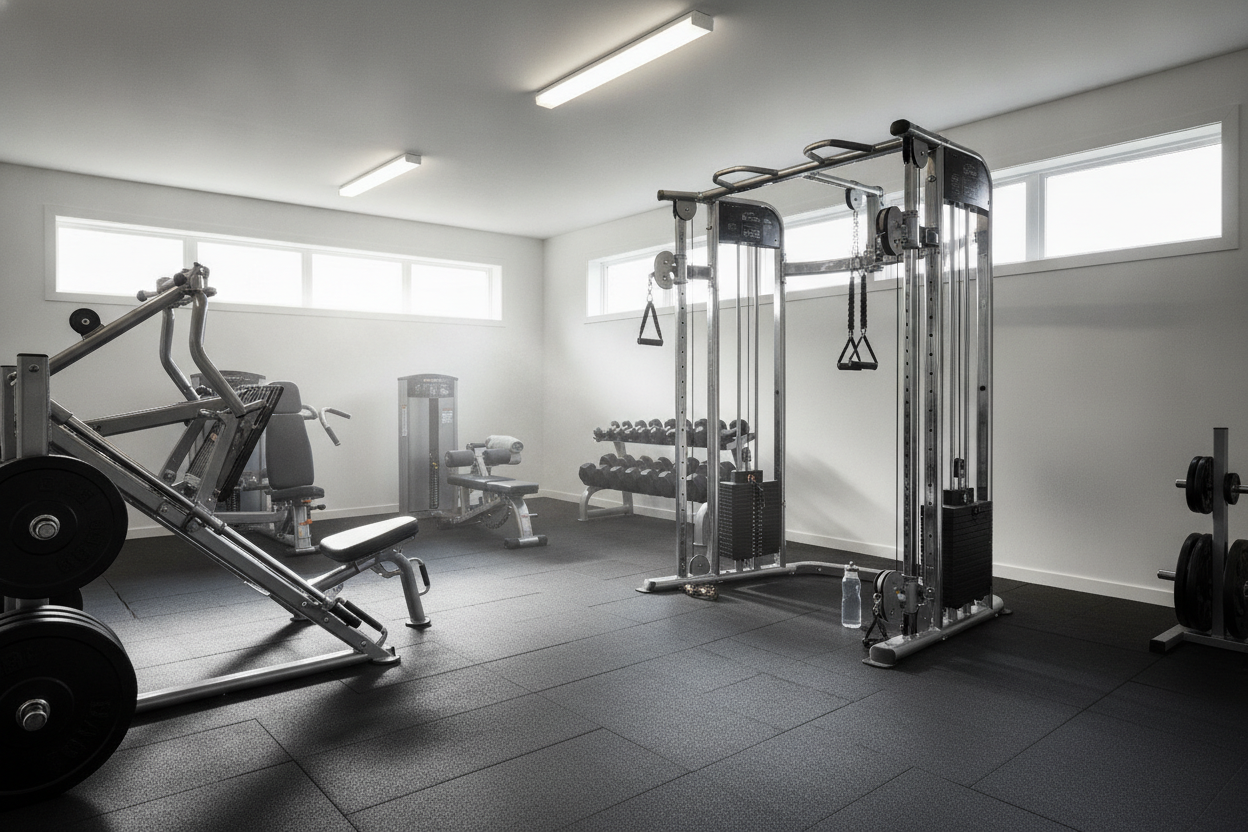
Despite my love for the 'keep it simple' mantra, there are a few times where sports and fitness equipment genuinely beats a barbell. You can't replicate the constant tension of a high-quality cable stack with a piece of iron. For me, the three movements worth the floor space are the lat pulldown, the leg extension, and the functional trainer fly. These provide a stimulus that free weights simply cannot match because of the strength curve.
If you are going to invest in these, don't buy the cheap, plate-loaded versions that wobble when you load more than two 45s. Go for the heavy-duty stuff. I always check the definitive buying guide before pulling the trigger on anything over $500. You want something with a 1:1 or 2:1 ratio that feels smooth, not jerky. A machine that catches or hitches mid-rep is worse than no machine at all.
Your Concrete Floor Hates Your Heavy Attachments
Here is something the manufacturers don't tell you: those heavy-duty leg press attachments and rack-mounted levers are absolute hell on your floor. I once dropped a 30-lb trolley arm from chest height while trying to pin it into my uprights. It took a chunk out of the concrete that I still look at every time I deadlift. This is why high-quality fitness and exercise equipment needs a proper foundation.
If you are running a rack with heavy attachments, you need more than just those thin foam tiles from the big-box store. I swear by a Large Exercise Mat 6X4 made of high-density rubber. It absorbs the vibration and saves your equipment from the 'clank' that eventually leads to metal fatigue. Plus, it makes the whole setup feel more like a professional facility and less like a cluttered shed.
Building a Low-Friction Training Space
At the end of the day, your garage gym should be a place of work, not a museum for sports equipment exercise gadgets. The most successful home lifters I know have a core of 'low-friction' gear. This means a solid rack, a versatile bench, and high-quality Strength Equipment that stays ready to go. If you have to move three things to use one thing, you have a storage problem, not a training problem.
Prioritize versatility. A good set of adjustable dumbbells replaces an entire wall of fixed weights. A single high-quality barbell is better than four specialty bars you only use once a month. Keep your floor clear, keep your pins greased, and spend your time lifting the weight rather than moving the machines around.
My Biggest Gear Mistake
I once bought a plate-loaded 'GHD' attachment that took twenty minutes to assemble and required me to remove my safety spotter arms every time I wanted to use it. It was a beast to move—heavy, awkward, and sharp. I used it exactly four times in six months. I eventually realized I could get 90% of the benefit from Nordic curls on the floor with a strap. I sold the attachment and used the space for a dedicated deadlift platform. Lesson learned: if it's a pain to set up, it's a waste of space.
FAQ
Is plate-loaded or selectorized better for a home gym?
Selectorized is faster but much more expensive and heavier to move. Plate-loaded is cheaper and saves space since you already own the plates, but it adds to your setup time. If you have the budget, go selectorized for cables.
How do I know if a machine is worth the space?
Ask yourself if you can do the same movement with a barbell or dumbbell. If the answer is 'yes' and the machine doesn't offer a significantly better tension curve, skip it. Space is your most limited resource.
Do I really need a dedicated floor mat?
Yes. Concrete is brittle. Heavy metal attachments and dropped plates will eventually crack it. A 3/4-inch rubber mat is the cheapest insurance policy you can buy for your home's foundation.