Is the Squat the Best Compound Exercise for Weight Gain?
I remember standing in my garage three years ago, staring at a 45-lb plate and wondering why my 60-minute isolation circuit wasn't doing anything. I'd spend hours on cables and machines, but I stayed the same size. I was chasing a pump instead of progress. If you're hunting for the best compound exercise for weight gain, you need to stop overcomplicating the process and start moving heavy metal.
Quick Takeaways
- Simplicity beats volume when you're trying to add mass.
- The squat recruits more muscle fibers than almost any other movement.
- Systemic stress is the secret to total-body growth.
- Safety gear is mandatory if you're training alone in a garage.
- You cannot out-train a low-calorie diet.
Why You're Doing Way Too Many Different Lifts
The biggest mistake I see guys making in their home gyms is 'program hopping' or trying to cram 15 different exercises into a single hour. You don't need a chest day, a quad day, and a separate day just for your rear delts. When you're trying to pack on 20 pounds of dense tissue, doing three sets of ten on a dozen different movements just creates a lot of 'junk volume.' It makes you tired, but it doesn't make you big.
I used to be the guy who thought I needed three types of curls and four variations of lateral raises. My workouts took two hours, and I looked exactly the same after six months. The reality is that your body has a limited capacity to recover. If you're spending all your energy on isolation movements, you have nothing left for the heavy lifts that actually signal your body to grow. Pick three or four big movements and own them. If you aren't getting stronger at the basics, you aren't going to get bigger.
The Real Reason Heavy Lifting Adds Dense Mass
Mass isn't just about localized muscle fatigue; it's about systemic stress. When you perform compound exercises for weight gain, you are forcing your central nervous system to adapt to a massive load. This triggers a hormonal response that isolation work simply cannot match. You aren't just working your legs; you're challenging your entire structural integrity.
Many people get lured in by the shiny chrome of various Weight Lifting Machines they see at the local big-box gym. While those machines have their place for bodybuilding finishing work, they often remove the stability requirement from the lift. When you use a free-weight barbell, your core, your stabilizers, and even your grip have to fight to keep that weight in line. That extra struggle is exactly what builds that 'dense' look. You want to be the guy who looks strong because he actually is strong, not the guy who only looks big under specific lighting after a machine circuit.
The Undisputed King: Why the Squat Wins
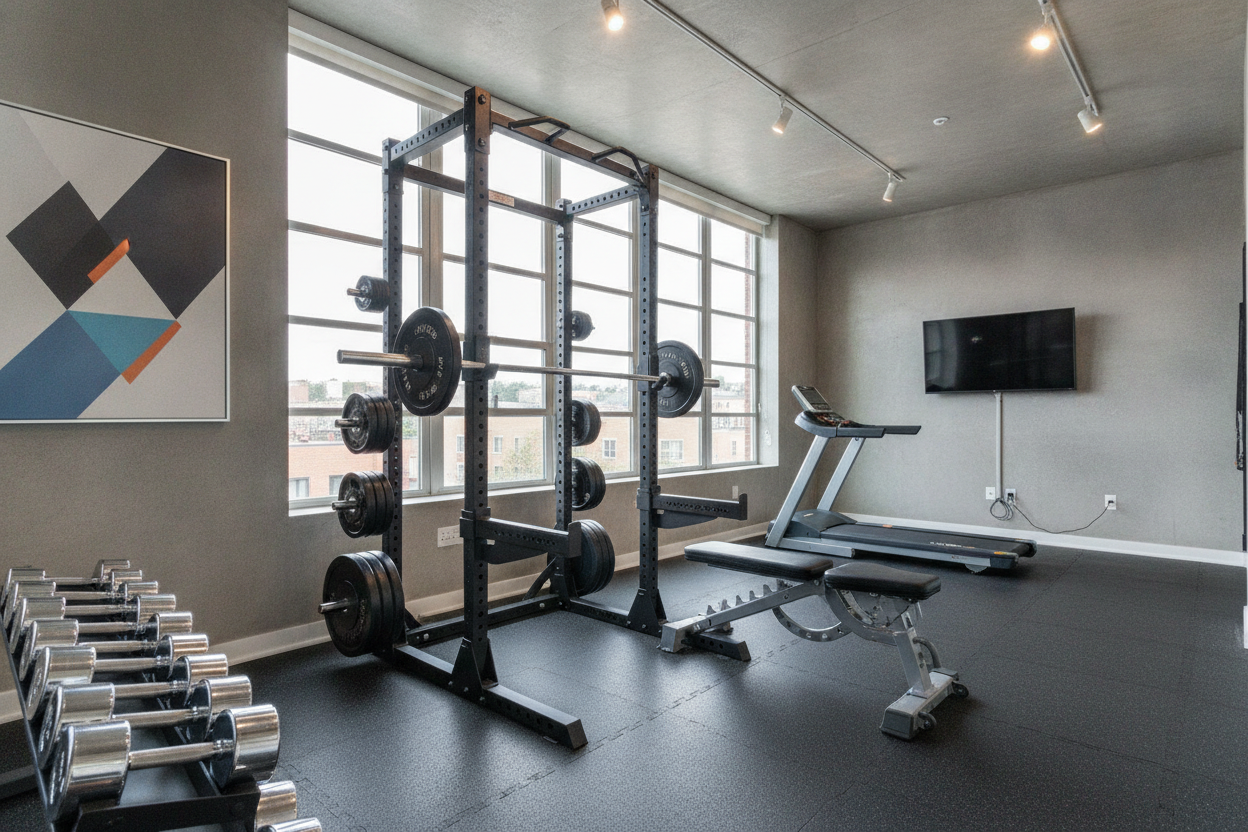
If I could only keep one piece of equipment in my garage, it would be a barbell and a rack for squats. The barbell squat is the ultimate anchor for any mass-building program. It isn't just a leg exercise. When you've got 300 pounds on your back, your traps are screaming, your erectors are firing to keep your spine from folding, and your core is braced like you're about to take a punch. It is a full-body event.
The muscle recruitment is insane. You're hitting the glutes, the quads, and the hamstrings, which are the largest muscle groups in your body. Growing these areas adds weight to the scale faster than any amount of bicep curls ever will. I've found that when my squat goes up by 50 pounds, my shirt size usually follows. There is a reason every legendary strength program is built around the squat rack. It's uncomfortable, it's hard, and it's the most effective way to tell your body that it needs to get bigger right now.
How to Push to Failure Safely in Your Garage
Training alone in a garage is a different beast than training at a commercial gym. You don't have a spotter to bail you out when that third rep feels like a ton of bricks. This is where most people hold back, and if you hold back, you don't grow. To really use the squat as a tool for weight gain, you have to be able to push toward failure without the fear of being pinned under the bar.
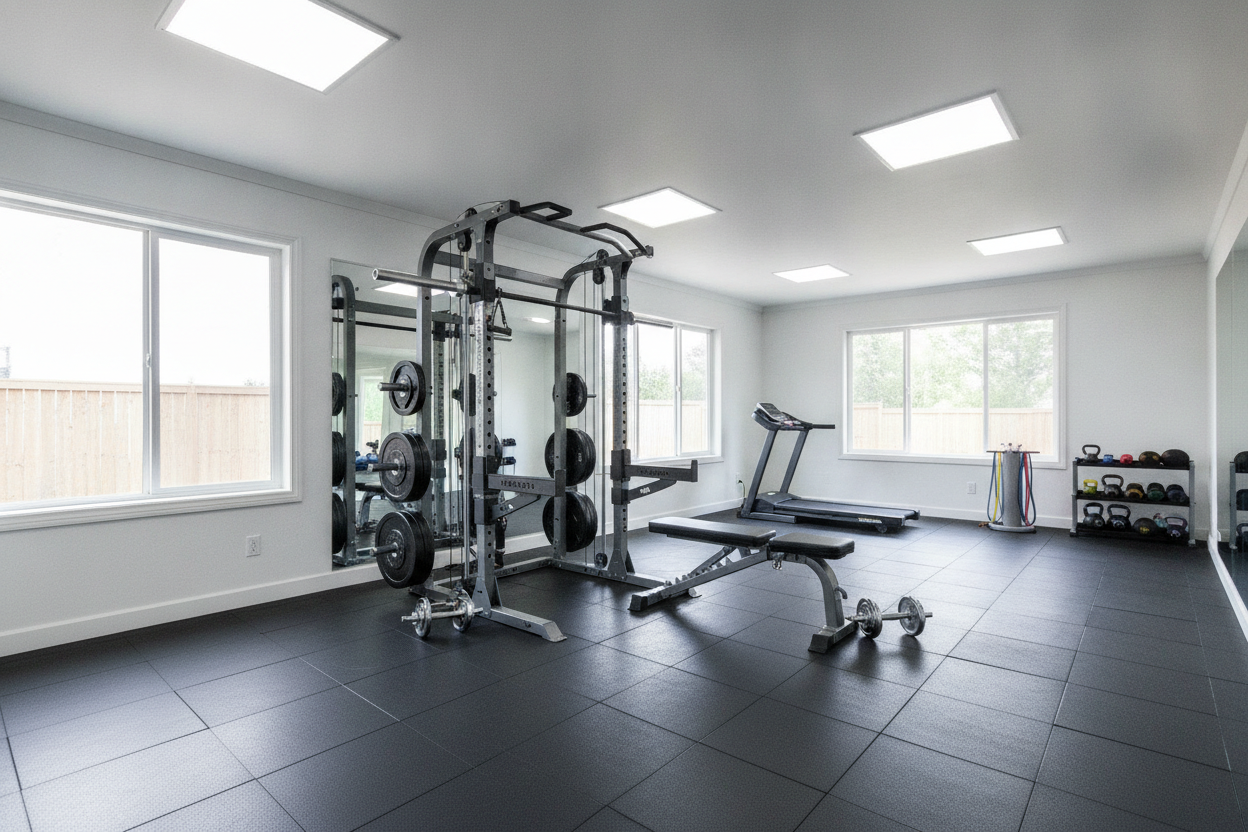
I personally use and recommend the Gxmmat X6 Power Rack Weight Bench Package because it gives you that safety net. Having high-quality safety spotter arms means you can squat until your legs give out, and the bar will just land on the steel instead of your floor (or your neck). If you're serious about heavy compound lifting at home, you need a cage. Period. It changes your psychology; you lift heavier because you know you're safe.
Don't Let Your Setup Ruin Your Form
I learned the hard way that lifting on the wrong surface is a recipe for a blown-out knee. I started my lifting journey on a cheap piece of carpet in my basement. Every time I hit the bottom of a squat, my feet would shift just a fraction of an inch. That instability kills your power output. Your Squishy Carpet Is Ruining Your Exercise for Weight Gain at Home is a lesson I wish I had learned sooner. You need a dead-flat, hard surface. Horse stall mats or a dedicated lifting platform are the only ways to go if you want to move real weight safely.
You Can't Out-Lift a Bird's Diet
You can squat until your eyes bleed, but if you're eating like a bird, you're just going to get 'toned' and tired. To gain weight, you need a caloric surplus. I used to think I was a 'hardgainer' until I actually tracked my macros and realized I was barely eating 2,000 calories a day. You need protein for repair and carbs for the energy to move that heavy barbell.
Be warned: heavy squat sessions will crush you. Sometimes, the fatigue is so high that you actually lose your appetite for a few hours. I wrote about this in I Ruined My Appetite Looking for an Exercise on How to Gain Weight because it's a real hurdle. You have to treat your meals with the same discipline as your sets. If you miss your calories, the squat won't save you. Drink a shake, eat the steak, and get the sleep you need to turn that mechanical tension into actual body mass.
FAQ
Can I gain weight without squatting?
Technically, yes. You can use deadlifts, presses, and rows. However, the squat provides the highest return on investment for total body mass due to the sheer amount of muscle it engages simultaneously.
How many times a week should I squat for mass?
For most people, twice a week is the sweet spot. One heavy day focused on lower reps and one 'volume' day with higher reps will keep you growing without burning out your central nervous system.
Do I need a weight belt?
Not right away. Focus on building core strength and proper bracing first. Once you're moving 1.5x your body weight, a belt can help provide extra intra-abdominal pressure for those top-end sets.