
Is The Square36 Cardio Mat Actually Worth It? The Honest Truth
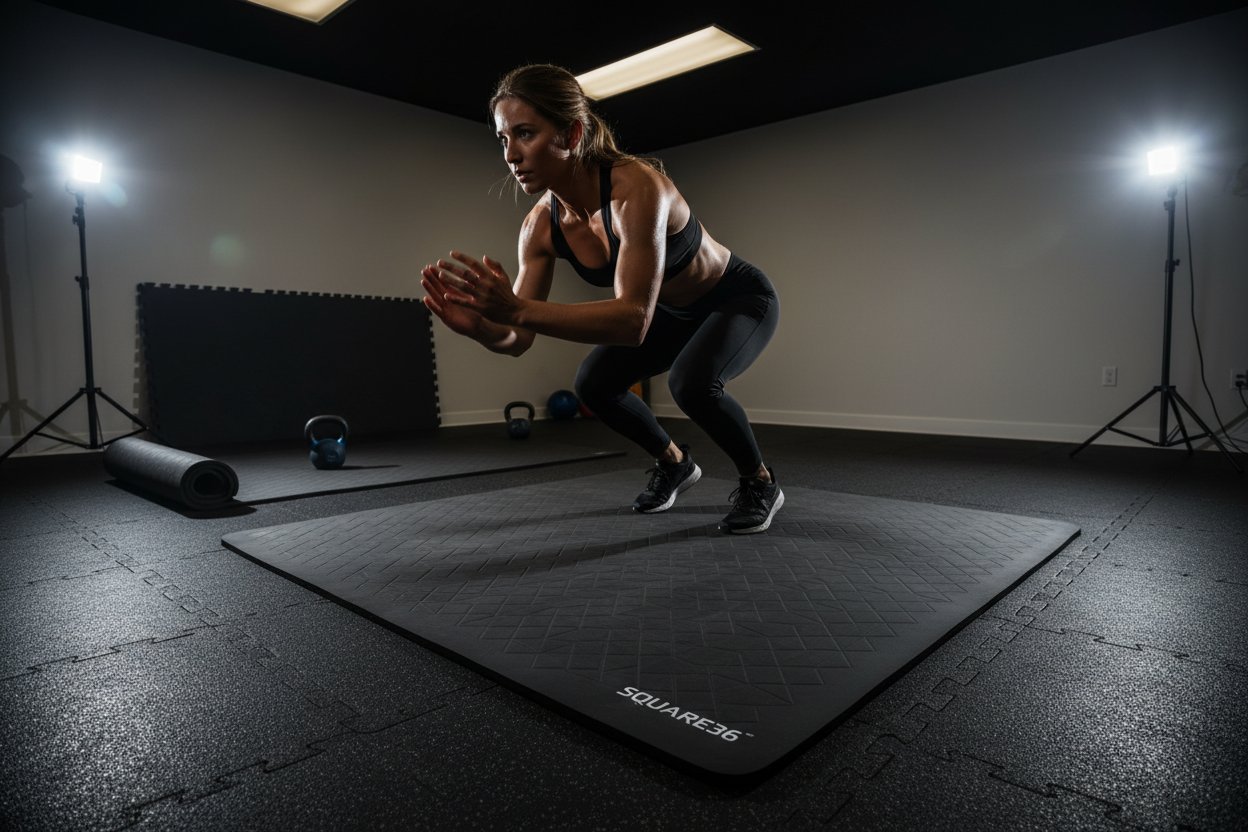
Most home workouts fail not because of a lack of motivation, but because of a lack of space. You know the struggle: you try to do a lateral lunge or a burpee, and suddenly you are off the edge of your standard yoga mat, slipping on the hardwood or twisting an ankle on the carpet edge. This is the specific problem the square36 cardio mat claims to solve.
If you are training with intensity—think P90X, Insanity, or heavy rope jumping—a standard 24-inch wide strip of foam isn't going to cut it. You need real estate, and you need density. Below, we break down whether this oversized mat is a necessary investment for your home gym or just overpriced rubber.
Key Takeaways
- Designed for Shoes: Unlike yoga mats, the Square36 is engineered to withstand the abrasion of sneaker treads without shredding.
- Stability Over Cushion: It uses high-density material to prevent joint instability, rather than soft foam which can cause ankle rolling.
- Floor Protection: The square36 extra large exercise mat covers enough surface area (up to 6'x6' or larger) to protect floors from sweat and dropped weights.
- Versatility: Works on concrete, hardwood, and low-pile carpet (though carpet anchors may be needed).
Why Standard Mats Fail at Cardio
To understand the value of this gear, you have to look at the physics of a workout. Standard yoga mats are designed for linear movement and static friction with bare skin. They are often made of PVC or TPE foam that is meant to be grippy, not durable.
When you introduce lateral movements (side-to-side) and rubber shoe soles, you create shear force. On a standard mat, this friction causes the material to stretch, bunch up, or disintegrate. The Square36 uses a proprietary blend of natural rubber and premium non-toxic synthetic materials designed specifically to resist this shear force. It provides a stable platform that allows for explosive movement without the fear of the ground shifting beneath you.
Analyzing the Material Density
The "Squish" Factor
There is a misconception that a thicker mat is always better. For cardio and weightlifting, too much cushion is actually dangerous. If you land a jump squat on a soft, 1-inch foam tile, your foot sinks, destabilizing your ankle joint. This is a primary cause of home gym injuries.
The Square36 typically clocks in around 7mm thick, but the density is much higher than standard foam. This provides shock absorption for your knees and shins without sacrificing the reactive surface you need for agility. It feels more like a gym floor than a mattress.
Size Matters: The Freedom of Movement
The mental aspect of training on a square36 extra large exercise mat is often overlooked. When you are confined to a small rectangle, you subconsciously limit your range of motion to avoid stepping off.
By expanding your workspace to a 6x6 or 8x6 foot area, you unlock the ability to perform traveling lunges, bear crawls, and sprawling kickboxing combinations. This psychological shift can lead to higher intensity workouts because you aren't constantly looking down to check your footing.
My Personal Experience with square36 cardio mat
I want to step away from the spec sheet and tell you about my actual experience living with the 6'x6' version of this mat for the last six months.
The first thing you notice isn't the grip—it's the weight. This thing is heavy. When I first unrolled it, the corners curled up aggressively. I actually had to weigh them down with hex dumbbells for a full 24 hours before it sat flush against my garage floor.
But here is the specific detail that sold me: I do a lot of mountain climbers and skaters. On my old puzzle-piece foam mats, the seams would always separate, and my toe would catch in the gap. It was infuriating. With the Square36, I noticed a distinct sound—a sharp squeak—when I planted my foot hard for a direction change. That sound is the sneaker rubber biting into the mat surface. It didn't budge a millimeter. However, I will warn you: if you sweat heavily like I do, the surface can get slick if you don't towel it off mid-workout. It doesn't absorb moisture (which is good for hygiene, bad for traction), so keep a towel nearby.
Conclusion
If you are just doing stretching or light pilates, this mat is overkill. Stick to a cheaper yoga mat. However, if you are wearing shoes and moving fast, the square36 cardio mat is legitimate safety equipment. It protects your joints from impact and your floors from your shoes. The price point is higher than generic options, but considering it replaces the need for replacing cheap mats every three months, the math works out in your favor.
Frequently Asked Questions
Can I use the Square36 mat on carpet?
Yes, you can, but with a caveat. While the mat is heavy enough to stay put on low-pile carpet, it may "walk" slightly during very intense lateral movements on plush carpet. For thick carpets, Square36 recommends using their specific carpet anchor strips to lock it in place.
Is it safe to drop weights on this mat?
The mat is designed to handle dumbbells and kettlebells, but it is not a dedicated deadlift platform. It will protect your floor from scratches and minor dings, but dropping a 100lb dumbbell from overhead could still damage the subfloor beneath the mat. Treat it as a cardio surface, not a powerlifting station.
How do I clean the mat?
Because the surface is non-porous, it is easy to clean but requires care to maintain the grip. Avoid harsh chemicals or bleach. A mixture of warm water and a drop of mild dish soap works best. Wipe it down and let it air dry completely before rolling it up to prevent mold or mildew growth.


