Is the LA Fitness Smith Machine Effective? The Honest Truth
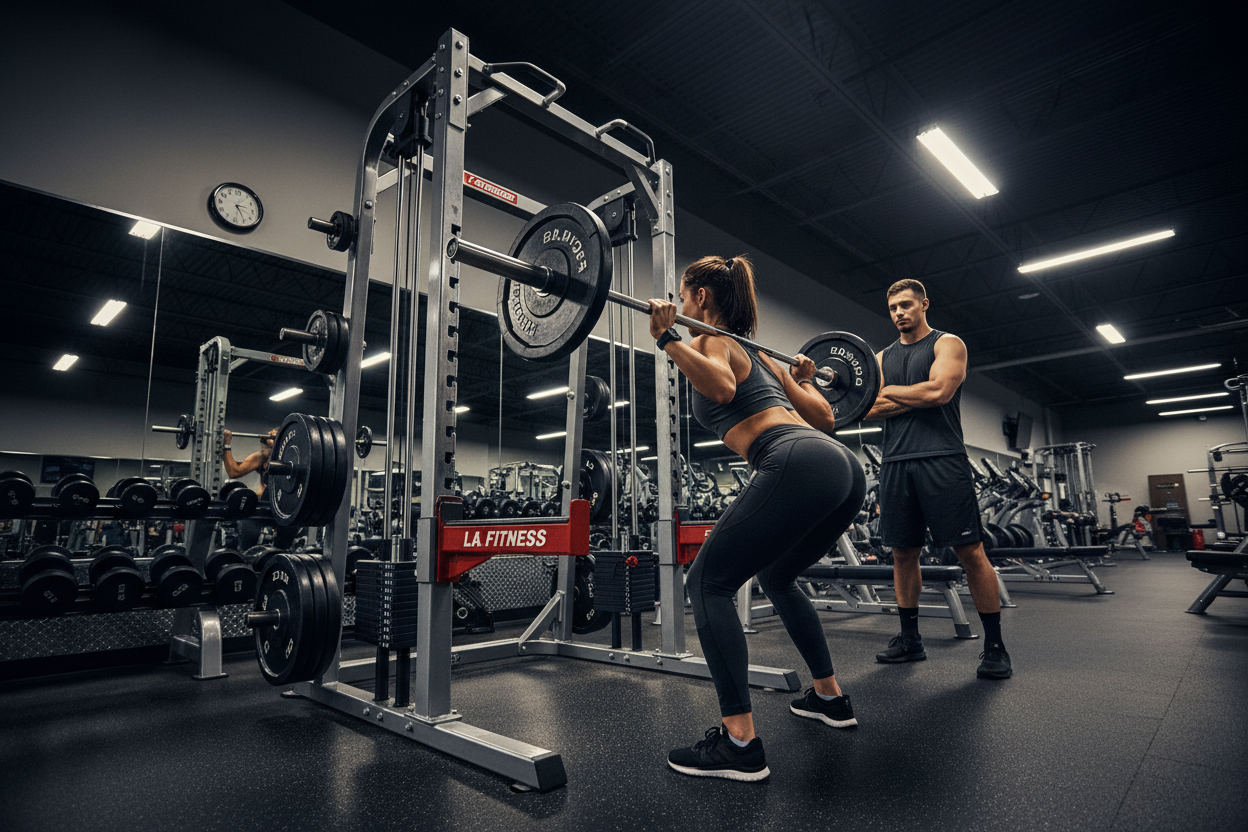
You walk into the gym during peak hours. Every power rack is taken, and there is a line of three people waiting to squat. You look over to the corner, and there it sits: the often-criticized, frequently misunderstood la fitness smith machine. Is it a waste of time, or is it a viable backup plan for your hypertrophy goals?
Many purists will tell you to wait for the free weights. As a coach, I’m telling you that’s a mistake. If you understand the mechanics of the machine found in most commercial gyms, you can get a workout that rivals free weights—provided you adjust your technique.
Key Takeaways: Mastering the Machine
- Bar Weight Variance: Unlike a standard 45lb Olympic bar, the LA Fitness Smith machine bar is usually counterbalanced, weighing between 15 to 20 lbs.
- Angled Path: Most units at these gyms have a 7-12 degree angle. You must face the correct direction to match your natural joint movement.
- Safety Stops: Always engage the adjustable safety catches before lifting; this allows you to train to failure safely without a spotter.
- Foot Placement: You cannot use your free-weight squat stance. You must place your feet further forward to account for the fixed bar path.
Understanding the Mechanics
Before you load up the plates, you have to understand what you are working with. The equipment at LA Fitness is typically a counterbalanced system running on linear bearings. This means the bar doesn't just hang there; a pulley system reduces the initial drag.
The "Angled" Factor
This is where most people mess up. The smith machine la fitness provides is rarely vertical. It usually has a slight incline. If you bench press or squat facing the wrong way, you are fighting against your natural biomechanics, which puts unnecessary shear force on your shoulders or knees.
The Rule of Thumb: Follow the natural curve of the exercise. For a bench press, the bar should move slightly back toward your face as you push up. Position yourself so the machine's angle mimics this arc.
Top Exercises for This Specific Machine
While you can do almost anything on it, certain movements shine due to the fixed stability.
1. The "Hack Squat" Simulation
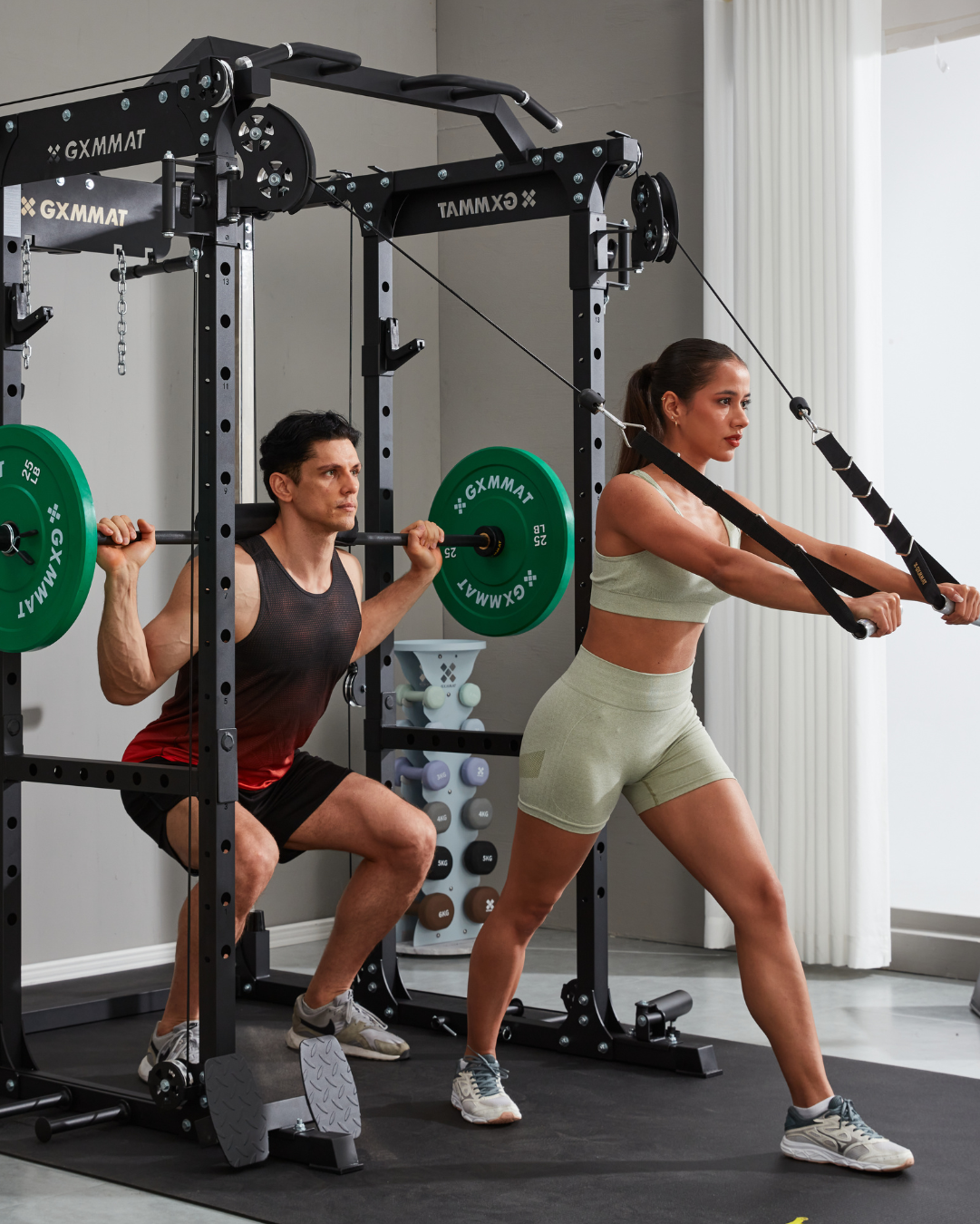
Since you can lean back against the bar without falling over, you can mimic a hack squat. Place your feet about 12 inches in front of your hips. This takes the load off your lower back and isolates the quads. You cannot do this with a free barbell.
2. Seated Overhead Press
Shoulder stability is often the limiting factor in overhead pressing. By removing the need to stabilize the load, you can focus entirely on the deltoid output. Just ensure the bench is positioned so the bar barely clears your nose on the way down.
Common Mistakes to Avoid
The biggest error I see is treating the machine exactly like a free weight. If you try to squat with your heels directly under the bar, the fixed path will force your torso forward, putting massive strain on your lumbar spine.
Another issue is the "false confidence" of the hooks. Even though the bar can be racked at any point, wrist fatigue is real. If your grip fails, you need those bottom safety stoppers set. Don't be the person who gets pinned under the bar because you were too lazy to adjust the safety catch height.
My Training Log: Real Talk
Let's be honest about the user experience. I've spent countless hours in different LA Fitness locations, and the Smith machines vary wildly in maintenance. There is a specific, gritty feeling you get on the older models where the guide rods haven't been oiled in months. It creates a weird friction—a "stutter"—on the eccentric (lowering) phase that can throw off your rhythm.
I also remember the first time I realized the bar weight difference. I loaded up what I thought was 225 lbs (two plates per side), expecting a grind. Instead, it flew up. I realized later that the counter-balance system makes the starting weight significantly lighter than a standard barbell—sometimes as light as 15 lbs. It was a hit to the ego, but a necessary lesson: don't count the plates, trust the tension. Also, the knurling on these bars is usually surprisingly passive (smooth), so if you're sweating, your hands will slide. I always keep liquid chalk in my bag specifically for these machines.
Conclusion
The LA Fitness Smith machine isn't a replacement for a barbell, but it is a powerful tool for hypertrophy and volume training. It allows you to safely push to failure and isolate muscles in ways free weights can't. Stop avoiding it because of gym snobbery. Adjust your feet, check the angle, and get the work done.
Frequently Asked Questions
How much does the bar weigh on an LA Fitness Smith machine?
Unlike a standard 45lb Olympic bar, most LA Fitness Smith machines use a counterbalanced system. This reduces the starting weight of the bar to approximately 15 to 20 lbs, though this can vary slightly by location and machine age.
Which way should I face when squatting on an angled Smith machine?
You should face the direction that allows the bar to travel in line with your natural movement. Generally, for squats, you want the bar to travel slightly backward as you go down? Actually, no—mechanically, you usually face *away* from the slant so the bar travels straight or slightly forward relative to your hips, but the best test is to do a rep with just the bar. If it feels like it's pushing you forward onto your toes, turn around.
Is the Smith machine bad for your joints?
It is only bad for your joints if you force your body into an unnatural position. Because the bar path is fixed, your body must adjust to the machine. If you adjust your foot placement and body angle correctly, it is perfectly safe and effective.