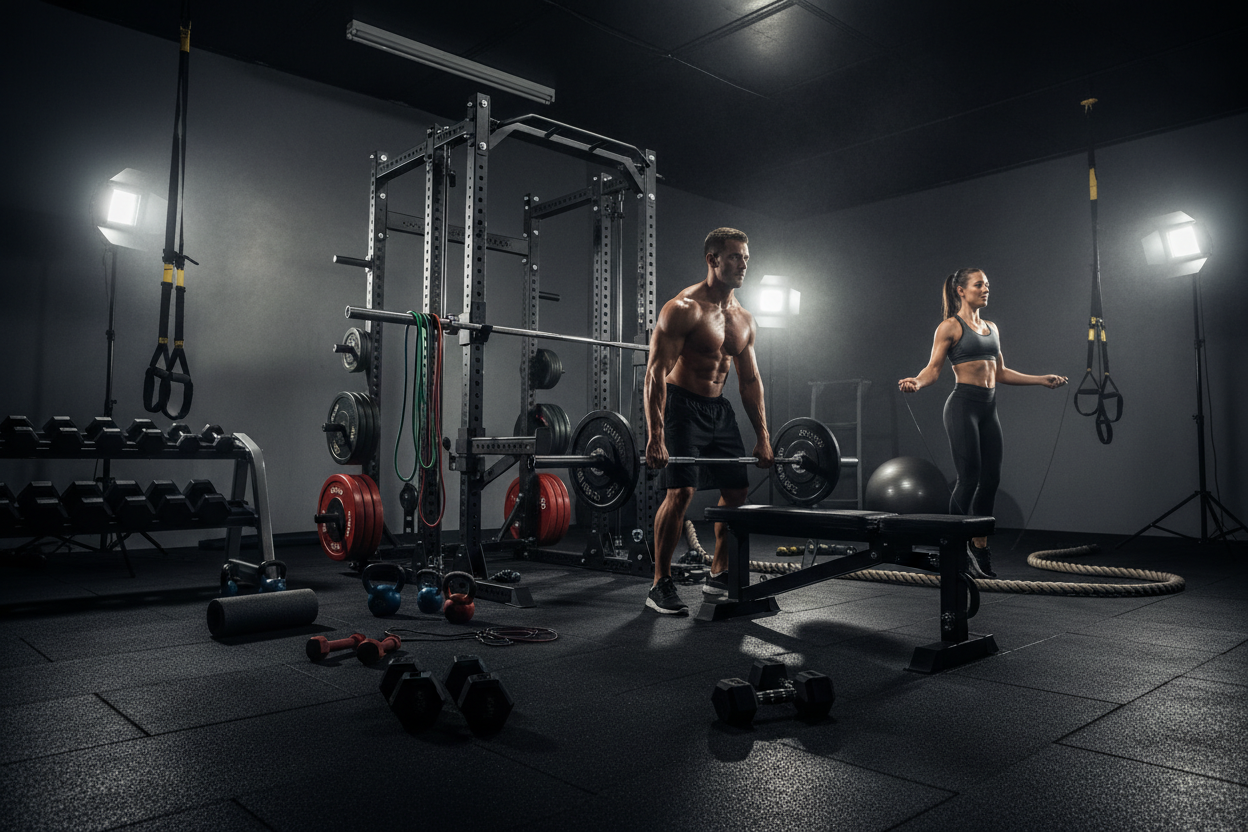
Is the Best All-In-One Home Gym Worth the Hype? The Honest Truth
We have all seen the dream setup: a pristine garage, perfect lighting, and rows of commercial-grade racks. But for most of us, reality is a cramped spare room or a corner of the basement. You don't have space for a squat rack, a dumbbell tree, and a cable crossover. This is where the hunt for the best all-in-one home gym begins.
The promise is seductive. One machine to replace an entire fitness center. But does it actually deliver, or is it just an expensive coat rack in the making? Let’s cut through the marketing noise and look at what actually matters when consolidation is your priority.
Quick Summary: What Defines a Winner?
If you are skimming for the essentials, here is what separates a gimmick from a legitimate training tool.
- Resistance Source: Digital electromagnetic resistance (smooth but requires power) vs. Physical weights (plates/stacks that feel 'real' but take up space).
- The "Wobble" Factor: If the frame isn't at least 11-gauge steel, it will shake during pull-ups. Stability is non-negotiable.
- Pulley Ratio: A 2:1 ratio is standard for functional training; a 1:1 ratio is better for heavy heavy lifting but rare in compact units.
- Footprint Efficiency: The best units offer a vertical storage solution or fold-away arms to reclaim floor space.
Understanding Resistance: Iron vs. Algorithms
When searching for the best all in-one gym, your first decision isn't brand—it's physics. How is the load generated?
The Classic Stack and Plate-Loaded Systems
These are the workhorses. They use gravity. The benefit here is the eccentric loading (the lowering phase of a lift). Gravity doesn't glitch. If you want to build raw strength, plate-loaded lever arms or selectorized stacks are superior.
However, they are heavy. Once you assemble a 400lb unit, it stays there. You need to reinforce your flooring, and you lose the ability to easily repurpose the room.
The Rise of the Digital "Smart" Gym
This category, often marketed as the best all in one trainer, uses electromagnetic resistance. The motor fights you. The massive advantage here is variable resistance modes—chains, eccentric overload, and spotter modes—that are impossible with gravity alone.
The downside? You are renting your hardware. If the company goes under or the server crashes, your expensive wall-mounted unit becomes a mirror. You also miss the tactile "clank" of iron, which, for many lifters, is part of the psychological cue to push harder.
Versatility: The "All-In-One" Lie
Here is the hard truth: no single machine is perfect at everything. The best all in one workout equipment usually compromises on one of the big three lifts: Bench, Squat, or Deadlift.
The Squat Problem
Many all-in-one cable machines lack a true spotting mechanism for heavy squats. If you are lifting solo, you need safety spotter arms. If the machine relies solely on cables, you lose the stabilization benefits of a free barbell squat. Look for a hybrid unit—one that includes a Smith machine or a half-rack component—if leg development is a priority.
Cable Drag and Range of Motion
Cheaper units often suffer from limited cable travel. If you are tall (over 6'0"), you might bottom out the stack during an overhead press. Furthermore, cheap nylon pulleys create friction. This "drag" steals the load from your muscles and puts it on the machine's friction points. Always look for aluminum pulleys with sealed bearings.
My Training Log: Real Talk
I want to share a specific experience I had testing a popular mid-range "all-in-one" functional trainer last year. On paper, it looked perfect. It had the Smith machine, the cables, and the pull-up bar.
But the first time I loaded up the Smith bar for a bench press, I noticed something the spec sheet didn't mention: the pitch of the bar rotation. To un-rack the weight, I had to rotate my wrists back an uncomfortable 30 degrees. It felt unnatural and strained my forearms before I even started the press.
Then there was the cable crossover. When I tried to do low-weight face pulls for a warmup, the carriage kept sticking. I had to use silicone lubricant on the uprights just to get a smooth glide. It’s these unpolished details—the grit in the glide or the awkward wrist angle—that determine if you'll actually use the machine six months from now.
Conclusion
Finding the right equipment isn't about buying the most expensive unit; it's about matching the machine's mechanics to your training style. If you love heavy compounds, get a rack-based hybrid. If you value space and tech, go digital. Just remember that the machine is only a tool; the consistency comes from you.
Frequently Asked Questions
Can an all-in-one gym really build muscle like a commercial gym?
Yes, provided the resistance is sufficient. Muscle fibers respond to tension, regardless of whether that tension comes from a rusty dumbbell or a $3,000 digital trainer. The key is progressive overload—the ability to increase weight or resistance over time.
How much ceiling height do I need?
Most all-in-one units require at least 84 inches (7 feet) of clearance. However, if you plan on doing pull-ups or overhead presses, you should aim for 96 inches (8 feet) to ensure your head doesn't hit the ceiling during the movement.
Is a Smith machine attachment necessary?
It depends on your goals. For hypertrophy (muscle growth) and safety while training alone, a Smith machine is excellent. However, for functional strength and athletic performance, free weight attachments or cable work are generally preferred over the fixed path of a Smith machine.