Is That Universal Weight Machine for Sale Actually a Good Deal?
I have been there. You are scrolling through local listings late at night and you see it: a universal weight machine for sale for less than the price of a decent pair of lifting shoes. It looks like a complete gym in one footprint. You start imagining the gains and the money you will save on that monthly membership fee. But before you rent a U-Haul, we need to talk about the hidden tax on these machines.
Quick Takeaways
- Moving a multi-station gym is a two-person, six-hour job minimum.
- Replacement cables for discontinued models can be nearly impossible to find.
- The footprint is often larger than a full power rack and platform setup.
- If the weight stack does not glide like butter, the guide rods might be permanently pitted.
The Craigslist Trap: Why They Are Always So Cheap
There is a reason you see massive multi-station units listed for pennies on the dollar every single weekend. It is not because the equipment is bad; it is because the owner is moving and they are in a state of absolute panic. I have flipped used gym equipment for long enough to recognize the 'must go by Sunday' desperation. These machines are the pianos of the fitness world—heavy, awkward, and expensive to move.
When you see a universal gym equipment for sale post that looks too good to be true, you are essentially being paid in equity to provide the labor. The seller knows that taking this thing apart is a nightmare. They know that if they do not sell it, they have to pay a junk removal service $200 to haul it away. You are not just buying a machine; you are taking a problem off someone else’s hands. Always negotiate with that in mind.
Don't be fooled by the 'barely used' claim either. A machine that has sat in a humid garage for three years without being touched is often in worse shape than one used daily in a climate-controlled commercial gym. Dust, rust, and dry-rotted upholstery are the silent killers of the cheap universal gym.
The Nightmare of Moving a 600-Pound Cable Monster
You cannot just toss a multi-station machine in the back of a Ford F-150 and call it a day. If you try to move it as one unit, you will bend the frame, and once a 2x3 steel tube is tweaked even a fraction of an inch, the weight stack will never track straight again. You have to strip it down to the skeleton.
This means you need a system. I use a roll of painters tape and a Sharpie. Every time I disconnect a cable, I wrap a piece of tape around the end and the corresponding pulley, numbering them '1-1', '2-2', and so on. If you don't do this, you will be staring at a pile of 15 different cables of slightly different lengths three weeks from now, wondering why the leg extension won't reach the bottom of the stack.
Also, consider the weight stacks. A standard universal machine might have two or three 200-pound stacks. That is 600 pounds of dead weight that needs to be removed plate by plate. If you leave the plates on the guide rods during transport, the vibration from the road will score the rods or, worse, crack the plastic bushings inside the plates. It is a tedious, greasy process that will ruin your favorite t-shirt.
What to Inspect Before You Hand Over Cash
Before you start unbolting anything, you need to do a thorough mechanical audit. Start with the cables. Run your hand (carefully) along the entire length of every cable. You are looking for 'bird-nesting'—where the internal steel wires have snapped and are poking through the nylon coating. If you see this, the cable is a ticking time bomb.
Next, check the guide rods. These are the two vertical poles the weight stack slides on. They should be perfectly smooth. If you see deep pits of rust or if they feel sticky even after a quick wipe, the chrome plating is gone. Replacing these is a massive pain. You should also look for red flags on any weight lifting machine like cracked welds or proprietary plastic cams that are snapped. If a custom-molded plastic part is broken on a 20-year-old machine, you aren't fixing it with duct tape.
Finally, check the weight selector pins. They should slide in and out of every plate effortlessly. If you have to hammer the pin in, the stack is misaligned or the frame is warped. That is an automatic 'no-go' for me. You want to train, not fight the equipment every time you want to change the resistance.
Is It Actually Worth Your Garage Floor Space?
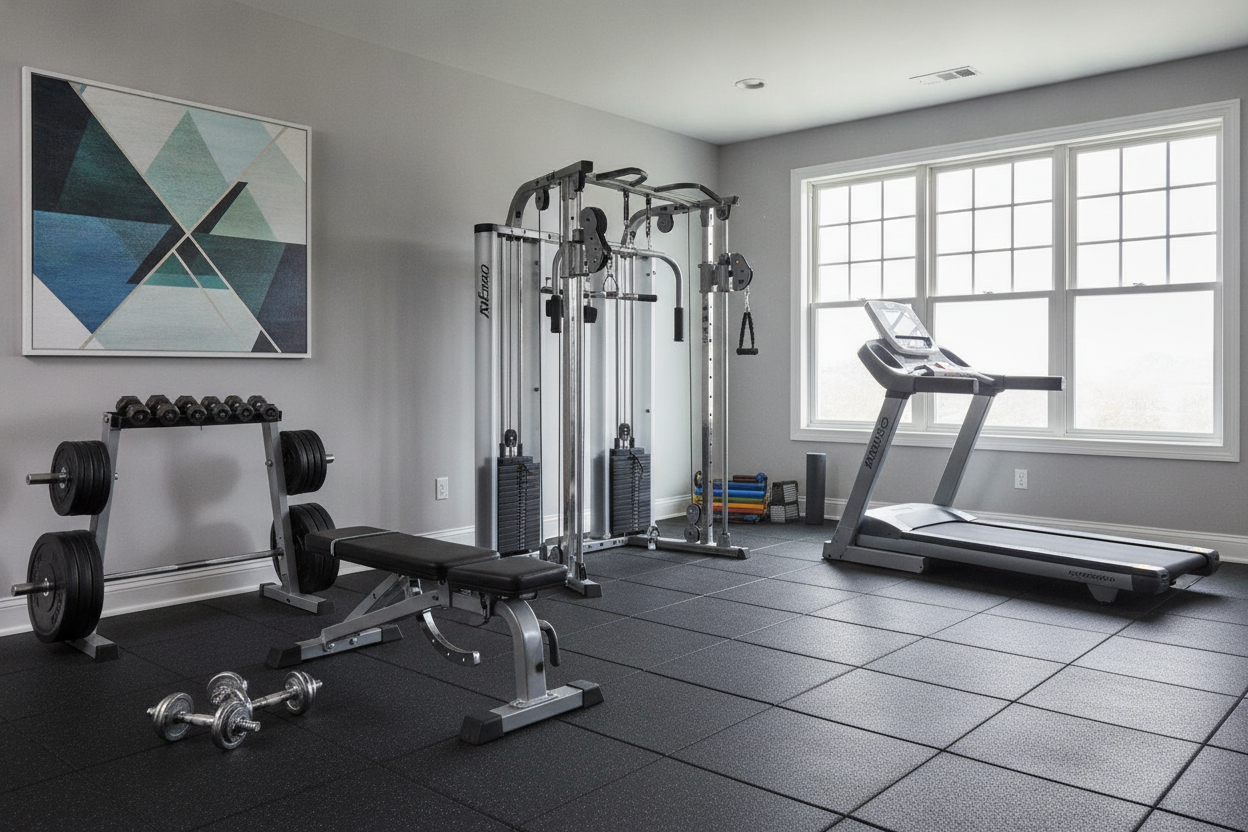
A typical multi-station universal gym requires an 8x8 foot footprint at a minimum, plus 'working space' around it so you don't smash your elbows into the wall during chest flies. That is 64 square feet of your garage. In that same space, I could fit a 3x3 power rack, an Olympic bar, 500 pounds of plates, and a functional trainer.
Think about your training goals. Are you looking for the specific isolation that a cable machine provides, or are you just buying it because it's cheap? Most people find that after the novelty wears off, they only use two of the four stations. If you are only using the lat pulldown and the chest press, you have wasted a massive amount of floor real estate on a leg press and a pec-deck you don't actually like.
If you have a massive basement with room to spare, go for it. But if you are working in a standard two-car garage and you still want to park a vehicle inside, a massive universal machine is usually the wrong move. Versatility is not just about how many exercises the manual says you can do; it is about how much effective training you can get done in the space you have.
When to Walk Away (Even if It's Free)
Free is a very dangerous price. If the upholstery is cracked and peeling, you are looking at $50 to $100 per pad to have a local shop recover them, or a messy DIY job with vinyl tape. If the cables are frayed, a full set of custom-length replacements can easily run you $200. Add in the cost of a truck rental and your own time, and that 'free' machine just cost you $500 and a Saturday.
Walk away if the brand is defunct and the parts are proprietary. Brands like old-school Marcy or certain Sears-era models used unique pulley sizes that you can't just find at a hardware store. If it looks like a rusted relic from a 1980s basement, leave it there. Your time is better spent hunting for a quality used barbell and a set of iron plates.
FAQ
How much ceiling height do I need for a universal machine?
Most home units are between 80 and 84 inches tall. However, you need to account for the top pulley's travel. If your ceiling is exactly 7 feet, you might find that the cable hits the drywall every time you do a lat pulldown.
Can I replace the cables myself?
Yes, if you can find the specs. Many modern companies sell bulk aircraft cable and crimping tools. It is a bit of a learning curve, but it is much cheaper than buying OEM replacements if the company is even still in business.
Are the weight stacks actual weight?
Usually, no. Due to the pulley ratios (often 2:1 or 4:1), a 200-pound stack might only provide 100 pounds of actual resistance. Always check the 'effective resistance' if you are a heavy lifter.