Is Fitness for Older People Safe on a Slippery Living Room Rug?
I have seen it a hundred times. Someone decides to get moving, clears the coffee table, and starts doing lunges in their socks on a Persian rug. It is a recipe for a hip replacement. fitness for older people should not feel like an obstacle course, yet the environment most people start in is exactly that.
- Rugs and hardwood are the primary enemies of balance.
- Socks act like skates on most household surfaces.
- A 6x8 footprint is the minimum space required for safety.
- Dense rubber or high-grip vinyl beats squishy foam every time.
The Living Room Rug Is a Trap
Most home routines die before they ever get off the ground because the environment is hostile. You are trying to focus on your breathing and form, but half your brain is dedicated to not sliding into the TV stand. This is why older adult fitness gets a bad rap for being 'dangerous.' The danger usually is not the movement itself; it is the friction coefficient of your floor.
I once watched my own uncle try to do standing side-leg raises on a polished oak floor. His standing foot started drifting like a slow-motion car crash. If you are constantly micro-adjusting to keep from slipping, you are not building strength—you are just exhausting your stabilizers and praying for the best. Exercising in socks on carpet is just as bad, as the fabric-on-fabric contact creates zero traction when you need it most.
Carpet vs. Hardwood vs. Real Gym Flooring
Hardwood is too slick, and standard residential carpet is too unstable. When you land a foot on carpet, the fibers compress and shift, which is a nightmare for ankles that might already be a bit stiff. You need a surface that offers 'bite.' This is why I tell people to stop using those $15 foam rolls from the big-box stores. They are too light, they bunch up, and they offer zero impact protection for aging joints.
When you choose the best exercise mat for home fitness, you need to look at density. A mat should be heavy enough that it does not move when you kick it. If you can pick it up with two fingers, it is probably going to slide when you put 150 pounds of body weight on it during a transition. Real gym flooring provides a predictable, non-slip surface that lets you focus on the lift, not the floor.
Setting Up a Safe Zone for Older Adults Fitness
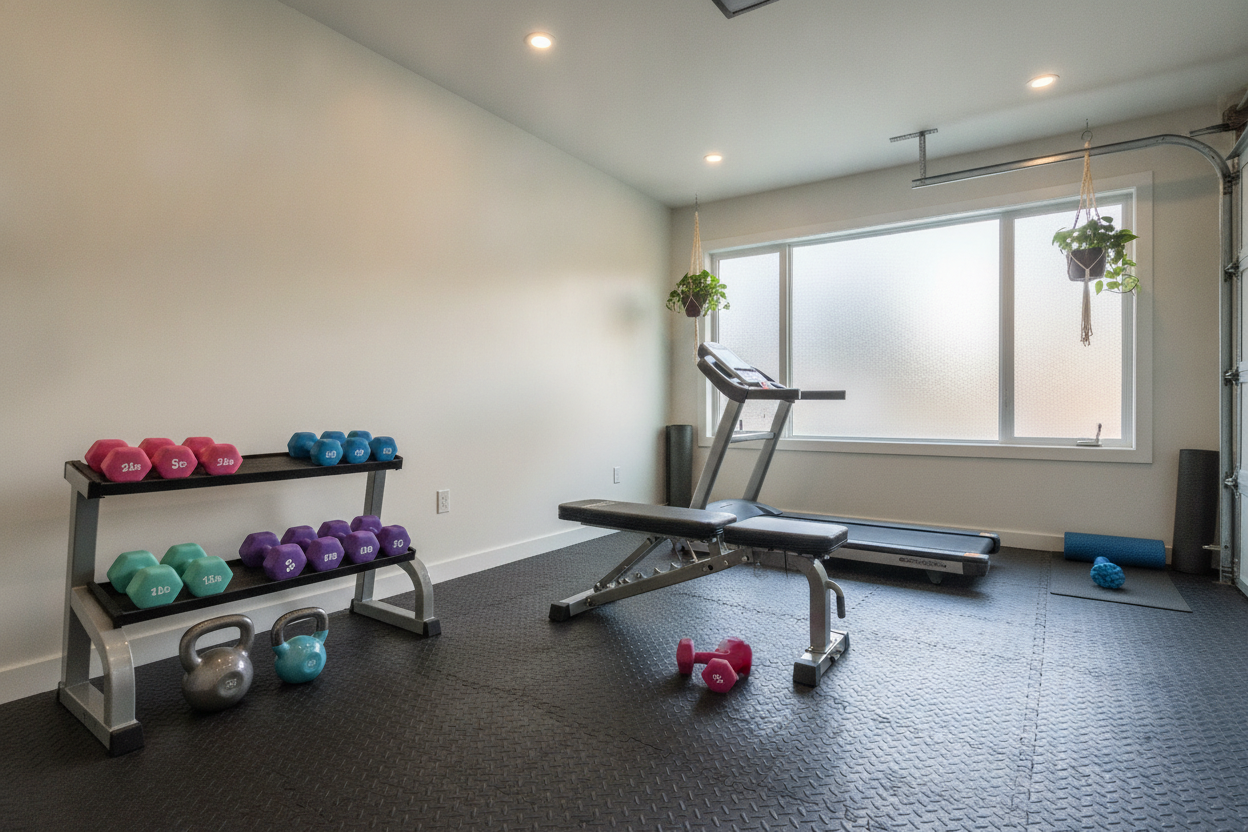
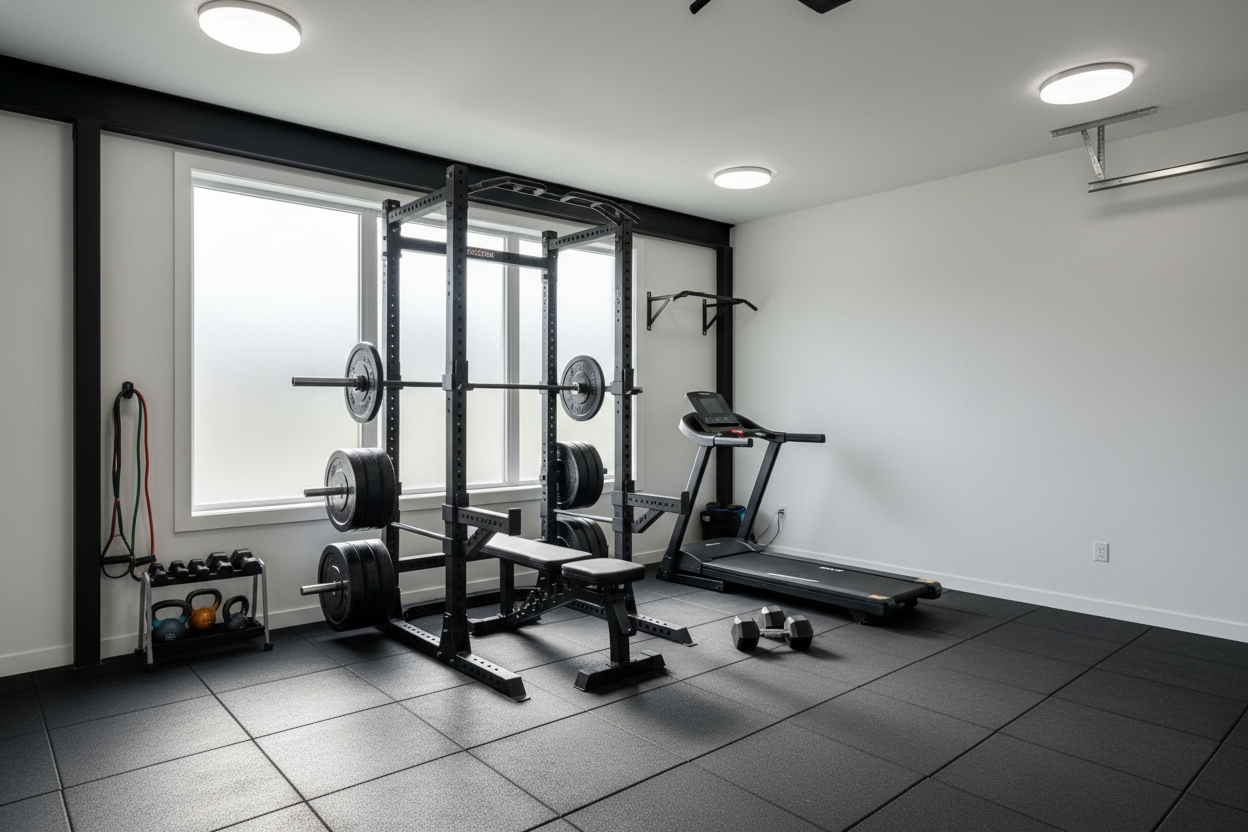
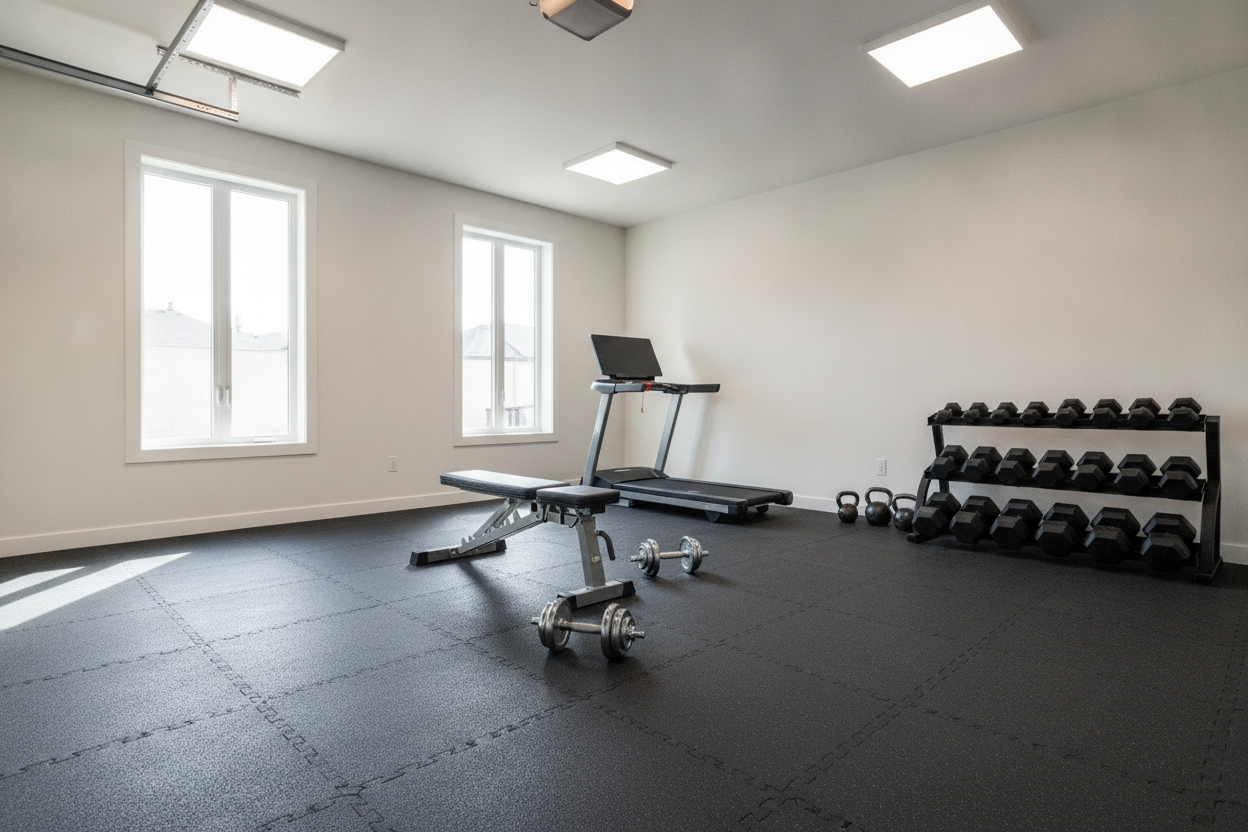
You do not need to renovate your entire house to stay safe. You just need to claim a dedicated 48-square-foot territory. I usually recommend a 6x8ft exercise mat because it allows you to lie down, stretch your arms out, and still have a few inches of safety buffer before you hit the 'danger zone' of the slippery floor.
Investing in a large exercise mat for home gym use is a one-time setup cost that is significantly cheaper than a single physical therapy session. Once that mat is down, it stays down. It creates a psychological 'work zone.' When you step onto that high-traction surface, your brain knows you are on solid ground, and the fear of falling disappears. This allows for much better intensity in your older adults fitness routine.
Three Floor-Based Moves You Can Actually Trust
Once you have a floor you can trust, you can actually exercise elderly people by using the ground as a tool rather than a threat. The floor provides the ultimate feedback for spinal alignment. I am a huge fan of the Deadbug, the Glute Bridge, and Bird-Dogs. I have programmed these for years, and they are exactly the kind of fitness older women actually need to maintain hip and core stability.
The Glute Bridge, for example, is much safer on a dense mat than a bed or a rug. On a mat, your heels can dig in without sliding away. This allows you to actually engage the posterior chain. When I built a small setup for my mother, the first thing we did was move her off the carpet and onto a 7mm thick rubberized surface. Her confidence in her balance doubled in a week simply because the ground stopped moving.
Fix Your Floor, Fix Your Fitness
Fear is the biggest barrier to staying active as we age. If you do not trust the ground beneath you, you will never push yourself hard enough to see real results. You will move tentatively, and tentative movement is where injuries happen. Fix the floor first. Create a space where you can move with 100% confidence, and the rest of the routine will fall into place.
FAQ
Can I just wear sneakers on my rug instead?
Not really. While sneakers give your feet grip, the rug itself can still slide across the hardwood or bunch up under the shoe, creating a tripping hazard. You need the surface itself to be anchored.
How thick should a senior fitness mat be?
Look for at least 6mm to 7mm. Anything thinner does not provide enough cushion for knees or elbows during floor work. Anything much thicker than 10mm can actually feel 'squishy' and make balance harder.
Do these large mats smell like rubber?
High-quality high-density mats are usually made from eco-friendly PVC or treated rubber that has very low odor. Avoid the cheap 'puzzle piece' foam tiles if you want to avoid that chemical smell and the risk of them pulling apart during a workout.