Is Building Muscle No Weights Just a Marketing Scam?
I’ve spent the last decade surrounded by knurled steel and rubber flooring. I know the smell of chalk and the sound of a 45-lb plate hitting a platform better than I know my own backyard. But I get it—sometimes the gym fees spike, or you’re stuck in a hotel room that smells like stale carpet and regret. You start wondering about building muscle no weights because some influencer with a six-pack and a ring light told you it’s easy.
The truth? It’s not easy. In fact, it’s often harder than lifting iron. When you have a barbell, you just add five pounds. When you’re training with nothing, you have to become a master of physics and leverage just to keep your progress from stalling. If you're looking for how to build muscle no equipment, you need to stop looking for 'hacks' and start looking at the biology of tension.
- Tension is King: Your muscles don't have eyes; they only know how hard they are contracting.
- Rep Ranges Matter: If you can do more than 20 reps easily, you're training for endurance, not size.
- Mechanical Disadvantage: To grow, you must make easy movements difficult by changing your body angle.
- Legs are the Barrier: You can build a decent chest with push-ups, but building tree-trunk legs requires serious creativity.
Are You Actually Building Muscle, or Just Sweating?
Most 'no equipment' apps are just high-intensity interval cardio wearing a costume. They have you doing 50 burpees and mountain climbers, getting your heart rate to 170 BPM, and calling it a 'strength workout.' That’s a lie. That’s how you get better at being out of breath, not how you achieve muscle building at home without equipment. Hypertrophy requires a specific type of stimulus that 'sweat-fests' usually ignore.
To actually grow, you need to trigger mechanical tension. This means the muscle fiber is being stretched under a load that it can barely handle. If you're just flailing your arms around for 30 minutes, you aren't building mass. You’re just burning the calories from that morning’s bagel. Real workouts to gain muscle without equipment should feel slow, controlled, and intensely difficult. If it feels like a dance class, it’s not a muscle builder.
I’ve seen guys who can run marathons but can’t do a single strict pull-up. Why? Because they’ve trained for efficiency, not power. Muscle is metabolically expensive; your body doesn't want to build it unless it absolutely has to. You have to convince your nervous system that your current muscle mass is insufficient for the 'threat' you’re putting it under. That threat isn't a high heart rate—it’s high tension.
The Ugly Biology of Building Muscle No Weights
Let’s talk shop about how growth actually happens. There are three main drivers: mechanical tension, metabolic stress, and muscle damage. When you use weights, these are easy to hit. Without them, you have to be smarter. Mechanical tension is the big one. If you want to know how to gain muscle fast without weights, you have to find ways to put 80% of your body weight on a single muscle group.
Metabolic stress is that 'pump' or 'burn' you feel when waste products like lactate build up in the muscle. You can get this with higher rep ranges, but it only works if you’re pushing close to failure. Muscle damage comes from the eccentric (lowering) phase of a movement. This is why I tell people to take four seconds to lower themselves in a push-up. If you’re just dropping to the floor, you’re skipping half the workout.
When people ask about exercises that build muscle without weights, they usually want a list of 20 different movements. You don't need 20. You need five that you can make progressively harder. The biology doesn't care if the resistance comes from a $500 barbell or the literal gravity of the earth. It just cares that the fibers are being recruited and fatigued. This is the core of no weight muscle building: making the simple things feel impossible.
Why Sets of 50 Push-Ups Are a Waste of Time
If you can bang out 50 push-ups in a single set, stop doing them. You’ve moved into the realm of muscular endurance. Your body has become efficient at that movement, and efficiency is the enemy of growth. To keep build muscles without weights, you have to increase the intensity, not just the volume. Chasing massive rep counts is a trap that leads to a plateau that lasts for years.
Instead of 50 standard push-ups, try five archer push-ups or three one-armed push-ups against a wall. The goal is to stay in that 8-12 rep range where failure is imminent. If you’re wondering how to get muscles at home without equipment, the answer is usually 'do harder variations, not more reps.' Once you can do 15 clean reps of any bodyweight exercise, it’s time to change the leverage.
How to Make Your Body Heavier (Without Gaining Fat)
Since we aren't adding plates, we have to use physics. This is called mechanical disadvantage. Think about a plank. Easy, right? Now move your hands six inches further in front of your head. Suddenly, your core is screaming. That’s progressive overload without iron. This is the secret to how to build muscle without weights at home.
You can also use deficit ranges of motion. Put your hands on two stacks of books for push-ups so your chest can go deeper than the floor. That extra two inches of stretch creates significantly more muscle damage and tension. Unilateral training is your other best friend. Doing a squat on one leg (a pistol squat) immediately doubles the load on that limb. It’s the closest you’ll get to a heavy barbell squat without actually having one.
Tempo is the final lever. Most people rush through their reps because it’s easier. If you want to know how to gain muscle at home without weights, try doing a pull-up with a 3-second hold at the top and a 5-second descent. You’ll realize very quickly that your body weight is more than enough to crush you if you stop using momentum. This is how you turn 'light' bodyweight moves into heavy hitters.
The Elephant in the Room: Growing Your Legs
This is where most 'no equipment' programs fail miserably. Your legs are incredibly strong because they carry you around all day. Doing 100 air squats is just cardio. If you are serious about building your legs at home without weights, you have to embrace the single-leg life. There is no other way to create enough tension to force the quads and glutes to grow.
Pistol squats, shrimp squats, and Bulgarian split squats (using a chair or your couch) are the gold standard. To truly strengthen thigh muscles at home without heavy weights, you also need to address the hamstrings. Nordic curls—where you anchor your heels under a couch and slowly lower your torso to the floor—are arguably harder than heavy leg curls at the gym. They are the ultimate tool for muscle building at home without equipment.
For the 'how to build muscle at home without equipment for females' crowd, the same rules apply. Don't fall for the 'toning' myth with 3-lb pink dumbbells. Your glutes are the largest muscle group in your body; they need a challenge. Step-ups onto a sturdy chair or high-volume glute bridges with a 10-second squeeze at the top will do more for your physique than any 'booty-blast' cardio video on YouTube.
The Hard Truth: When You Actually Need to Buy Iron
I’ll be honest: there is a ceiling to building muscles without equipment. You can get very fit, very shredded, and reasonably muscular. But if you want to look like a pro bodybuilder or a powerlifter, you eventually need external load. There’s a point where your own body weight isn't enough to trigger further hypertrophy without doing circus-level acrobatics that risk your joints.
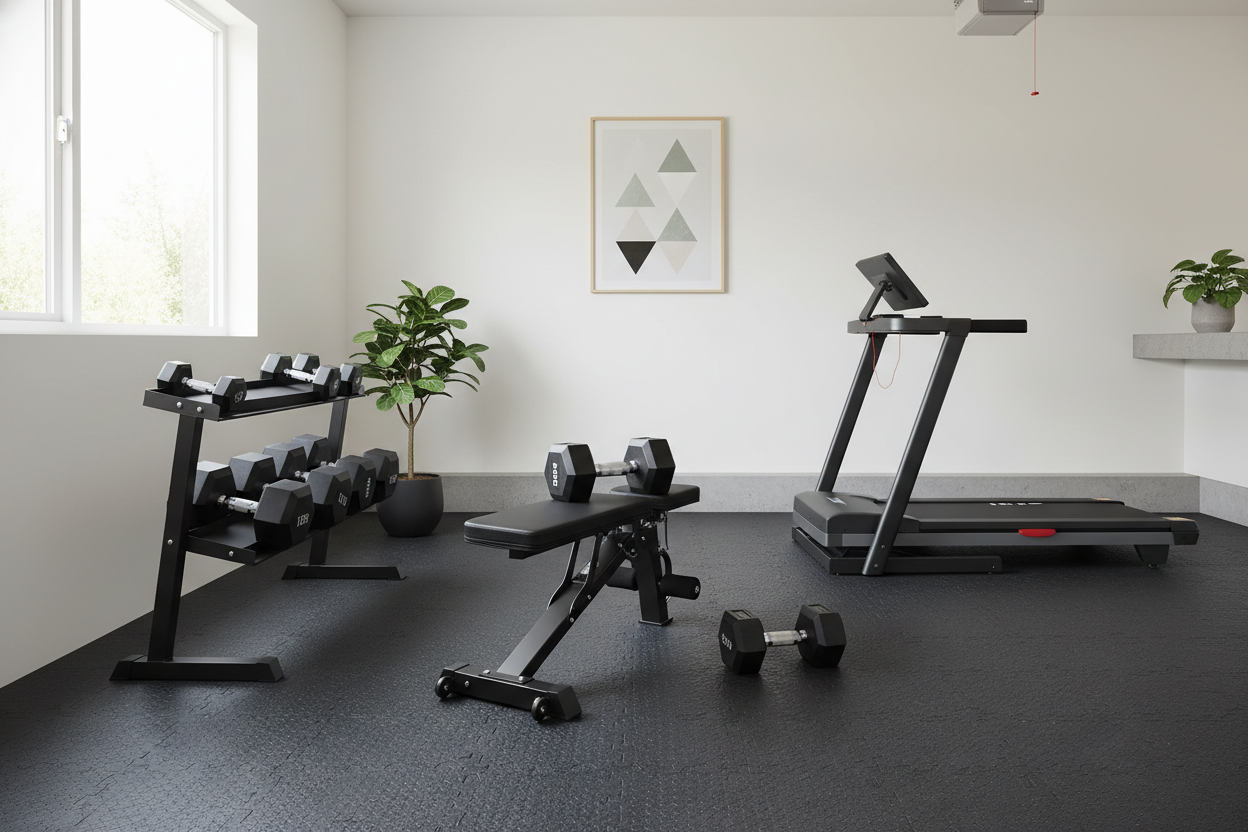
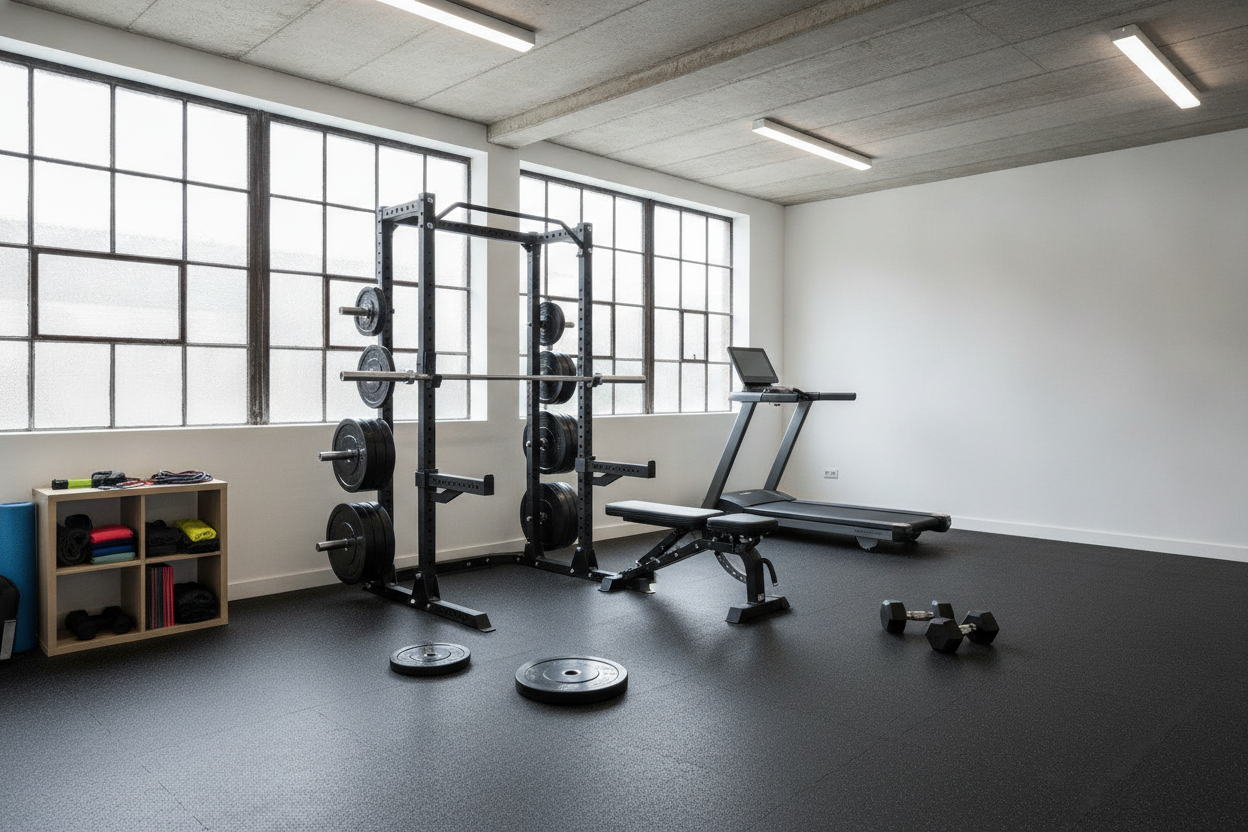
When you hit that wall, you don't need a commercial gym membership. You just need the basics. The first thing I always recommend is a solid adjustable weight bench. It opens up a world of angles for your chest and back that you simply can't get on the floor. Once you have that, you can start looking at a power rack and weight bench package to safely handle the kind of weight that builds real-world strength.
Transitioning from bodyweight to weights is a milestone, not a failure of your bodyweight routine. It means you’ve become too strong for your own frame to challenge you. That’s a win. Use workouts that build muscle without weights to build your foundation, but don't be afraid to invest in some iron when the time comes to break through a plateau.
Personal Experience: My Month of Minimalist Torture
A few years ago, I moved across the country and my gym equipment was stuck in a shipping container for six weeks. I thought I’d just 'maintain' with some push-ups and lunges. I was wrong. I tried to do my usual high-volume routine and I actually lost size because I wasn't pushing the intensity. I was just doing 'busy work.'
It wasn't until I started doing handstand push-ups against the wall and Bulgarian split squats with a slow tempo that I felt my muscles actually working again. The mistake I made—and the one I see everyone make—is thinking that more reps equals more growth. It doesn't. I had to learn to love the struggle of a 10-rep set of something incredibly difficult rather than the 'burn' of 100 easy reps. If you want to know how to build muscle no equipment, learn from my failure: make it harder, not longer.
FAQ
Can you really build muscle with zero equipment?
Yes, but you have to be disciplined about progressive overload. You can't just do the same workout every day. You have to constantly find harder variations of the movements to keep your muscles guessing.
How long does it take to see results?
Just like with weights, you’ll see neurological changes (strength) in 2-4 weeks, but actual muscle tissue growth takes 8-12 weeks of consistent training and proper nutrition. You still need a caloric surplus to grow.
What is the best bodyweight exercise for back growth?
The pull-up is the undisputed king. If you don't have a bar, look into 'inverted rows' using a sturdy table. Without some form of pulling movement, your back development will always lag behind your chest.
Is bodyweight training better for your joints?
Not necessarily. Doing 500 reps of a movement can cause overuse injuries just as easily as a heavy 1-rep max can cause an acute injury. Form is everything, regardless of whether you’re holding a dumbbell or not.