Cancel the App: Best At Home Workout Programs for Beginners
I remember staring at my credit card statement last year, seeing a $19.99 charge for a fitness app I hadn't opened in three weeks. It is a classic trap. We tell ourselves that the subscription is the commitment, but the best at home workout programs for beginners don't live behind a paywall or a shiny UI. They live in the sweat you leave on the floor.
Real training is boring, repetitive, and incredibly effective. If you are waiting for a digital trainer to shout 'you got this' through a tiny speaker, you are already losing. The most successful home gym owners I know started with a notebook and a clear floor space, not a login screen.
Quick Takeaways
- Apps often distract you from learning proper body mechanics.
- The best home workout programs for beginners focus on three core movements: squat, push, and pull.
- Manual tracking in a notebook beats automated app tracking for psychological 'buy-in.'
- A dedicated 6x8 ft space is the only 'equipment' you truly need to start.
Stop Paying for Digital Motivation
Buying a subscription is easy; moving your body is hard. Companies bank on the fact that you will pay for the feeling of being 'someone who works out' without actually doing the work. This is 'fitness theater.' Beginners often think they need a high-production video to show them how to move, but that constant screen-watching ruins your focus.
When you are looking at a screen, you aren't looking at your form. You aren't feeling your heels drive into the floor or your core bracing. You are just mimicking a person in a studio. Real progress comes from internalizing the movement, not following a cursor. Save that twenty bucks a month and put it toward a decent pair of shoes or a kettlebell.
Why Your Phone is a Terrible Training Partner
Your phone is a distraction machine disguised as a coach. You finish a set of squats, pick up the phone to log the reps, and suddenly you are three minutes deep into an Instagram reel. Your heart rate drops, your focus evaporates, and a twenty-minute session stretches into an hour of scrolling.
The best at home workout programs for beginners are the ones where the phone stays in the other room. Follow-along videos dictate a pace that might be too fast for your current form or too slow for your recovery. When you control the tempo with a simple paper list, you learn to listen to your body instead of a pre-recorded script.
What the Best Home Workout Programs for Beginners Actually Need
You don't need sixty different exercises. You need four. A squat, a push-up (or a variation), a hinge, and a plank. If you can't do these with perfect form using just your body weight, adding a 'pro' app subscription won't help you. The goal for any novice should be linear progression—doing slightly more this week than you did last week.
Grab a cheap spiral notebook. Write down: Squats 3x10, Push-ups 3x10, Lunges 3x10. If you hit those numbers, write '11' for next time. This manual tracking creates a physical record of your growth that an app can't replicate. It is honest, it is raw, and it doesn't require a Wi-Fi signal to function.
Creating Your Distraction-Free Lifting Zone
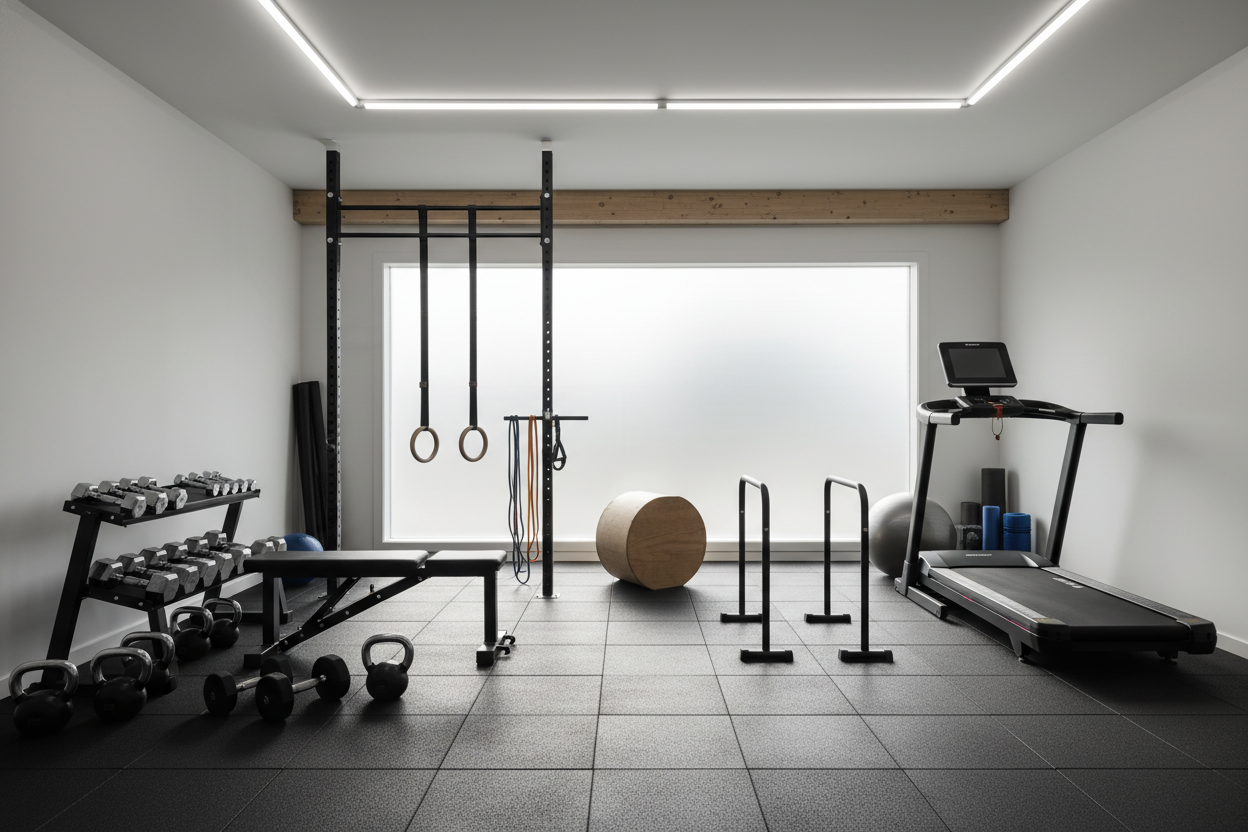
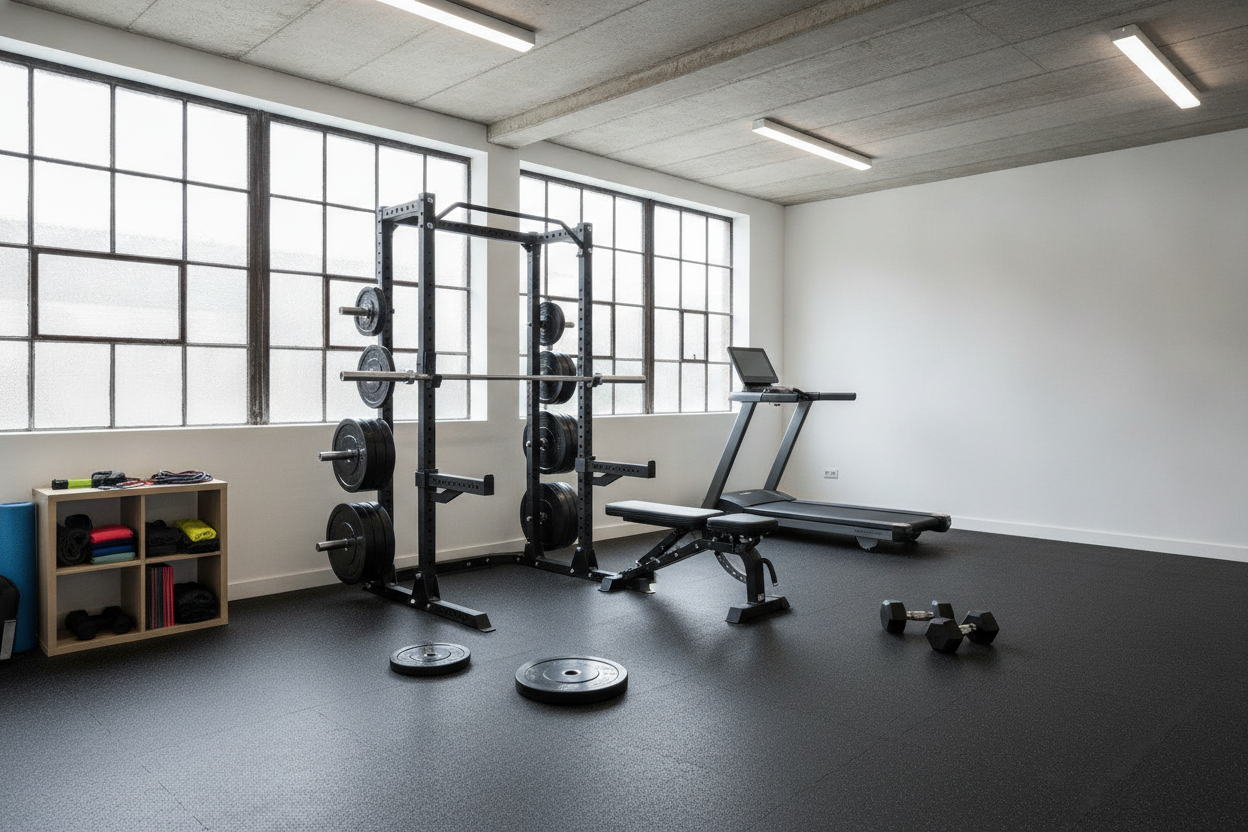
Your brain needs a signal that it's time to work. If you try to exercise in the same spot where you watch TV, you will fail. You need to carve out a 'no-phone zone.' This doesn't require a converted garage; a simple corner of the living room will do, provided you have the right foundation.
Ditch the thin, slippery yoga mats that bunch up when you move. Investing in a large exercise mat for home gym use is the only physical gear that actually matters on day one. It protects your joints, keeps you from sliding on hardwood, and visually anchors your workout space. Once you step on that rubber, the rest of the house disappears.
The Pen-and-Paper Routine You Can Start Today
Here is the 'secret' routine: 3 sets of Bodyweight Squats, 3 sets of Incline Push-ups (use your couch), and 3 sets of Reverse Lunges. Do this three times a week. That is it. No 'shred' programs, no 'summer body' challenges. Just consistent, repeatable movement.
To do this right, you need enough room to move without fear of kicking a coffee table. On a 6x8ft exercise mat yoga mat, you have the exact footprint needed for full-range lunges and sprawling out for core work. It is enough space to be effective without requiring a dedicated room. Write the routine on a Post-it note, stick it to the wall, and get to work.
Personal Experience: The Notebook Shift
I spent years chasing the latest fitness tech. I had the heart rate monitors, the $30-a-month subscriptions, and the 'smart' scales. I was busy, but I wasn't getting stronger. My 'aha' moment came when my internet went out for two days. I had to write my workout on a scrap of cardboard and use a kitchen timer. I had the best workout of my life because I wasn't waiting for a video to load or checking my 'stats.' I just lifted. Now, my home gym is 90% iron and 10% paper. I've never been stronger.
FAQ
Do I need a mirror to check my form?
It helps, but it is not mandatory. It is better to film yourself with your phone (on airplane mode!) and review it between sets. This teaches you what a 'good' rep feels like versus what it looks like.
How do I know if I'm progressing without an app?
The numbers don't lie. If you did 8 push-ups on Monday and 9 on Wednesday, you are progressing. If the movement feels 'easier' or 'snappier,' you are progressing. You don't need an algorithm to tell you that.
What if I don't have enough space?
If you can lie down flat and reach your arms over your head, you have enough space. A 6x8 ft area is the gold standard for home workouts because it accommodates almost every bodyweight and dumbbell movement safely.