I Quit the Standard 'Female Fitness Woman Workout' Routine
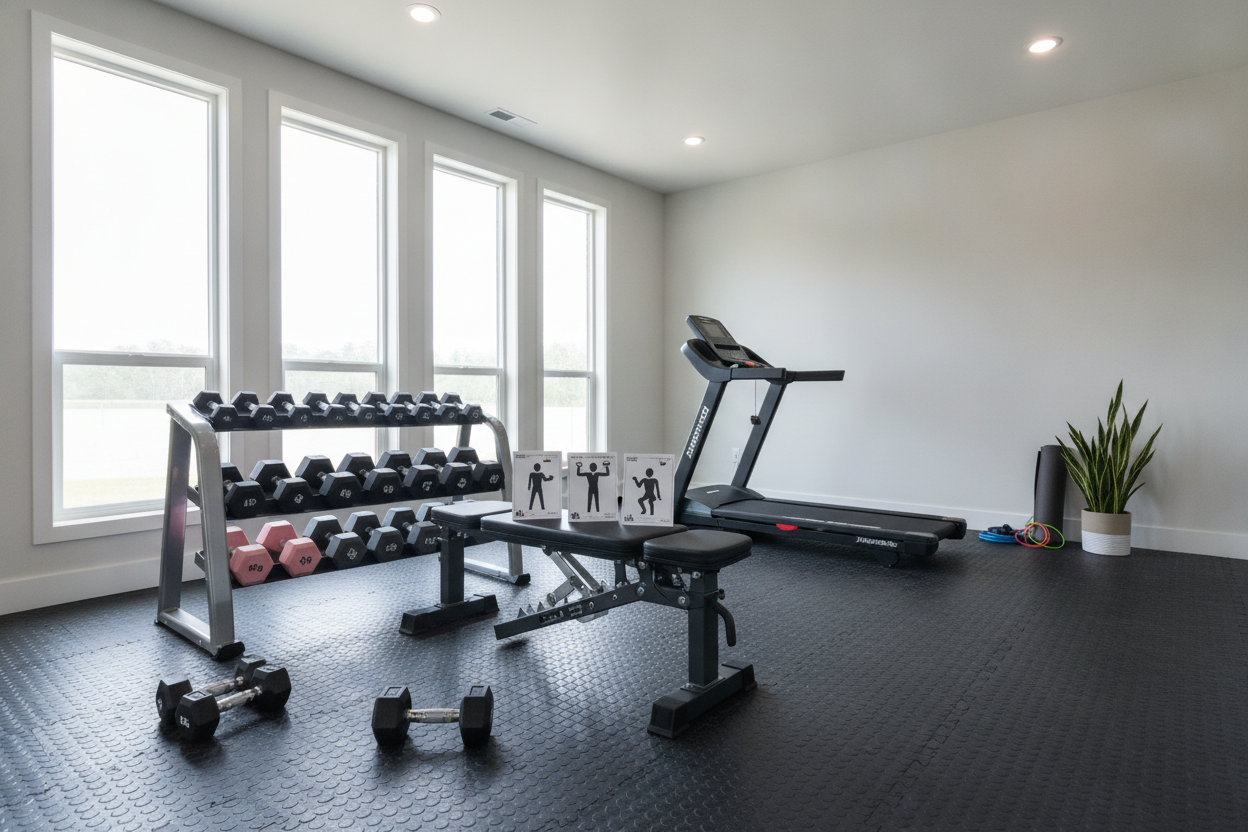
I remember staring at a pair of pink 3-pound dumbbells and wondering why I was doing 50 reps of kickbacks. I spent years following every female fitness woman workout I could find on social media, sweating buckets but seeing zero actual muscle definition. It was exhausting, boring, and a total waste of time. My garage gym was eventually born out of a refusal to pay for a commercial membership just to be funneled into the 'women's section' where the equipment topped out at 15 lbs.
- Marketing 'toning' routines are often just high-rep cardio in disguise.
- Real strength comes from compound movements and progressive overload, not variety.
- You can build a professional-grade physique in a 6x8 foot space.
- Rest days are as important as the heavy triples.
The Illusion of 'Women-Specific' Training
The fitness industry has a massive problem with how it talks to women. We are sold this idea that if we touch a barbell over 45 lbs, we will wake up looking like a pro bodybuilder against our will. It’s a lie designed to sell memberships to group classes that never change. Most 'women-specific' routines are built around the idea of 'toning'—a word that doesn't actually exist in exercise science. You either build muscle or you lose fat. Usually, these routines focus on low-weight, high-rep circuits that leave you sweaty but stagnant.
I fell for it for three years. I did the 'female fitness woman workout' plans that promised a 'long, lean look' but just left me with nagging shoulder pain and a metabolism that felt like it was stuck in first gear. When you lift light weights for dozens of reps, you aren't challenging your central nervous system or your muscle fibers enough to create real change. You're just doing expensive calisthenics. The industry wants you to stay in that middle ground because it keeps you coming back for the next 'flavor of the month' routine.
Why I Stopped Following the Script
My breaking point happened on a Tuesday morning in a crowded commercial gym. I was waiting for a pair of 12-lb dumbbells while a group class next to me did burpees to the beat of a pop song. I realized I hadn't added a single pound to my lifts in six months. I was following a female fitness women workout guide from a popular influencer that had me doing 45 minutes of 'glute activation' before I even touched a weight. I was tired, but I wasn't strong.
I realized that the physiology of muscle growth doesn't care about your gender. A squat is a squat. A deadlift is a deadlift. The reason most women don't see the results they want from these 'scripted' routines is that they lack intensity. I stopped chasing the 'burn' and started chasing the numbers on the bar. I traded the 100-rep air squat challenges for five sets of five at a weight that actually made me nervous. The mental shift was harder than the physical one, but it was the only way out of the plateau.
The Turning Point: Claiming My Own Space
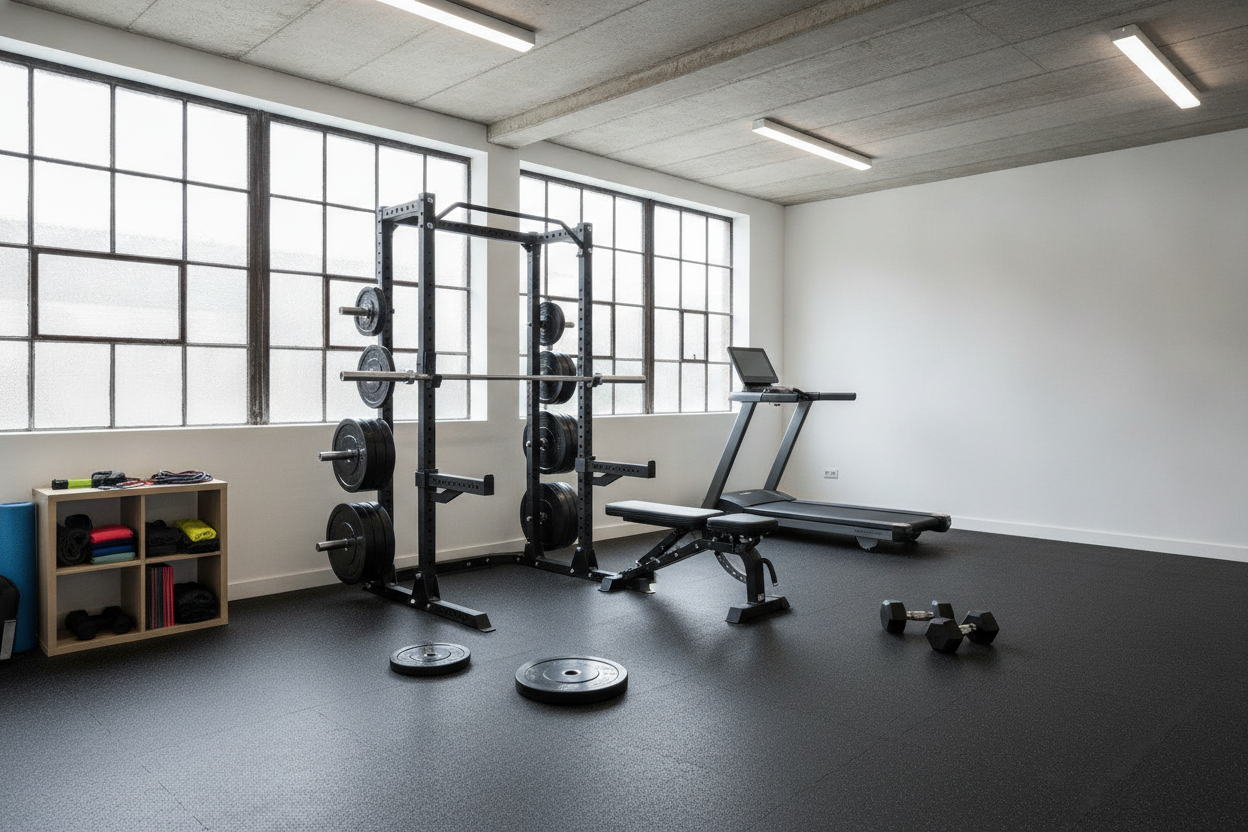
I stopped trying to fit into the commercial gym culture and moved into my garage. The first thing I did was clear out a dusty corner and realize that if I was going to pull 225 lbs off the floor, I couldn't do it on bare concrete or those cheap foam puzzle tiles that slide around the moment you sweat. Investing in high-density gym flooring for home workout was the first step to feeling comfortable lifting heavy deadlifts without damaging the house or my joints. Having a dedicated 6x8 space meant I didn't have to negotiate for a squat rack.
In my own space, the pressure to look 'graceful' while working out vanished. I could grunt, I could use chalk, and I could fail a rep without feeling like the entire gym was watching. This is where the real progress happened. When you have a solid foundation under your feet, you stop worrying about stability and start focusing on power. I stopped doing those 'female fitness women workout' circuits and started treating my training like an athlete would. I tracked my rest periods with a stopwatch and my lifts in a notebook. No fluff, just iron.
Ditching the Gadgets for Real Iron
You don't need vibrating platforms, pastel-colored sliders, or thigh masters. Those are gadgets designed to take up space and make you feel like you're doing something new. If you want to actually change your body composition, you need a barbell, a rack, and a bench. I wasted so much money on 'home gym kits' that were basically just rubber bands and plastic. Now, I stick to gear that has a 500-lb+ weight capacity and steel construction. If you're looking for the specifics on what actually holds up under daily abuse, check out this guide on the top home fitness machines and equipment. A solid power rack is worth ten 'all-in-one' home machines.
Building a Foundation That Actually Works
The biggest change I made was moving from daily, exhausting circuits to a three-day-a-week heavy lifting split. I focused on the 'Big Four': Squat, Bench, Deadlift, and Overhead Press. On my off days, I walked or did light mobility work. I stopped trying to 'crush' myself every single day. Instead, I focused on adding 2.5 to 5 lbs to the bar every week. This is progressive overload, and it is the only thing that actually works long-term.
I won't lie—I made mistakes. I initially bought a cheap, 1-inch standard bar that bent the first time I loaded 150 lbs on it. I also tried to lift too heavy too fast without checking my form, which led to a week of lower back stiffness. But those mistakes taught me more than any 'female fitness woman workout' PDF ever did. If you're tired of the generic plans, you can browse the workout hub to find a plan that actually uses structured, progressive lifting. Stop exercising to lose weight and start training to get strong. The rest will follow.
Will lifting heavy make me look like a man?
No. Women don't have the testosterone levels to accidentally build massive muscle mass. Lifting heavy will give you the 'firm' look that most people try (and fail) to get through endless cardio. It builds the structure that makes you look athletic.
How much space do I really need for a home gym?
You can do 90% of a professional program in a 6x8 foot area. As long as you have enough vertical clearance for an overhead press and enough floor space for a standard 7-foot barbell, you are good to go.
What if I can't afford a full power rack yet?
Start with a pair of adjustable dumbbells or a heavy kettlebell. You can still perform squats, lunges, and presses. The goal is to reach a point where the weight is heavy enough that the last two reps of a set are genuinely difficult to finish.