Is an Exercise Mat XL Actually Worth the Space? The Honest Truth
You know the feeling. You are in the middle of a burpee or a sprawling yoga flow, and suddenly your hand lands on the cold, hard floor while your feet are still on the mat. It breaks your focus. It ruins your rhythm. Most standard mats are designed for a very static, linear style of training that simply doesn't match how modern athletes move.
If you are building a home gym or just trying to protect your living room carpet, upgrading to an exercise mat xl is rarely a regret. It isn't just about covering more floor area; it is about changing the psychology of your workout. When you aren't subconsciously worried about slipping off the edge, you move with more intent and intensity.
Key Takeaways: Why Go Big?
- Unrestricted Movement: Eliminates the need to reposition during lateral movements, plyometrics, or multi-directional flows.
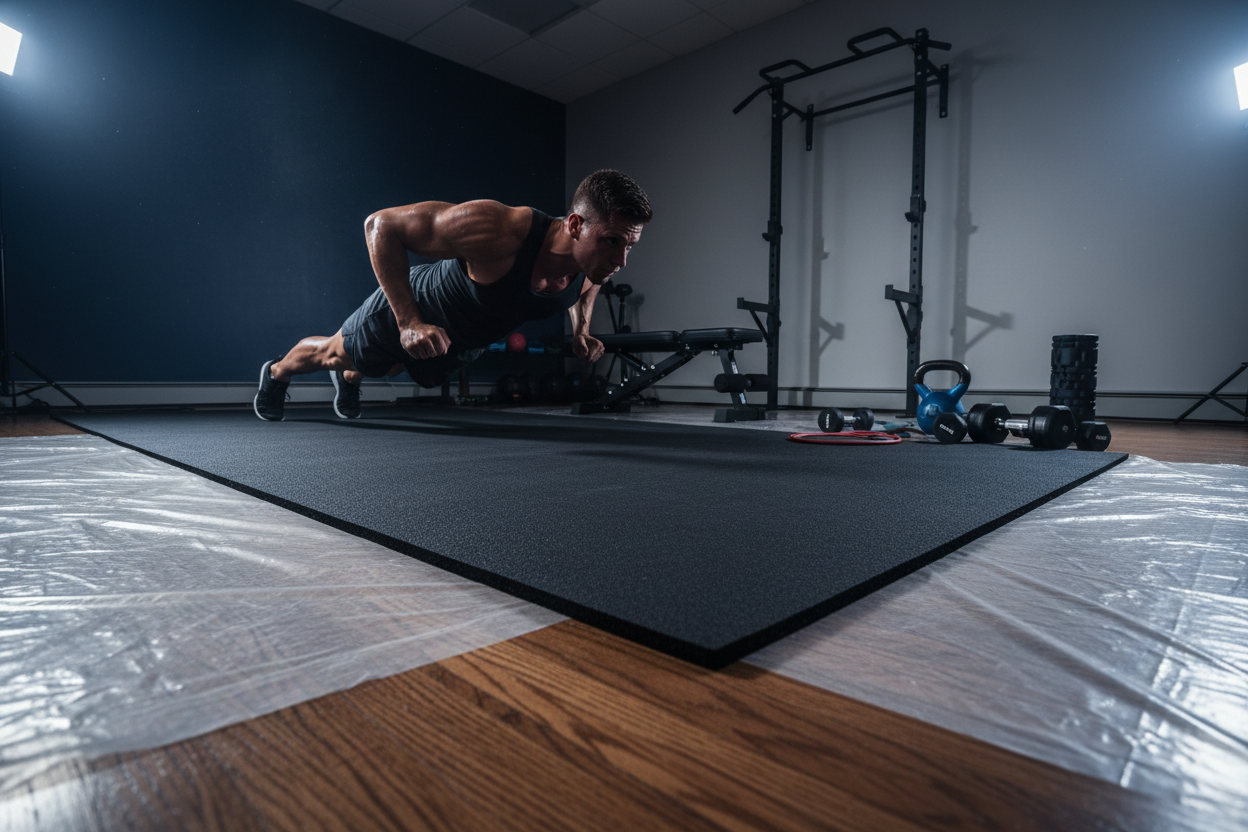
- Floor Protection: An XL surface acts as a barrier for heavy dumbbells and kettlebells, preventing dents in hardwood or tile.
- Joint Preservation: High-density XL mats often provide better shock absorption for knees and wrists during high-impact cardio.
- Shoe Compatibility: Unlike standard yoga mats, a quality fitness mat xl is designed to withstand the friction of cross-training shoes.
The Psychology of Space: Why Standard Mats Fail
Standard mats are typically 24 inches wide. That is barely wider than the average person's shoulders. When you are doing lateral lunges or skaters, a standard mat forces you to modify your form to stay "in bounds."
An xl workout mat—usually starting at 4 feet by 6 feet—removes those boundaries. This creates a designated "training zone." This mental shift is crucial. When you step onto a large mat, your brain switches to work mode. You have room to sprawl, jump, and fail safely.
Material Matters: It’s Not Just a Big Yoga Mat
A common mistake is thinking an XL mat is just a larger version of your spongy yoga mat. It isn't. If you try to do mountain climbers on a soft, open-cell foam mat, it will shred under your sneakers within a month.
High-Density PVC vs. Rubber
For most home gyms, high-density PVC is the gold standard. It allows you to wear shoes without tearing the surface. It provides stability so you don't sink into the floor during a heavy squat. Rubber is excellent for grip, but it can be harder to clean and often carries a strong scent that lingers in small rooms.
Installation and Floor Compatibility
Before you buy a fitness mat xl, check your subfloor. If you are putting this over high-pile carpet, you need a thicker, heavier mat to prevent it from "walking" or bunching up while you move.
On hardwood or tile, the grip on the underside is more important than the texture on top. You need a mat that effectively suctions to the ground. Nothing causes an injury faster than a mat sliding out from under you during a broad jump.
My Personal Experience with exercise mat xl
I want to be real about the transition to an oversized mat because it wasn't all perfect initially. I bought a 6x4 foot high-density mat for my garage gym last winter. The marketing photos always show these mats laying perfectly flat the second they are unrolled. That is a lie.
When I first unboxed mine, the corners curled up aggressively because it had been rolled tight in a warehouse for months. I spent the first three days tripping over the edges. I actually had to use my 45lb plates to weigh down the corners for a full 48 hours before it finally relaxed.
Also, nobody warns you about the "break-in" period for grip. The first time I did a downward dog, my hands started sliding slowly forward because of the thin, oily film left over from the manufacturing process. I had to scrub the whole thing down with a vinegar-water solution before it felt tacky enough for plyometrics. But once that film was gone? I could never go back to a skinny strip of foam again.
Conclusion
Investing in an exercise mat xl is an investment in your joints and your floors. It stops you from training tentatively and allows you to push your limits without fear of slipping or running out of room. Measure your space, choose a high-density material that can handle sneakers, and give yourself the room you need to actually move.
Frequently Asked Questions
Can I wear shoes on an XL exercise mat?
Yes, provided you choose a mat designed for cardio or HIIT. Look for high-density PVC or rubber mats. Avoid TPE or standard yoga foam, as the friction from shoe tread will tear the surface quickly.
How do I clean a large fitness mat?
Because you can't throw an xl workout mat in the washing machine, use a spray bottle with a mix of water and a few drops of mild dish soap. Wipe it down with a microfiber cloth. Avoid harsh chemicals like bleach, which can degrade the UV coating and make the mat brittle.
Will an XL mat protect my carpet from sweat?
Absolutely. Most XL mats are closed-cell, meaning they do not absorb moisture. Sweat pools on top rather than soaking through to your carpet or hardwood, preventing mold growth and odors in your flooring.