Is an Automatic Workout Machine Worth the Hype? The Honest Truth
Walk into a modern home gym, and you might notice something missing: the plates. The clanking iron and towering racks are being replaced by sleek, wall-mounted units or compact platforms. We are witnessing the rise of the **automatic workout machine**, a piece of tech that promises to replace an entire room of equipment with a single, intelligent motor.
But for those of us raised on barbell squats and rusty dumbbells, this shift feels strange. Can a computer really replicate the feeling of a heavy deadlift? Is the resistance actually effective, or is it just a gimmicky new weight machine designed to sell subscriptions?
I’ve spent years lifting heavy iron, but recently I’ve put these digital systems to the test. Here is the breakdown of how they work, why they are different, and whether you should actually buy one.
Key Takeaways
- Algorithm-Based Resistance: Unlike gravity, these machines use electromagnetic motors to generate tension, allowing for consistent load throughout the movement.
- Built-in Safety: The defining feature of a digital bench press or squat rack is the automatic spotting capability, eliminating the need for a human spotter.
- Variable Loading: These systems can instantly change weight during a rep (eccentric overloading), a feat impossible with standard iron.
- Space Efficiency: A digital weight gym replaces roughly 200+ lbs of plates and a power rack with a footprint smaller than a yoga mat.
How Do Digital Weights Work?
To understand the value here, you have to understand the mechanism. When people ask, "how do digital weights work?" or "how does digital weight work?", they are usually asking about the source of the tension.
In a traditional gym, gravity is the boss. A 45lb plate pulls down with 45lbs of force. However, an electromagnetic weight machine uses a digital engine to pull back against you. The computer controls the torque of the motor to simulate weight.
The "Virtual Weights" Difference
Because the resistance is generated by a motor, it eliminates momentum. With a standard dumbbell, you can swing the weight up using inertia. With a digital weight system, the moment you stop applying force, the weight stops moving. This creates a relentless tension that often makes virtual weights feel 15-20% heavier than their analog counterparts.
The Evolution: Digital Bench Press and Squat Machines
The biggest hesitation for serious lifters is usually the big three lifts: bench, squat, and deadlift. Can a machine handle them?
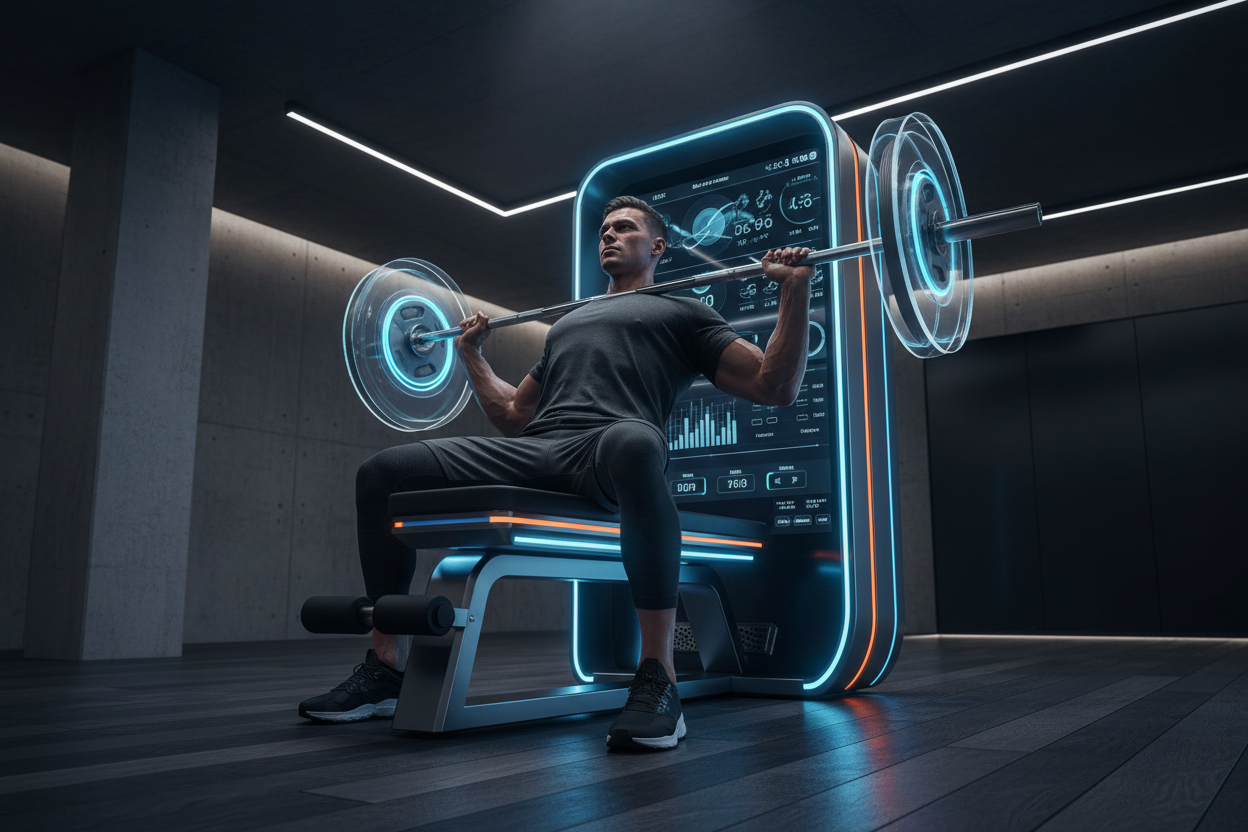
A digital bench press setup typically involves a bar attached to cables. The "magic" happens during failure. If the machine detects you are struggling at the bottom of a rep, it can automatically deload the weight by 10lbs to help you finish, acting as an invisible spotter. This allows you to train to absolute failure safely while alone.
Similarly, a digital squat machine allows you to get under a heavy load without the fear of getting crushed. If your upward velocity drops below a certain threshold, the machine cuts the weight instantly. For home gym owners, this safety feature is the primary selling point of digital weight lifting.
Advanced Modes: What Iron Can't Do
This is where the digital exercise machine actually surpasses traditional weights. Because the resistance is software-controlled, you can access training modes that usually require complex setups:
- Eccentric Overload: The machine adds weight only on the way down (the negative), which is superior for muscle growth.
- Chains/Isokinetic Mode: The weight gets heavier as you push harder/faster, similar to using chains on a barbell but smoother.
My Personal Experience with automatic workout machine
I want to step away from the specs and talk about what this actually feels like, because the marketing videos don't tell you everything.
The first time I maxed out on a magnetic weight machine, the silence was unnerving. I was setting up for a heavy bench press. Usually, I rely on the adrenaline spike from unracking a heavy bar—the metal bending slightly, the plates shifting. With this, I clicked a button on the bar, and suddenly the tension was just... there.
The weirdest part? The lack of inertia. I tried to use a bit of body English to grind through a sticking point, a bad habit I picked up from years of barbell training. The machine didn't care. It didn't carry any momentum. It felt like pushing against quicksand rather than lifting a rock.
I also learned the hard way about the "tilt" safety feature. I was doing overhead presses and leaned back too far, compromising my form. The machine sensed the angle change in the cable and cut the weight instantly. It was jarring, and honestly, annoying in the moment—but it forced me to correct my posture. It’s a humbling experience because you can't cheat the motor.
Conclusion
Is an automatic workout machine right for you? If you are a competitive powerlifter, you still need to touch real iron because the stabilization requirements are slightly different. However, for the general population looking to build muscle safely at home, or for athletes wanting advanced eccentric training, a digital weight gym is a superior tool.
It saves space, protects you from injury, and provides data that rusty plates never could. The future of fitness isn't just heavy; it's smart.
Frequently Asked Questions
Are digital weights as effective as real weights?
Yes, and often more so. Because a digital weight system eliminates momentum, it keeps constant tension on the muscle throughout the entire range of motion, leading to high levels of muscle activation.
What happens if the power goes out mid-lift?
Most high-quality electromagnetic weight machine models are designed to release tension gently or lock in place if power is cut, rather than dropping a load on you. However, you generally cannot use the machine without power.
Can you build bulk with a digital exercise machine?
Absolutely. Muscle hypertrophy requires progressive overload and mechanical tension. These machines provide both, with many offering resistance up to 200lbs or more, which is sufficient for the vast majority of lifters.