How to Build Massive Pecs With Just the Chest Machine
Walking into a weight room can be intimidating, especially when the bench press stations are crowded with lifters moving serious iron. You might look at the chest machine gym equipment and wonder if it can actually deliver the same results as free weights. Here is the honest truth: it absolutely can, provided you understand the mechanics behind the movement.
Many lifters dismiss machines as "easy" options, but that is a mistake. When used with high intensity and proper biomechanics, machines offer benefits that dumbbells and barbells simply cannot match, specifically regarding isolation and safety. Let's break down how to use these tools to force hypertrophy.
Key Takeaways: Machine Training Basics
- Constant Tension: Unlike free weights, machines provide consistent resistance throughout the entire range of motion, even at the very top of the rep.
- Safety Profile: You can train to absolute failure without a spotter, significantly increasing the intensity of your sets.
- Stability: Because the path of motion is fixed, you spend less energy stabilizing the load and more energy contracting the pectoral fibers.
- Volume Capability: Machines allow for rapid drop sets and higher volume work with minimal setup time.
Why the Weight Machine for Chest Works
The primary advantage of a weight machine for chest development is the elimination of the "stability tax." When you bench press with a barbell, your rotator cuffs, triceps, and front delts work overtime just to keep the bar from crushing you. While this is great for functional strength, it can sometimes detract from raw muscle building if your stabilizers fatigue before your pecs do.
Machines solve this. By stabilizing the path for you, they allow you to focus entirely on the squeeze (concentric) and the stretch (eccentric). This mind-muscle connection is often harder to achieve with free weights.
Navigating the Variations: Which Machine for Chest?
Not every chest machine in gym environments functions the same way. Understanding the subtle differences will help you program your workout effectively.
The Seated Chest Press
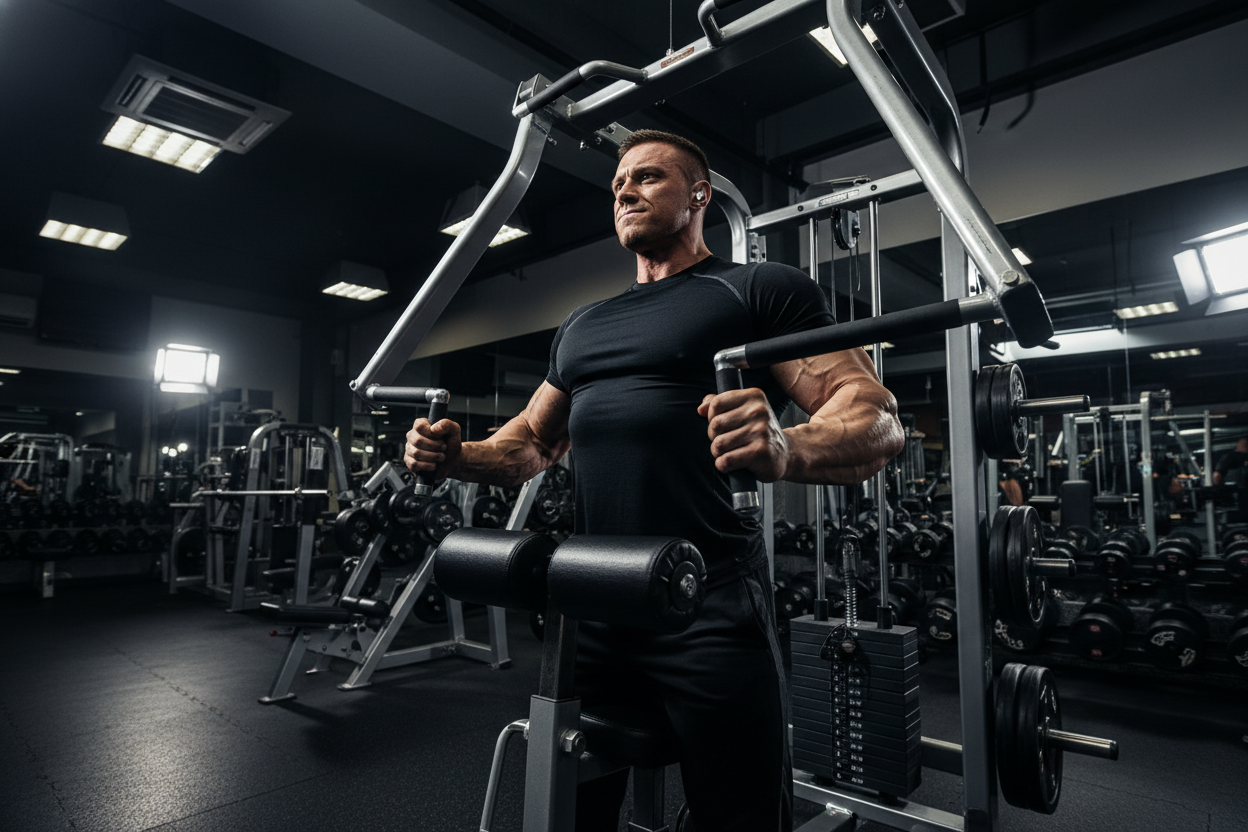
This is the bread and butter of machine training. Most modern gyms feature a converging chest press. Unlike older models where you push straight out, converging machines force your hands to come together at the peak of the movement. This provides a much stronger peak contraction for the inner chest fibers.
The Pec Deck (Fly Machine)
Often referred to by beginners as a "breast exercise machine" due to its focus on the pectoral muscles without tricep involvement, the Pec Deck is superior to dumbbell flys in one specific way: tension at the top. When you bring dumbbells together, gravity takes the tension off the muscle. On a machine, the cam system keeps the weight heavy even when your hands touch.
Common Setup Mistakes to Avoid
Even the best machine won't work if your setup is wrong. The most common error is seat height. If the seat is too low, your shoulders will shrug up towards your ears, shifting the load to your upper traps and increasing impingement risk.
Set the handles so they align with the middle of your chest (roughly nipple line). Retract your shoulder blades against the back pad before you push. Keep them pinned there throughout the set. If your shoulders roll forward at the end of the press, you have lost tension on the chest.
My Training Log: Real Talk
I want to share a specific experience regarding the difference between "textbook" machine use and reality. I spent a year training at a warehouse gym that had an old, rusted Hammer Strength ISO-Lateral press. It wasn't smooth like the Matrix machines at commercial gyms.
The specific thing about this machine was the start position. The handles were set so far back that getting the weight moving required a massive heave that almost tore my rotator cuff every time. I learned the hard way that you almost never want to start a heavy machine set from a "dead stop" if the handles are behind your torso.
I started using the foot lever (the "cheater bar") to push the handles out to the starting position before engaging my chest. If your machine doesn't have a foot lever, I recommend pushing one arm out at a time to get into position. Also, on that specific machine, the knurling on the handles was worn smooth on the left side but sharp on the right. I had to use chalk just to get an even grip sensation, or my brain would subconsciously push harder with the right hand. These small tactile details matter when you are pushing near failure.
Conclusion
You do not need a barbell to build a chest that stands out. By utilizing the stability and constant tension of machine work, you can target the pectoral muscles safely and effectively. Focus on your seat height, control the negative portion of the rep, and don't be afraid to take your sets to absolute failure.
Frequently Asked Questions
Can I build a full chest using only machines?
Yes. Hypertrophy requires mechanical tension, metabolic stress, and muscle damage. Machines provide all three. Many bodybuilders switch almost exclusively to machines leading up to a show to avoid injury while maintaining muscle mass.
How often should I use the chest machine?
For most lifters, training chest twice a week is optimal. You might do a heavy session with 6-8 reps early in the week, and a hypertrophy-focused session with 10-15 reps later in the week.
Is the Pec Deck better than dumbbell flys?
For muscle isolation, arguably yes. The machine maintains tension at the top of the movement where dumbbells do not. However, dumbbells require more stabilization, which has its own functional benefits. A balanced program can include both.