Is a Walking Step Machine Actually Effective? The Honest Truth
You have likely seen them tucked away in the corners of living rooms or advertised as the ultimate solution for watching TV while getting shredded. The walking step machine is a polarizing piece of equipment. Some swear it toned their glutes in a month; others claim it's nothing more than a dust collector that mimics an awkward shuffle.
Here is the reality: this device isn't a magic wand, and it isn't a replacement for a heavy squat rack. However, when utilized with specific intent, it occupies a unique functional space between sedentary behavior and high-impact cardio. If you are looking to understand the biomechanics rather than just the marketing fluff, you are in the right place.
Key Takeaways
- Low-Impact Mechanics: Unlike treadmills, steppers keep your feet planted, significantly reducing shear force on the knees and ankles.
- Targeted Activation: Proper form isolates the gluteus medius and quads more effectively than flat-ground walking.
- Caloric Output: Expect a burn rate similar to a brisk uphill hike, not a sprint.
- Space Efficiency: The highest utility-to-footprint ratio of almost any cardio machine.
The Mechanics: How It Actually Works
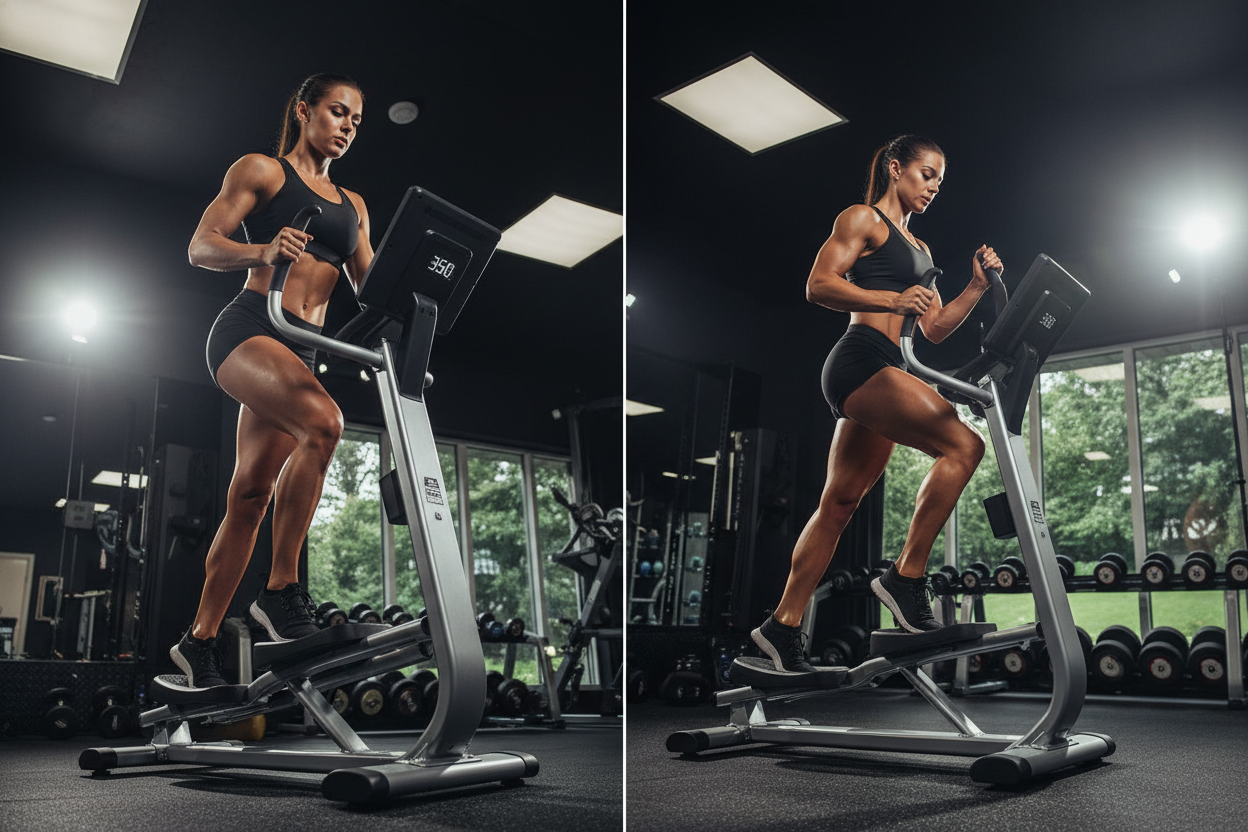
To get the most out of this tool, you need to understand the resistance profile. A standard step walking machine typically uses hydraulic cylinders to create resistance. This is fundamentally different from a treadmill.
On a treadmill, the belt pulls your leg back. On a stepper, you must actively push the pedal down against resistance. This distinction changes the muscle recruitment pattern entirely. The treadmill is often about keeping up; the stepper is about driving through.
The "Bottoming Out" Problem
The biggest error users make is letting the pedal hit the base frame with every step. When you hear that plastic clack, you have lost tension. The science of hypertrophy (muscle growth) and endurance relies on Time Under Tension (TUT).
To fix this, keep the pedals floating in the middle range of motion. Never let them hit the top or the bottom. This creates a constant demand on your quads and stabilizers, turning a casual stroll into a legitimate workout.
Muscle Activation: Glutes vs. Quads
Many users complain that they only feel the burn in their quads (front of the thigh) and not their glutes. This is usually a posture issue.
If you stand perfectly upright or lean back, you are mechanically biasing the quadriceps. To engage the posterior chain, you need a slight forward hinge at the hips—not a slump in the spine. Think about the posture of a speed skater. This slight angle stretches the glutes, allowing them to contract more forcefully as you drive the pedal down.
Walking Step Machine vs. The Real World
Is this the same as walking outside? No. Walking involves a "gait cycle" that includes a heel strike, a roll-through, and a toe-off. A stepper eliminates the stride length and the push-off.
This means you aren't training your hip flexors or hamstrings the way you would during a run. However, this restriction is exactly why it is safer for people with joint issues. You remove the impact forces of the heel strike while retaining the cardiovascular load.
My Personal Experience with Walking Step Machine
I want to move away from the physiology for a moment and talk about what it's actually like to live with one of these things. I picked up a compact hydraulic stepper during a particularly busy season when I couldn't make it to the gym.
The first thing nobody warns you about is the heat. After about 20 minutes of consistent stepping, those hydraulic pistons get incredibly hot—hot enough to burn your calf if you accidentally brush against them. It’s a sign the resistance is working, but it caught me off guard.
Also, there is a weird sensory distortion I call "sea legs." The first time I did a 45-minute session and stepped off onto my solid hardwood floor, I nearly tipped over. Because your brain gets used to the floor sinking beneath your feet, stable ground feels like it's rising up to meet you for the first 30 seconds post-workout. It’s a strange sensation that proves just how much stabilization work your nervous system is doing during the session.
Conclusion
The walking step machine is not a gimmick, provided you respect its limitations. It won't prepare you for a marathon, and it won't give you bodybuilder legs on its own. But as a tool for increasing non-exercise activity thermogenesis (NEAT) and keeping your joints healthy without impact, it is incredibly effective. Focus on not bottoming out the pedals, and you will feel the difference.
Frequently Asked Questions
Can I lose belly fat using a step walking machine?
You cannot spot-reduce fat from your belly. However, using a stepper increases your overall daily caloric expenditure. If this activity puts you in a caloric deficit, you will lose body fat over time, which will eventually reveal abdominal definition.
How long should I use the machine for a good workout?
Because the intensity is generally lower than a sprint, duration matters. Aim for 20 to 30 minutes of continuous movement. If you are using it for high-intensity intervals (moving legs as fast as possible), 15 minutes may suffice.
Is it bad for my knees?
Generally, no. It is low impact, which is usually better for knees than running. However, if you have existing patellar tendon issues, be careful not to lock your knees at the top of the movement or let your knees cave inward while stepping.