Deadlift Equipment for Home: The Ultimate Setup Guide
You don't miss the commute to the commercial gym, and you certainly don't miss waiting for a rack. But when it comes to pulling heavy weight off the floor, the environment changes. In a commercial facility, dropping 400 pounds is expected. In your garage or spare room, it can crack the foundation or wake the neighbors.
Building a setup capable of handling heavy pulls requires more than just buying weights. You need the right deadlift equipment for home to protect your body, your equipment, and your house structure. This isn't about buying the most expensive gear; it's about buying the correct gear so you only have to buy it once.
Key Takeaways: The Essentials
- The Barbell: Prioritize tensile strength (190k PSI+) and aggressive knurling over finish or aesthetics.
- Weight Plates: Bumper plates are superior to cast iron for home use to dampen noise and vibration.
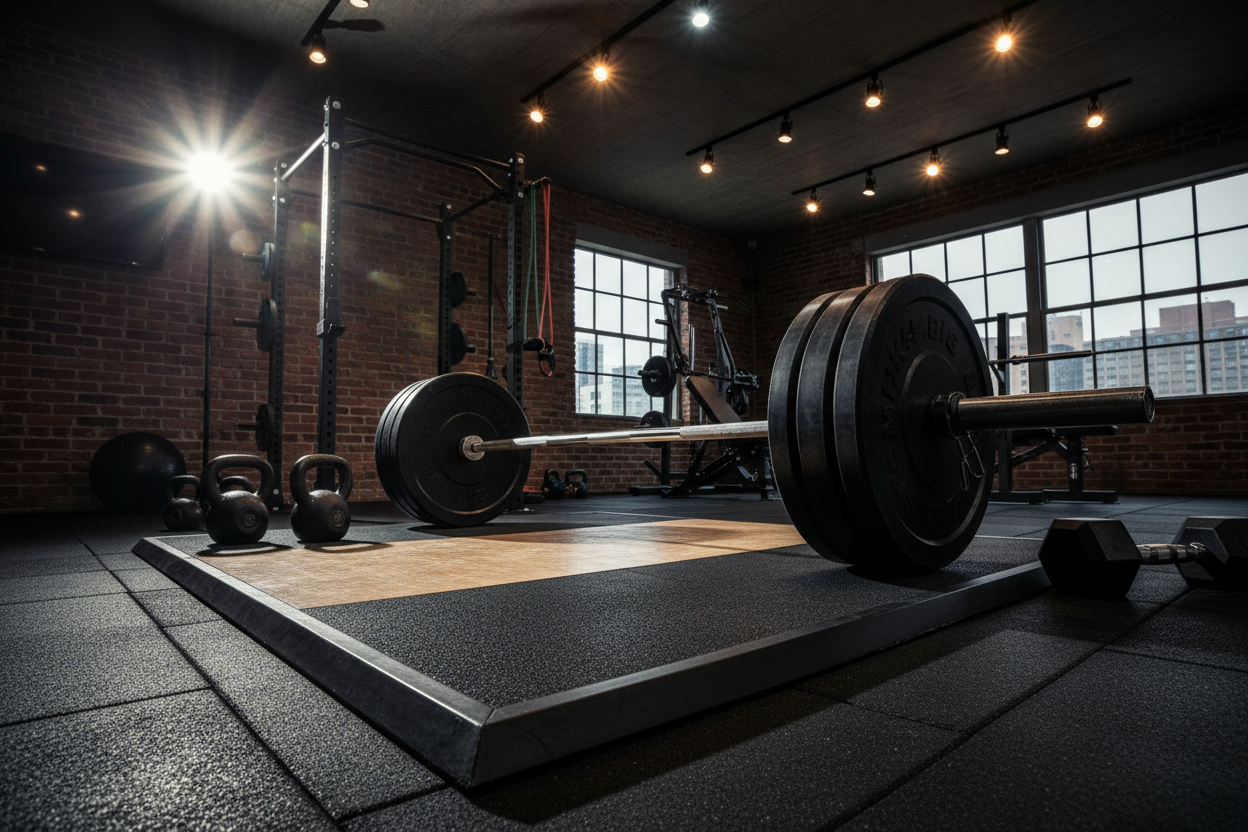
- Flooring: Standard puzzle mats are insufficient; use 3/4-inch horse stall mats or a dedicated deadlift platform.
- Collars: Lockjaw-style collars prevent plate slide, which saves your walls and shins.
The Barbell: Your Connection to the Weight
The barbell is the most critical piece of the puzzle. Many beginners make the mistake of buying a generic "standard" bar from a big-box store. These often have a low weight capacity (sometimes as low as 300 lbs) and thick, non-rotating sleeves.
For deadlifting, you need an Olympic barbell. Specifically, look for a bar with high tensile strength. If a bar bends permanently under load, it is useless. A good power bar should have little "whip" (bounce) unless you are pulling over 500 lbs, at which point a specialized deadlift bar becomes a consideration. The knurling (the grip texture) needs to be aggressive enough to hold without straps, but not so sharp it tears your calluses on the first rep.
Plates: Iron vs. Bumpers
When selecting home deadlift equipment, the debate usually lands on Cast Iron vs. Bumper Plates.
Why Bumpers Win for Home Gyms
In a home environment, bumper plates (rubber-encased weights) are almost always the better choice. They have a larger surface area to distribute impact force, which protects your flooring. More importantly, they are significantly quieter. The "clank" of iron plates hitting the floor resonates through walls; the "thud" of bumpers is a dull thud that stays contained.
The Diameter Issue
If you do choose iron plates, ensure they are standard 450mm diameter. Many cheaper iron plates (especially 45lb/20kg ones) are cast smaller than standard height. This means you will be pulling from a deficit (lower than standard height) on every rep, which alters your mechanics and increases injury risk.
Flooring: Protecting the Foundation
Do not deadlift directly on concrete. Concrete is brittle; drop a heavy deadlift on it, and it will eventually crack. Conversely, do not deadlift on soft, squishy puzzle mats or thick carpet. Soft surfaces absorb the force you are trying to drive into the ground, making the lift harder and less stable.
The gold standard for home gyms is the 3/4-inch horse stall mat. These are dense rubber mats designed for livestock, but they offer the perfect balance of protection and firmness. If you are lifting on a second floor, you will need a dedicated deadlift platform with plywood layers to disperse the shock across the joists.
My Training Log: Real Talk
I want to be honest about a mistake I made early in my garage gym days so you don't repeat it. I thought I could get away with using "Hex Plates" (the octagon-shaped iron plates) for deadlifts because they were cheap on the used market.
It was a nightmare. Every time I set the bar down, the flat edges of the hex plates would hit the floor unevenly, causing the bar to roll or twist violently. I spent more time resetting the bar and centering it than I did actually lifting. Furthermore, without a proper platform, I cracked a ceramic tile in my basement because I missed the thin yoga mat I was using.
The worst part was the knurling on the cheap bar I bought. It was coated in a thick, slippery chrome that chipped off. It felt like holding onto a greased pipe once my hands got sweaty. Upgrading to a raw steel power bar and a set of crumb rubber bumpers changed my entire training trajectory. The bar finally stuck to my hands, and I stopped flinching every time the weights hit the floor.
Conclusion
Investing in quality deadlift equipment for home is an investment in your longevity. You don't need a warehouse full of machines. A high-tensile bar, a set of durable bumper plates, and proper flooring are all that stand between you and a stronger posterior chain. Buy nice or buy twice.
Frequently Asked Questions
Can I deadlift on carpet if I don't have mats?
It is not recommended. Carpet is unstable and can cause your ankles to roll under heavy loads. Additionally, the bar may crush the carpet padding underneath, creating permanent divots in your floor. Always use a flat, stable surface like plywood or rubber mats.
Do I need a deadlift jack for home use?
While not strictly necessary, a deadlift jack (or a mini-jack) is highly recommended for home training. Loading and unloading heavy plates while the bar is on the floor is exhausting and wastes energy you need for the lift. It is a small piece of equipment that provides a massive quality-of-life improvement.
Is a trap bar (hex bar) better for home deadlifts?
The trap bar is an excellent piece of home deadlift equipment, especially if you have lower back issues or limited mobility. It centers the weight with your body rather than in front of it. However, it takes up more floor space than a straight bar, so consider your storage options before buying.