Is a Rowing Machine a Good Workout? The Honest Truth
You walk past it in the gym every day. It sits low to the ground, looking more like a medieval torture device than a piece of modern cardio equipment. You see people gasping for air on it, drenched in sweat, and you have to wonder: is a rowing machine a good workout, or is it just an outdated way to warm up?
If you are looking for efficiency, the answer is a resounding yes. But it is not as simple as hopping on and pulling the handle. The rowing machine, or "ergometer," demands technique, grit, and a willingness to engage muscles you didn't know you had.
Here is the reality of what happens to your body when you strap in.
Key Takeaways: Quick Summary
- Total Body Engagement: Unlike cycling, rowing activates approximately 86% of the body's musculature, including legs, core, back, and arms.
- High Caloric Output: It burns calories at a rate comparable to running, but with higher muscular demand.
- Joint Preservation: It is a non-weight-bearing exercise, making it ideal for injury prevention and rehabilitation.
- Versatility: It supports both steady-state aerobic conditioning and high-intensity anaerobic sprints.
The Mechanics: Why It Works
Many beginners mistake rowing for an arm workout. If you are doing it right, your arms are actually the last link in the chain.
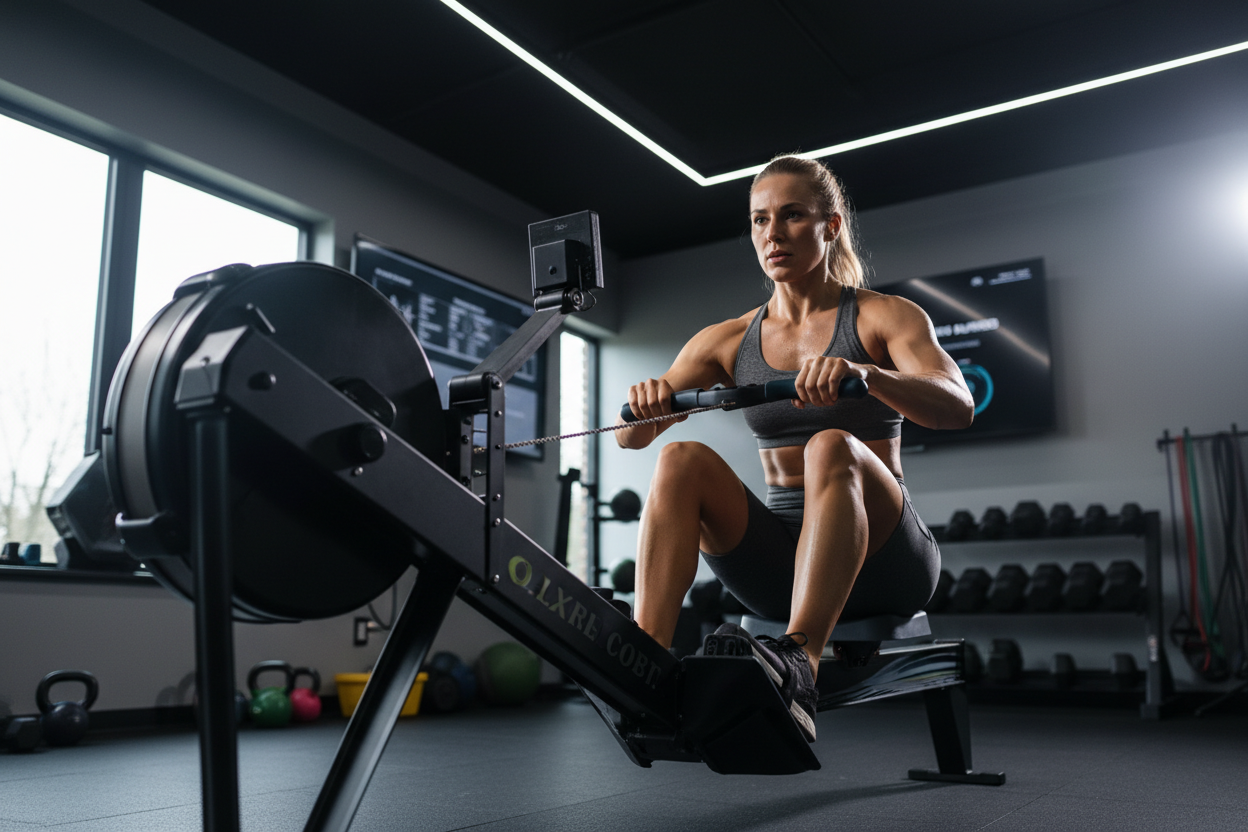
The rowing stroke is 60% legs, 20% core, and 20% arms. It is a pushing movement, not just a pulling one. You drive through your heels (similar to a deadlift or squat), transfer that power through a rigid torso, and finish with the arms. This specific sequence is why are rowing machines a good workout for building functional power.
The "86%" Factor
According to research from the English Institute of Sport, rowing engages 86% of your muscles. When you run, you are primarily using your lower body. When you row, you are forcing your lats, rhomboids, glutes, quads, and hamstrings to cooperate in a rhythmic cycle. This high level of recruitment forces your heart to pump blood to both the upper and lower extremities simultaneously, skyrocketing your cardiovascular demand.
Calorie Burn vs. The Treadmill
One of the most common questions is whether are rowing machines good exercise for weight loss compared to running.
While a treadmill might edge out the rower slightly in raw calorie burn for an absolute beginner, the rower levels the playing field through intensity. Because you are pushing against resistance (air, water, or magnetic) with your muscles, you trigger an "afterburn" effect—known scientifically as EPOC (Excess Post-exercise Oxygen Consumption). You keep burning calories long after you unstrap your feet.
The Low-Impact Advantage
High-impact exercises like running are fantastic for bone density but brutal on joints. Every step on pavement sends a shockwave through your ankles, knees, and hips.
Rowing is a closed-chain kinetic exercise. Your feet never leave the footplates. This allows you to exert maximum effort without the pounding impact. For athletes recovering from ACL tears or runners dealing with shin splints, the rower is often the only safe way to maintain high-end cardiovascular fitness.
My Training Log: Real Talk
I want to step away from the science for a moment and tell you what this actually feels like, because the specs don't tell the whole story.
I remember my first attempt at a sub-7-minute 2,000-meter row. The first 500 meters felt smooth—almost too easy. But the reality of the machine is the "flywheel effect." It doesn't give you momentum; you have to earn every meter.
By the 1,500-meter mark, it wasn't my lungs that were screaming—it was my grip. I wasn't wearing gloves (rowers usually don't), and I could feel the specific diamond-pattern knurling of the Concept2 handle digging into the calluses right at the base of my fingers. My forearms were so pumped they felt like they were going to burst.
And then there is the "rower's cough." After I finished, I had this metallic taste in the back of my throat and a dry cough that lasted for twenty minutes—a hallmark of truly emptying the tank anaerobically. It is brutal, unglamorous, and absolutely effective. If you want a machine that pets your ego, this isn't it.
Conclusion
So, is the juice worth the squeeze? Absolutely. The rowing machine offers a unique blend of strength building and cardiovascular endurance that few other machines can match. It respects your joints while challenging your mental fortitude.
Don't be intimidated by the technique. Master the drive, control the recovery, and you will find it to be the most efficient tool in your arsenal.
Frequently Asked Questions
Can rowing reduce belly fat?
Yes. Because rowing is a full-body cardiovascular workout that burns a high number of calories, it contributes significantly to the caloric deficit needed to lose fat. While you cannot spot-reduce fat, the high metabolic demand of rowing helps lower overall body fat percentage.
Can you build muscle on a rowing machine?
To an extent, yes. Unlike a treadmill, rowing provides resistance. It will not build mass like a heavy barbell squat, but it will develop lean muscle tone, particularly in the posterior chain (hamstrings, glutes, back) and quads.
How long should I row for a good workout?
It depends on intensity. For high-intensity interval training (HIIT), 15 to 20 minutes is often enough to exhaust an athlete. For steady-state endurance training, sessions usually range from 30 to 60 minutes.