Is a Power Rack the Secret to a Weight Workout Women Actually Enjoy?
I have seen it a thousand times: a woman signs up for a home program, clears a 6x6 space in the living room, and buys a pair of 10-pound dumbbells. Three weeks later, she is bored, the weights feel like toys, and the results are nowhere to be found. A real weight workout women can actually stick to isn't about doing fifty more reps of the same easy movement; it is about getting under a bar and feeling the literal weight of your own progress.
Quick Takeaways
- Floor-based routines often prioritize heart rate over actual muscular overload.
- A power rack provides the safety and stability needed to lift heavy without a spotter.
- Progressive overload is nearly impossible with fixed-weight, light dumbbells.
- Compound movements (Squat, Bench, Press) yield the fastest results for body composition.
The Trap of the 'Living Room Sweat Session'
Most workout weights for women are marketed as these cute, rubber-coated accessories that look nice on a shelf but do not do much for your posterior chain. You end up doing endless variations of lunges and goblet squats, mistaking being out of breath for actually getting stronger. While you might burn some calories, you are hitting a hard ceiling because you cannot safely hold 80 or 100 pounds in your hands while balancing on a rug.
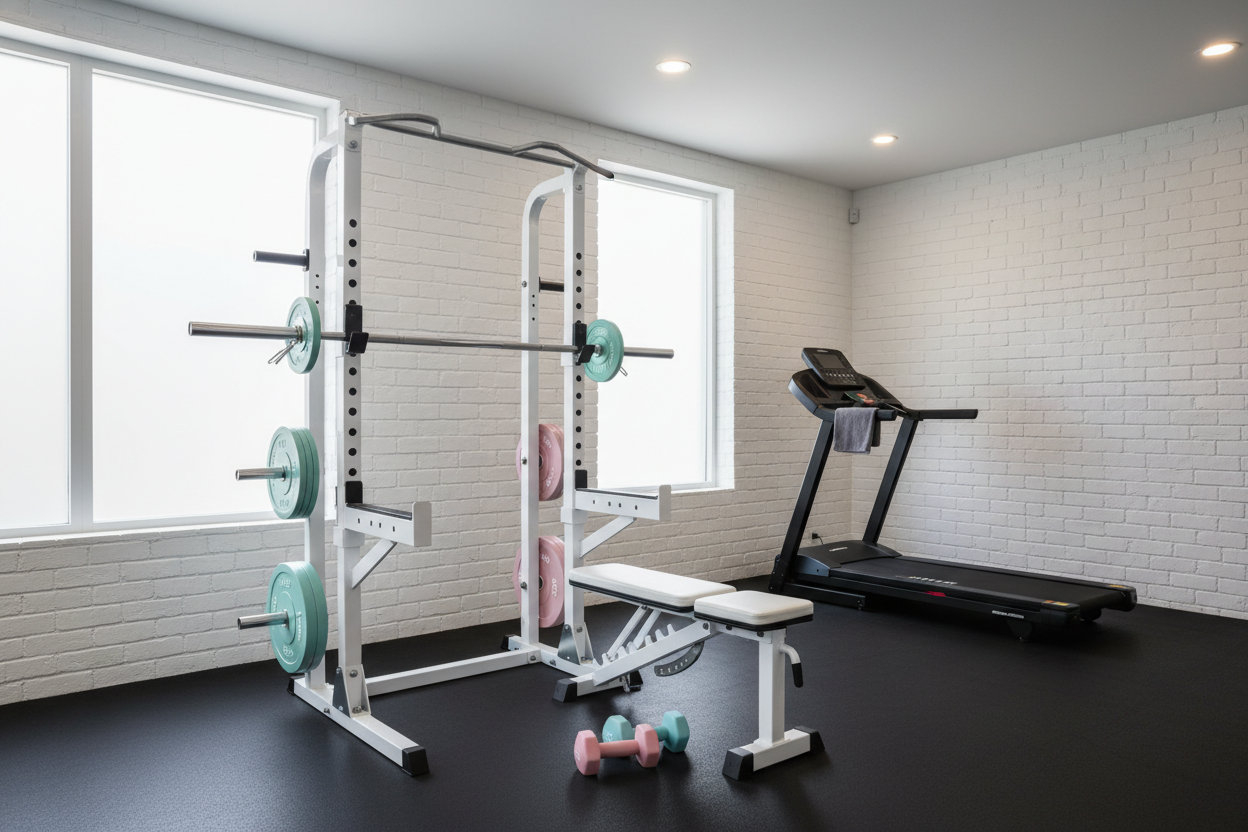
The industry sells this idea that women should stay in the 'light and high rep' zone, but that is exactly why plateaus happen. When you cannot scale the resistance, your body stops adapting. It is time to Stop Buying Pink Dumbbells: A Real Home Weights Workout for Women and start looking at equipment that actually challenges your central nervous system.
Why You Need to Anchor Your Routine
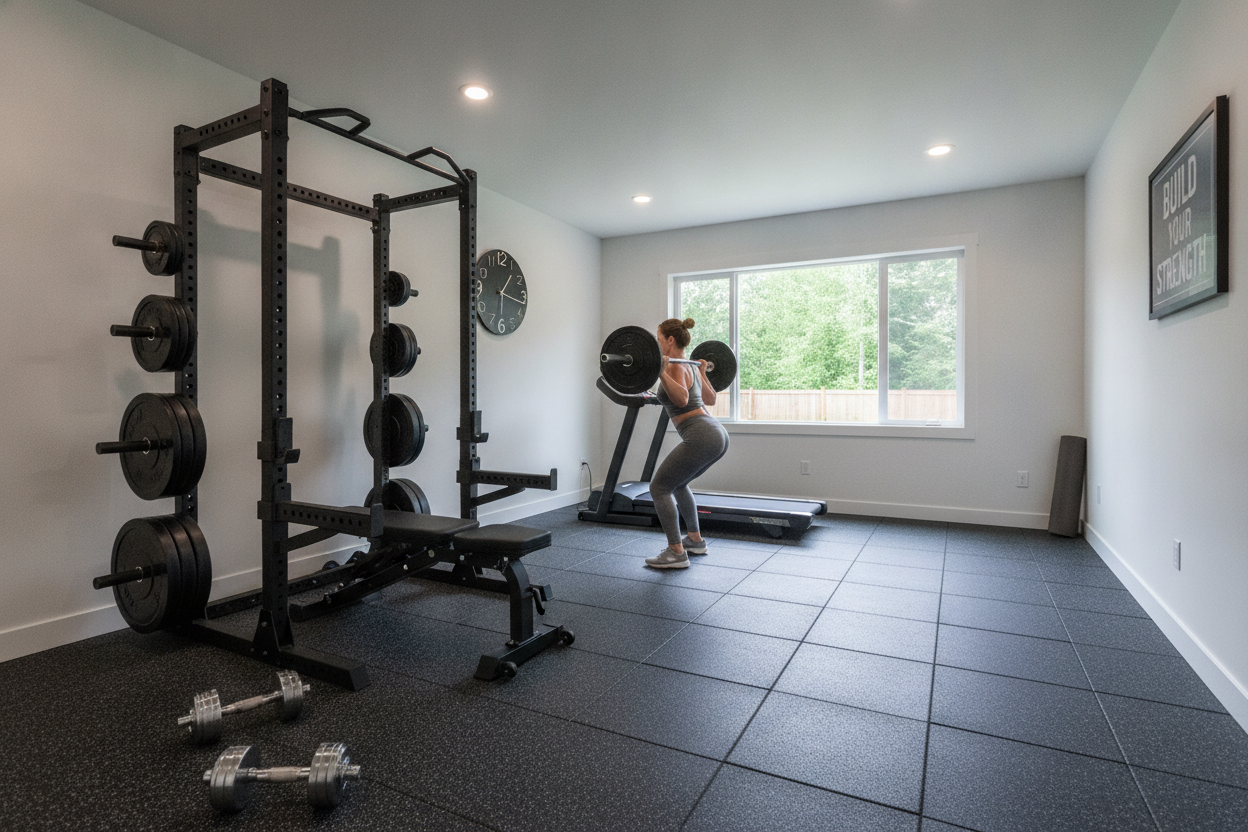
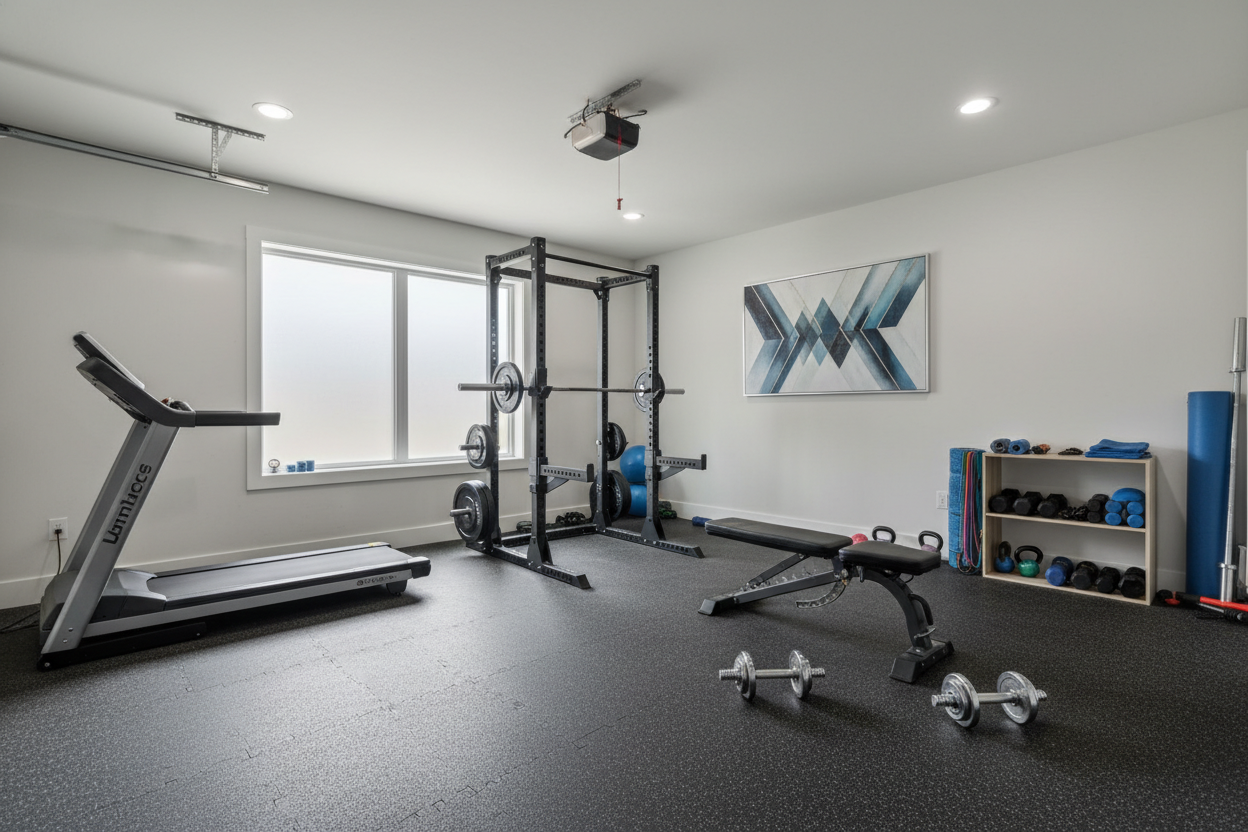
Progressive overload is a biological requirement for change. If you aren't adding weight to the bar over time, you are just maintaining. A power rack acts as the anchor for your home gym, replacing a dozen scattered women workout weights with one professional-grade station. It gives you a fixed, safe environment to fail a rep without ending up in the ER.
If you are tired of your equipment sliding across the floor, look at the Gxmmat X6 Power Rack Weight Bench Package. It is a 14-gauge steel frame that handles the heavy lifting so you do not have to worry about dropping a bar on your floorboards. Having a dedicated station changes your mindset from 'doing a quick circuit' to 'training for strength.'
Stability Equals Strength
Your brain is incredibly protective. If it senses you are unstable—like trying to bench press while lying on a squishy floor or a cheap, wobbly bench—it will not let your muscles fire at 100% capacity. This is a survival mechanism. To bypass it, you need a rock-solid foundation.
Using a Gxmmat Adjustable Weight Bench inside a rack allows you to drive your heels into the ground and keep your shoulder blades pinned. That stability tells your nervous system it is safe to recruit more muscle fibers. You will find you are significantly stronger than you thought the moment you stop wobbling.
The 4-Move Rack Routine You Actually Need
Forget the 'toning' fluff you see on Instagram. If you want to change your physique, you need the big four: Squat, Bench Press, Overhead Press, and Rack Pulls. These compound movements use the most muscle mass and create the greatest hormonal response. I have written extensively about Why I Program This Full Body Weight Training Workout for Women because it focuses on efficiency. You do not need twenty exercises; you need four that you can consistently add weight to every two weeks.
Ditching the Fear of 'Too Heavy'
The biggest barrier I hear is the fear of getting 'bulky' or getting hurt. Trust me, building massive muscle mass takes years of surplus eating and very specific high-volume training. For most of us, lifting heavy just makes us harder to break. A rack with adjustable safety pins is the safest place to transition away from the restrictive paths of commercial Weight Lifting Machines. You get the freedom of natural movement with the 'fail-safe' of steel bars catching the weight if you bottom out.
My Personal Take
I spent two years trying to 'tone' my legs with 25-pound dumbbells. I felt like I was working hard, but my squat depth was terrible and my back always ached from trying to clean the weights up to my shoulders. The day I bought a rack was the day my training actually started. I failed my first 135-pound squat attempt about a month in, and the safety pins caught the bar with a loud 'clank.' I didn't get hurt, the floor didn't break, and my ego survived. That was the moment I stopped being afraid of the iron.
FAQ
How much space do I really need for a rack?
Most standard racks have a footprint of about 48 by 50 inches. However, you need to account for the 7-foot Olympic bar. I recommend a clear space of at least 8 feet wide and 6 feet deep to move comfortably.
Is it safe to lift heavy at home alone?
Yes, provided you use your safety pins or spotter arms. Always set them just an inch below your lowest point of movement. If you get stuck, you simply lower the bar onto the pins and crawl out.
Will lifting heavy make me less flexible?
Actually, lifting through a full range of motion—like a deep squat in a rack—is one of the best ways to improve active mobility. You are stretching the muscle under load, which is far more effective than static stretching.