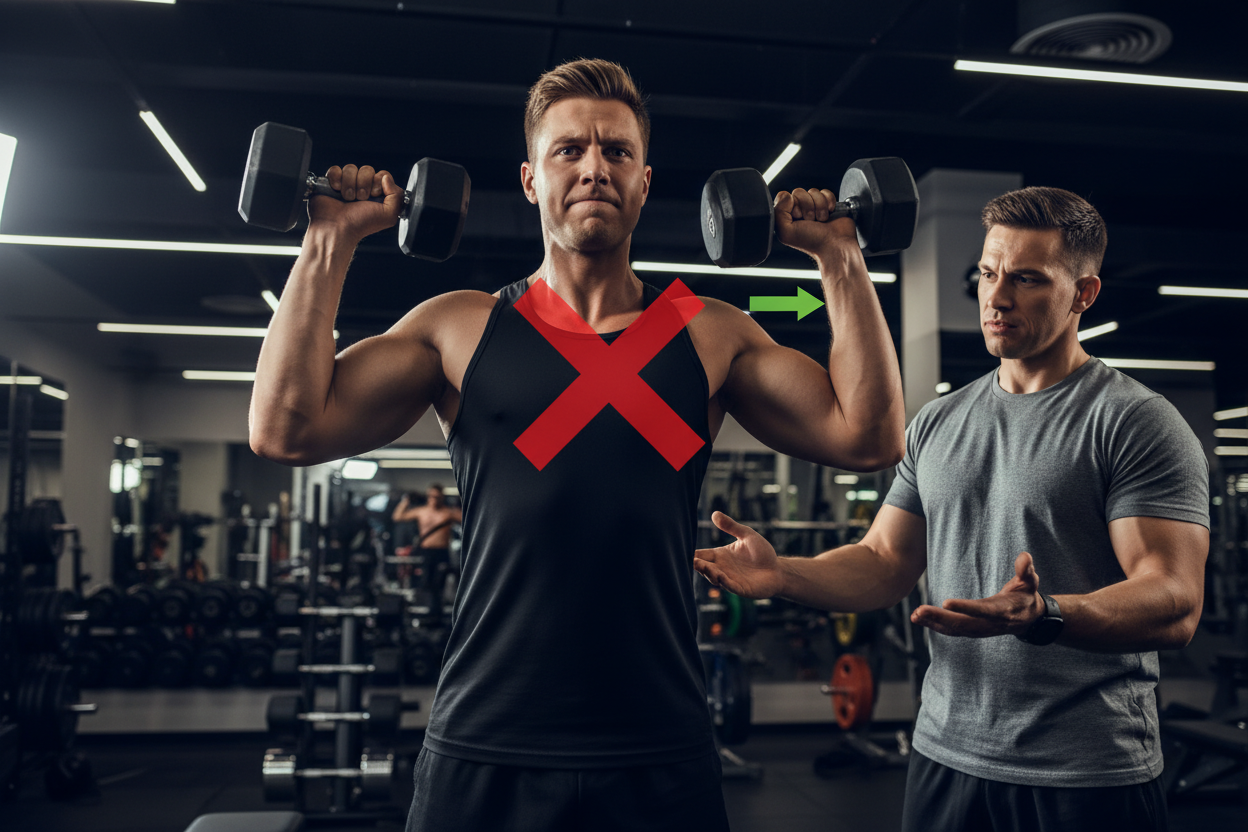
Is a Leg and Shoulder Workout Effective? The Honest Truth
Most gym-goers follow the traditional "bro-split," dedicating entire days to chest, back, or legs alone. But if you are pressed for time or looking to ramp up your metabolic conditioning, a leg and shoulder workout might be the intensity booster your routine is missing.
Combining these two muscle groups is controversial in some circles. Legs demand massive amounts of energy, and shoulders require intricate stability. Can you train them together without sacrificing gains? Absolutely, provided you structure the session intelligently.
Key Takeaways
- Metabolic Demand: Training large lower body muscles with upper body movements forces the heart to shunt blood vertically, drastically increasing calorie burn.
- Hormonal Response: Heavy leg training releases testosterone and HGH, which can theoretically aid shoulder development when trained in the same session.
- Order Matters: Always prioritize heavy compound leg movements first to ensure central nervous system (CNS) freshness.
- Core Stability: Both muscle groups rely heavily on the core; manage fatigue to avoid lower back injury during overhead presses.
Why the Legs and Shoulders Split Works
The concept of a legs and shoulders same day split is rooted in efficiency and physiology. This pairing is often referred to as "Peripheral Heart Action" training if done circuit-style, but even in standard bodybuilding, it packs a punch.
When you train shoulders and legs together, you are pairing the body's largest muscle group (quads/glutes/hamstrings) with a smaller, complex group (deltoids). This allows you to blast the legs with heavy weights while giving the upper body a rest, then switch focus to shoulders while the legs recover.
The "Anabolic Spillover" Effect
There is a theory in leg and shoulder workout bodybuilding circles regarding hormonal response. Heavy compound movements like squats trigger a systemic release of anabolic hormones. By training shoulders immediately after, you may capitalize on this hormonal environment, potentially spurring growth in the deltoids that might not happen on a shoulder-only day.
The Best Leg and Shoulder Workout for Mass
If you are looking for a leg and shoulder workout for mass, you cannot rely on isolation machines alone. You need compound movements. Here is a structure that balances CNS fatigue with hypertrophy.
1. The Heavy Compound (Legs)
Start with Barbell Squats or Leg Press. Do not save these for later. Your core needs to be fresh to protect your spine. Aim for 3-4 sets in the 6-10 rep range.
2. The Heavy Compound (Shoulders)
Transition to the Standing Overhead Press (Military Press). Because your core is fatigued from squats, be mindful of your form. If your lower back feels compromised, switch to a Seated Dumbbell Press to take the load off the lumbar spine.
3. The Quad and Shoulder Workout Superset
To increase density, use a leg and shoulder superset workout for your accessory work. This saves time and keeps the heart rate high.
- Exercise A: Walking Lunges (Legs)
- Exercise B: Lateral Raises (Shoulders)
Perform these back-to-back with no rest. The lunges will leave you winded, making the lateral raises a test of mental fortitude as much as muscular endurance.
Leg and Shoulder Combo Exercises
If you are short on time or doing a leg and shoulder workout at home, you can use "hybrid" movements. These recruit both areas simultaneously.
The "Thruster" is the king here. Holding dumbbells at shoulder height, perform a squat and explode upward into a press. This is a staple in CrossFit, but utilized in a legs and shoulders dumbbell workout, it builds incredible conditioning and functional strength.
Common Mistakes on Shoulder Leg Day
Ignoring Core Fatigue
The biggest risk when you perform shoulders on leg day is core failure. Both the squat and the overhead press require a rigid torso. If you exhaust your abs on leg raises early in the workout, your press will suffer, or worse, you will injure your lower back.
Improper Sequencing
Never do heavy shoulders before heavy legs. Pre-exhausting your deltoids might seem like a good idea, but if your upper back is tired, you cannot keep the bar tight against your traps during a squat, leading to forward lean and poor mechanics.
My Training Log: Real Talk
I want to be transparent about what a leg and shoulder day actually feels like because the paper routine doesn't tell the whole story. I remember the first time I switched to this split to break a plateau. I programmed heavy back squats followed immediately by standing military presses.
The first two sets were fine. But on the third set of presses, I felt a distinct wobble in my lower back that I'd never experienced on a dedicated shoulder day. My core wasn't sore, but it was fried from stabilizing the heavy squats minutes earlier. When I tried to lock out the barbell overhead, my stabilizer muscles just checked out. I didn't get injured, but I had to rack the weight and sit down.
The lesson I learned the hard way? If I'm going heavy on legs, I now strictly do seated shoulder presses afterward. The "ego lift" of standing isn't worth the compromise in stability when your legs are jelly. Also, the sweat factor is real—gripping a knurled barbell for presses when you're dripping sweat from squats changes the game. Bring chalk.
Conclusion
Is a leg and shoulder workout right for you? If you can handle high intensity and want to condense your training split, it is one of the most effective combinations available. It forces your body to adapt to systemic stress, building a hardened, conditioned physique. Just respect the fatigue, order your exercises correctly, and don't skip the warm-up.
Frequently Asked Questions
Can I do legs and shoulders on the same day effectively?
Yes, you can do legs and shoulders on the same day. It is an excellent way to increase training frequency. Since these muscle groups do not mechanically interfere with each other (unlike chest and triceps), one group can recover while the other works, provided you manage systemic fatigue.
What is the best order for a leg and shoulder workout?
Always train legs first. Exercises like squats and deadlifts require maximum nervous system energy and core stability. If you fatigue your shoulders first, you compromise your ability to hold the bar securely during squats. The only exception is if your shoulders are significantly lagging and you are prioritizing them over leg maintenance.
Is a leg and shoulder split good for beginners?
It can be intense for beginners. A leg shoulder split requires significant cardiovascular endurance and core strength. Beginners might benefit more from a full-body routine or an Upper/Lower split until they build enough work capacity to handle the metabolic demand of training two large areas in one session.