Stop Doing Shoulder Elevation Exercises Like This (Read First)
Most lifters treat the shoulder girdle like a simple hinge, but it’s actually a complex floating system. If you want upper back density or pain-free overhead mobility, you have to master the shoulder elevation exercise. The problem? Most people treat elevation—specifically the shrug—as an ego lift rather than a precision movement.
When you execute this movement pattern poorly, you aren't just missing out on gains; you are actively inviting neck tension and impingement. Let’s strip away the bro-science and look at how to elevate the scapula the way anatomy intended.
Key Takeaways: Quick Summary
- Elevation is Scapular: It is not just lifting the weight; it is sliding the shoulder blade up the rib cage.
- Line of Pull Matters: The upper trapezius fibers run at an angle, not straight up and down.
- Stop Rolling: Rolling your shoulders back at the top of a shrug adds zero value and increases joint grinding.
- Functional Necessity: Proper elevation is required for safe overhead pressing to clear space in the shoulder joint.
The Anatomy of Elevation (Why You're Doing It Wrong)
Shoulder elevation is primarily driven by the upper trapezius and the levator scapulae. Here is the disconnect: most people think "elevation" means bringing the shoulders straight up to the ears.
However, if you look at a muscle chart, the upper trap fibers fan out toward the clavicle. To maximally shorten these fibers, the line of pull needs to match that angle. If you are standing stick-straight and shrugging vertically, you are largely bypassing the meat of the traps and overloading the levator scapulae—a small muscle in the neck that is prone to stiffness and knotting.
The Correct Way to Shrug
If your goal is hypertrophy (growth), the shrug is the king of elevation exercises. But you need to tweak your setup.
1. The Slight Lean
Instead of standing upright, hinge forward at the hips about 15 to 20 degrees. This aligns the line of resistance (gravity/barbell) with the line of pull of the upper trapezius. You will feel a deeper contraction in the mid-upper back rather than just at the base of your neck.
2. The "Out," Not Just "Up"
Don't just think "shoulders to ears." Think "shoulders to corners of the room." The scapula rotates slightly as it elevates. Allowing a slight outward movement at the top of the rep accommodates natural scapular rhythm.
Functional Elevation: The Overhead Reach
Not everyone needs huge traps; some of you just want to lift your arm without a pinch. In a rehabilitation or functional context, shoulder elevation is crucial during overhead movements.
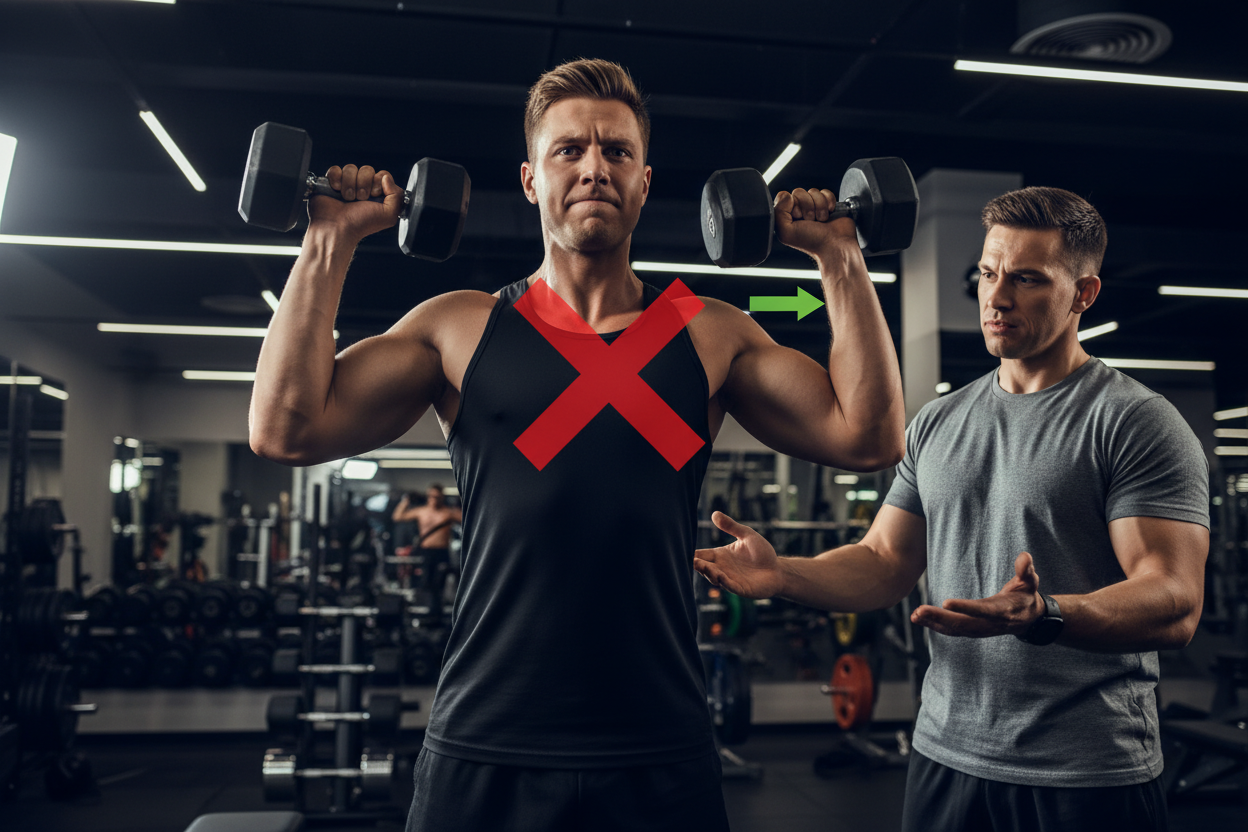
When you raise your arm, the scapula must elevate and upwardly rotate. If you depress your shoulders (pull them down) while trying to press overhead, you reduce the subacromial space. This causes the bones to pinch the rotator cuff tendons.
The Fix: At the top of an overhead press or a wall slide, actively push the weight (or your hands) toward the ceiling. Shrug at the top. This "functional elevation" clears the joint space and keeps your shoulders healthy.
My Personal Experience with Shoulder Elevation
I spent my first three years of lifting doing heavy barbell shrugs, rolling my shoulders back at the top every single rep because I thought it hit the "rear traps." It didn't.
What it did do was give me chronic tension headaches. I remember distinctly the feeling of the barbell knurling digging into my palms as I tried to force that rotation, hearing a wet, gritty "crunch" in my neck on the descent of heavy reps. It wasn't a satisfying pop; it felt like sand in a bearing.
I didn't fix my trap development until I dropped the weight by 30%, leaned forward those critical 15 degrees, and stopped the rolling motion entirely. The pump moved from the base of my skull (levator scapulae) down into the meat of the trap muscle. The headaches stopped within a week, and the "grit" sound eventually faded.
Conclusion
Whether you are rehabbing a frozen shoulder or trying to build a yoke that commands respect, the mechanics remain the same. Respect the anatomy. Align your movement with the muscle fibers, not just gravity. Stop rolling your shoulders, and start elevating with intent.
Frequently Asked Questions
Should I roll my shoulders when doing shrugs?
No. Rolling your shoulders back or forward under load places unnecessary shear stress on the glenohumeral joint and offers no additional muscle activation for the trapezius. Lift up and down on a slight angle only.
Can shoulder elevation exercises help with neck pain?
Yes, if done correctly. Weak upper traps can lead to neck pain because the smaller neck muscles have to overcompensate. Strengthening the elevators through controlled, light-load shrugs or overhead carries can stabilize the neck region.
What is the best rep range for elevation exercises?
The trapezius is a postural muscle with high endurance capabilities. While heavy sets of 8-10 work for mass, sets of 15-20 with a distinct pause at the top often yield better results for motor control and hypertrophy without overloading the spine.