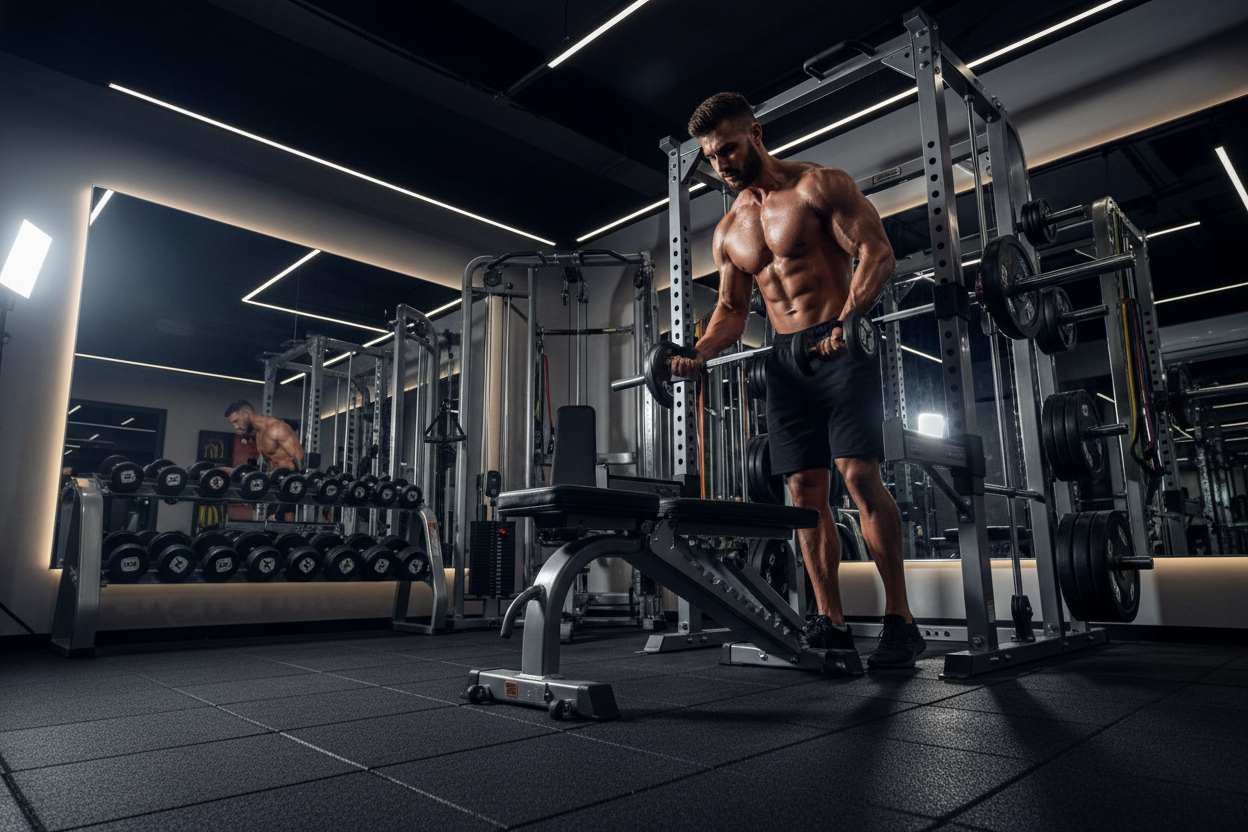
Indoor Gym Floor Mistakes: Why Most People Get It Wrong
There is nothing quite like the heart-stopping crack of a heavy dumbbell hitting bare concrete. Whether you are converting a spare bedroom or outfitting a two-car garage, your foundation dictates how hard and how safely you can train. Investing in a proper indoor gym floor is the single most important decision you will make for your home gym space—protecting your joints, your home's foundation, and your expensive iron.
But not all mats are created equal, and choosing the wrong material can lead to wobbly racks and ruined subfloors. In this guide, we will break down exactly what you need to know to build a safe, durable, and shock-absorbing foundation for your training.
Key Takeaways
- Thickness matters: Heavy lifting requires at least 3/8-inch to 3/4-inch high-density rubber to absorb impact.
- Material is king: Vulcanized rubber vastly outperforms cheap EVA foam for long-term durability and stability.
- Installation style: Interlocking tiles offer flexibility for odd spaces, while rolled rubber provides a seamless, professional look.
- Subfloor protection: Proper flooring prevents costly structural damage to concrete basements or hardwood spare rooms.
Choosing the Right Foundation
Materials: Rubber vs. Foam
When searching for flooring for gym equipment, you will quickly notice a massive divide between EVA foam and high-density rubber. Foam might be budget-friendly, but it compresses under heavy power racks and tears easily when shifting benches. If you are doing anything more intense than bodyweight exercises or light yoga, vulcanized or recycled rubber is absolutely non-negotiable for safety and stability.
Thickness Guidelines
If you are dropping barbells or heavily loaded dumbbells, 3/4-inch thickness is the gold standard. For general functional training, dumbbell workouts, and cardio machine use, 3/8-inch offers plenty of impact absorption without breaking the bank or creating a massive lip at the doorway.
Installation and Space Planning
Mastering DIY Gym Flooring
You do not need a general contractor to get a professional look. A successful diy gym flooring project comes down to precise measuring, a straight edge, and a sharp utility knife. Always remember to leave a small 1/4-inch gap near the walls to account for temperature expansion, especially in uninsulated garages where rubber swells and contracts with the seasons.
The Case for the Fitness Tile
If you are working with an awkwardly shaped basement or an apartment corner, a modular fitness tile system is your best friend. The interlocking edges make it incredibly easy to assemble, disassemble, and move if you ever relocate. Plus, if you damage one section by dropping a kettlebell, you only have to replace a single square rather than an entire roll.
From Our Gym: Honest Take
We have tested dozens of flooring setups over the years, from premium commercial rolled rubber to cheap big-box store mats. When I built out my own basement gym, I initially went with 1/2-inch interlocking foam to save money. That was a huge mistake. Within three months, my power rack had permanently compressed the foam, making the rack dangerously wobbly during heavy squats.
I eventually swapped them out for 3/4-inch vulcanized rubber stall mats. The grip is phenomenal, and my chalked feet stay planted during heavy deadlifts. I can confidently drop weight without worrying about cracking the concrete below. The one caveat? Fresh rubber off-gasses. I had to leave the basement windows open and run a box fan for about two weeks before the strong 'tire shop' smell faded. Keep that in mind if you are installing your setup in a small, poorly ventilated spare room.
Frequently Asked Questions
Do I need to glue my gym flooring down?
For most home gyms, no. Heavy rubber mats and tightly fitted interlocking tiles will stay in place under their own weight and the weight of your equipment. Double-sided carpet tape is usually more than enough to secure any troublesome edges near doorways.
Can I put an indoor gym floor over carpet?
It is highly recommended to avoid placing heavy rubber directly over plush carpet, as it will shift and create an uneven, unsafe lifting surface. If you must build over carpet, place a layer of rigid 3/4-inch plywood down first, then lay your rubber flooring on top to distribute the weight evenly.
How do I clean my rubber gym floor?
Keep it incredibly simple. Vacuum up loose dirt and chalk dust, then mop with a mild solution of warm water and a pH-neutral cleaner (like a few drops of dish soap). Avoid harsh chemicals like bleach or ammonia, which will break down the rubber binders over time and cause crumbling.