I Wasted $500 on the Wrong Weights for My Garage Gym
I remember the night I hit 'order' on a massive 300-lb 'Olympic' set from a brand I had never heard of. It was 11:30 PM, the gym membership prices had just hiked again, and I was desperate to start my own sanctuary. When the pallet arrived, I realized I had made a massive mistake. The bar was thin and flaking chrome, and the weights were so wildly inaccurate that one '45-lb' plate actually weighed 42 pounds while the other was nearly 48. Training on uneven loads is a fast track to an injury, not a PR.
Quick Takeaways
- Avoid 'all-in-one' beginner sets; the bars are usually junk and the plate tolerances are terrible.
- Cast iron is the best value for most people, but bumper plates are mandatory if you plan on dropping the bar.
- Adjustable dumbbells save massive amounts of space but look for brands with metal internal components to avoid rattling.
- Your floor and bench are just as important as the iron; don't put heavy loads on flimsy equipment.
The 'Buy Everything at Once' Trap
Beginners almost always fall for the massive, shiny sets of weight training weights that look like a bargain online. You see a rack, a bar, and 300 pounds of iron for a price that seems too good to be true. It usually is. These sets are the fast-fashion of the lifting world. The knurling on the bars is often so passive it feels like holding a wet pool noodle, and the collars are so loose that the plates jangle and slide with every rep.
I spent months trying to make that cheap gear work before I finally admitted it was garbage. The problem is that once you've bought a full set of sub-par workout weights, you're stuck with them. Resale value on low-end gear is non-existent. You're better off buying a high-quality barbell and just two 45-pound plates to start. Quality gear holds its value and, more importantly, it feels right in your hands.
Before you drop a paycheck on a mountain of iron, ask yourself if you're ready for the commitment. If you're still figuring out your routine, you might want to look into the best beginner workout at home to see what equipment you'll actually use versus what will just collect dust and laundry in the corner of your garage.
Iron vs. Bumpers: Which Weights for Working Out Make Sense?
This is the classic debate. Old-school cast iron plates are the soul of the garage gym. They’re thinner, which means you can fit more of them on the sleeve of the bar, and they have that satisfying 'clink' when you rack them. If you’re strictly powerlifting—squats, bench, and deadlifts—and you have decent flooring, cast iron is the most cost-effective way to buy home exercise weights. You can often find these used for pennies on the dollar if you’re patient on local marketplaces.
Bumper plates, on the other hand, are made of high-density rubber. They’re designed to be dropped from overhead. If you’re doing cleans, snatches, or even just heavy deadlifts and you’re worried about cracking your concrete slab, bumpers are the answer. The downside? They’re thick. A standard 45-lb bumper is twice as wide as an iron plate, which limits how much total weight you can put on the bar. For most of us, that doesn't matter yet, but it's something to keep in mind as you get stronger.
My advice? Mix them. Buy a pair of heavy bumpers to act as the base of your stack, then use iron weights for workouts to fill out the rest. This gives you the protection of rubber with the space-saving benefits of iron. It’s the hybrid approach that most veteran garage gym owners eventually land on after wasting money on full sets of one or the other.
The Fixed vs. Adjustable Dumbbell Debate
Dumbbells are the most versatile fitness training weights you can own, but they are also the biggest space-hogs. A full set of fixed dumbbells from 5 to 50 lbs requires a rack that’s at least six feet long. In a standard two-car garage where you still want to park a vehicle, that’s a luxury you probably can’t afford. I tried the fixed route early on and ended up tripping over a 20-lb dumbbell every time I tried to take out the trash.
Adjustable dumbbells are the solution, but you have to be careful. The cheap ones use plastic dials and internal gears that wear out or, worse, break while the weight is over your face. I’ve tested pairs that rattled so much I didn't feel safe doing overhead presses. Look for adjustables that go up to at least 50 lbs per handle. If you're serious about your progress, you'll outgrow a 25-lb set in about three weeks of consistent training.
The trade-off is speed. It takes a few seconds to change the weight on an adjustable set, which can be annoying if you’re doing high-intensity supersets. But compared to the cost and footprint of a full commercial rack, it’s a trade-off I’d make every single time. Just make sure the handle feels like a real dumbbell—knurled steel is always better than contoured plastic grips.
Your Weights Are Useless Without a Solid Foundation
I once tried to bench press 225 lbs on a bench I bought for $40. The legs started to splay outward, and I had to dump the bar on my chest. It was a terrifying reminder that heavy weights for exercising at home are only as safe as the gear supporting them. You can have the nicest calibrated plates in the world, but if your bench wobbles, your form will suffer and your strength will plateau.
A solid bench should have a weight capacity of at least 600 lbs (that includes your body weight plus the weight you're lifting). I personally recommend the Gxmmat Adjustable Weight Bench for its stability and ease of adjustment. It doesn't have that annoying 'gap' between the seat and the backrest that many cheap adjustable benches have, which is a literal pain in the lower back during heavy presses.
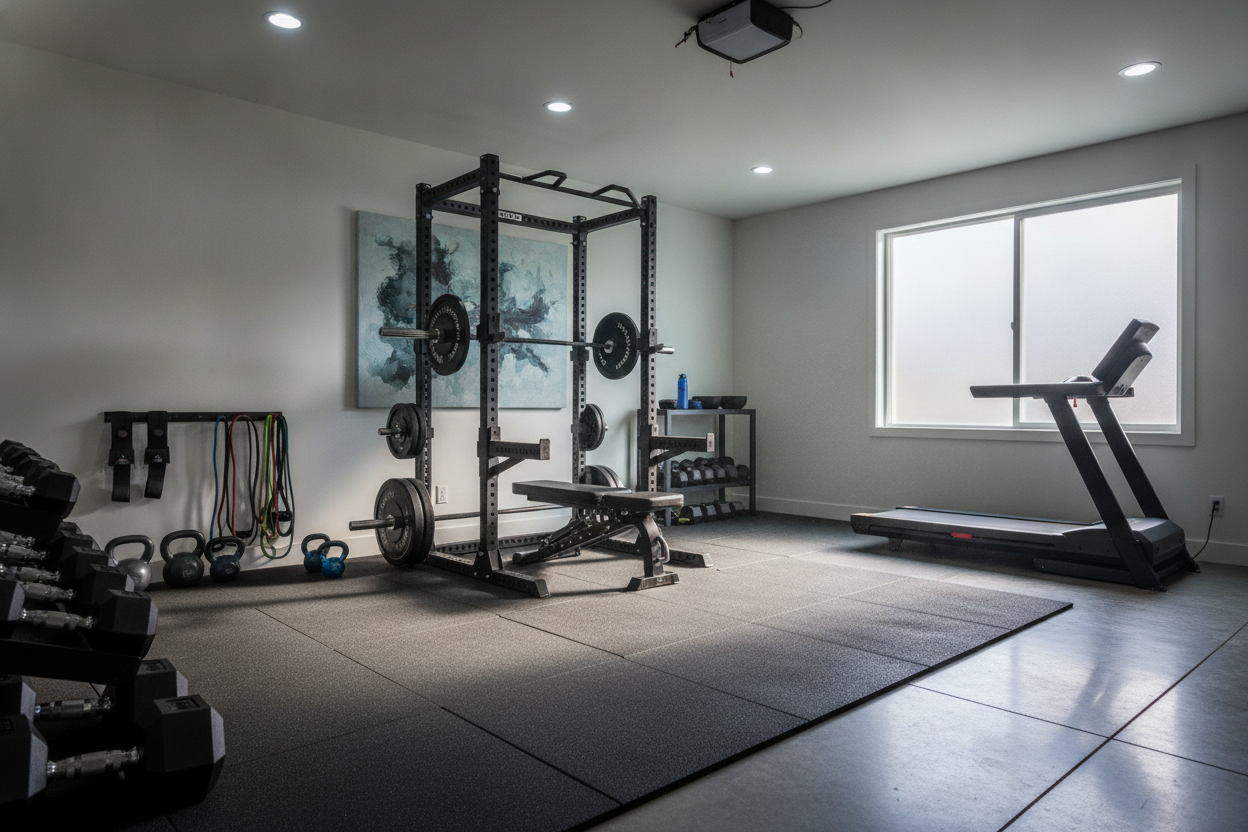
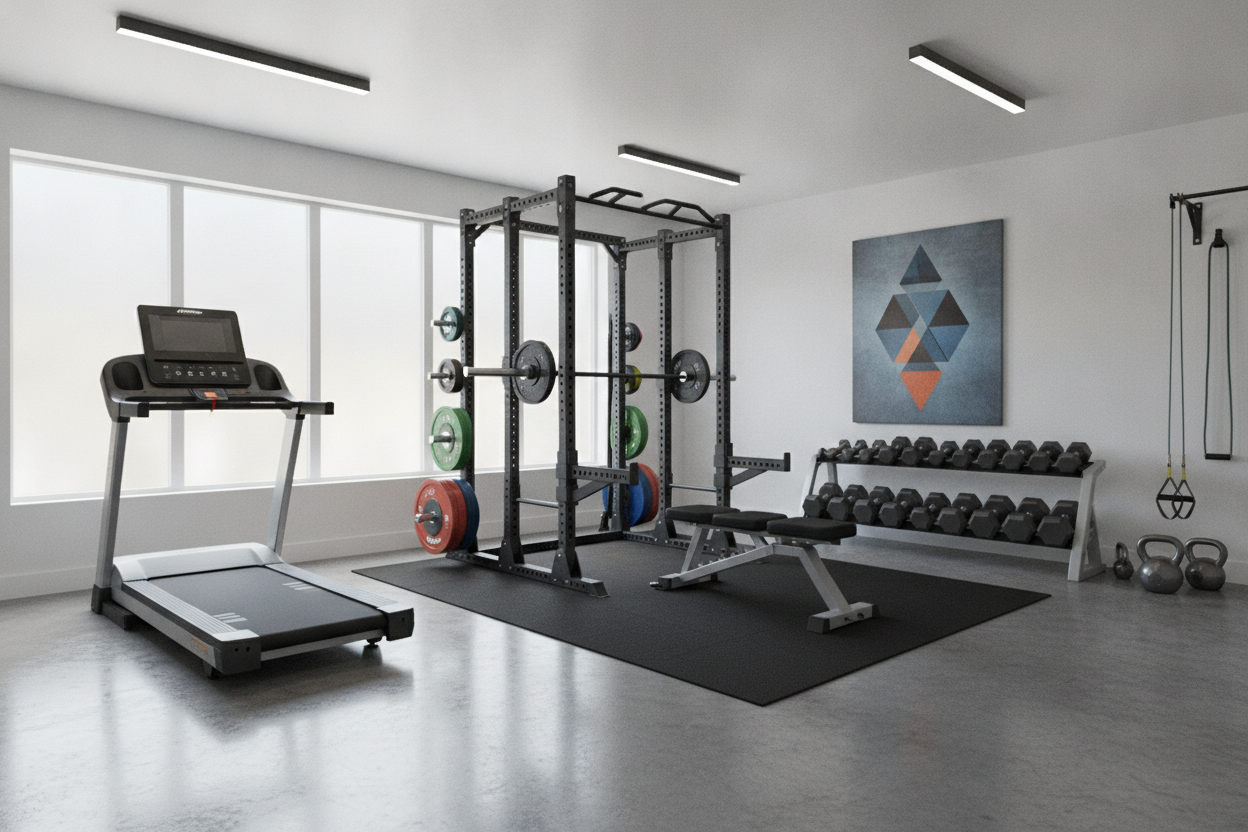
If you're moving beyond dumbbells and into barbell work, a rack is non-negotiable. Don't rely on those standalone squat stands; they're prone to tipping. A full power rack is the only way to safely lift to failure when you're training alone. The Gxmmat X6 Power Rack Weight Bench Package provides a secure, bolted-down feel that lets you focus on the lift rather than whether the rack is going to slide across the floor when you re-rack a heavy set. It’s an investment in your safety as much as your strength.
When Should You Look Beyond Free Weights?
Free weights are the gold standard for building raw strength, but they aren't the only tool in the shed. Once you’ve built a solid base with your weights for working out at home, you’ll likely hit a point where you want more variety. Cables and machines offer constant tension that you just can't get with a gravity-dependent dumbbell. They are fantastic for hypertrophy and working around injuries because they stabilize the path of the weight for you.
Adding Weight Lifting Machines to a home setup used to be impossible due to size, but modern designs have gotten much more compact. A functional trainer or a lat pulldown attachment for your rack can change the way you train your back and shoulders. If you're curious about how to integrate these without turning your garage into a crowded commercial gym, I’ve broken down the best weight training machines for every home gym to help you choose the right ones.
Transitioning to machines doesn't mean you're getting soft. It means you're getting smart. Using a machine for high-rep isolation work at the end of a session is a great way to push your muscles to failure without the systemic fatigue or injury risk of heavy compound free-weight movements. It’s about balance—use the iron for the big stuff and the cables for the finish.
My Bare-Minimum Checklist to Buy Weights for Home Gym
If I had to start over tomorrow with a limited budget, this is the exact list of weights for working out I would buy. No fluff, no useless gadgets—just the essentials that will actually help you build muscle and strength without wasting space.
- One Pair of 50-lb Adjustable Dumbbells: This covers almost all your accessory work like rows, presses, and lunges.
- A 160-lb Olympic Plate Set: This includes two 45s, two 25s, two 10s, four 5s, and two 2.5s. This allows you to increment your lifts by as little as 5 lbs at a time.
- One 20kg (44lb) Barbell: Don't skimp here. Get a bar with a 28mm or 28.5mm diameter and a decent 190k PSI tensile strength.
- A Pair of Spring or Aluminum Collars: Plastic 'lock-jaw' style collars are much easier to use than the old wire springs that pinch your fingers.
Stick to this list and you'll avoid the $500 graveyard of useless equipment that I built in my first year. Buy once, cry once, and then get to work.
FAQ
Is it better to buy new or used weights?
Used iron is almost always better if you can find it. Iron is iron; as long as it isn't cracked, a little rust can be cleaned off with a wire brush and some 3-in-1 oil. However, for adjustable dumbbells or barbells, buy new so you get a warranty and a straight shaft.
Do I really need 2.5-lb plates?
Yes. If you only have 5-lb plates, the smallest jump you can make on a barbell is 10 lbs. That is a massive jump for exercises like the overhead press. Those tiny 2.5-lb plates are the key to consistent, weekly progression.
How do I stop my weights from rusting in a garage?
Airflow is your friend. Use a dehumidifier if you live in a swampy climate. Otherwise, a light coat of WD-40 Specialist or 3-in-1 oil on your bars and plates once every few months will keep the oxidation at bay. Wipe them down after a sweaty session.