I Use Exercises for Upper and Lower Body to Skip Cardio
Last winter, I spent three months staring at a treadmill that had basically become a $1,200 clothes rack for my lifting hoodies. Every time I forced myself onto that belt, I felt my soul leaving my body through my sneakers. It was boring, it took forever, and it didn't actually make me any stronger. I realized that if I wanted to stay lean without the steady-state slog, I had to change how I used my iron.
The solution wasn't adding more miles; it was strategically pairing exercises for upper and lower body to create a metabolic firestorm. By forcing my heart to move blood from my toes to my fingertips in seconds, I turned my garage into a high-octane conditioning suite. No running required.
- Efficiency: You get your lifting and your cardio done in 30 minutes.
- The 'Pump': Total body blood flow leads to insane vascularity.
- Fat Loss: Your heart rate stays in the 'red zone' longer than a jog.
- Recovery: Moving blood helps flush lactic acid between heavy sessions.
The Treadmill Was Just Taking Up Space
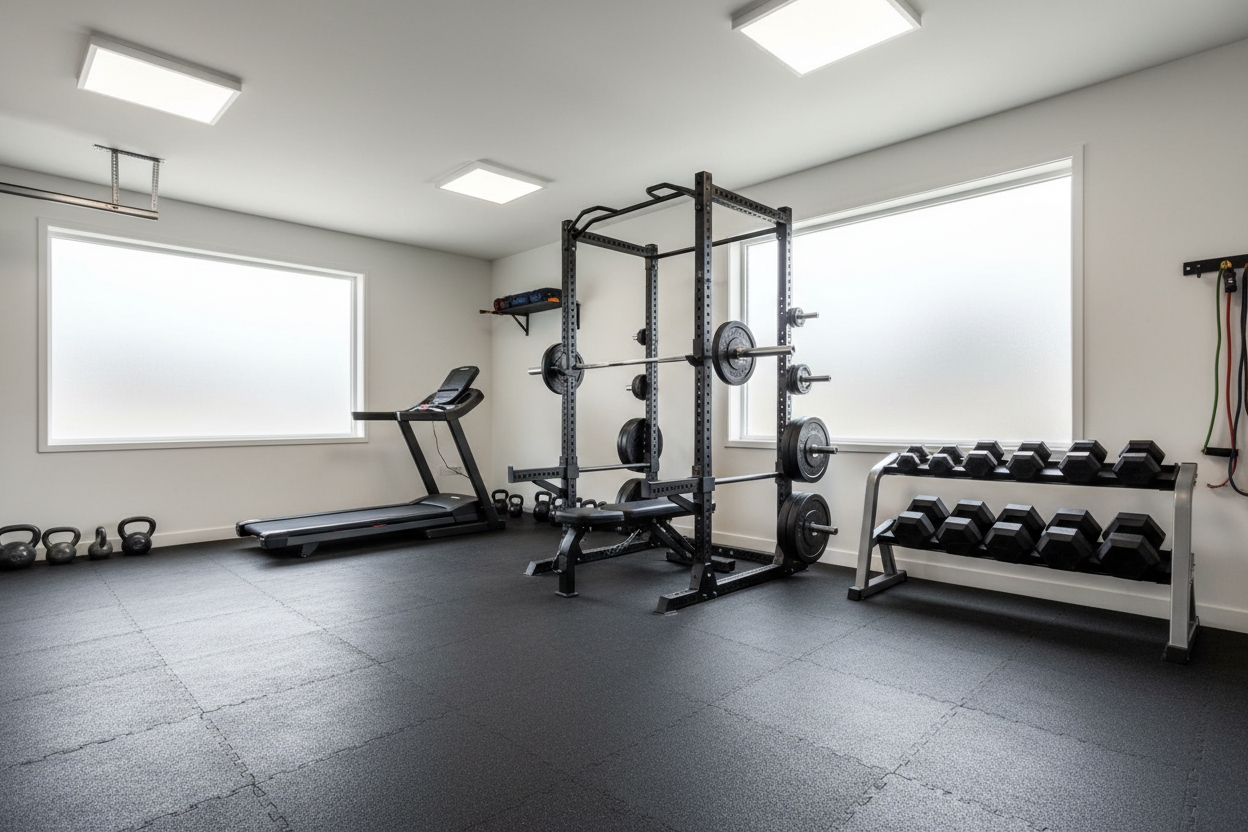
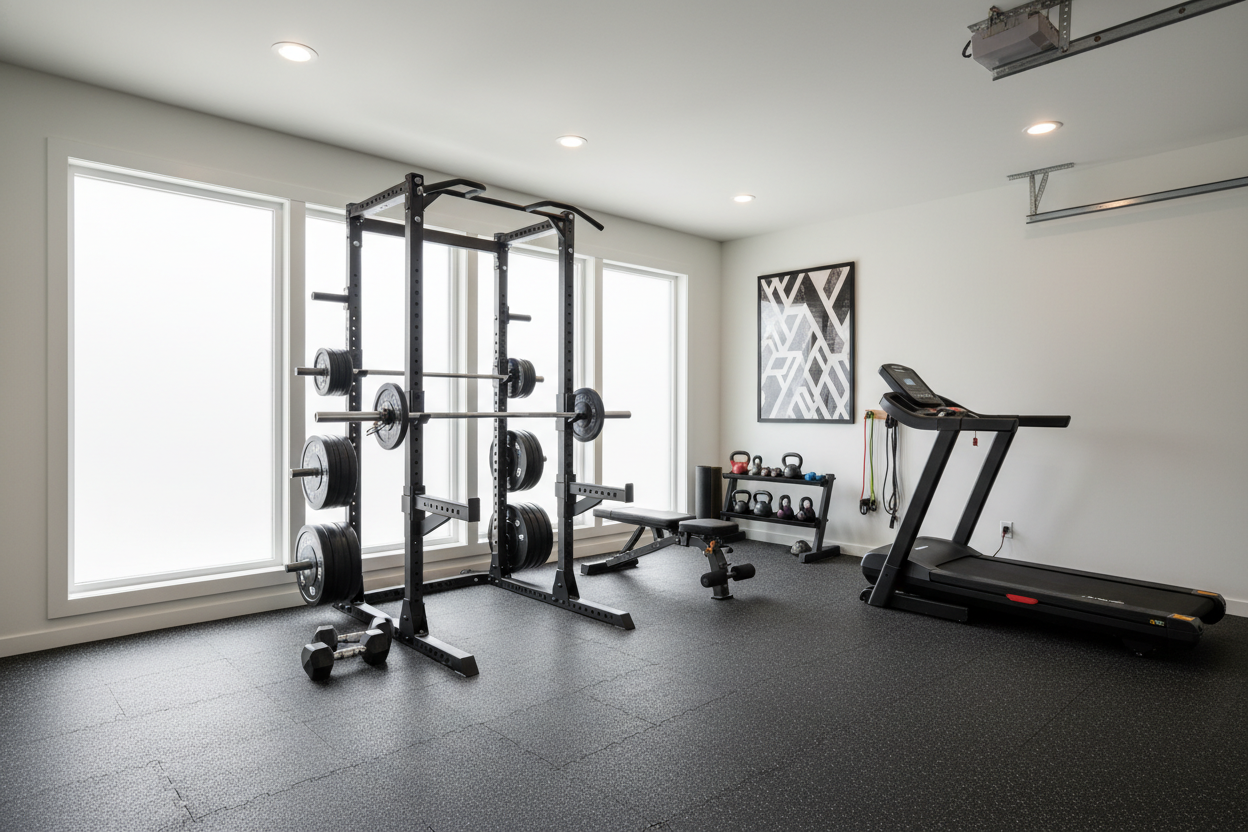
Let's be honest: most garage gym owners don't have the floor space for a massive commercial treadmill. My 20x20 foot space is a premium real estate market, and that machine was a squatter. Beyond the footprint, traditional cardio feels like a chore when you'd rather be pulling heavy triples. But skipping conditioning entirely is a recipe for a 'powerbelly' and getting winded walking up the stairs.
I used to think lifting faster was the answer. It’s not. Doing 20 reps of curls just makes your biceps burn; it doesn't challenge your cardiovascular system in a way that builds real-world stamina. You need a method that demands massive oxygen consumption without sacrificing the heavy loads that actually build a physique. That's where the 'Blood Shunt' comes in.
Enter the 'Blood Shunt' Method
In the nerdier corners of the fitness world, this is called Peripheral Heart Action (PHA) training. The logic is simple: when you hit a heavy set of squats, your body rushes blood to your legs. If you immediately follow that with a set of overhead presses, your heart has to work like a high-pressure pump to 'shunt' that blood all the way to your shoulders. It’s a brutal cardiovascular demand that happens while you're technically 'just lifting.'
This isn't some fancy bio-hack; it's just physics. By alternating upper and lower body weight training back-to-back, you keep your heart rate elevated for the entire duration of the workout. A basic weight set and bench is all you need to execute this. You don't need a $3,000 rower or a fan bike that sounds like a jet taking off in your ear. You just need the discipline to keep the rest periods short and the transitions tight.
How to Pair Your Movements Without Crashing
The mistake most people make is pairing two 'high-skill' movements. If you try to superset heavy 1-rep-max deadlifts with technical barbell snatches, you’re going to end up in the ER. The key is to pick one 'anchor' lift—something heavy and foundational—and pair it with a 'stabilizer' or a less technical movement. This keeps you safe even when your lungs are on fire.
For your lower body, I recommend starting with a blueprint for total lower body power that focuses on compound movements like goblet squats or lunges. These move the most muscle mass and trigger the biggest heart rate spike. For the upper half, follow the logic of upper body weight training exercises by starting with pulls (like rows) before pushes (like bench) to keep your shoulders healthy as you fatigue. A classic pairing is a heavy walking lunge followed immediately by a dumbbell floor press.
The Gear You Need for Lightning-Fast Transitions
If you have to spend three minutes stripping plates and moving safety bars, the 'Blood Shunt' effect dies. This style of lower body upper body workout relies entirely on the speed of your transitions. If your heart rate drops back to baseline because you're hunting for a 10-lb plate, you're just doing a normal workout. You need gear that adjusts in seconds.
I use a Gxmmat adjustable weight bench because it uses a ladder-style adjustment. I can go from a flat press to a 45-degree incline for step-ups in about three seconds. Also, if you have the budget, using a dedicated lower body strength machine like a leg press or hack squat is a massive advantage. It allows you to push your legs to absolute failure without worrying about your lower back rounding or the bar slipping when you're gasping for air.
My 30-Minute Upper Lower Body 'Gas Station' Routine
This is my go-to when I'm short on time and want to feel like I've run a 5K without actually touching the pavement. Perform these as a circuit. Rest 60 seconds after the final exercise in the block, then repeat for 4-5 rounds. Keep the weight around 60-70% of your max.
- A1: Goblet Squats - 12 Reps (Keep the kettlebell tight to your chest)
- A2: Dumbbell Bench Press - 12 Reps (Focus on the stretch)
- A3: Alternating Reverse Lunges - 10 Reps per leg
- A4: One-Arm Dumbbell Rows - 12 Reps per arm
By the third round, your shirt will be soaked. By the fifth, you'll understand why I sold my treadmill. This routine hits every major muscle group while forcing your heart to work harder than any jog ever could.
Personal Experience: The 'Ego' Trap
I'll be honest: the first time I tried this, I tried to use my 5-rep-max weights. I got through one and a half rounds before I had to lay down on my cold rubber mats because I was seeing stars. I felt like a failure, but the reality is that PHA training is a different animal. You have to check your ego at the door. Lower the weight by 20%, focus on the transition speed, and let the cumulative fatigue do the work. It's not about the weight on the bar; it's about the lack of air in your lungs.
FAQ
Can I do this every day?
No. This is high-intensity conditioning. Treat it like a heavy leg day. Twice a week is usually the sweet spot for most home lifters to avoid burnout.
Do I need adjustable dumbbells?
They help a lot with transition speed. If you have a full rack of fixed dumbbells, that's even better. If you only have one pair of plates, you'll spend too much time changing weights.
Is this better than HIIT?
It's a form of HIIT, but with the added benefit of mechanical tension. You aren't just jumping on a box; you're moving external loads, which preserves muscle mass better than pure plyometrics.