I Trashed My Spreadsheets for Just 5 Exercises for Strength
I was staring at a Google Sheet with 14 color-coded tabs and an 'accessory' list that took longer to read than my actual warm-up. My bench press had been stuck at 245 pounds for two years. I was following every 'optimal' volume guide I could find, yet I looked and felt exactly the same. I finally got fed up, deleted the spreadsheets, and stripped my routine down to just 5 exercises for strength.
The result? I hit a 20-pound deadlift PR in six weeks. It turns out my problem wasn't a lack of variety; it was a lack of intensity caused by trying to do everything at once. When you stop worrying about your 'inner-upper-chest' and start worrying about moving heavy iron, things actually start to happen.
Quick Takeaways
- Over-programming leads to 'junk volume' where you're too tired for the lifts that actually matter.
- Focusing on five movement patterns (Squat, Hinge, Push, Pull, Carry) covers 99% of your needs.
- Minimalist training allows for higher intensity and better recovery.
- You only need a barbell, a rack, and a solid floor to get world-class results.
The Problem With 'Optimal' 20-Exercise Routines
Social media has convinced us that we need a different isolation movement for every single muscle fiber. You see guys doing three types of lateral raises and four different bicep curls before they even touch a barbell. This is junk volume. It feels like work because you're sweating and 'getting a pump,' but it doesn't force your central nervous system to adapt.
When your program is bloated, you subconsciously sandbag the first few lifts to save energy for the remaining eighteen. You aren't training; you're just exercising. Real strength requires a level of focus that you simply cannot maintain for a two-hour session filled with cable crossovers and leg extensions.
Why Pruning Your Workout Forces You to Try Harder
There is a psychological shift that happens when you walk into your garage and know you only have two or three things to do. You can't hide from the weight. Without the fluff, you have no choice but to push the main lifts to their absolute limit. You stop being a collector of exercises and start being a practitioner of strength.
This minimalist approach works best when you invest in heavy-duty strength equipment rather than a dozen cheap gadgets. A rack that doesn't wobble when you re-rack 300 pounds is worth more than ten fancy selectorized machines. When your gear is reliable, you can focus entirely on the effort instead of wondering if the equipment is going to hold up.
The Core 5 Strength Exercises I Actually Kept
I boiled my entire training philosophy down to five movement patterns. These are the 5 strength exercises that provide the highest return on investment. If an exercise didn't help one of these five, it got the axe.
The survivors were the Back Squat (Squat), the Conventional Deadlift (Hinge), the Overhead Press (Vertical Push), the Weighted Pull-Up (Vertical Pull), and the Farmer’s Walk (Carry). This core rotation of 5 strength exercises hits every major muscle group and builds the kind of 'farm strength' that actually carries over to real life. You aren't just building show muscles; you're building a chassis that can handle load.
How to Run This Program Without Losing Your Mind
People worry that doing the same 5 strength training exercises will get boring or lead to overuse injuries. The secret is simple variation. You don't change the movement pattern, you just change the tool or the stance. Swap a back squat for a front squat for a month. Trade your conventional deadlift for a trap bar pull.
If you feel like your upper body needs more attention, you can swap your horizontal push for specific chest movements to build strength like the incline bench or floor press. The key is to keep the volume low and the weight heavy. Don't add more exercises; just get better at the ones you have.
The Bare Minimum Gear You Need to Pull This Off
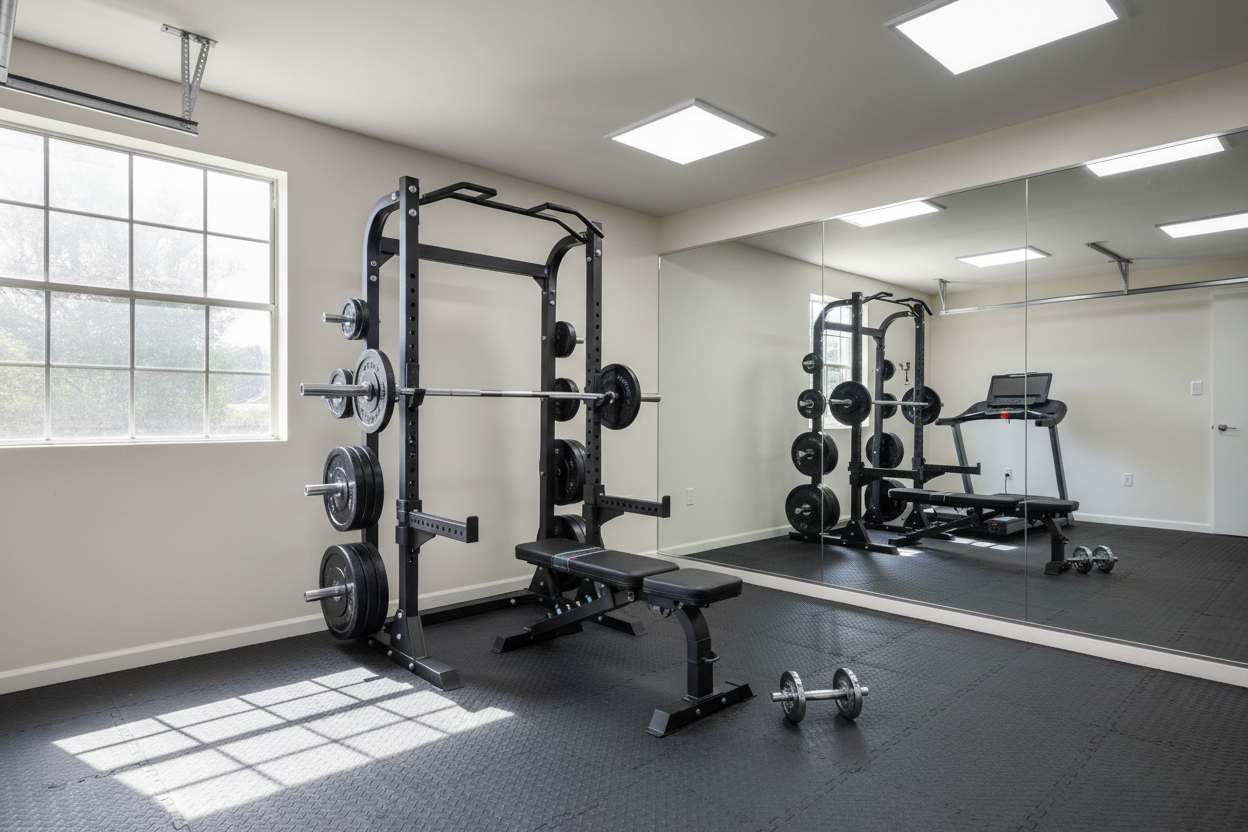
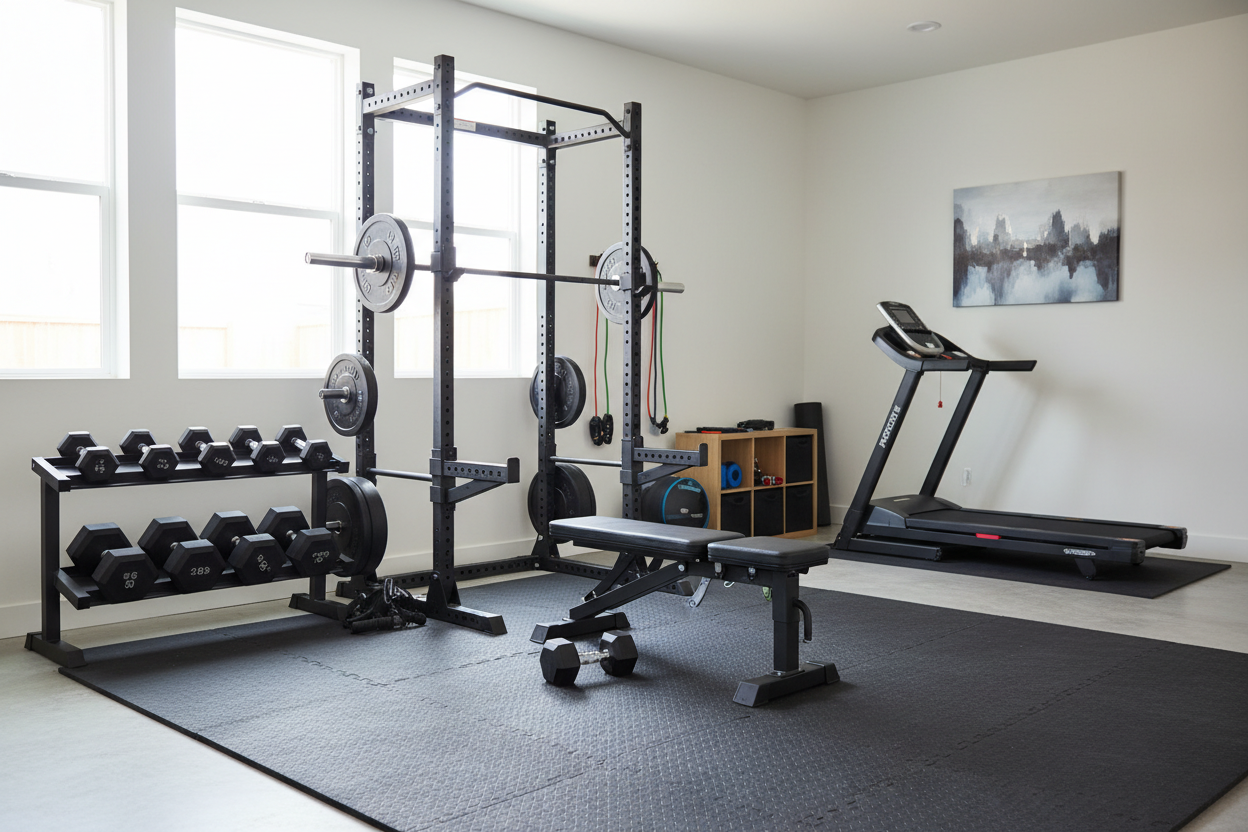
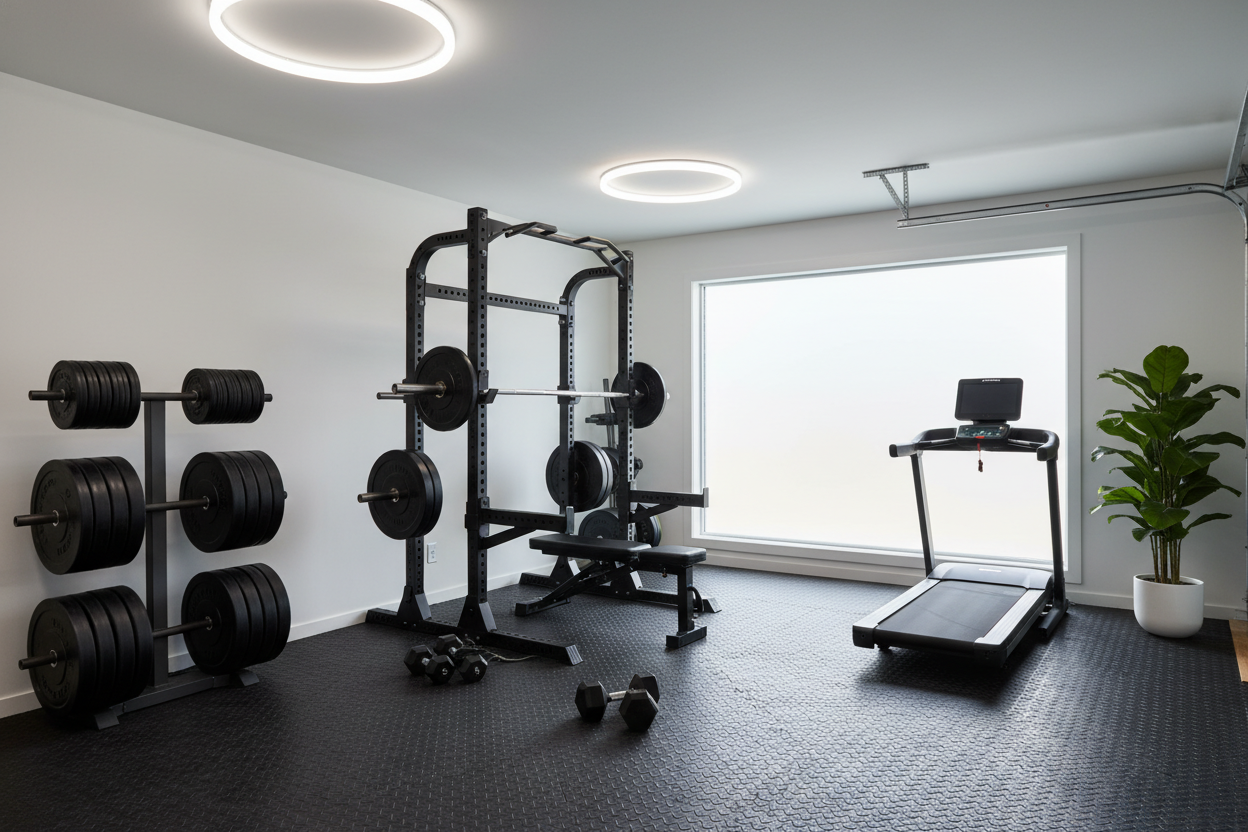
You don't need a 2,000-square-foot commercial space. My entire 'PR factory' fits in half of a two-car garage. You need a power rack with a pull-up bar, an Olympic barbell, and enough plates to actually challenge yourself. Everything else is secondary.
Protecting your foundation is the only other 'must.' I put down a thick exercise mat to save my concrete from the impact of heavy deadlifts and dropped carries. Beyond that, keep your kit simple. Grab some essential strength training accessories like a 10mm lever belt and a block of chalk. If it doesn't help you lift more weight, you don't need it in your gym.
My Personal Experience: The Cable Machine Trap
Three years ago, I bought a fancy functional trainer because I thought I needed it for 'scapular health' and 'face pulls.' It cost $1,200 and took up a massive footprint in my garage. Six months later, I realized I was spending 30 minutes on cable fluff and only 10 minutes on my squats. I sold the machine, bought a second-hand Ohio Bar, and my strength exploded. I learned the hard way that complexity is usually just a distraction from the hard work of moving heavy bars.
FAQ
Can I build muscle with only 5 exercises?
Absolutely. Hypertrophy is a byproduct of mechanical tension. If you're adding weight to these five movements over time and eating enough protein, you will grow. Big movements build big muscles.
What about my abs?
Heavy squats, deadlifts, and especially heavy carries require massive core stability. Your 'abs' are working harder to stabilize a 400-pound bar than they ever will during a crunch.
How long should these workouts take?
If you're resting properly between heavy sets (3-5 minutes), you can be in and out in 45 to 60 minutes. It's about quality, not clock-watching.