I Traded the Barbell Shoulder Press With Dumbbells for Good
I used to be a barbell purist. If it wasn't a 45-pound Olympic bar loaded with iron, I didn't think it counted for real strength. But after a decade of chasing a three-plate overhead press, my AC joints started sounding like a bowl of Rice Krispies every time I reached for a coffee mug. The rigid, fixed path of the bar was wrecking my mechanics. That is when I decided to swap my heavy barbell shoulder press with dumbbells for a six-month experiment.
The results weren't just about pain management. My shoulders actually got wider, my bench press stability improved, and I stopped dreading 'Push Day.' If you are tired of the grinding feeling in your rotators, it might be time to look at the pair of bells sitting in the corner of your gym.
Quick Takeaways
- Dumbbells allow for a natural, slightly neutral grip that saves your rotator cuffs.
- Free weights expose unilateral imbalances that a barbell hides.
- You get a deeper range of motion at the bottom of the lift since the bar doesn't hit your chest.
- Setup is everything—learning to 'kick' the weights up is a mandatory skill for solo lifters.
The Day I Finally Put the Barbell Down
It happened during a standard 5x5 session. I was fighting through my third set at 165 pounds when my left shoulder gave a sharp, hot 'zip' sensation. I finished the rep, but the feedback was clear: my body was done with the straight bar. The barbell forces your wrists, elbows, and shoulders into a fixed plane. If your mobility is even slightly off, your joints pay the tax.
I spent the next week researching the best way to do dumbbell shoulder press variations. I realized I had been using the barbell as a crutch for my weaker left side. Switching to dumbbells felt like a ego-check. I couldn't even handle 60-pounders for the same volume. But the clicking stopped immediately. My shoulders felt 'greased' rather than ground down.
Why Free Weights Force Honest Mechanics
When you use military press free weights, there is nowhere to hide. On a barbell, your dominant side can easily take over 60% of the load without you even noticing. This leads to that lopsided look where one trap is huge and the other looks like it belongs to a different person.
A shoulder military press dumbbell movement requires every stabilizer muscle in your upper back and core to fire simultaneously. You have to balance two independent loads in space. This 'honest' tension is what actually builds the capped-delt look. If your left hand is shaking while your right is steady, you've just identified exactly why your progress has stalled.
Nailing Your Setup (Without a Spotter)
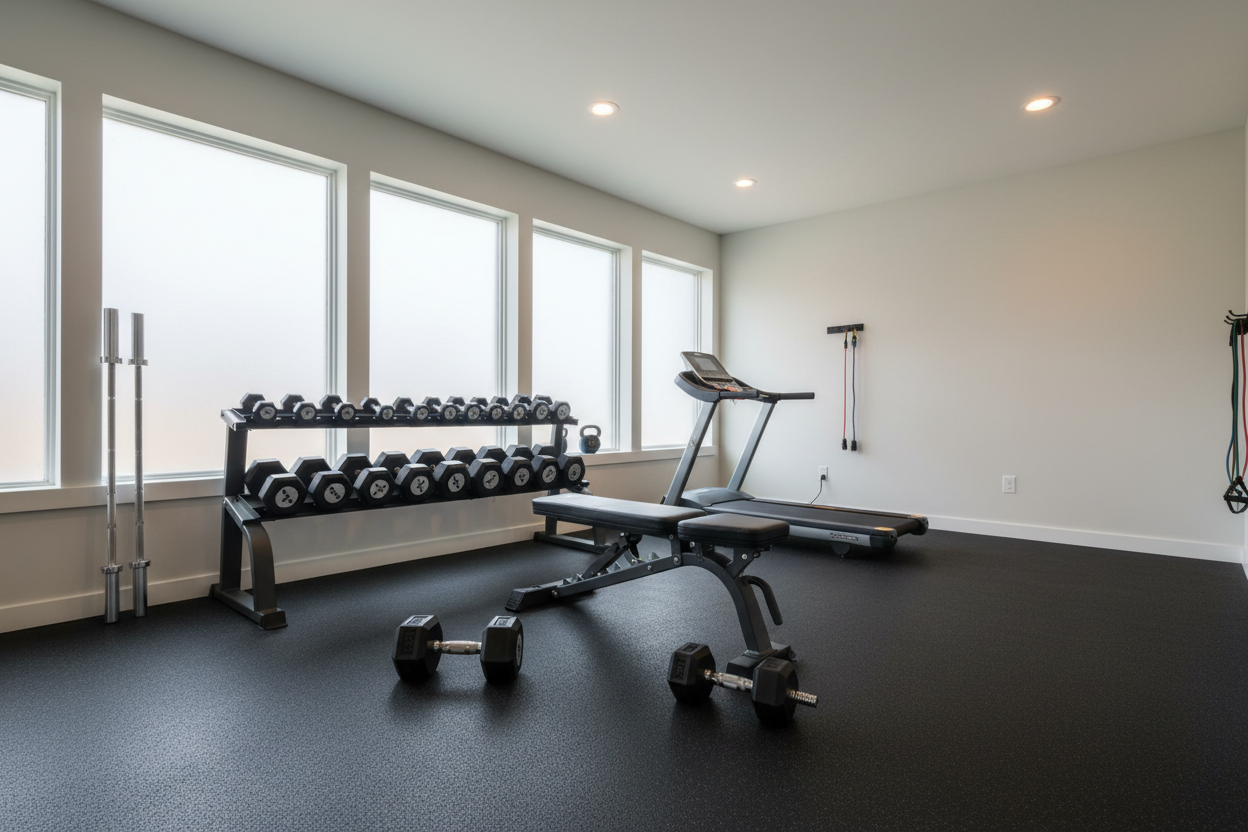
The hardest part of heavy dumbbell work in a home gym is getting the weights into position. I've seen guys try to 'curl' 80-pounders into place—that is a fast track to a bicep tear. The pro move is to sit on your military press chair or adjustable bench, place the dumbbells vertically on your thighs, and use your knees to kick them up one at a time to shoulder height.
Once they are up, you need to stay tight. I often see people arching their lower back like they are trying to turn it into an incline bench press. To avoid this, keep your feet planted and squeeze your glutes. If you find yourself struggling with stability, check out these tips on how to shoulder press dumbbell without back pain. Bracing is just as important as the push itself.
The Wrist Tweak That Saves Your Joints
One of my favorite dumbbell shoulder press tips is to avoid the 'flared elbow' position. On a barbell, your elbows are often forced out wide. With dumbbells, you can bring them in about 30 degrees into the 'scapular plane.' This is much friendlier on the labrum.
I also highly recommend experimenting with a dumbbell shoulder press with rotation, often called the Arnold Press. Starting with your palms facing you and rotating them outward as you press creates a massive pump in the side and front delts. If that feels too complex, a simple front press with dumbbells using a neutral grip (palms facing each other) is the safest way to move heavy weight if you have a history of impingement.
What About Fixed-Path Equipment?
I get asked a lot if a machine is just as good. While a plate-loaded machine is great for pure hypertrophy because you don't have to balance the weight, it lacks the stabilizer recruitment of free weights. In the debate of shoulder press machine vs dumbbell, I always lean toward the dumbbells for home gym owners. You get more 'bang for your buck' in terms of functional strength and core engagement.
Plus, a set of dumbbells takes up way less space than a massive shoulder press unit. If you're working in a 10x10 spare bedroom, versatility is king. You can't do lateral raises or rows with a shoulder press machine, but you can do it all with a pair of 50s.
Putting It Together: The Perfect Form
To master the military press dumbbell form, start with the weights just outside your shoulders. Your forearms should be perfectly vertical. As you drive upward, don't just think about pushing the weights up; think about 'shrugging' into the ceiling at the very top. This shoulder press out at the lockout ensures full serratus activation.
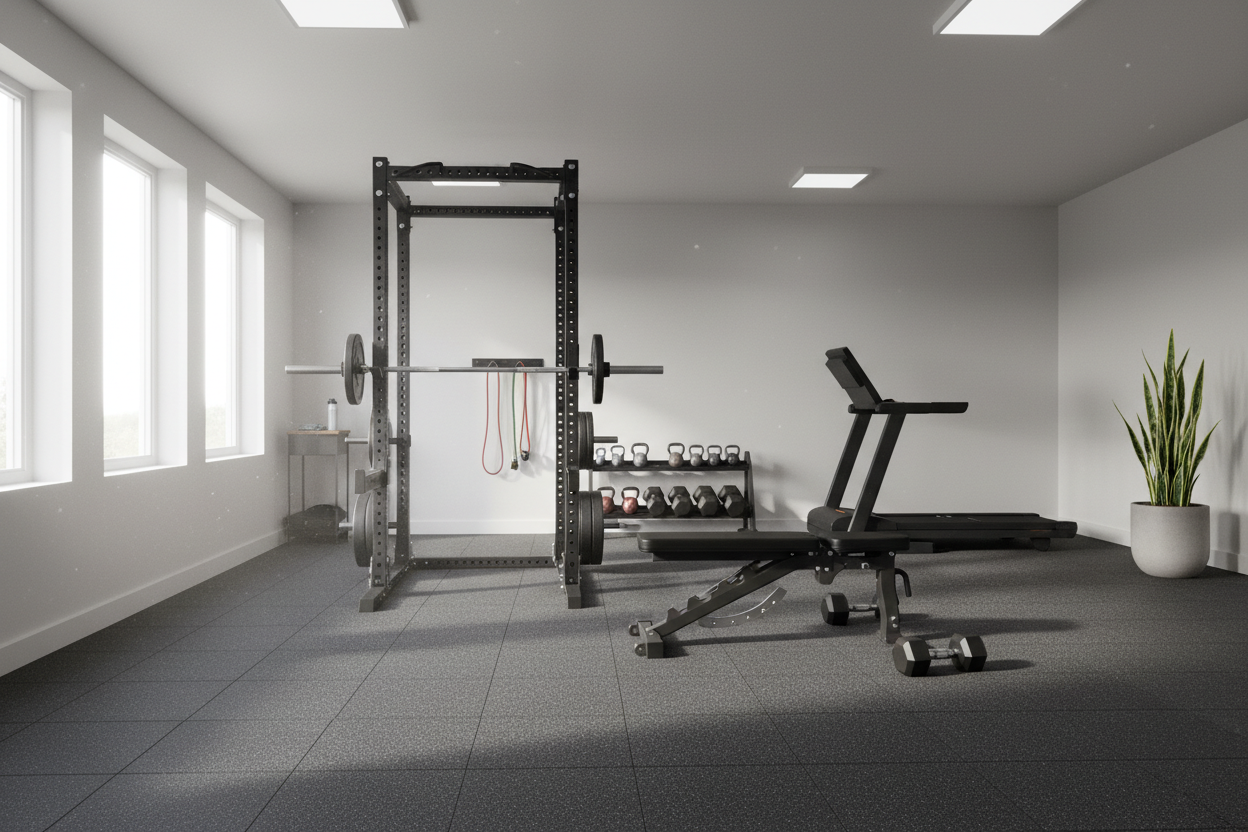
If you're looking to build a serious setup that handles both the heavy basics and these accessory movements, a solid power rack weight bench barbell package is the foundation. You can use the rack for your heavy pulls and the bench for your seated dumbbell work. Just remember: control the eccentric. Don't let the weights drop like stones; fight them on the way down for three seconds to really tear those muscle fibers.
FAQ
Is it better to do dumbbell press standing or seated?
Seated allows you to lift more weight and focus entirely on the delts. Standing turns it into a full-body stability exercise and hits your core harder. I do seated for my heavy 'strength' sets and standing for higher-rep 'volume' sets.
How low should I go on a dumbbell shoulder press?
Go as low as your mobility allows without your lower back arching. For most, that means the bottom of the dumbbell should be roughly level with your ears or chin. Don't short-change the range of motion.
Why do my shoulders click when I press dumbbells?
Usually, it is because your elbows are flared too wide. Try a neutral grip (palms facing each other) or tuck your elbows in slightly. If it still clicks without pain, it might just be gas bubbles; if it hurts, stop and see a PT.