I Tracked How to Build Muscle in a Month (And Kept the Receipts)
I’ve spent the last decade turning my garage into a temple of iron, testing everything from $1,000 barbells to the cheapest Amazon plates. Last month, I decided to stop testing gear for a second and test myself. I wanted to see if the '30-day transformation' was actually possible or just a clever way to sell overpriced pre-workout. I logged every set, weighed every meal, and obsessively tracked how to build muscle in a month to find out what really happens when you push the limit.
- True muscle tissue growth is capped at about 1-2 pounds per month for most natural lifters.
- Most 'rapid' gains are actually glycogen and water stored inside the muscle cells.
- Compound movements (squats, presses, pulls) are the only effective way to trigger growth on a short timeline.
- Recovery is the limiting factor—if you can't sleep, you won't grow.
What Actually Happens to Your Body in 30 Days?
When you start a high-intensity block to figure out how to gain muscle in a month, your body undergoes a massive shift in fluid dynamics. Within the first two weeks, your muscles look 'fuller.' This isn't usually new contractile tissue; it's sarcoplasmic hypertrophy. Your body is stuffing your muscle cells with extra glycogen and water to keep up with the new demand. It looks great in the mirror, but it’s essentially a long-term pump.
Real, dry muscle tissue—the stuff that actually makes you stronger—takes much longer to build. In 30 days, you might realistically add 1.5 pounds of actual muscle fiber if your nutrition and training are flawless. The rest of that 'five-pound gain' people brag about on social media? That’s mostly water weight and maybe a little bit of fat from that 'bulking' diet.
The Difference Between a Real Pump and Fake Tissue
Most influencer programs promising you'll learn how to get muscles in a month are just high-volume 'trash' sets. They have you doing 20 sets of curls and lateral raises until your arms are so inflamed you can't put on a t-shirt. This isn't growth; it's just localized swelling. Chronic inflammation like that actually hinders your ability to recover and build real strength.
I’ve seen too many guys burn out by the third week because they think more is always better. Honestly, why googling how to build muscle in 2 weeks is a massive trap becomes obvious once your joints start aching and your morning resting heart rate spikes. You can't cheat the biological clock; you can only optimize the time you have.
My Garage Gym Blueprint for a 30-Day Growth Sprint
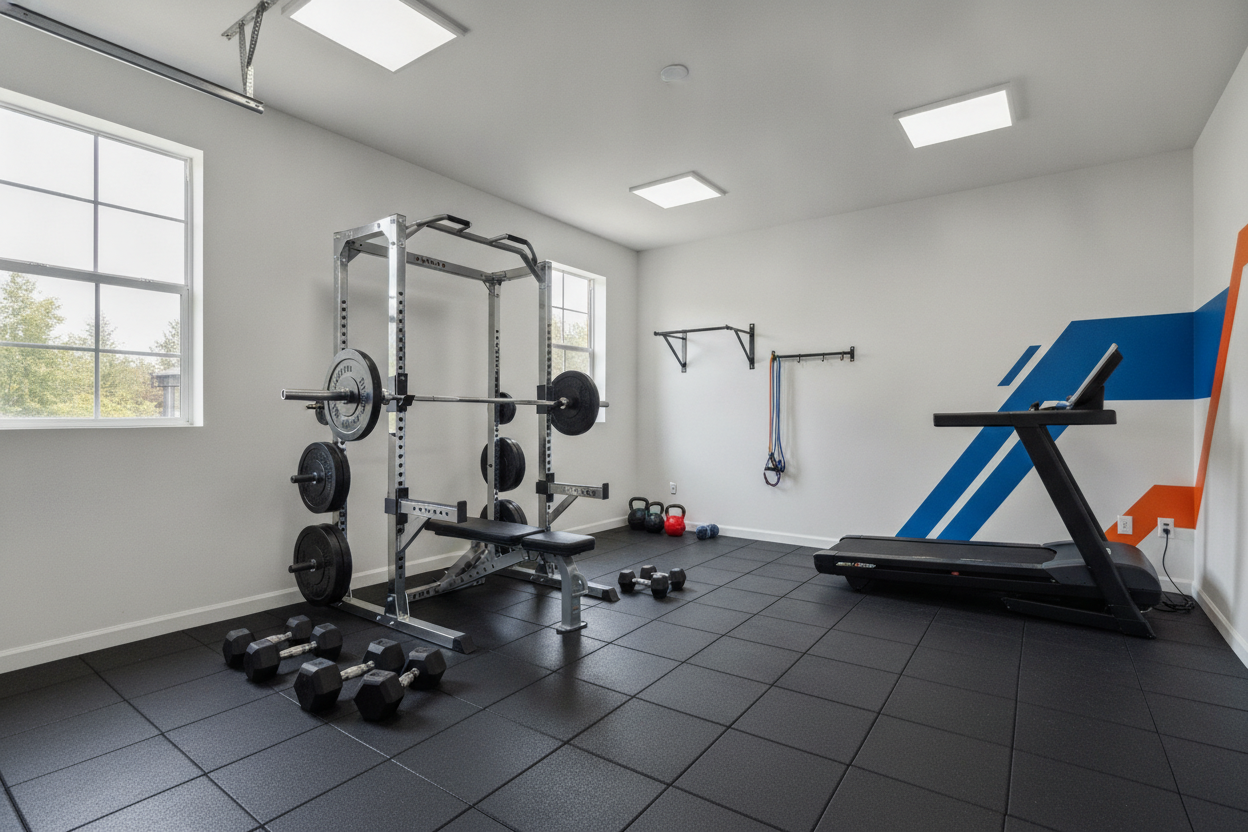
For my 30-day experiment, I stripped everything back. No fancy cables, no 15-variation leg days. I stuck to a heavy upper/lower split, four days a week. I focused on the 6 to 10 rep range for my primary lifts—squats, bench, and weighted pull-ups. I used my 20kg Rogue Ohio Bar for everything. The aggressive knurling kept my grip locked even when my palms were sweating in a 90-degree garage.
By sticking to compound movements, I was able to move the most weight possible. To understand how to build muscle in 1 month, you have to prioritize mechanical tension. That means adding 2.5 to 5 pounds to the bar every single week. If the weight isn't going up, the muscle isn't coming on.
Eating Enough to Grow (Without Getting Fat)
You cannot build a house without bricks. To figure out how to gain muscle mass in one month, I bumped my calories by about 300 above maintenance. I didn't go on a 'dirty bulk.' I just added an extra scoop of protein and a cup of rice to my post-workout meal. This fueled my recovery without turning my abs into a distant memory. I aimed for 1 gram of protein per pound of body weight, which is the gold standard for anyone serious about hypertrophy.
Why Your Gym Floor Might Be Killing Your Lifts
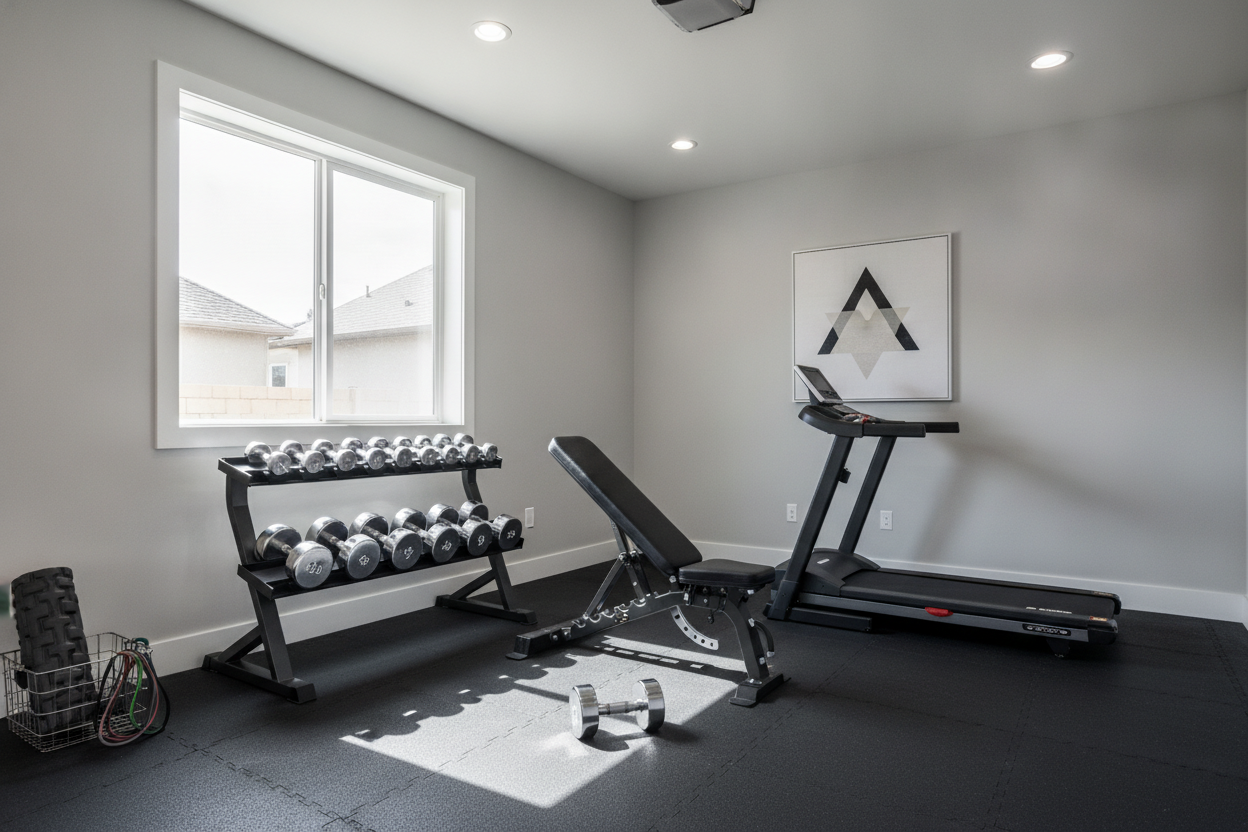
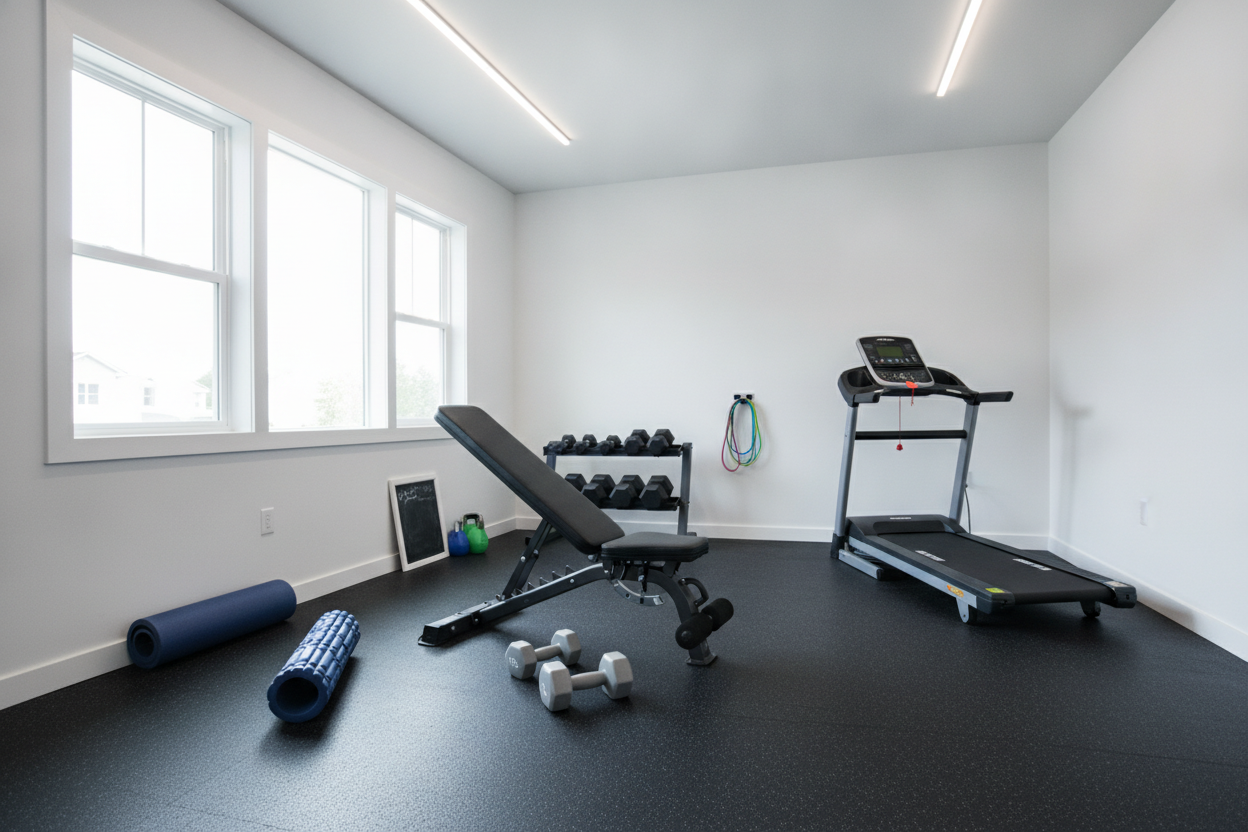
Stability is the most underrated part of growth. If you're trying to squat heavy on squishy carpet or uneven concrete, your brain will literally shut down your muscle output to prevent you from falling over. I noticed a massive difference in my leg drive once I cleared out the clutter and laid down a high-density large exercise mat. It gave me the traction I needed for heavy Bulgarian split squats—a move I hate, but one that is essential for leg size.
Stop Adding Volume and Start Adding Rest
The biggest mistake I made in the past was thinking I had to live in the gym to grow. This time, I kept my sessions under 60 minutes. Once the main work was done, I left. I spent more time focusing on 8 hours of sleep than I did on my bicep peak. Growth happens while you sleep, not while you're grinding out a 5th set of cable flyes.
If you feel like you're hitting a wall, you might need to scale back. I actually saw better results when I looked at how I cut my exercise routine to build muscle in half and applied those principles here. Intensity beats duration every single time. When I stopped doing 'junk volume,' my strength numbers finally started to move again.
Expectations vs. Reality After 4 Weeks
After 30 days, I was up 4.5 pounds on the scale. My clothes fit tighter in the shoulders, and my squat max went up by 15 pounds. Was all 4.5 pounds pure muscle? Absolutely not. I'd estimate maybe 1.2 pounds was actual tissue, with the rest being water and glycogen. But the visual difference was there, and more importantly, the strength was real.
Learning how to build muscle in one month isn't about a total body overhaul. It’s about jumpstarting the process. It proves to you that if you're disciplined with your gear, your form, and your food, your body will respond. Don't look at day 30 as the finish line; look at it as the day you finally figured out the formula.
FAQ
Is it possible to see muscle growth in 30 days?
Yes, but it's mostly 'fullness' from glycogen storage and improved muscle tone. Actual new muscle fiber takes time, but you will definitely look and feel different if you train hard and eat right.
How many days a week should I lift to gain muscle fast?
Stick to 4 or 5 days. Any more than that and you'll likely outpace your ability to recover, especially if you're training with high intensity. Rest days are when the actual repair and growth happen.
What are the best exercises for a 1-month bulk?
Focus on the 'Big Five': Squats, Deadlifts, Bench Press, Overhead Press, and Rows. These recruit the most muscle fibers and allow for the heaviest loading, which is the primary driver for growth.