I Threw Out My Weights Training Chart and Built This Instead
I remember staring at my garage wall three years ago, looking at a glossy, laminated poster I’d bought for twelve bucks on Amazon. It had 50 different exercises on it, color-coded by muscle group, and it looked impressive. But despite following that weights training chart to the letter, my progress had stalled harder than a cold engine in a Minnesota winter. I was doing a lot of 'work,' but I wasn't getting any stronger.
- Generic charts prioritize variety over actual intensity.
- Compound lifts are the only metrics that truly move the needle for most home trainees.
- Physical notebooks beat phone apps because they don't have Instagram notifications.
- If your tracker has more than 6 exercises per session, you're probably wasting time.
The Problem With That Laminated Poster on Your Wall
Most people buy a weight exercise chart because it looks professional. It usually features a guy with 4% body fat doing cable crossovers or something called a 'seated concentration curl.' In reality, those 40 movements are fluff designed to make the poster look like it’s worth the money. If you're training in a garage, you don't have time for twelve variations of a tricep extension. You need to squat, press, and pull.
The issue with a generic free weight exercise chart is that it treats every movement as equal. It suggests that a set of lateral raises is just as vital as a set of deadlifts. This 'shotgun approach' leads to junk volume. You end up exhausted, but your central nervous system hasn't actually been challenged enough to force your muscles to grow. I spent six months doing 'circuit style' charts before I realized I was just doing aggressive cardio with dumbbells.
What a Real Tracker Actually Looks Like
A real weight workout chart shouldn't look like a periodic table; it should look like a grocery list. You want to see the date, the lift, the weight, and the reps. When you use commercial weight lifting machines, you're constantly adjusting pins, seat heights, and cable pulleys, which makes your log look like a mess of technical notes. Barbells and plates are much easier to track because the only variable is the iron on the bar.
I stripped my log down to the essentials. I stopped tracking my 'pump' and started tracking my PRs. If you can't see a clear line of progression over the last four weeks in your main lifts, your chart is failing you. I want to see that 225 lbs for 5 reps turned into 230 lbs for 5 reps. Anything else is just noise.
Why Free Weights Make Tracking Easier
Barbells and dumbbells provide a cleaner data set for your home gym. If you spend any time looking for printable free weight workouts, you'll notice the best ones always circle back to the 'Big Five' movements. There is no ambiguity with a barbell. You either moved the weight or you didn't. Investing in high-quality free weight exercise equipment simplifies your tracking because you aren't accounting for different pulley ratios or friction in a machine's slide.
How I Structure My Own Garage Gym Log
I use a five-dollar spiral notebook. I don't use spreadsheets because I don't want to bring a laptop into a dusty garage, and I don't use apps because they are a gateway to checking my email between sets. When I'm tracking full body exercise weight loss routines, I focus on the 'Big Three' plus two accessories. That's it.
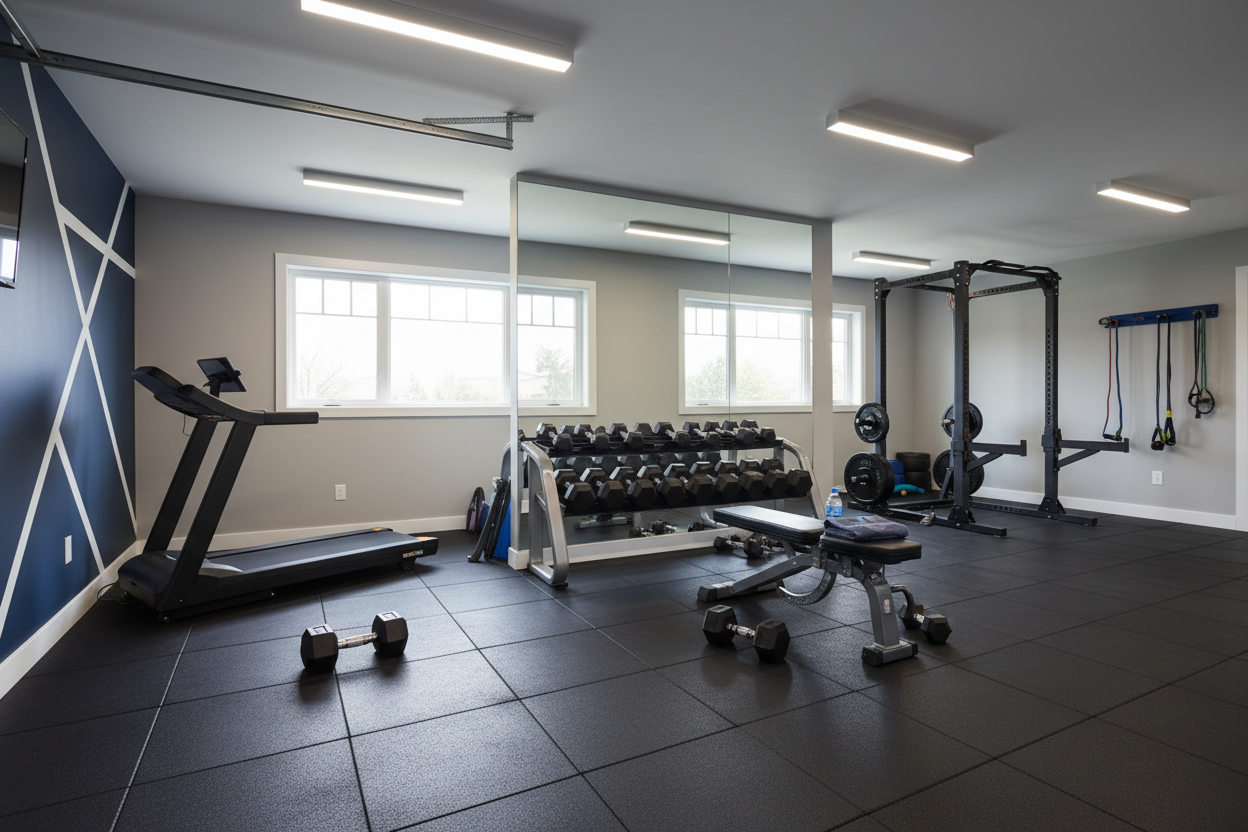
My routine is built around efficiency. I walk into the garage, kick the space heater on, and immediately set up my adjustable weight bench inside the rack. I know exactly what I'm doing because my notebook tells me what I did last Monday. I don't have to scan a wall chart to decide which 'flavor' of bicep curl I feel like doing. I just look at the numbers and try to beat them.
One mistake I made early on was trying to track every single warm-up set. It cluttered the page. Now, I only write down my 'working sets.' If it didn't make me strain, it doesn't get ink. This keeps the log clean and makes it very obvious when I'm plateauing. If I see three workouts in a row with the same numbers, I know I need to eat more or change my recovery, not add more exercises from a poster.
The Bare-Bones Template You Can Steal
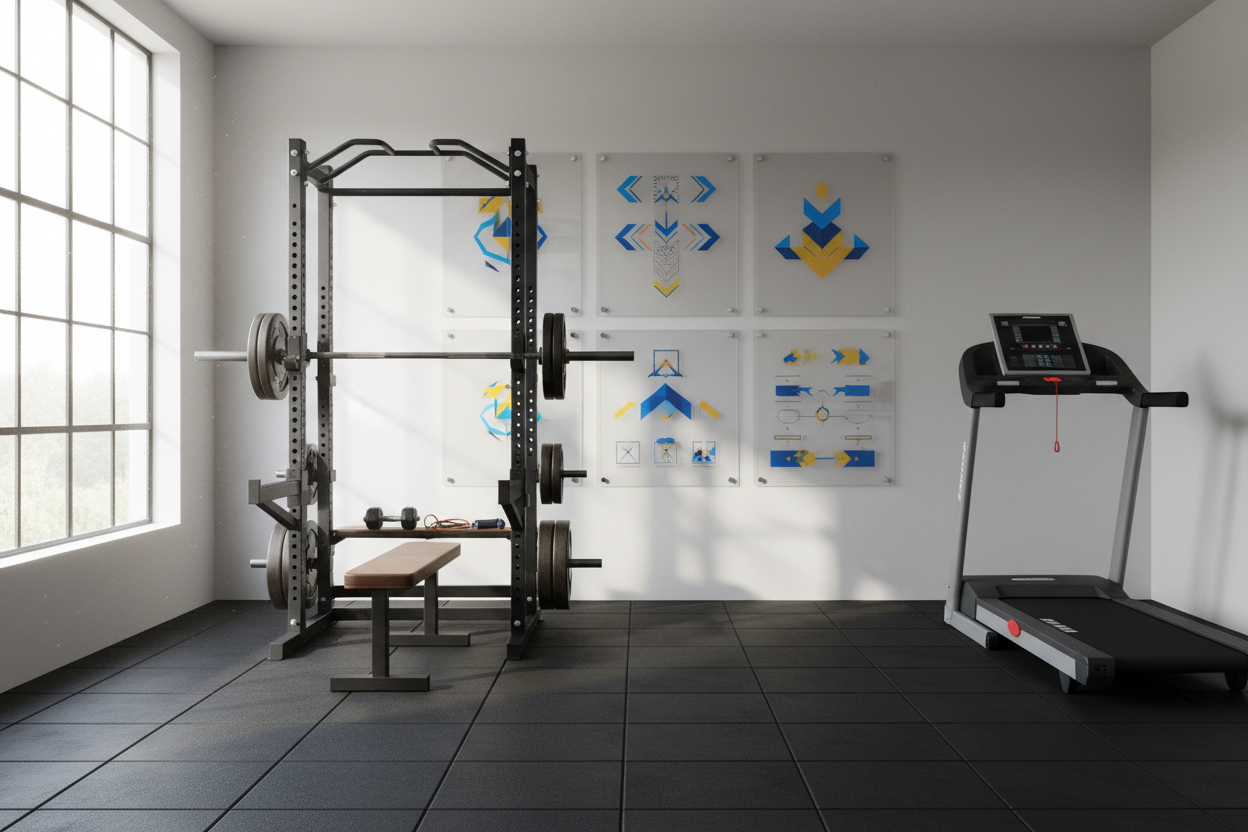
If you've already invested in a solid power rack weight bench package, you have everything you need to build a world-class physique. You don't need a 50-exercise poster. Here is the 'chart' I actually use. Copy this into a notebook and stop overthinking it:
- Monday: Squat, Overhead Press, Pull-ups.
- Wednesday: Deadlift, Bench Press, Barbell Row.
- Friday: Front Squat, Incline Bench, Power Clean.
Write down the weight, the sets, and the reps for those three movements. If you have energy left at the end, do some curls or face pulls, but don't bother tracking them. They're the garnish; the big lifts are the steak.
FAQ
Should I track my rest times on my chart?
Unless you're training for a specific CrossFit-style metcon, don't worry about it. Rest until you're ready to hit the next set with perfect form. Usually, that's 2-3 minutes for heavy compounds.
Is a digital weight workout chart better than paper?
Paper is better for the garage. It doesn't break when you drop a 25-lb plate on it, and it doesn't require a battery. Plus, there's something satisfying about physically crossing out a goal weight.
How do I know when to increase the weight?
If you hit your target reps for all sets with good form, add 5 lbs next time. If you're using dumbbells, you might have to jump by 5 lbs per hand, which is a 10-lb total jump—be careful with that on overhead movements.