I Tested the Most Brutal Exercises for Entire Body Workouts
I’ve spent way too many Tuesday nights scrolling through forums, looking for that mythical 'perfect' routine that builds a physique like a Greek god in twenty minutes. Most of the 'hacks' you find online for exercises for entire body development are just fluff designed to sell PDFs. I’ve tried the 'one move' approach, and frankly, it usually leaves you with great cardio and zero traps.
- One-move workouts usually fail due to systemic fatigue before muscular failure.
- The Barbell Thruster is the closest thing to a 'perfect' movement.
- Heavy pulls are non-negotiable for a thick back and strong glutes.
- Loaded carries bridge the gap between 'gym strong' and 'useful human.'
Why the 'One Exercise Full Body Workout' Myth Needs to Die
We all want the shortcut. The idea of a single exercise for whole body dominance is seductive. You think, 'If I just do 100 burpees or kettlebell swings, I’m good.' I’ve tried it. The reality? Your lungs give out long before your quads or chest get a real growth stimulus. You end up as a very sweaty person with mediocre strength gains.
Chasing a full body workout in one exercise is a bottleneck. If you use a weight heavy enough to challenge your legs, your shoulders will fail on the press. If you use a weight your shoulders can handle, your legs are basically just going for a walk. To actually see results, you need a minimalist three-move approach that covers every plane of motion without compromising load.
The Barbell Thruster: Your High-Output Engine
If you forced me at gunpoint to pick one exercise full body workout, it would be the barbell thruster. It’s a front squat transitioned into an overhead press in one fluid motion. It’s miserable. It’s effective. It’s the closest thing to a full body one exercise solution for building explosive power and core stability simultaneously.
When you’re looking for the best exercise equipment for full body workout, a solid 28mm or 28.5mm barbell beats a $3,000 cable machine every time. The thruster requires your core to stay rigid under a front-loaded weight, which hits your abs harder than any crunch ever will. Just make sure your bar has decent knurling; sweat and high-rep thrusters are a recipe for a dropped bar.
Heavy Floor Pulls: Building the Posterior Chain
The thruster is great, but it’s very 'front-side' dominant. To actually exercise whole body systems, you have to pull something heavy off the floor. Whether it’s a standard deadlift or a heavy clean pull, you need that hinge movement to hit the hamstrings, glutes, and spinal erectors. This is where the real mass is built.
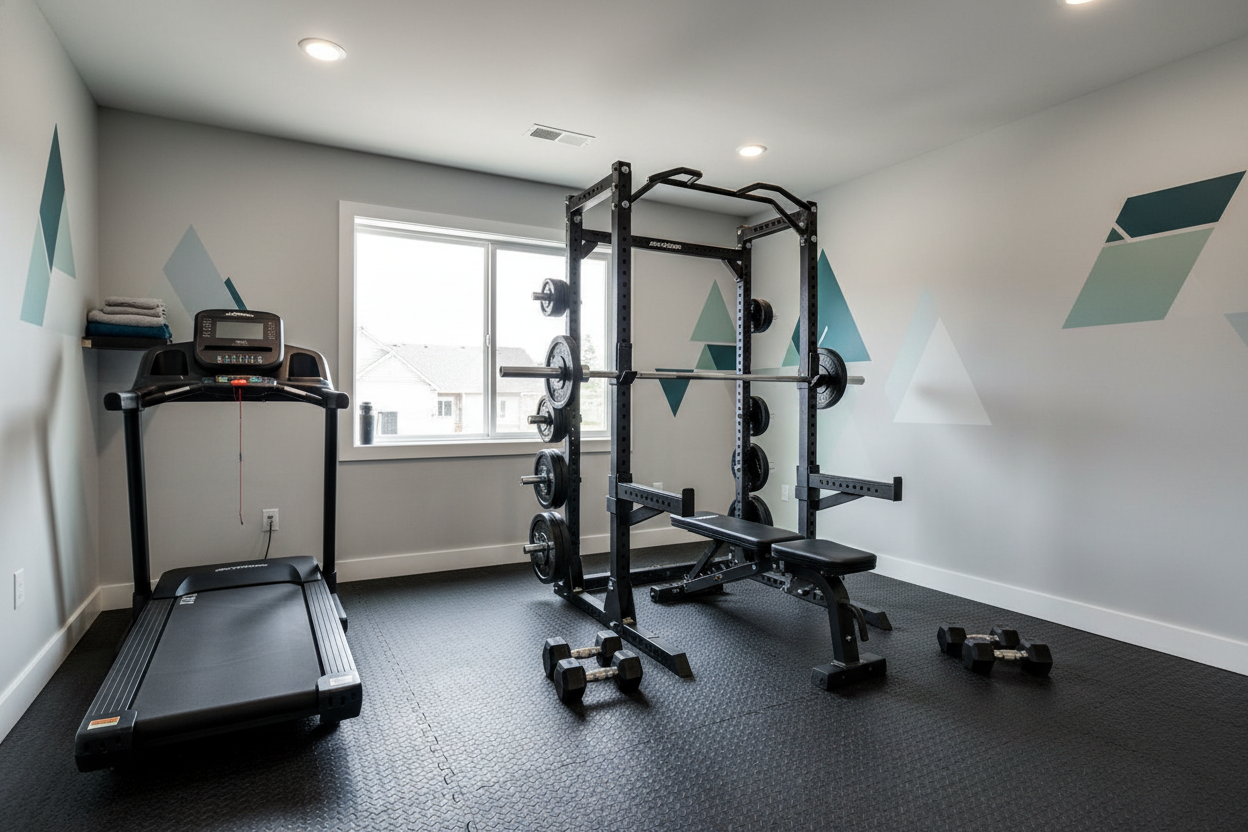
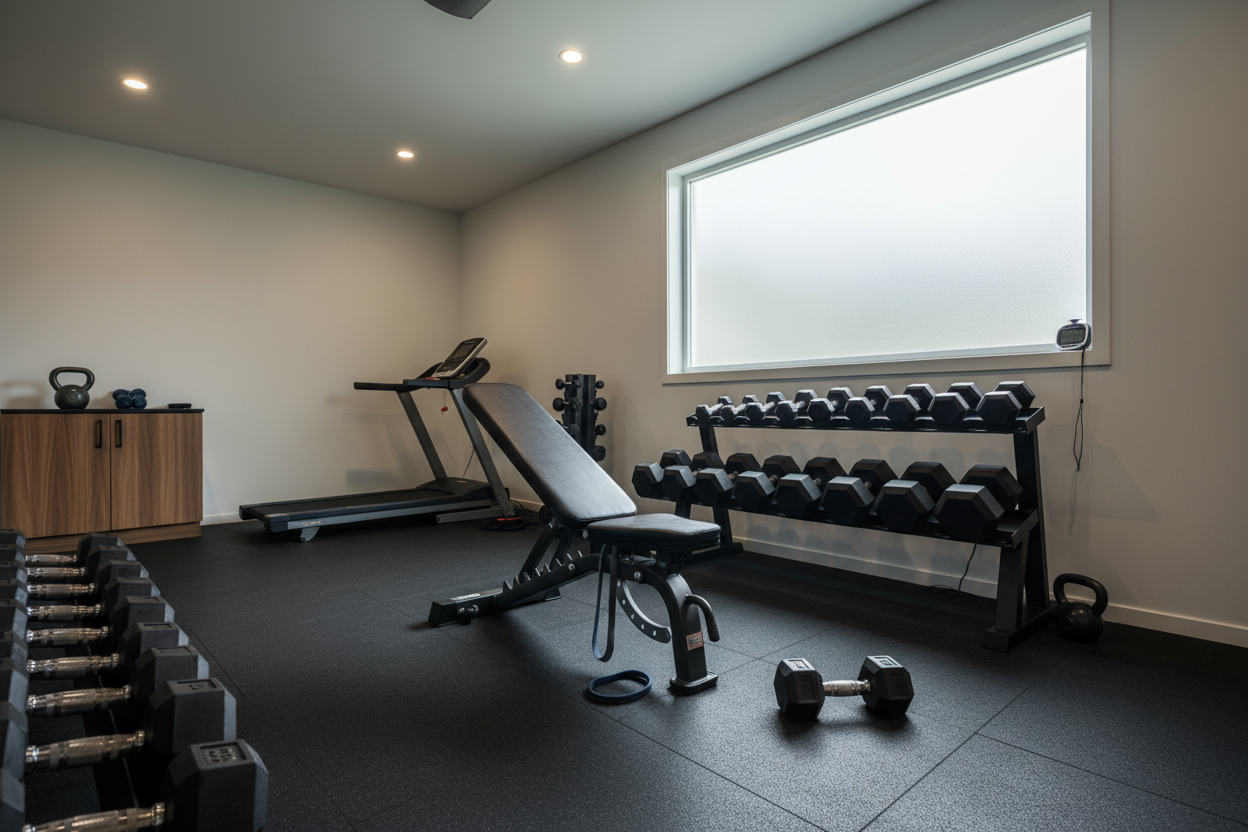
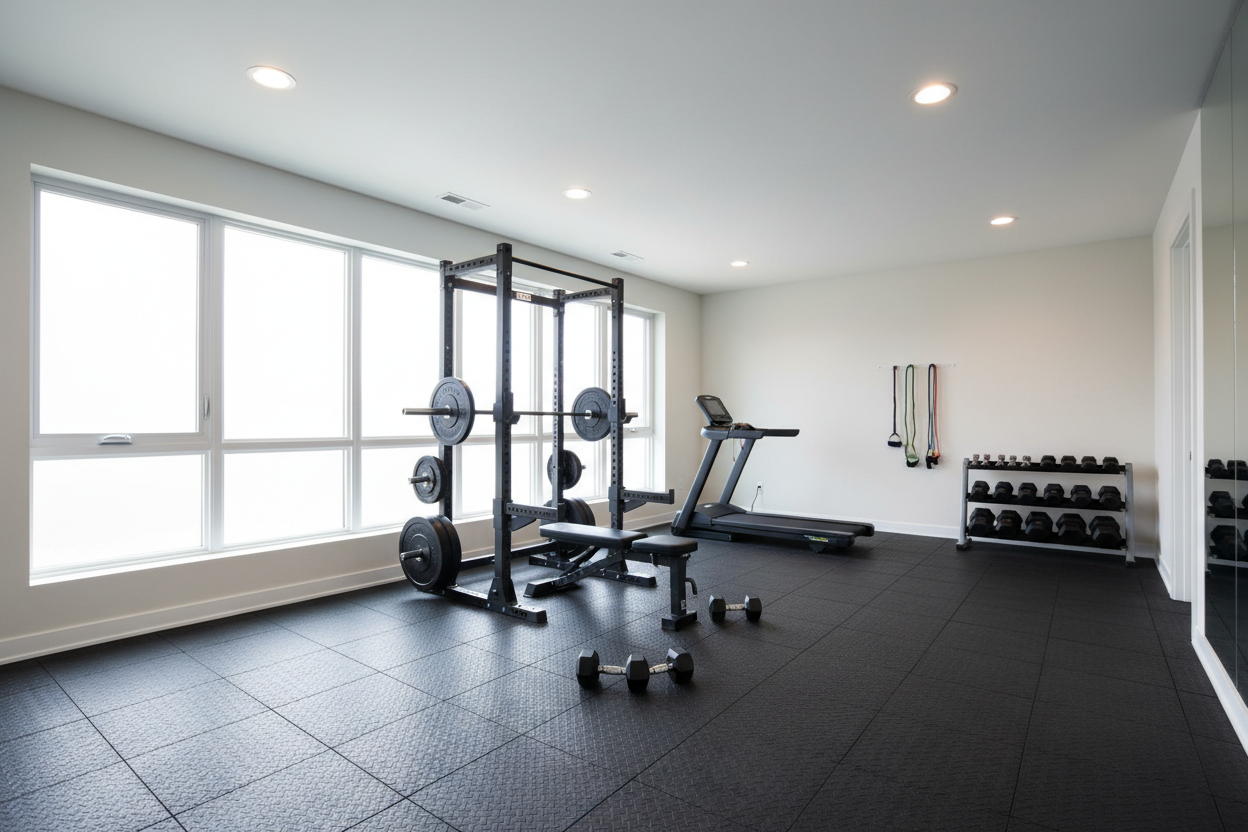
I’ve made the mistake of pulling heavy on bare concrete, and my foundation paid the price. You need a large exercise mat for home gym use to dampen the vibration and protect your plates. A 3/4-inch rubber stall mat is the gold standard here. When you’re pulling 405 lbs, the last thing you want to worry about is cracking the slab or waking up the neighbors three houses down.
Loaded Carries: The Final Piece of the Puzzle
Loaded carries are the most underrated move in the best exercises for the whole body. Pick up two heavy dumbbells, a couple of kettlebells, or a sandbag, and walk. It sounds simple, but it’s a single exercise for whole body stability that builds massive traps and a grip like a vice. It forces your body to resist rotation and stay upright under duress.
I usually grab my 50lb dumbbells and pace the length of my driveway until my forearms scream. It’s the ultimate finisher. If you find your grip failing before your legs, start using fat grips or just hold on longer. This isn’t about being pretty; it’s about time under tension. It turns a standard session into a one workout for whole body resilience.
Putting the List of Full Body Exercises Together
So, how do you turn this into a one workout that works whole body? You don't need three hours. You need 30 minutes of focused intensity. Start with the heavy floor pulls to hit your peak power, move into the thrusters for the metabolic engine, and finish with the carries. It’s a workouts that work the whole body powerhouse.
For a home setup, I recommend a 6x8ft exercise mat gym flooring section. This gives you enough runway to drop the bar after a heavy set of thrusters and transition immediately into your farmer’s walks. Try 5 sets of 5 on the pulls, 4 sets of 10 on the thrusters, and 3 sets of 40-yard carries. It’s brutal, it’s fast, and it’s one move full-body workout adjacent without the typical bottlenecks.
My Personal Experience: The 'One Move' Trap
A few years ago, I got obsessed with the idea of 'one exercise that works the whole body' and decided I’d only do kettlebell snatches for a month. I thought I was being efficient. By week three, my shoulders were fried, my cardio was insane, but I’d lost five pounds of muscle on my legs. I learned the hard way that 'minimalist' shouldn't mean 'incomplete.' Now, I stick to the Big Three (Pull, Push/Squat, Carry) and my joints—and the scale—are much happier.
FAQ
What one exercise works the whole body best?
If you absolutely must pick one, it’s the Barbell Thruster. It covers the squat, the core, and the overhead press. However, you’ll eventually need a pulling movement to balance out your back.
Is a single exercise for whole body enough for muscle growth?
Strictly speaking, no. You’ll hit a plateau quickly because different muscle groups have different fatigue limits. A three-exercise approach is the minimum I’d recommend for actual growth.
How many times a week should I do this full body workout?
Three times a week is plenty. These are high-CNS (Central Nervous System) movements. If you’re lifting heavy, your body needs the 48 hours in between to actually repair the tissue you just tore down.