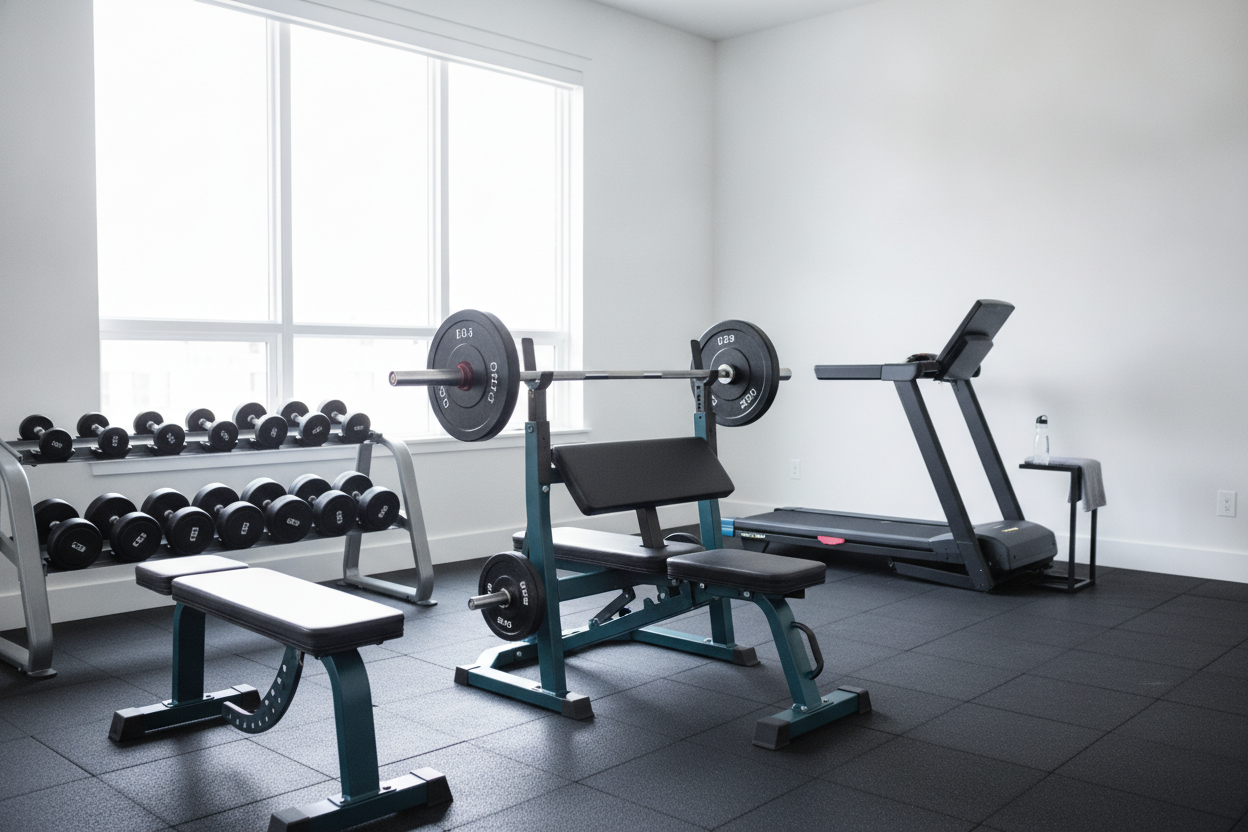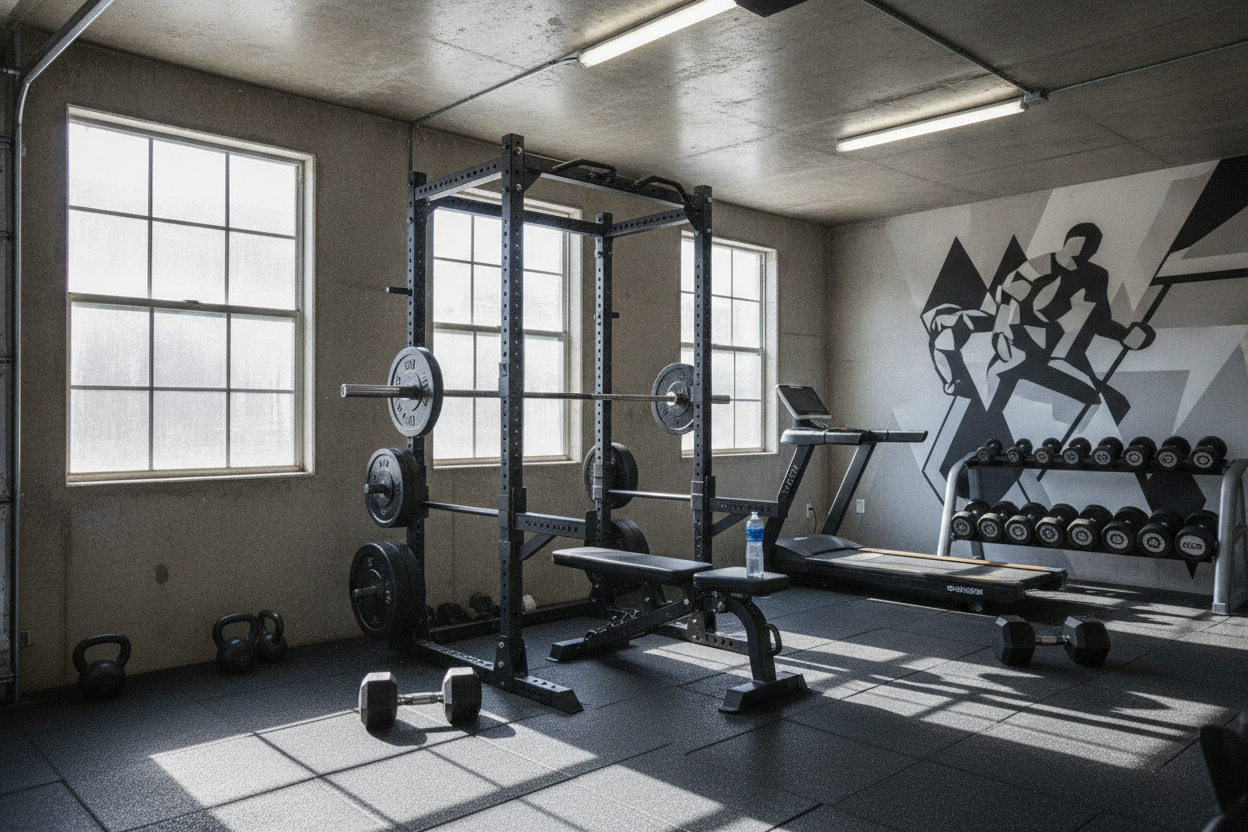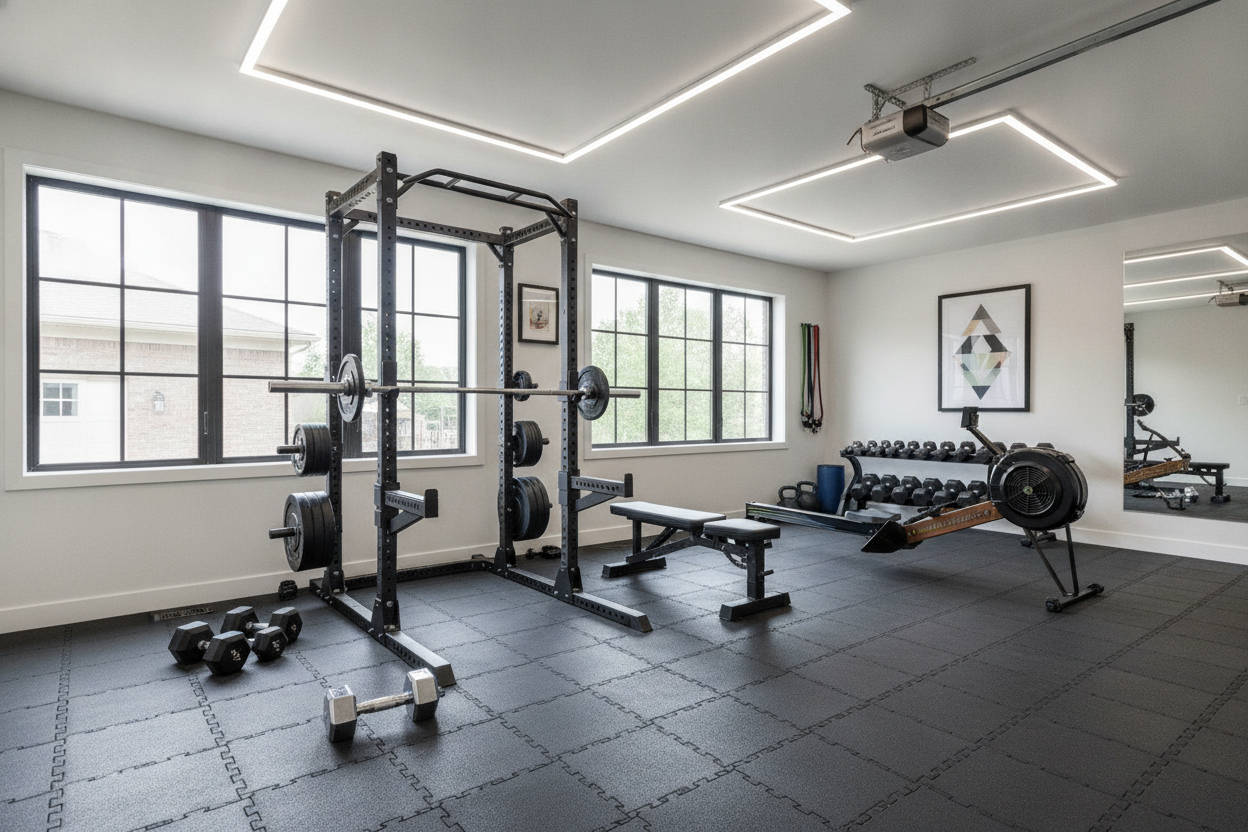
I Tested the Best Weight Equipment for Home Gym Setups (Most Failed)
I remember the day I finally quit my commercial gym. It wasn't just the crowds or the guy doing curls in the squat rack; it was the realization that I was paying $60 a month to wait for equipment that felt like it was held together by hope and WD-40. I went home and started searching for the best weight equipment for home gym setups, only to find a sea of sponsored junk and 'top 10' lists written by people who have clearly never touched a barbell in their lives.
After six months of turning my garage into a testing lab—dropping 400-pound deadlifts, slamming adjustable dumbbells, and seeing which racks actually stay bolted to the floor—I’ve learned that 90% of the gear marketed to home lifters is absolute garbage. You don't need a 20-piece circuit; you need three or four pieces of steel that won't kill you when you're going for a PR.
Quick Takeaways
- The squat rack is your anchor; never settle for anything less than 11-gauge steel.
- Your barbell is where you should spend the most money—it is the direct interface between you and the weight.
- Floor protection is not optional if you want to keep your security deposit or your foundation intact.
- Ignore 'all-in-one' machines until you have mastered the basics of free weights.
Why Most 'Top Rated' Gear Lists Are Complete Trash
If you search for the best workout equipment for home gym setups, you’ll find articles written by SEO specialists who wouldn't know a snatch from a power clean. They recommend flimsy $200 racks because they get a higher commission, not because the equipment is safe. These lists are filled with 'top rated fitness equipment' that looks great in a studio apartment but falls apart the second you try to use it for real strength training. Real-world performance isn't about how many cup holders a machine has; it's about whether the J-cups can survive a botched re-rack.
I’ve spent thousands of dollars on gear that looked good on paper but felt like a toy in practice. I once bought a 'top rated' bench that claimed a 600-lb capacity, only to have the frame creak and groan under a 225-lb press. That’s why I started looking for actual top picks for the best home and gym exercise equipment that comes from companies with a history in powerlifting and CrossFit. If a company doesn't show you the thickness of their steel or the PSI of their barbells, they are hiding something. You aren't just buying gear; you're buying safety. A cheap rack is a liability, not an investment.
The Squat Rack: Your Gym's Non-Negotiable Anchor
The squat rack is the heart of your gym. It is the most important piece of top rated home exercise equipment you will ever buy. When you are looking at racks, the only number that matters is the gauge of the steel. You want 11-gauge steel. Period. Most budget racks use 14-gauge, which is significantly thinner and prone to swaying. If you can move your rack with one hand, it’s not heavy enough to hold your life in its hands. Look for 3x3 inch or 2x3 inch uprights. This isn't just for stability; it’s for the attachment ecosystem. Most high-quality accessories—like dip bars, landmines, and lever arms—are designed for these standard sizes.
Hole spacing is the next big factor. I prefer 'Westside' hole spacing in the bench zone, which means holes are one inch apart. This allows you to set your safety pins at the exact height you need so you don't get pinned during a solo session. I’ve tested racks that had three-inch spacing, and I always found myself either too high to hit depth or too low to be safe. A good rack should also be expandable. You might start with a simple squat stand, but eventually, you’ll want to add a pull-up bar or a plate storage system. If the rack isn't part of a modular system, you're buying a dead end.
Please Don't Buy a Cheap Barbell (Here is Why)
Your barbell is the most important piece of 'best at home gym equipment' you will own. It is where the weight meets your hands. A cheap bar has poor knurling—the 'grip' texture—that either feels like sandpaper or vanishes the moment your hands get sweaty. More importantly, cheap bars have low tensile strength. I once watched a buddy of mine squat 315 pounds on a 'big box store' barbell. As he walked it out, the bar started to whip and bounce like a pool noodle. By the time he hit the bottom of his rep, the bar had a permanent 'U' shape. It never went back to straight.
You want a bar with at least 190,000 PSI tensile strength. This ensures the bar has 'memory'—it can bend under load and snap back to perfectly straight. Look at the sleeves, too. Cheap bars use bolts that loosen over time; high-quality bars use snap rings. Also, pay attention to the bushings or bearings. If you’re doing Olympic lifts, you want bearings for a smooth spin. If you’re just powerlifting, bushings are more durable and require less maintenance. Don't skimp here. A $300 bar will last a lifetime; a $100 bar will last six months and potentially hurt you.
Adjustable vs. Fixed Dumbbells for Small Spaces
Dumbbells are essential for accessory work, but they are a logistical nightmare in a home gym. A full set of fixed hex dumbbells from 5 to 50 pounds takes up an entire wall and costs a fortune in shipping. This is where adjustable blocks become the best workout home machine alternative. I’ve used the ones that look like boxes and the ones that look like traditional dumbbells. The 'block' style is incredibly durable—I've dropped them from waist height (don't do that, but I did for science) and they didn't flinch. The 'dial' style is faster to change but has more plastic parts that can fail.
If you have the space and the budget, nothing beats a set of rubber-coated hex dumbbells. They feel better in the hand, and you can drop them between sets without worrying about internal mechanisms jamming. However, for 90% of home lifters, a pair of high-quality adjustables that go up to 80 or 90 pounds is the smarter move. It keeps your gym footprint small while giving you the versatility of a commercial weight room. Just remember: if you go the adjustable route, buy the expansion kits early. You’ll get stronger faster than you think.
You're Going to Wreck Your Floor Without This
Nobody talks about flooring because it isn't 'cool,' but it is the most critical piece of top at home exercise equipment for protecting your house. Concrete cracks. Hardwood splinters. If you are deadlifting or even just racking heavy dumbbells, the vibration and impact will eventually damage the subfloor. I made the mistake of using those cheap foam puzzle mats when I first started. Within a month, they were compressed flat, and I had a nice chip in my garage floor. Foam is for yoga; rubber is for lifting.
You need high-density rubber stall mats. They are typically 3/4 inch thick and weigh about 100 pounds per 4x6 foot sheet. If you want a cleaner look than a horse barn, you can invest in a large exercise mat for home gym use that is specifically designed for high-impact lifting. This creates a dedicated 'kill zone' where you can drop weights without the house shaking. Proper flooring also helps with noise dampening. If you’re lifting at 6 AM while the family is asleep, a layer of rubber is the difference between a productive workout and a domestic dispute.
The Shiny Object Syndrome: What to Buy Later
When you first start building your gym, it’s easy to get distracted by the best new fitness equipment like functional trainers, cable towers, and specialized leg press machines. Resist the urge. Most people fail at home workouts because they buy too much gear that they don't know how to use effectively. Master the big three—squat, bench, and deadlift—before you start adding the 'shiny objects.' You can get 95% of your results with a rack, a bar, and some plates. The rest is just 'gym jewelry' until you hit a plateau that only a specialized machine can break.
Once you’ve been training consistently for a year, then you can start to discover the best and latest exercise equipment for your home gym to round out your accessory work. Maybe that’s a lat pulldown attachment for your rack or a specialized 'safety squat bar' for your back health. The key is to let your training dictate your purchases, not the Instagram ads. I’ve seen too many people buy a $3,000 smart-mirror gym only to use it as a clothes hanger three months later. Buy the iron first. It never goes out of style, and it never needs a software update.
FAQ
What is the most effective home exercise equipment for fat loss?
The most effective tool is the one you actually use, but for bang-for-your-buck, a kettlebell or a barbell wins. Compound movements burn more calories and build more muscle than any 'as seen on TV' cardio machine ever will. Focus on movements that use your whole body.
Is it cheaper to build a home gym or keep a gym membership?
Upfront? A home gym is expensive. But if you spend $2,000 on a setup that lasts 20 years, that’s $8.33 a month. Most commercial gyms cost five times that. Plus, you save on gas, time, and the 'annoyance tax' of dealing with crowds.
Can I put a home gym on a second floor?
It depends on your house's construction. A rack and some dumbbells are usually fine, but I wouldn't recommend heavy deadlifting on a second floor without professional structural advice. If you must, use extra-thick crash pads to absorb the impact.
What should I look for in a weight bench?
Look for a tripod design (three feet) so your feet can stay flat on the floor during a press. Ensure it has a high weight capacity (at least 600 lbs including your body weight) and that the gap between the seat and the back pad is minimal if you're buying an incline bench.