I Swapped Upright Rows for a Cable Shoulder Pull
I remember the exact moment my AC joint decided it was done with the barbell upright row. I was halfway through a heavy set, pulling 135 pounds toward my chin, when a sharp, electric 'zip' shot through my right shoulder. It wasn't the good kind of burn. It was the kind of pain that tells you you've been doing something stupid for a long time. I spent weeks nursing that impingement, scrolling through equipment forums and biomechanics videos, looking for a way to get that lateral delt pop without the surgical bill. That's when I moved to the cable shoulder pull.
- Barbells lock your wrists into a fixed, often painful path; cables allow for natural rotation.
- Constant tension from the cable stack means your delts never get a 'break' at the bottom.
- Using a rope or D-handles eliminates the internal rotation 'pinch' that kills shoulders.
- A rooted stance is mandatory—if you're sliding on the floor, you're not growing.
Why I Finally Retired the Barbell Upright Row
The traditional barbell upright row is a biomechanical disaster for many of us. When you grab a rigid bar and pull it vertically, you are forcing your shoulders into extreme internal rotation while simultaneously elevating the humerus. This is the exact recipe for subacromial impingement. You're basically grinding your tendons against bone under load. I used to think I just had 'tight' shoulders, but the reality was the tool I was using didn't care about my anatomy.
Beyond the shoulder joint, the barbell is a nightmare for the wrists. Unless you have the mobility of a circus performer, that straight bar forces your wrists into an awkward ulnar deviation at the top of the movement. I found myself cutting sets short not because my delts were tired, but because my wrists felt like they were about to snap. Switching to a cable pull for shoulders solved this instantly by letting the resistance follow my body, rather than forcing my body to follow the bar.
How the Cable Changes Everything About This Lift
The magic of the cable column is the resistance profile. When you use a barbell or dumbbell, the weight is only 'heavy' when you're fighting gravity directly. With a cable, the tension is constant from the second you pull the pin. For a muscle like the lateral delt, which thrives on time under tension, this is a massive upgrade. You don't get that dead spot at the bottom of the rep where the weight just hangs off your joints.
The freedom of movement is the other big win. By using a tricep rope or dual D-handles, your hands can move independently. This allows you to pull the weight 'out' as you pull 'up,' which better aligns with the muscle fibers of the lateral deltoid. You can feel the muscle contracting without that sickening 'pinch' in the front of the shoulder. It's the difference between fighting your equipment and working with it.
High vs. Low: Where Should the Pulley Be?
I’ve experimented with every pin setting on my functional trainer, and the height matters more than you’d think. Setting the pulley at the absolute bottom creates a very vertical line of pull. This hits the lateral delts hard but also brings a lot of upper trap into the mix. If your goal is that wide, 'capped' shoulder look, this is usually the go-to.
However, I've found that moving the pulley up to about knee-height or even mid-thigh allows for a slightly more diagonal pull. This takes a bit of the stress off the traps and puts the focus squarely on the side deltoid. It also makes it easier to maintain your balance when the stack gets heavy. Play with the height in one-inch increments; you'll find a 'sweet spot' where the tension feels like it's wrapping right around the side of your arm.
Setting Up a Cable Pull for Shoulders in a Garage Gym
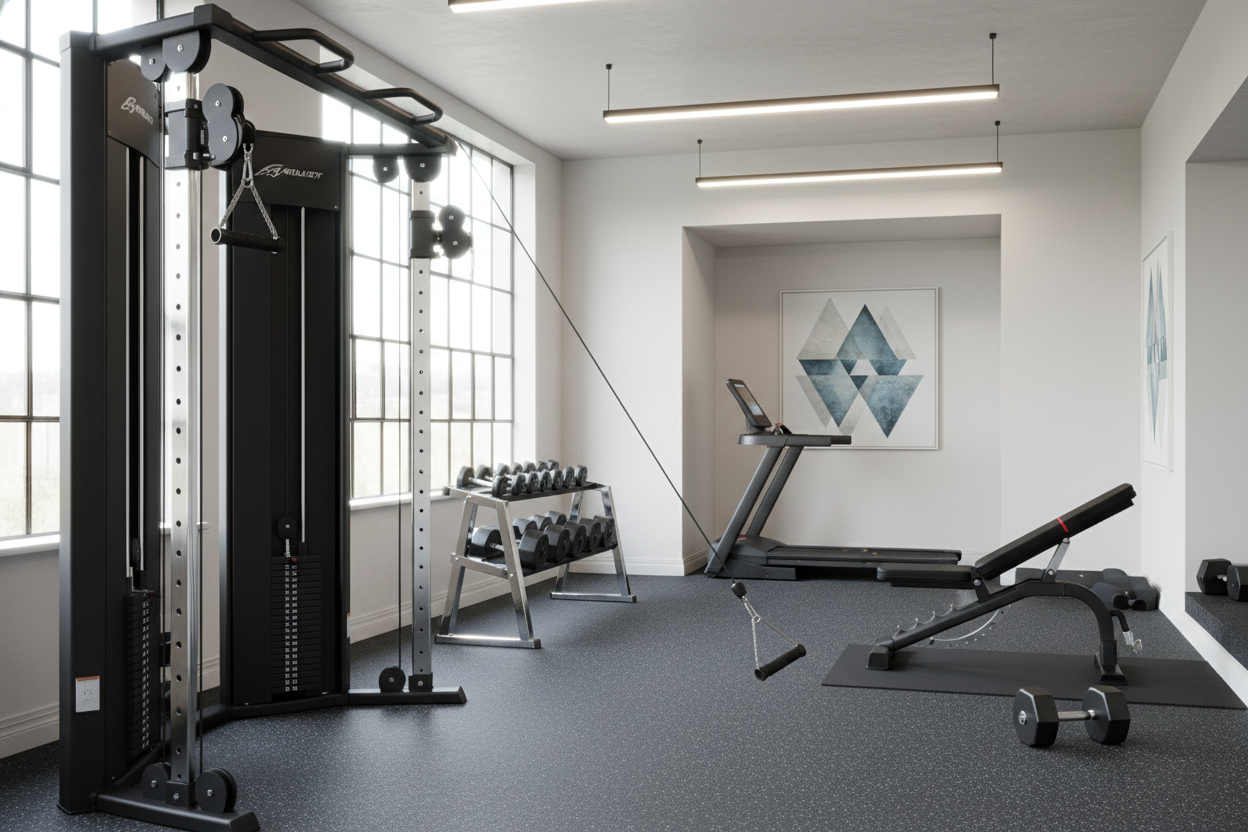
You don't need a $3,000 commercial functional trainer to get this right. I do most of my pulling on a simple wall-mounted plate-loaded pulley system. The key is the attachment. Ditch the straight bar immediately. A long tricep rope is the gold standard here because it allows your hands to move away from each other at the top of the rep, maximizing that lateral delt contraction.
If you're working with limited gear or your pulley system is occupied, you can get creative. I've seen guys use a cable pull through with dumbbell setup to mimic the mechanics of a low-cable pull. The goal is to find a way to maintain that constant tension without locking your joints into a single plane of motion. Stand about a foot back from the machine to ensure there's tension even at the very start of the rep.
You Can't Pull Heavy If You're Slipping
One thing people overlook with standing cable work is traction. When you're pulling 80 or 100 pounds upward and slightly toward you, that force wants to pull your feet toward the machine. If you're training on dusty concrete or a cheap, thin mat, you'll spend more energy trying not to slide than you will moving the weight. It ruins the mind-muscle connection completely.
I eventually invested in a dedicated 6x8ft exercise mat specifically to create a high-traction 'anchor' point for my cable work. Having a grippy, dense surface allows you to 'screw' your feet into the floor and create a stable base. This stability lets you actually load the movement. You can't build big shoulders if you're ice skating through your sets.
Programming the Pull Into Your Upper Body Days
I treat the cable shoulder pull as a primary accessory movement. I don't go for 1-rep maxes here; the shoulder is too complex for that kind of ego lifting. Instead, I aim for the 10-15 rep range with a slow, controlled eccentric. Focus on leading with your elbows and keeping them higher than your wrists throughout the movement. If your wrists start higher than your elbows, you've turned it into a weird bicep curl.
This movement slots perfectly into a push/pull split or a dedicated shoulder day. I usually sequence it after my heavy overhead pressing but before my isolation work like lateral raises. If you want to maximize your time in the gym, you can even pair this with a cable machine inner thigh pull for a quick, full-body cable circuit. It keeps the heart rate up and ensures you aren't just standing around waiting for the next set.
Personal Experience: The 'Aha' Moment
For years, I pushed through the pain because 'upright rows build big traps.' My traps grew, sure, but my shoulders always looked narrow and my joints felt like they were full of sand. The first time I tried this with a rope attachment on a low pulley, the difference was night and day. I could actually feel the lateral head of my delt working in isolation. No clicking, no grinding. I did realize, however, that I had to drop the weight by about 30% compared to the barbell version because I couldn't use momentum to cheat. It was a humbling lesson in quality over quantity.
FAQ
Can I do this with a single handle?
Absolutely. Doing a single-arm cable pull allows you to focus even more on the mind-muscle connection and can help fix imbalances. Just make sure you have a solid handle to grab with your non-working hand to stay stable.
Should I pull the rope to my chin?
Stop when your elbows reach shoulder height. Pulling higher than that often brings the impingement risk back into play without adding much extra benefit to the delts. Focus on the 'width' of the pull rather than the height.
What if my cable machine is too light?
Slow down your tempo. Use a 3-second negative and a 2-second pause at the top. If you're still maxing out the stack, try doing the reps one arm at a time or adding a small 'gym pin' to add an extra 5lb plate to the stack.