
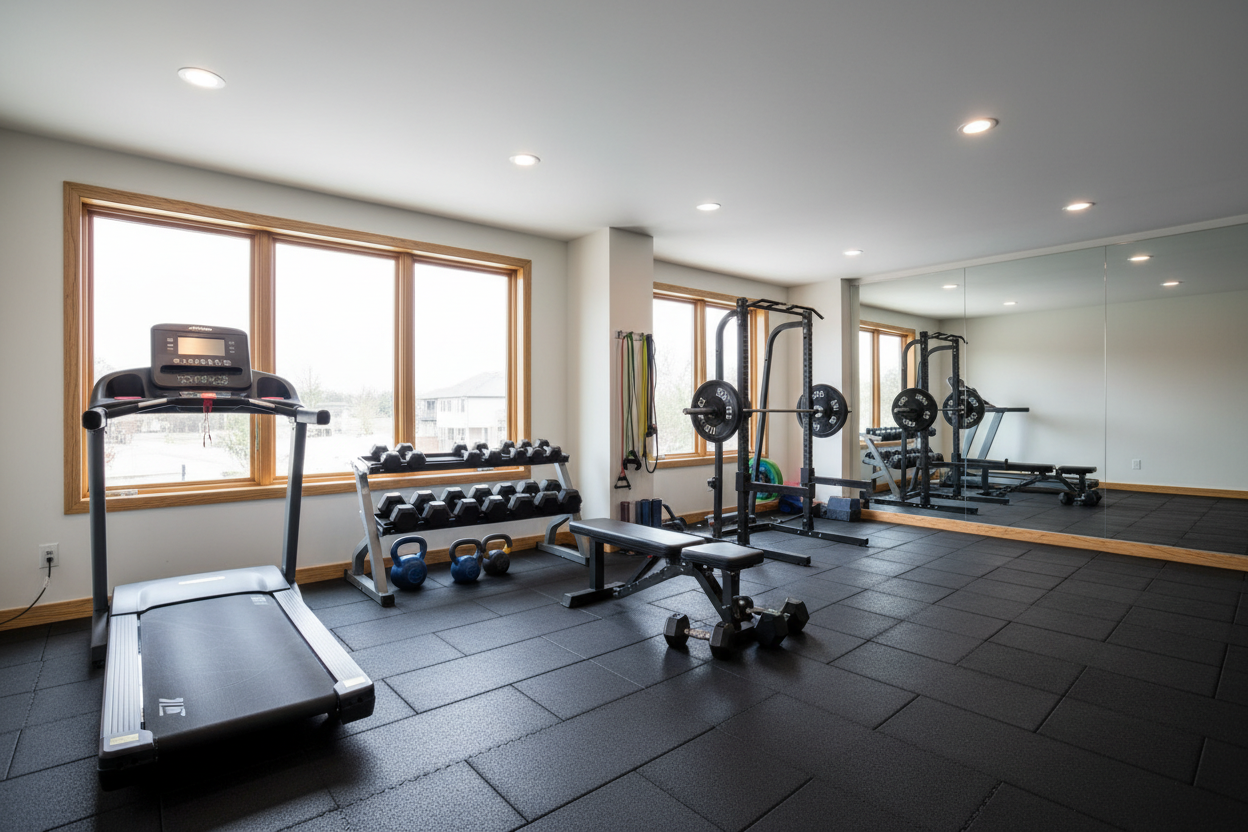
I Swapped Endless Cardio for This Workout for Beginners with Weights
I spent years as a cardio addict. I would hit the treadmill for 45 minutes every morning, watching the calorie counter lie to me while I dripped sweat onto the console. I was 'fit' in the sense that I could jog forever, but I looked exactly the same as I did three years prior. I had the endurance of a marathoner but the muscle tone of a wet noodle.
The fix wasn't more miles; it was a workout for beginners with weights. I had to learn the hard way that sweat isn't a proxy for progress. If you are tired of running in place and seeing zero change in your silhouette, it is time to put down the heart rate monitor and pick up something heavy.
- Muscle burns more calories at rest than fat, making weightlifting better for long-term body composition.
- You only need three days a week to see significant results if you focus on compound movements.
- Resting between sets is mandatory, not a sign of laziness.
- Quality gear like a solid bench and floor-friendly plates are the only home gym essentials.
Why Your Treadmill Isn't Changing Your Body Shape
The cardio plateau is a real, frustrating wall. When you jog at the same pace every day, your body becomes incredibly efficient at that specific movement. Efficiency sounds good, but in fitness, it means you're burning fewer calories to do the same amount of work. You're teaching your body to survive on less, not to build more.
Jogging might improve your heart health, but it won't give you that 'toned' look most people are actually chasing. Tone is just muscle mass combined with a low enough body fat percentage to see it. By skipping the weights, you're missing the stimulus required to tell your body to keep its muscle while burning fat. Without resistance, your body often burns muscle for fuel during long cardio sessions, leaving you 'skinny fat' instead of lean and strong.
The 'Sweat Myth' of Starting Strength Training
The hardest part for a cardio junkie isn't the lifting; it's the resting. In a cardio session, if your heart rate drops, you feel like you're failing. In a strength session, if you don't let your heart rate drop, you can't lift heavy enough to trigger growth. You’ll find yourself sitting on a bench for two minutes between sets of squats, feeling like you should be doing mountain climbers. Don't.
Heavy sets require ATP recovery and central nervous system resets. If you're gasping for air, your lungs will give out before your muscles do, which defeats the purpose of the lift. If you absolutely crave that lung-burning sensation on your off-days, try a metabolic workout with weights. It’s a great compromise that keeps you moving without sabotaging the heavy strength gains you’re making on your primary lifting days.
The 3-Day Workout for Beginners with Weights
You don't need a six-day 'bro split' to get results. In fact, as a beginner, you'll probably see better results on a 3-day full-body or push/pull/legs split because it allows for maximum recovery. We are focusing on 'compound' movements—exercises that use more than one joint. These give you the most bang for your buck.
Day 1: The Push (Chest, Shoulders, Triceps)
This day is all about moving weight away from your body. Start with a flat bench press, followed by an overhead press, and finish with some tricep extensions. Focus on the 'eccentric' part of the lift—that's the lowering phase. Don't just let the weight fall; control it.
If the idea of a barbell over your face is intimidating, using weight lifting machines for the first few weeks is a smart move. They guide your path of motion, allowing you to build the mind-muscle connection and baseline strength before you move to the stabilization requirements of free weights.
Day 2: The Pull (Back, Biceps, Core)
Pulling movements build the 'V-taper' and improve your posture, which is usually wrecked from sitting at a desk. Focus on rows (either dumbbell or barbell) and lat pulldowns. The key here is to pull with your elbows, not your hands. If you feel your forearms burning more than your back, your grip is doing too much work. Finish the session with some weighted planks or hanging leg raises. A strong core isn't just for show; it's the platform that allows you to squat and press heavier weights safely.
Day 3: Legs and Full-Body Stability
Leg day is the most metabolically demanding day of the week. Because your legs contain your largest muscle groups, working them triggers a massive hormonal response that helps with overall muscle growth. Stick to the basics: goblet squats (holding a weight at your chest), Romanian deadlifts for the hamstrings, and lunges. These movements mimic real life—picking things up, sitting down, and walking. If you only have time for one workout a week, make it this one.
The Only Gear You Actually Need at Home
Stop looking at $5,000 all-in-one machines. They take up half the garage and usually have crappy cable ratios. To run this beginner program effectively, you only need two things: a place to sit/lay and things to pick up. I always recommend the Gxmmat Adjustable Weight Bench as the centerpiece. It has a high weight capacity and adjusts from decline to incline, which is essential for hitting different parts of your chest and shoulders.
For the weights, skip the cheap plastic-coated sand weights. They leak and they're bulky. If you're ready to use a barbell, Gxmmat Bumper Plate Sets are the way to go. They are the same diameter regardless of weight, which puts the bar at the correct height for deadlifts, and they won't shatter your garage floor if you have to drop a heavy set. They're much quieter than old-school iron plates, which your neighbors will appreciate.
How to Know When It's Time to Go Heavier
Progressive overload is the only 'secret' in fitness. If you lift the same 20-lb dumbbells for the next six months, your body has no reason to change. I use the 2-for-2 rule: If you can perform two extra repetitions over your target goal in the final set of an exercise for two consecutive workouts, it is time to increase the weight.
For example, if your goal is 3 sets of 10, and you hit 12 reps on that last set two workouts in a row, go up by 5 lbs. It seems small, but 5 lbs a week adds up to 260 lbs in a year. Don't rush it. Strength is a marathon, not a sprint.
Personal Experience: My 'Pool Noodle' Barbell
When I first started my home gym, I bought a cheap, 1-inch thick 'standard' barbell from a big-box store. It felt like a pool noodle once I put more than 100 lbs on it. It didn't have revolving sleeves, so every time I curled or cleaned it, the torque went straight into my wrists. I ended up with tendonitis that sidelined me for a month. I learned that quality matters. Now, I'd rather have two high-quality kettlebells than a room full of cheap, dangerous junk.
FAQ
Do I need a squat rack to start?
Not on day one. You can do goblet squats with a single heavy dumbbell or kettlebell. Once you're squatting more than 50 or 60 lbs, a rack becomes a safety necessity, but don't let the lack of a rack stop you from starting today.
What if I don't feel sore the next day?
Soreness (DOMS) is not a requirement for growth. It usually just means you did something your body wasn't used to. If your numbers are going up and your clothes are fitting differently, you're winning, even if you can still walk down the stairs without wincing.
How long should these workouts take?
If you're focused, 45 to 60 minutes. That includes a 5-minute warm-up and 2-minute rest periods between your heavy sets. If it's taking two hours, you're on your phone too much.

