I Swapped Barbells for Exercise Cable Workouts for a Month
My elbows felt like they were filled with broken glass. After a decade of chasing heavy triples on the bench and grinding through low-bar squats, my joints finally staged a coup. I was tired of waking up stiff, and frankly, my physique had hit a plateau that no amount of extra plates could fix. I decided to do something that felt like heresy in the garage gym community: I locked my barbells away and committed strictly to exercise cable workouts for 30 days.
Quick Takeaways
- Joint pain vanished within the first 10 days of the experiment.
- The mind-muscle connection is significantly easier to establish with constant tension.
- Leg day requires a lot more creativity (and a few extra attachments) to feel effective.
- You will likely lose some 'peak' neurological strength, but hypertrophy gains are real.
The Breaking Point: Why I Walked Away From the Barbell
The barbell is a blunt instrument. It is incredible for moving massive weight, but it is also unforgiving on your connective tissue. I realized I was spending more time warming up with liniment and sleeves than I was actually lifting. My 'heavy' days were becoming sessions of injury management rather than muscle building.
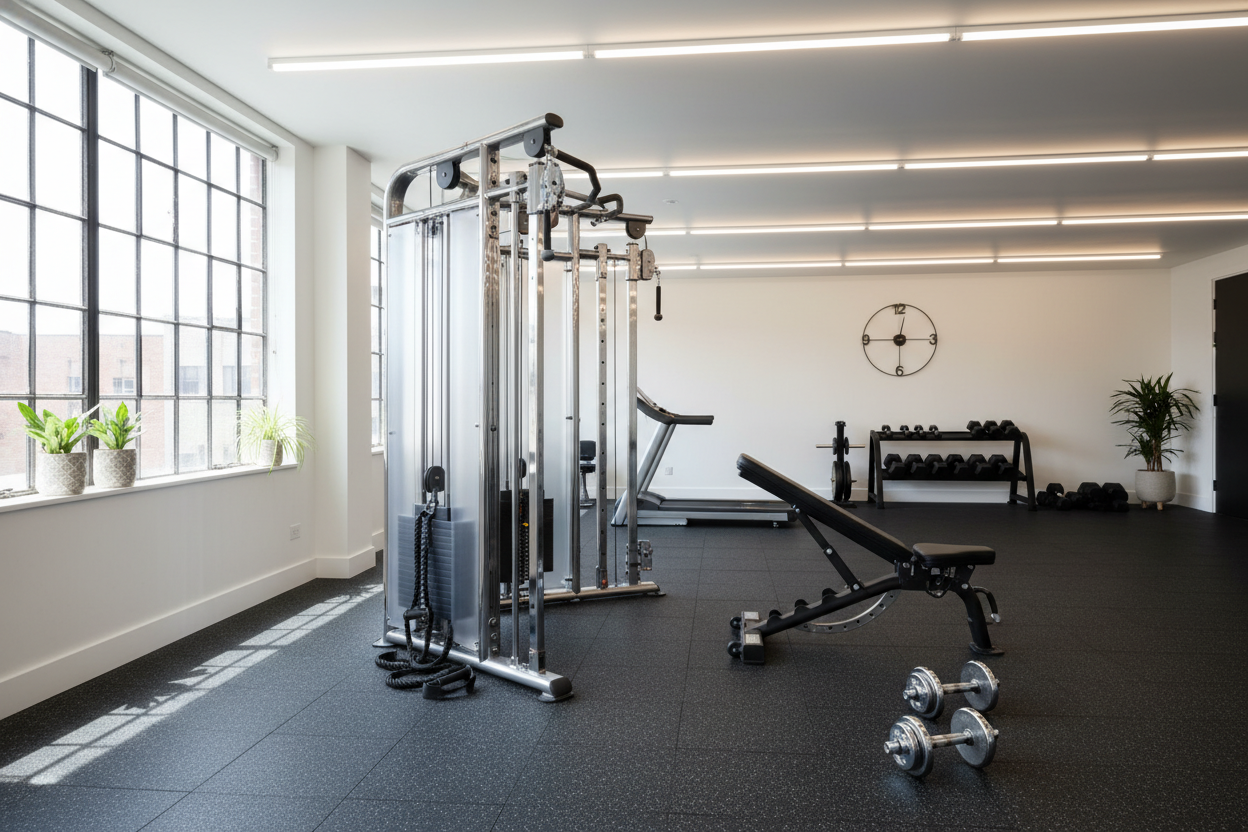
I wanted to see if I could trigger the same hypertrophy by eliminating axial loading—the kind of weight that compresses your spine. By moving to a cable exercise gym setup, I could hit the muscle from angles that a straight steel bar simply won't allow. I stopped caring about the number on the plate and started focusing on the tension in the fiber.
The 30-Day Rules for My Cable Exercise Gym
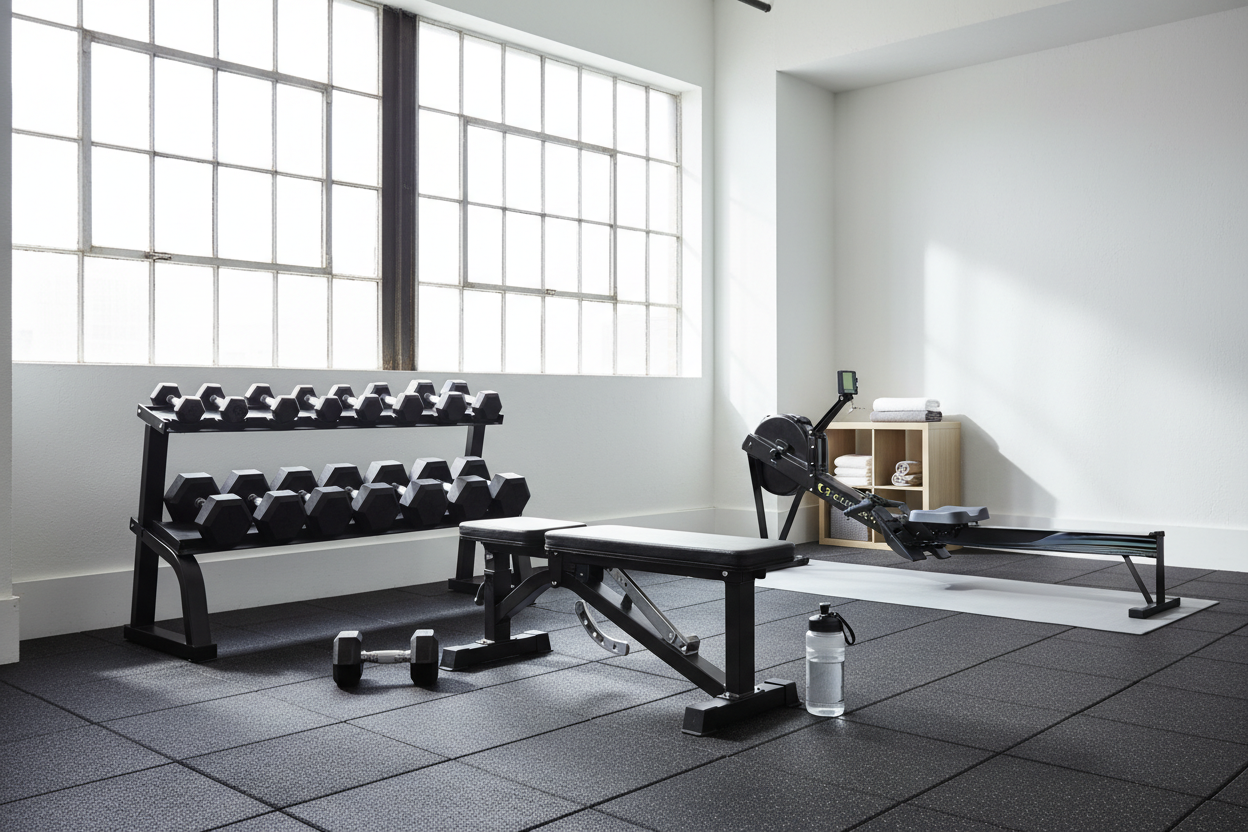
The rules were simple but strict. No dumbbells, no barbells, and no plate-loaded machines unless they were pulley-based. I spent the first weekend maximizing your home gym setup by clearing out my power rack's center space to make room for a functional trainer's footprint. I needed enough 'runway' to perform lunges and flyes without hitting the uprights.
I focused on a three-on, one-off split. Every movement was performed with a three-second eccentric (lowering) phase and a hard one-second squeeze at the peak. Since I couldn't just 'load more weight' indefinitely like I could with a barbell, I used mechanical drop sets—moving the pins up slightly and continuing the set until my muscles literally quit.
Why Constant Tension Feels So Different
When you do a dumbbell curl, there is a 'dead spot' at the bottom and top where gravity isn't doing much. With an exercise cable, the resistance is coming from the side or behind you. The weight stack is fighting you through the entire arc. This constant tension means your muscles never get a micro-break during the set. It is a exhausting, deep burn that you just don't get from free weights.
My Go-To Upper Body Cable Routine
Upper body days were where this experiment really shined. I replaced the standard bench press with standing cable crossover presses. Instead of the bar path being dictated by gravity, I could press slightly downward or upward to target specific chest fibers. My chest has never felt fuller.
For lats, I moved away from standard pull-ups to kneeling single-arm pulldowns. Being able to pull the handle toward my hip while slightly crunching my torso allowed for a contraction so deep it felt like my back was going to cramp. This kind of cable work allows for a level of isolation that makes the barbell look like a caveman tool.
Can You Actually Build Legs With Cables?
This was my biggest concern. How do you replace a 400-lb squat? The answer is: you don't, but you can still torch your quads. I spent a lot of time on my knees for this. I used a large exercise mat for home gym floor work because kneeling cable squats and pull-throughs are brutal on the kneecaps without serious padding.
I found that high-rep cable belt squats—where the cable is pulled from a low pulley between your legs—created a massive pump without any of the lower back fatigue. I also used the exercise cable for standing leg curls and 'donkey' kicks. My legs didn't get 'smaller,' but they definitely got more defined. It’s a different kind of suck.
The Verdict: Do You Really Need a Pulley System?
After 30 days, I stepped back under a barbell just to see. My joints felt lubricated and pain-free for the first time in years. While my 1-rep max had dipped by maybe 5%, my muscular endurance was through the roof. I looked better in the mirror, mostly because I wasn't constantly inflamed from heavy loading.
If you're tight on space, you have to ask if a machine is worth the home gym space. For me, the answer is a resounding yes. I’m not getting rid of my barbell forever, but I’ve moved to a 60/40 split in favor of cables. My body simply handles the volume better, and the results speak for themselves.
FAQ
Can I build as much muscle with cables as barbells?
For pure hypertrophy (size), yes. Your muscles only understand tension, not what tool is providing it. For raw powerlifting strength, you still need the barbell to practice the specific skill of moving heavy iron.
What is the best cable attachment to start with?
Get a pair of long soft-grip handles and a high-quality tricep rope. Those two will cover 90% of the exercises you'll ever need to do.
Do I need a commercial-grade functional trainer?
Not necessarily. A high-quality plate-loaded wall-mounted pulley works fine for most people, provided the ratio is 1:1 or 2:1 and the travel is smooth. Avoid the cheap plastic pulleys that stutter when you pull.