I Stripped My Routine to the Best Exercises to Build Legs and Glutes
I spent three years chasing a 'burn' with 20-rep sets of air squats and rainbow kicks before realizing I was just doing glorified cardio. My legs looked like toothpicks, and my glutes weren't much better, despite the sweat. If you want actual size, you need the best exercises to build legs and glutes that actually force your muscle fibers to adapt or die.
The fitness industry loves to sell you complexity. They want you to think you need five different cable attachments and a boutique membership to see growth. The truth is much uglier: you need to get uncomfortably strong on about four or five movements and stay there for a long time.
- Prioritize mechanical tension over the 'burn'—if it doesn't feel heavy, it probably isn't working.
- Compound movements are the foundation; isolation is just the finish.
- Stop changing your routine every two weeks; progressive overload needs consistency.
- Stability is non-negotiable—if you're wobbling, you aren't growing.
Why Your Current Lower Body Routine Feels Like a Waste of Time
Most people fail because they mistake fatigue for progress. Doing 15 different lightweight movements might make you sweat, but it doesn't provide the stimulus needed for a real best leg muscle building exercises. When you spread your energy across a dozen exercises, you never truly push the limit on the ones that matter.
I used to do 'glute days' that consisted of light bands and floor work. I was exhausted, but my measurements didn't change for a year. A true leg and glute muscle building workout should be centered around movements where you can actually add weight to the bar. If you aren't tracking your lifts and trying to beat last week's numbers, you're just exercising, not training.
The Heavy Hitters: My Picks for the Best Glute Mass Building Exercises
If I could only keep three lifts in my garage gym, it would be the Romanian Deadlift (RDL), the Bulgarian Split Squat, and the Back Squat. These are the best glute mass building exercises because they allow for massive loading. You can't put 315 lbs on a cable kickback, but you can on an RDL.
The RDL is the king of the posterior chain. By focusing on the hinge and getting a deep stretch in the hamstrings and glutes, you create micro-tears that force growth. I don't care how many 'glute bridges' you do with a 20-lb dumbbell; they won't touch the stimulus of a heavy-loaded hinge. Keep the bar close to your shins, push your hips back like you're trying to close a car door with your butt, and feel the tension.
Squat and Hinge Variations That Actually Command Growth
Bulgarian Split Squats are the exercise everyone loves to hate, but they are non-negotiable for a home gym lifter. Because you're on one leg, you don't need a 500-lb squat rack to get a massive stimulus. A pair of 50-lb dumbbells will absolutely wreck your quads and glutes if you do them right. Lean forward slightly during the movement to shift the emphasis from your quads to your glutes.
Then there is the Hip Thrust. While some 'hardcore' lifters call it a fluff exercise, the EMG data doesn't lie. It provides peak tension in the shortened position where squats and RDLs are weakest. Use a barbell pad—a cheap one will suffice—and load it heavy. If you aren't doing these at least once a week, you're leaving mass on the table.
Filling the Gaps: The Best Glute Isolation Exercises for Mass
Once the heavy lifting is done, you can look at the best glute isolation exercises for mass. These aren't the main course; they are the dessert. I see too many people chasing a massive pump with high-rep isolation work before they've even touched a barbell. That is a recipe for staying small.
My favorite isolation move is the weighted 45-degree back extension. Round your upper back, flare your toes out, and squeeze your glutes at the top. It targets the glutes without taxing your lower back. If you don't have a hyper bench, heavy dumbbell lateral lunges or 'frog pumps' can work, but keep the intensity high. If you can do more than 20 reps easily, it's too light.
Putting It Together: The Best Leg and Glute Workout for Mass
This is a no-nonsense, best leg and glute workout for mass that you can do in any garage gym with a rack and some iron. This leg and glute muscle building workout focuses on the big wins first.
- Romanian Deadlifts: 3 sets of 8-10 reps (2 mins rest)
- Bulgarian Split Squats: 3 sets of 10-12 reps per leg (90 sec rest)
- Barbell Hip Thrusts: 3 sets of 8-12 reps (2 mins rest)
- Goblet Squats: 2 sets of 15-20 reps (to finish the quads)
- 45-Degree Back Extensions: 2 sets of 15 reps (holding a plate)
Stick to this for eight weeks. Don't add exercises. Don't 'shock the muscle.' Just add five pounds to the bar every time you hit the top end of the rep range. That is how you build a lower body that actually looks like it lifts.
Stop Overcomplicating Your Setup (And Start Lifting Heavier)
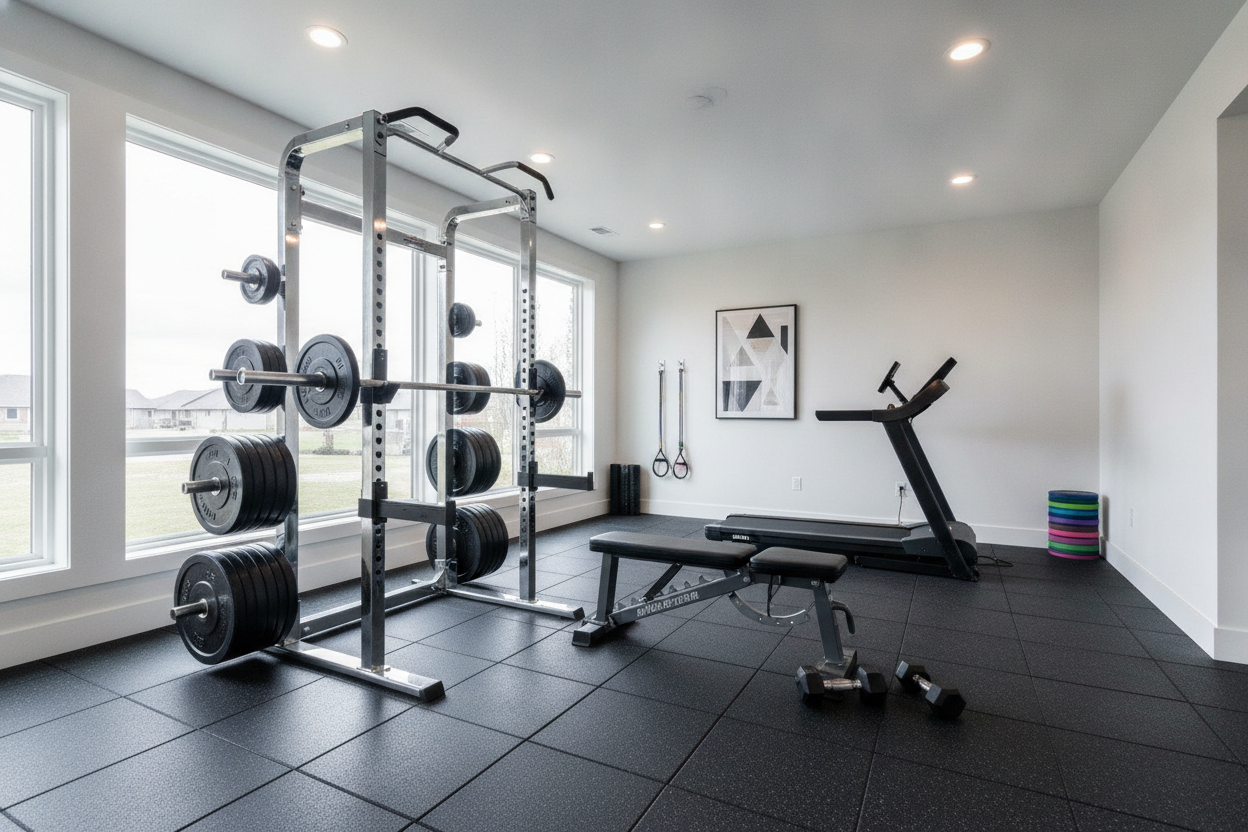
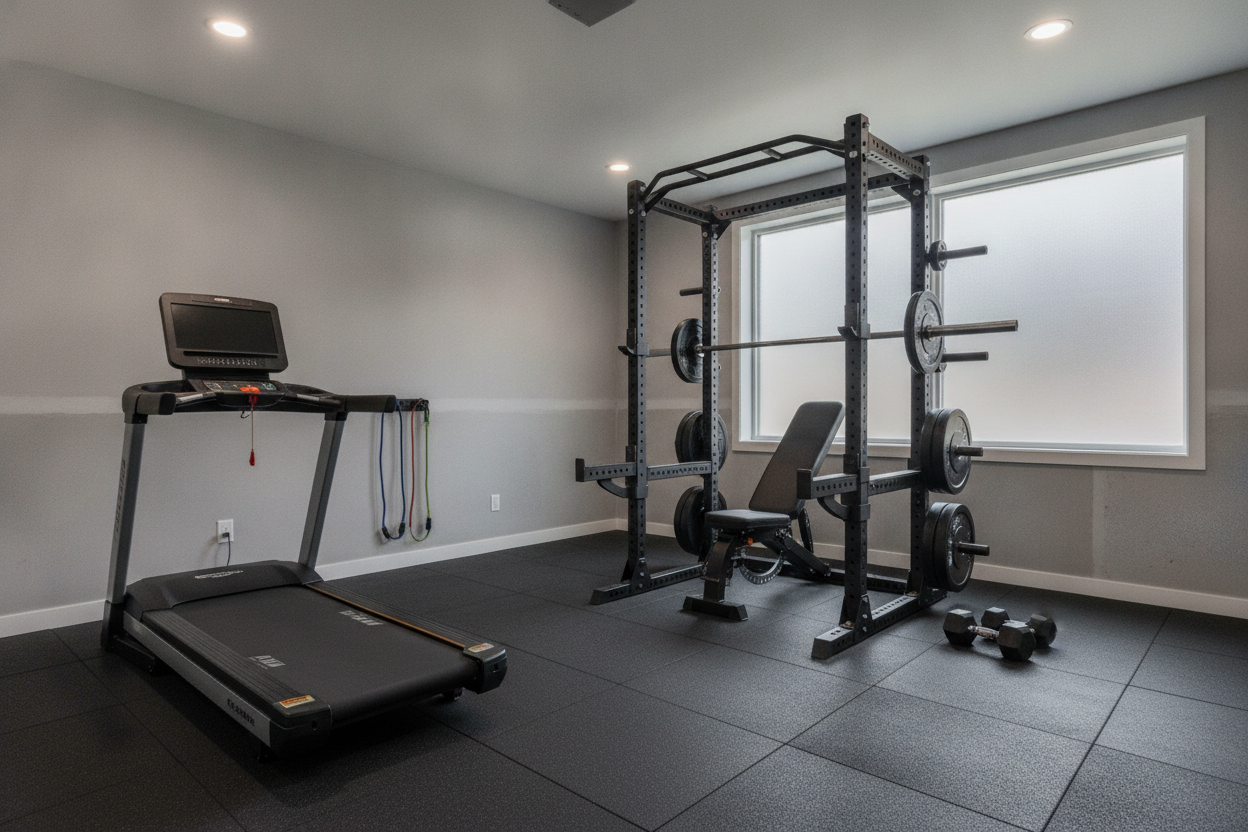
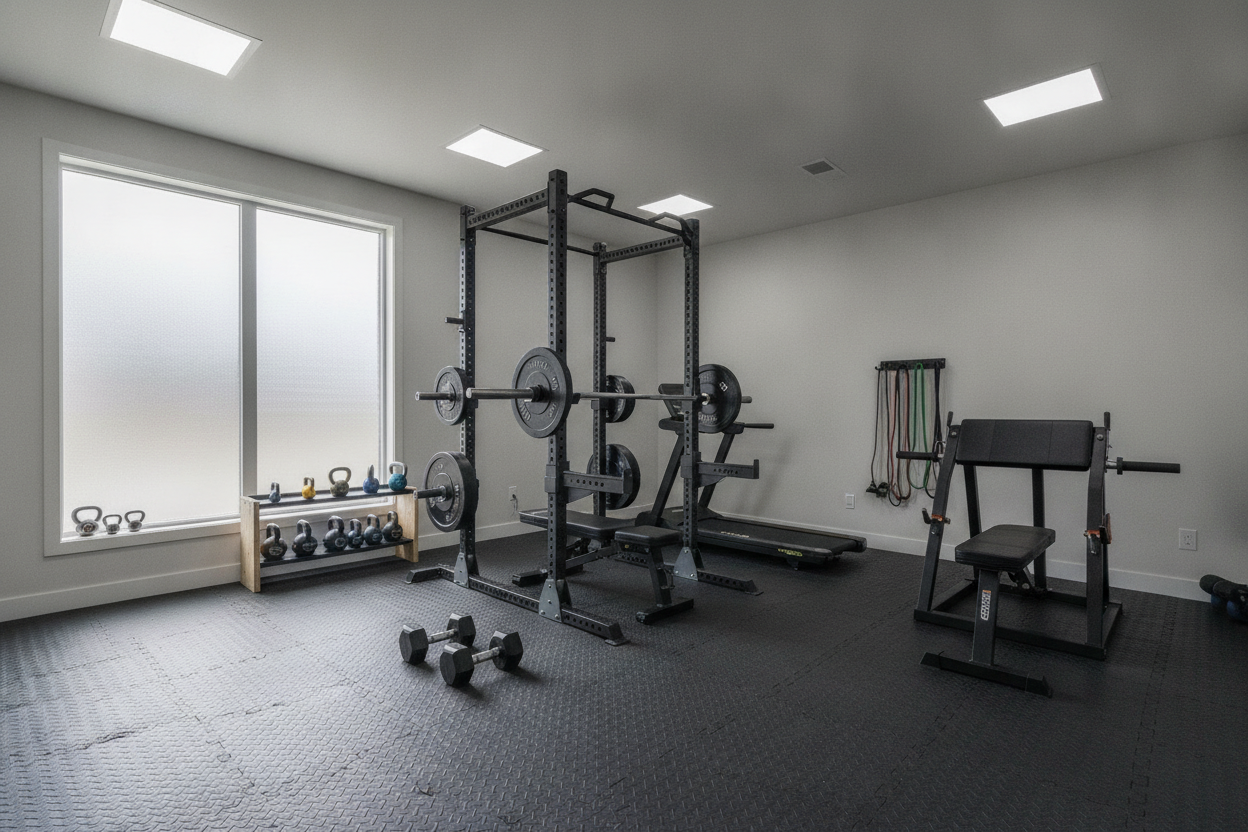
You can't build massive legs if you're training on a surface that feels like a skating rink. I learned this the hard way when my back foot slipped during a heavy set of split squats, nearly blowing out my knee. Investing in solid home gym flooring is just as important as the bar itself. You need a surface that grips your shoes and doesn't compress under 300 lbs of pressure.
Also, stop worrying about fancy machines. A barbell, a bench, and a stack of plates have built more world-class physiques than any $5,000 selectorized machine ever will. Focus on your bracing, keep your heels planted, and stop quitting when the set gets hard.
The Time I Failed at Hypertrophy
A few years ago, I fell for the 'high volume' trap. I was doing 30 sets per workout, six days a week. I was constantly sore, my joints ached, and I wasn't getting any stronger. I was doing 'glute kickbacks' with a cable machine for 45 minutes. My legs actually got smaller because I couldn't recover. It wasn't until I cut my volume in half and doubled the weight on my RDLs that my pants actually started getting tight in the thighs. Simple works.
FAQ
How many times a week should I train legs and glutes?
Twice a week is the sweet spot for most people. It allows for enough intensity to drive growth while giving your CNS and joints enough time to recover before the next heavy session.
Do I need a squat rack for this routine?
While a rack is ideal for safety on back squats, you can do a massive amount of work with just dumbbells and a sturdy bench for split squats and RDLs. Don't let a lack of equipment be an excuse for lack of effort.
Should I do cardio on leg days?
If your goal is maximum mass, keep the cardio separate. A 10-minute walk for a warm-up is fine, but don't run a 5k before trying to hit a PR on your deadlifts. You only have so much energy; spend it on the heavy stuff.