I Stopped Counting Reps to Finally Learn How to Gain Muscle
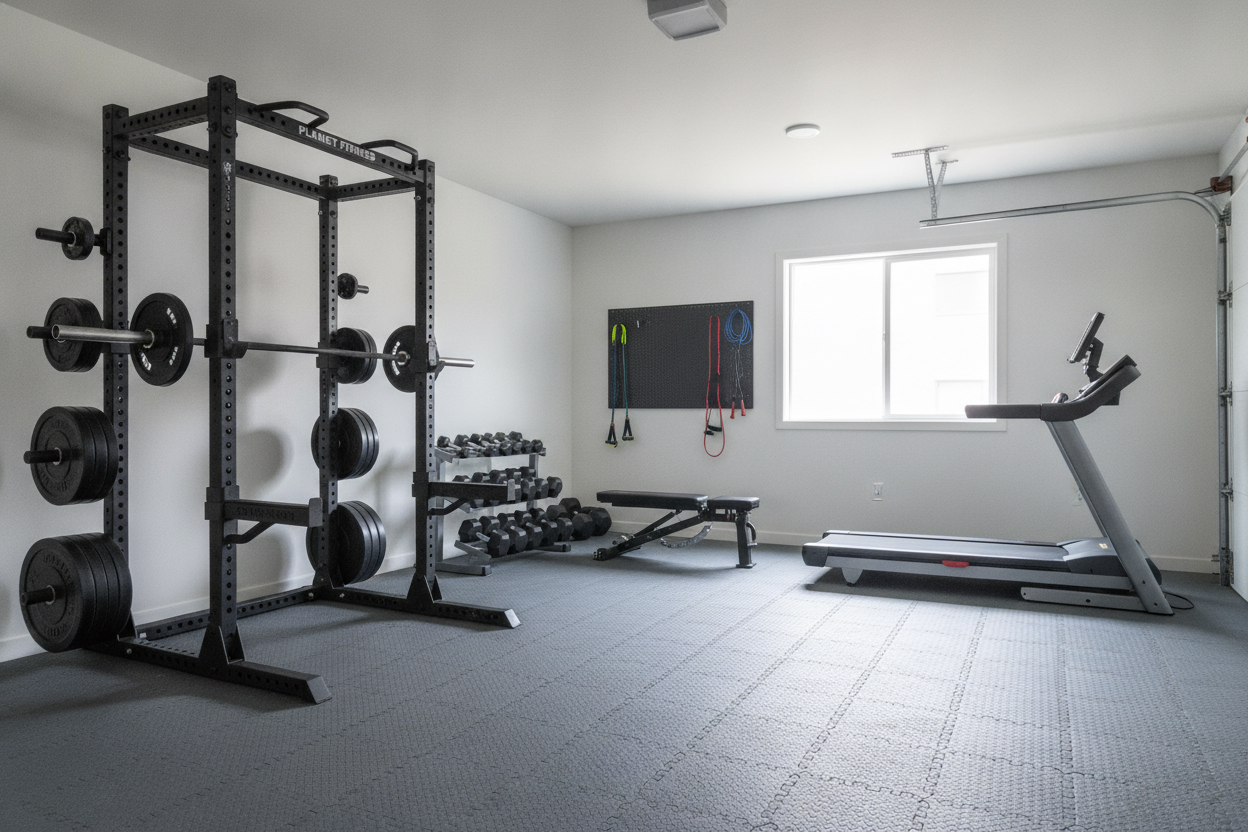
I spent three years staring at a spreadsheet, hitting exactly 10 reps, and wondering why my physique looked identical to the day I bought my first rack. My garage was full of gear, but my progress was dead in the water. I finally realized that learning how to gain muscle isn't about hitting a magic number; it's about what happens when that number actually starts to hurt.
Most home lifters are leaving gains on the table because they treat their workout like a math homework assignment. They do the work, but they don't provide the stimulus. If you want to know how to grow muscle, you have to stop thinking about the finish line and start thinking about the struggle.
- Stop stopping at 10 reps if you have 5 more in the tank.
- Focus on 'Reps in Reserve' (RIR) to gauge real intensity.
- Use equipment that allows you to fail safely without a spotter.
- Manipulate tempo to make light weights feel like lead.
The Problem With Chasing a 'Magic' Number of Reps
We’ve all been told that 8 to 12 reps is the 'hypertrophy zone.' It’s a lie—or at least a half-truth. If you pick up a weight you could move 20 times and stop at 10 because the program said so, you didn't build muscle. You just did cardio with a heavy object. Understanding what is the best way to build muscle starts with realizing that the muscle doesn't have a calculator; it only has a tension sensor.
I used to be terrified of 'junk volume.' I’d do my three sets of ten and walk away. The reality? I wasn't working hard enough. The most effective way to build muscle is to ensure that every set actually challenges your fibers. If the last rep looks as fast and snappy as the first, you’re just going through the motions.
Why 'Proximity to Failure' Dictates Your Growth
The science is pretty clear: the last two or three reps of a set are the 'effective' reps. These are the ones that actually signal your body to adapt. This is what helps you gain muscle. We call this training with low Reps in Reserve (RIR). If you finish a set and feel like you could have done three or more clean reps, you didn't reach the threshold for growth.
You’ll know you’re there when your bar speed involuntarily slows down. Your brain is screaming to stop, and the weight feels like it’s doubling in mass. That grind is the signal. If you're constantly looking for ways to get muscles fast, stop looking for new exercises and start looking for that involuntary slowdown in your current ones.
How to Safely Push Your Limits Without a Spotter
Training to failure in a garage gym can be a recipe for a viral 'gym fail' video if you aren't smart. I don't bench press with a barbell to failure because I value my ribcage. Instead, I’ve shifted my heavy pressing to dumbbells. It’s much easier to ditch a pair of 80s than it is to escape a pinned barbell.
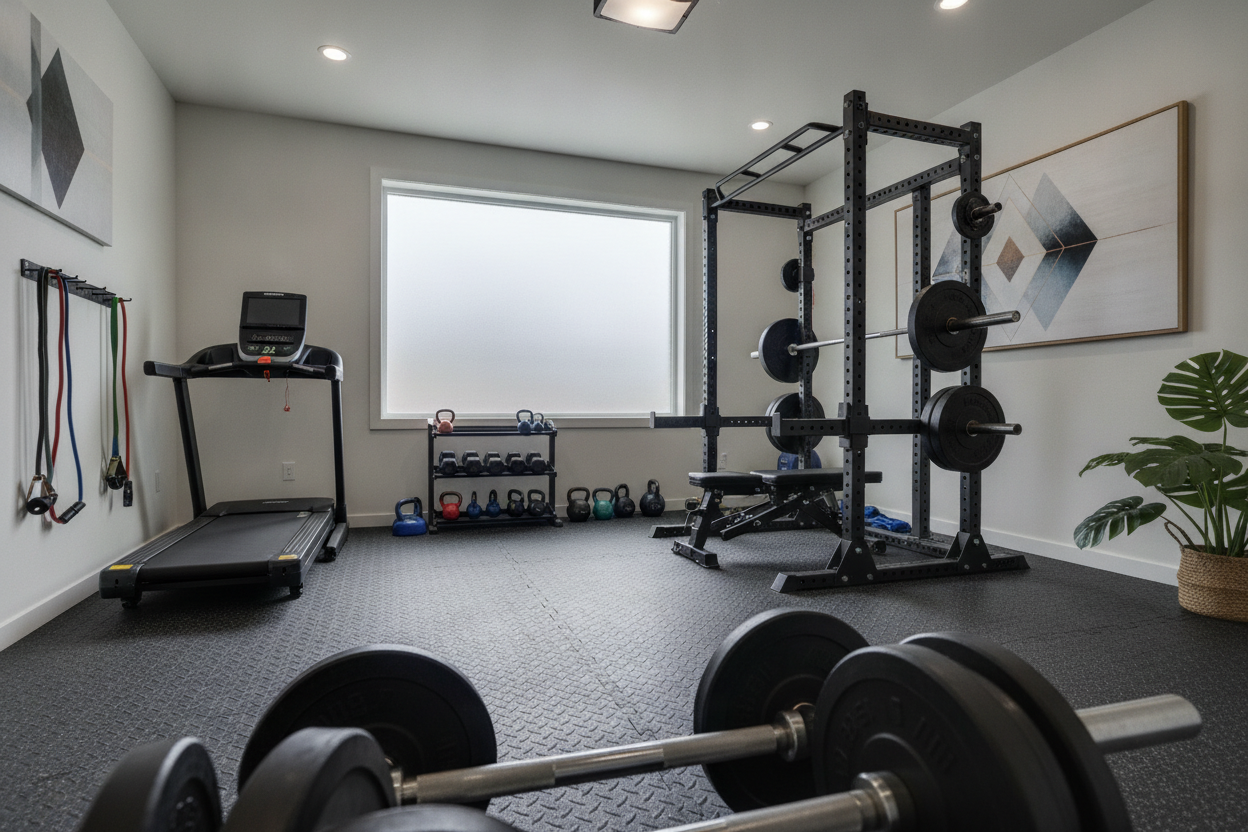
To do this right, you need a rock-solid foundation. I use a high-capacity adjustable weight bench that doesn't wobble when I'm grinding out that final, shaky rep. Having equipment you trust allows you to focus entirely on the muscle contraction rather than wondering if the frame is going to buckle under a heavy load. If you want to know the best way to add muscle mass safely, it's about creating an environment where failure isn't dangerous.
Slowing Down: Making Light Weight Feel Brutally Heavy
One of the biggest mistakes I made was thinking I needed more plates to grow. When you're training at home, you eventually run out of weight or space. I learned that your workout to gain muscle starts with the lightest weights when you master the eccentric—the lowering phase.
Instead of dropping the weight, take three full seconds to lower it. Pause at the bottom. The tension is agonizing, but it’s how you force growth without needing a 500-lb deadlift. This mechanical tension is a primary driver for hypertrophy. You don't need a commercial gym's worth of iron if you know how to make 25 pounds feel like 50.
Applying the Intensity to Your Lower Body
Leg day is usually where home lifters quit because they don't have a $2,000 squat rack. But you can learn how to gain muscle in legs fast by embracing unilateral work. Bulgarian split squats are the ultimate 'no-rack' leg builder. They are miserable, they require balance, and they will absolutely pack size on your quads.
If you're wondering how to gain muscle and weight fast, stop worrying about your back squat max and start worrying about how many controlled, deep split squats you can handle. All you really need is a basic weight set and bench to turn your garage into a growth factory. The intensity you bring to the movement matters significantly more than the name of the machine you're using.
Is training to failure every set bad for you?
Doing it on every single set of every exercise can fry your central nervous system. Save total failure for your last set of an exercise, or for isolation moves like curls and lateral raises where the recovery cost is lower.
How do I know if I'm actually close to failure?
Film your sets. If your 'hard' reps look just as fast as your first reps when you watch the video back, you weren't actually close to failure. Real proximity to failure involves a visible struggle and a decrease in bar speed.
Can I build muscle with just dumbbells?
Absolutely. Your muscles only recognize tension and fatigue. As long as you are progressively increasing the load or the difficulty (like slowing down the tempo), dumbbells are more than enough to build a pro-level physique.