I Stopped Chasing the Pump to Solve How Do I Build Muscle Mass
I remember spending two hours in my garage, arms swollen like balloons, dripping sweat onto my stall mats. I felt like a beast in the moment, but when the pump faded and I looked in the mirror three months later, I looked exactly the same. I kept asking myself, how do i build muscle mass if I am already working this hard? The truth was painful: I was just getting tired, not getting bigger.
Quick Takeaways
- Fatigue is a side effect of training, not the primary driver of growth.
- The 'pump' is temporary cellular swelling, not permanent muscle tissue.
- Progressive mechanical tension is the only non-negotiable for hypertrophy.
- Stable equipment and a solid floor are required to move heavy enough loads for growth.
The Big Difference Between Feeling Exhausted and Getting Bigger
We’ve been conditioned to think that if we aren't crawling out of the gym, we didn't work hard enough. I used to judge my workouts by how much I sweated and how sore I felt the next morning. That is a trap. Fatigue is easy to generate; you could jump rope for an hour and be exhausted, but your biceps won't grow an inch.
When you focus on exhaustion, you usually sacrifice form and load. You start using momentum to finish sets just to 'feel the burn.' If you want to solve the riddle of how do you build muscle mass, you have to stop chasing a feeling and start chasing a number. Your logbook—whether it's an app or a beat-up notebook—is a better indicator of growth than your sweat levels.
Why the 'Pump' is Just a Biological Illusion
The pump feels incredible. Your skin gets tight, your veins pop, and you look 10% bigger for about forty-five minutes. This is just sarcoplasmic hypertrophy—basically, your body shunting blood and fluid into the muscle to manage metabolic waste. While it can play a minor role in signaling, it is largely a temporary biological illusion.
I’ve seen guys spend forty minutes on 'finisher' sets with 10-lb dumbbells just to get that tight feeling. They leave the gym looking huge and wake up the next day looking exactly the same as they did six months ago. Real tissue growth—myofibrillar hypertrophy—comes from actual structural changes to the muscle fibers, not just filling them with fluid.
If Not the Pump, How Do You Build Muscle Mass?
The answer is boring but brutal: you have to force the muscle to adapt to a load it can't currently handle. Your body is lazy. It doesn't want to build expensive, calorie-burning muscle tissue unless it absolutely has to for survival. You provide that 'survival' signal by lifting heavy weights that get progressively heavier over time.
Hypertrophy is a survival mechanism. If you squat 225 lbs for 10 reps this week, and you do the same next week, your body has no reason to change. But if you force 230 lbs for 10 reps, or 225 lbs for 12, you’ve created a new stressor. That is the fundamental reality of how do you build muscle mass.
The Undeniable Power of Progressive Mechanical Tension
Mechanical tension is the king of muscle growth. This happens when you stretch a muscle under a heavy load through a full range of motion. Think of the bottom of a deep stretch on a chest fly or the eccentric phase of a heavy squat. This tension creates micro-tears and mechanical stress that tell your satellite cells to get to work repairing and thickening those fibers.
To maximize this, you need the right gear. I stopped using those cheap, bouncy barbells and upgraded to a stiff power bar with aggressive knurling. Why? Because if the bar is slipping in my hands or whipping around, I can't apply maximum tension to the target muscle. You need to be the one in control of the weight, not the other way around.
Stop Wasting Energy on Junk Reps
I used to think more was better. I’d do five different variations of curls until I couldn't lift my water bottle. Most of those sets were 'junk volume'—reps that were too light to trigger growth but heavy enough to eat into my recovery. When I finally got serious, I realized how can you build muscle mass doing less by focusing on two or three high-intensity, heavy working sets rather than ten mediocre ones.
If you’re doing 20 sets per body part and you aren't growing, you aren't training hard enough on the sets that actually matter. Cut the fluff. If you can do more than 15 reps with a weight, it’s probably too light to be the primary driver of your muscle mass goals. Focus on the 6 to 12 rep range and make every single one of those reps look identical.
Building Your Base From the Ground Up
You can't fire a cannon from a canoe. I learned this the hard way when I tried to max out my overhead press on a piece of plywood that wasn't level. If your feet are wobbling or your bench is rocking, your brain will naturally 'throttle' your strength output to keep you from getting injured. This kills your ability to apply mechanical tension.
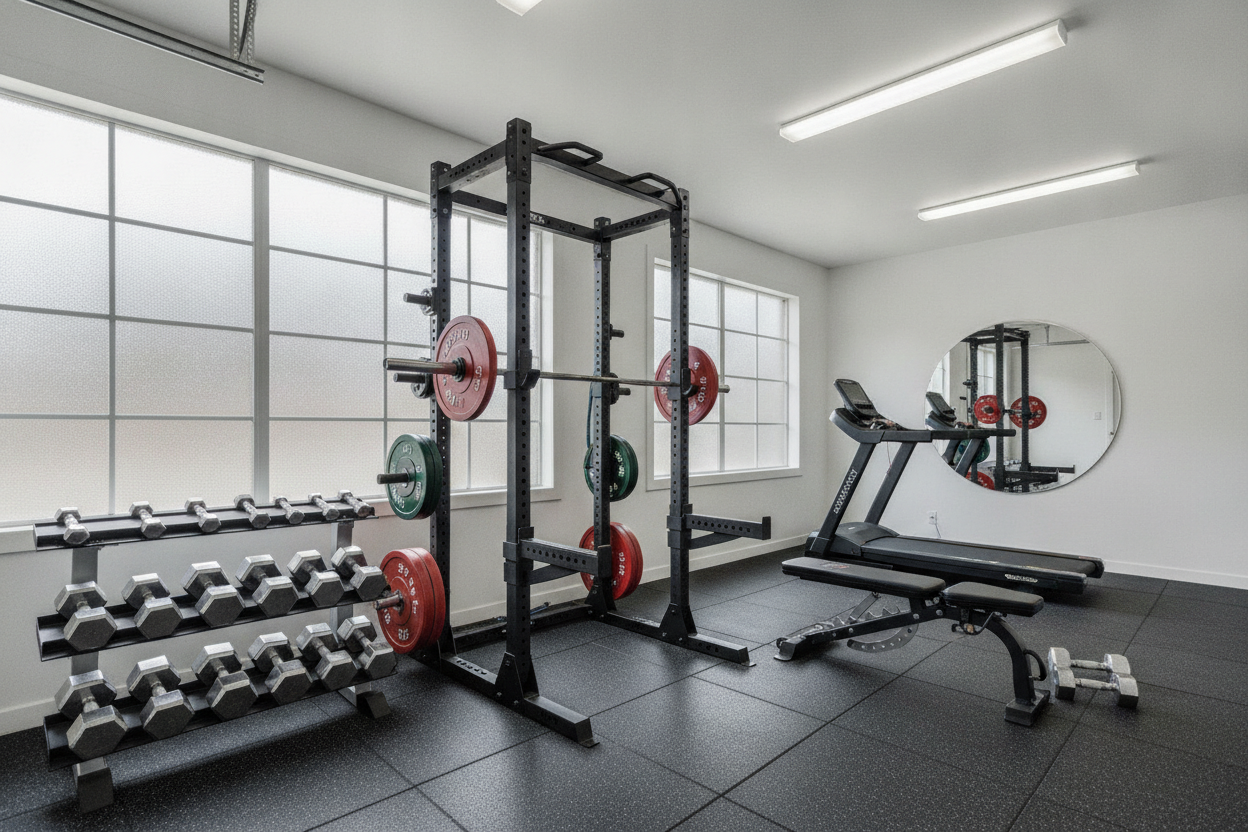
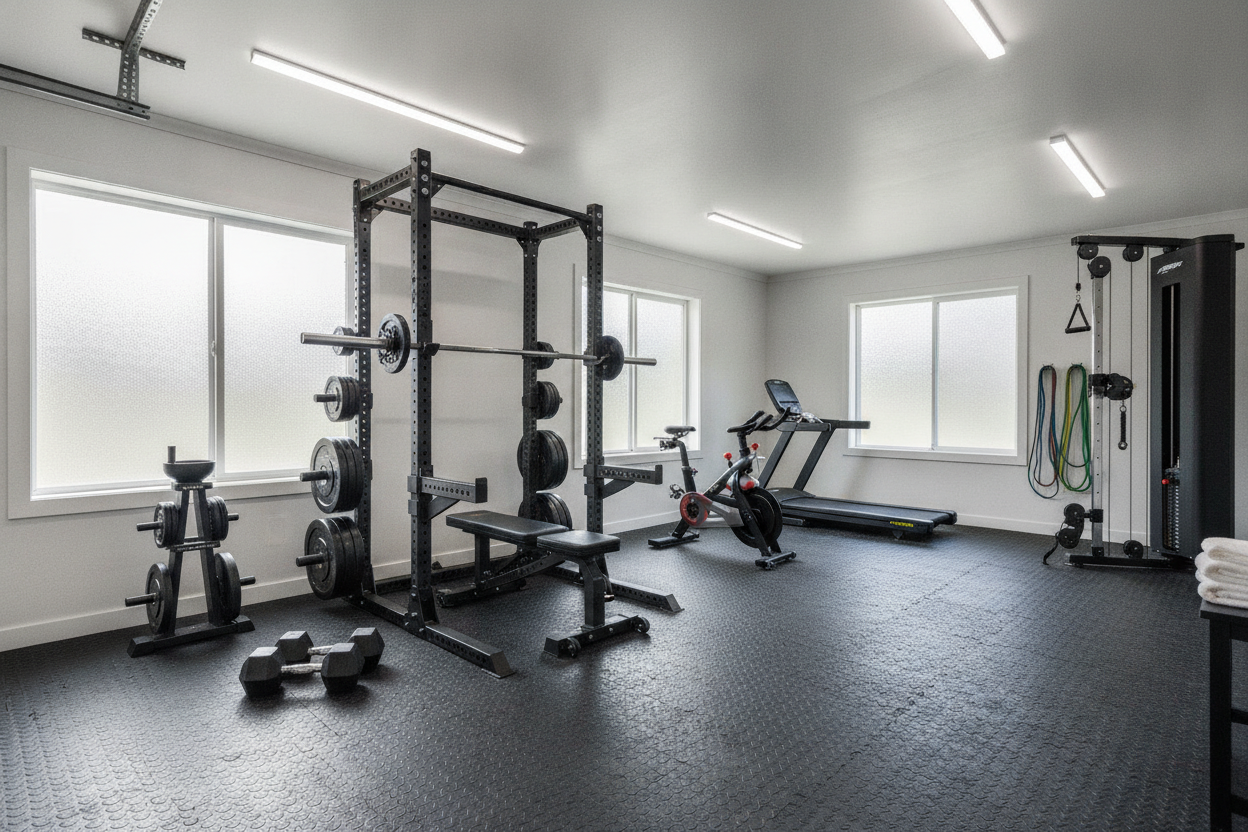
I realized how do you gain muscle mass fast once I invested in actual 3/4-inch horse stall mats and a rack that was bolted to the floor. Stability allows you to move more weight. More weight equals more tension. More tension equals more muscle. It’s a simple equation that most people ignore in favor of fancy cable machines.
Personal Experience: My 20-Set Mistake
For the first two years of owning my garage gym, I was a volume junkie. I followed those old-school bodybuilding magazines that recommended 24 sets for chest. My joints hurt, my motivation was tanking, and my bench press was stuck at 185 lbs for an eternity. I was 'working out' but I wasn't 'training.' I finally stripped everything back to a basic upper/lower split, focused on adding 5 lbs to the bar every two weeks, and my chest finally started growing. I had to kill my ego and stop chasing the pump to actually see results.
FAQ
Does muscle soreness mean I had a good workout?
Not necessarily. Soreness (DOMS) is just a sign of novel stimulus or connective tissue inflammation. You can grow muscle without ever being sore, and you can be incredibly sore without growing an ounce of muscle.
How many days a week should I train for mass?
For most people, 3 to 5 days is the sweet spot. The key is frequency per muscle group; hitting a muscle twice a week is generally more effective for growth than hitting it once with massive volume.
Can I build muscle with just bodyweight exercises?
Yes, but it's much harder to apply progressive overload. Eventually, you'll need to add a weighted vest or move to more difficult progressions to keep the mechanical tension high enough to trigger growth.