I Stopped Buying Gear and Stuck to These 4 Workout Essentials
I remember looking at my garage floor two years ago. It was a graveyard of resistance bands, ab rollers, and those weird 'weighted' jump ropes that snap after three sessions. I realized I was spending more time unboxing junk and managing 'smart' apps than actually moving heavy weight. That is when I realized most workout essentials aren't found in a sponsored social media ad.
- Buy once, cry once: Invest in steel and rubber, not plastic gadgets.
- A 20kg barbell is the only true multi-tool you will ever need.
- Floor protection is a non-negotiable safety requirement, not an extra.
- A sturdy rack is your only friend when training heavy and alone.
Why Most Influencer 'Must-Haves' Are Complete Garbage
The algorithm loves shiny things. It pushes 'smart' mirrors and color-coded push-up boards because they look good in a 15-second clip. But true working out essentials aren't supposed to be pretty. They are supposed to be cold, heavy, and slightly intimidating. Real gear does not come with a monthly app subscription.
I have seen people spend $500 on 'recovery' gadgets before they even own a decent set of plates. It is a trap. Most of that plastic junk will end up in a landfill within eighteen months. If it is made of thin plastic and promises a 'revolutionary' way to hit your triceps, it is probably garbage. True exercise essentials are unsexy, heavy, and built to last three decades of abuse.
The Brutal Truth About Building a Foundation
If you want to get strong, you need to stop buying novelty. Building a real home gym requires a front-loaded investment in durability. You are buying tools that should outlive you, not seasonal accessories. Once you have the basics down, you can check out our dedicated workout hub to find programming that actually utilizes this heavy-duty hardware rather than fluff routines.
Focusing on fitness essentials means you stop worrying about 'muscle confusion' and start worrying about progressive overload. You do not need thirty different machines. You need four specific items that allow you to move the most weight safely. If it does not help you squat, press, or pull, it is not an essential.
Essential #1: A Barbell That Won't Bend Under Load
The barbell is the undisputed king of workout necessities. Do not buy a bar from a big-box sporting goods store. Those 'chrome' bars usually have a 300-lb limit and the knurling feels like wet soap once your hands get sweaty. You need a real 20kg Olympic bar with at least a 190,000 PSI tensile strength rating.
I personally look for a bar with aggressive knurling—the sandpaper-like texture on the steel. If the knurling is too passive, the bar will slip during heavy deadlifts. A quality bar will have a slight whip but won't take a permanent bend if you leave it loaded. It is the one item where spending an extra $100 literally changes the feel of every single rep.
Essential #2: Plates That Actually Weigh What They Claim
I once bought a '100lb set' of plastic-coated sand weights from a garage sale. When I finally put them on a scale, the 25lb plates were actually 22.4lbs. That kind of inconsistency kills your progress. If you think you are hitting a PR but the weight is actually 10% light, you are only cheating yourself.
Stick to cast iron or high-density rubber bumper plates. Iron is classic and takes up less room on the sleeve, which is great if you are moving 400+ lbs. Bumpers are better if you plan on doing any Olympic lifting or if you are worried about the noise. Just make sure they are within a 1-2% weight tolerance.
Essential #3: A Rack You Can Trust Your Life With
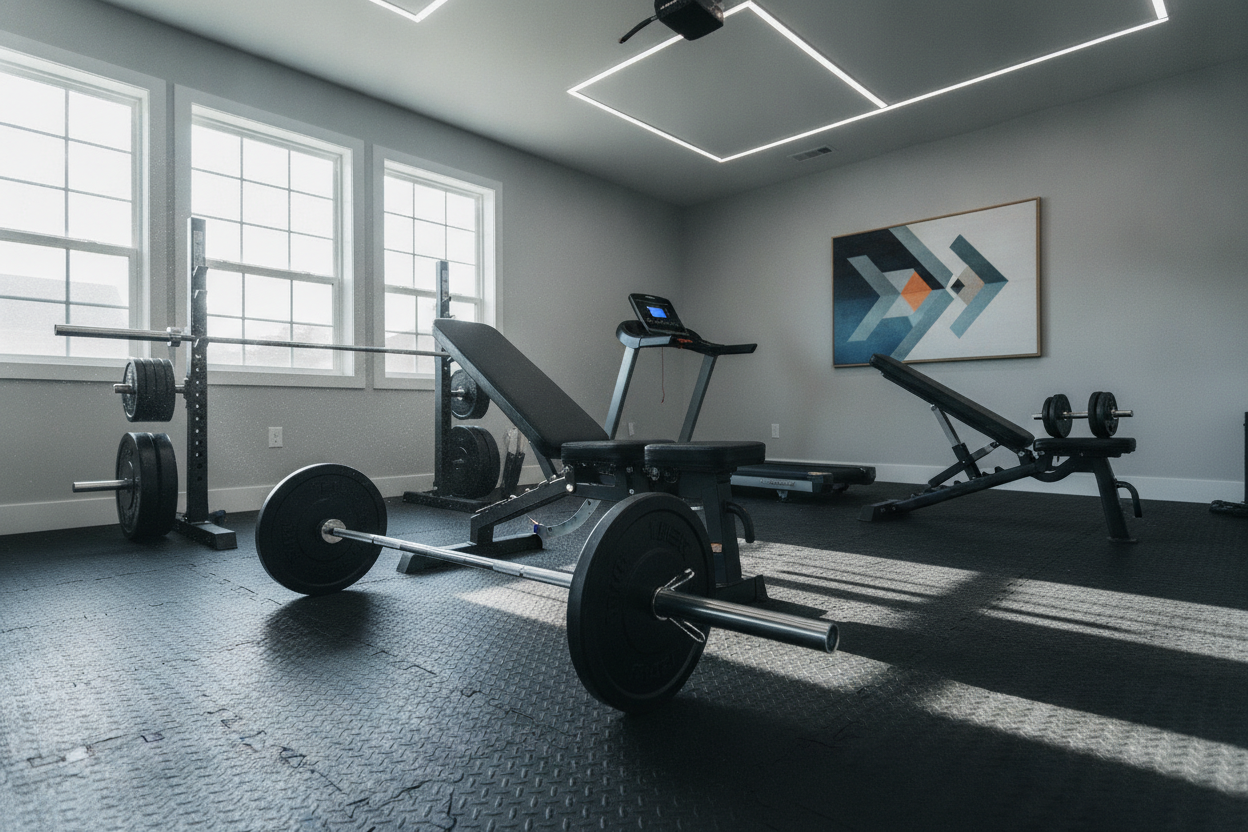
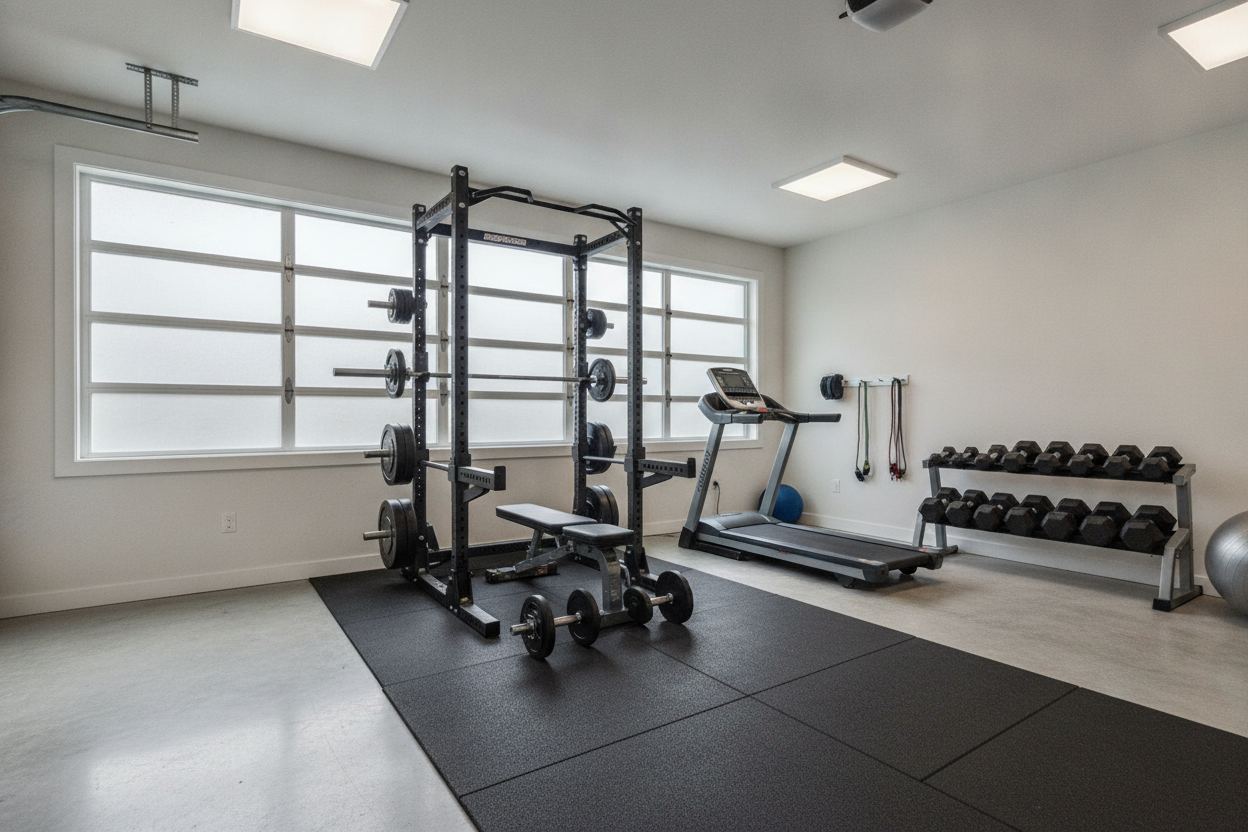
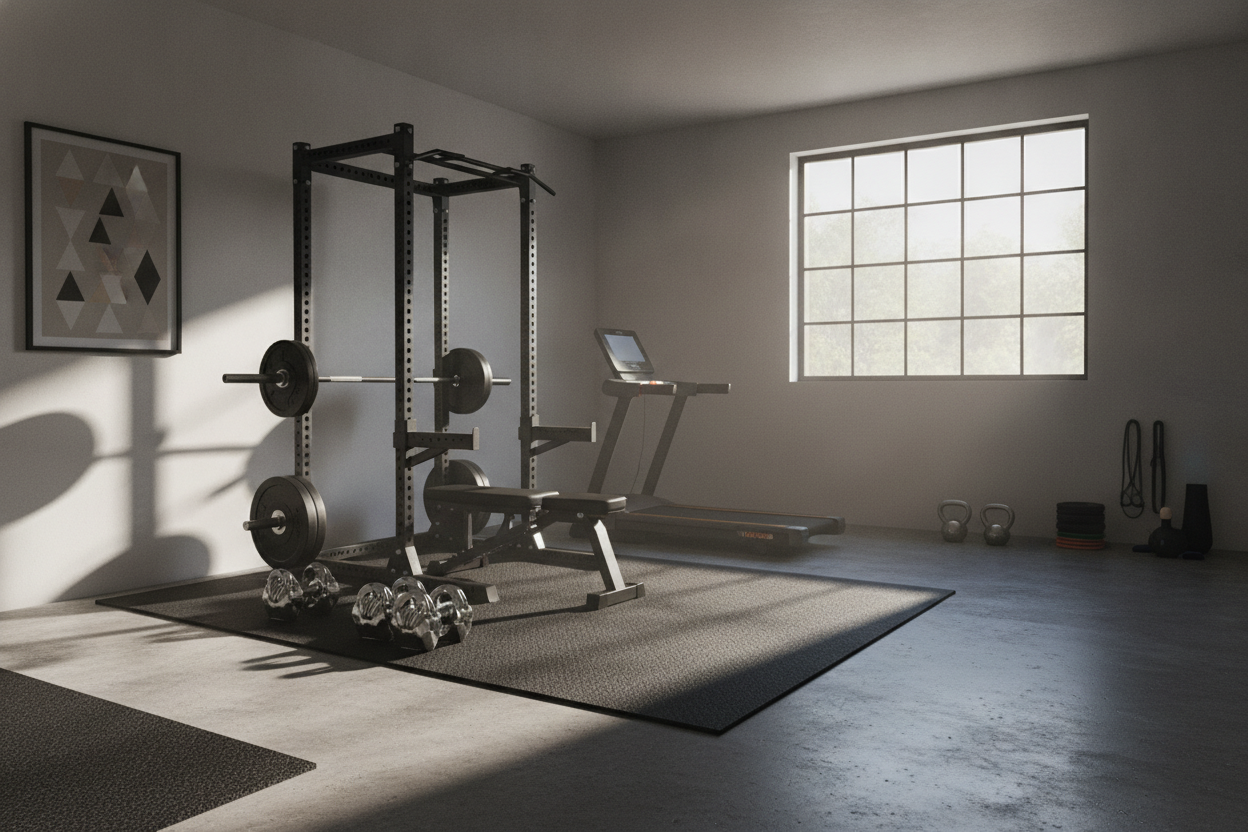
If you are training alone in a garage, the rack is your only spotter. I look for 11-gauge steel and at least 2x3 or 3x3 uprights. Anything thinner feels like a swing set when you re-rack a heavy squat. You want something that does not wobble when you are doing pull-ups or dips on the attachments. To get the most out of your space, read our complete home training guide for tips on layout and safety.
Westside hole spacing—where the holes are closer together in the bench zone—is a huge plus. It allows you to set the safety pins at the exact height needed to save your neck without the bar hitting the pins on a 'good' rep. Do not skimp here. A cheap rack is a safety hazard, plain and simple.
Essential #4: Flooring That Saves Your Concrete (and Joints)
Dropping a 300-pound deadlift on bare concrete is a $5,000 mistake. Concrete cracks, and once it starts, it is a nightmare to fix. Before you buy another pair of lifting shoes, invest in a heavy-duty 6x8ft exercise mat to protect your foundation. It deadens the noise, protects your plates from chipping, and provides a stable surface for your feet.
I made the mistake of using those cheap foam puzzle mats early on. They are useless. They slide around and compress under heavy load, making you feel like you are lifting on a marshmallow. You need dense, recycled rubber. It smells a bit like a tire shop for the first week, but it is the only thing that actually stands up to a dropped barbell.
How to Purge the Fluff and Actually Get Strong
Throw the plastic gadgets in the trash or sell them to someone who hasn't learned the lesson yet. An essentials workout is built on the big compound movements. When you clear the clutter, you focus on the work. That is why I stripped my setup down completely and finally started seeing real strength gains.
Stop looking for the next 'hack.' Buy the steel, lay the rubber, and get under the bar. Everything else is just noise designed to separate you from your money.
FAQ
Is iron better than bumper plates?
Iron is thinner, so you can fit more weight on the bar. Bumper plates are made of dense rubber, so they are quieter and safer to drop. If you are doing powerlifting, go iron. If you are doing CrossFit or Olympic lifts, go bumpers.
Do I really need to bolt my rack to the floor?
If the manufacturer recommends it, do it. If you have a flat-foot rack, you can usually get away without bolting it, but for any rack with a narrow base, bolting it down prevents it from tipping during heavy re-racks or pull-ups.
How much should I spend on a barbell?
Expect to spend between $250 and $350 for a high-quality, entry-level professional bar. Anything under $150 is usually a 'beater bar' that will rust and bend. Anything over $600 is usually for specialized competitive lifting.