I Snapped 3 Belts Before Finding the Best Weightlifting Gear
I remember the sound vividly. It wasn't the satisfying 'clink' of iron plates meeting on a barbell; it was the violent 'thwack' of a cheap Velcro belt giving up on life at the bottom of a heavy squat. I had bought it at a big-box sporting goods store because it was twenty bucks and looked 'pro' enough. It wasn't. Investing in the best weightlifting gear isn't about vanity; it's about not having your equipment fail when you're pinned under 315 pounds.
- Leather is king for heavy compounds; nylon is for high-rep metcons.
- Look for double-stitching and reinforced buckles to avoid mid-set failures.
- Cheap gear costs more in the long run when you have to replace it every six months.
- Fix your form before relying on a belt to hide a weak core.
The Day My Bargain-Bin Lifting Belt Exploded
I was chasing a 405-lb squat PR in my garage. I hit the hole, braced hard, and the buckle literally sheared off the frame. The belt flew across the room like a slingshot. I managed to finish the rep, but my lower back felt like it had been hit by a truck for a week. That is the risk with bargain-bin gear. It is built for the 'fitness enthusiast' who never goes over 135 pounds, not for someone actually moving heavy iron.
You do not want to be wondering if your gear will hold while you are trying to set a lifetime best. The peace of mind that comes with overbuilt equipment is worth every penny. Since that day, I have been a stickler for specs, materials, and where the stitching meets the metal.
Leather vs. Nylon: What Actually Lasts?
Nylon has its place. If you are doing high-rep thrusters or burpees, a 4-inch nylon belt is great because it moves with you and does not dig into your ribs. But if you want the best lifting gear for pure strength, you need 10mm or 13mm vegetable-tanned leather. It stays stiff, it supports your intra-abdominal pressure, and it does not pop open when you are grinding out a heavy set of five.
Check the edges of the leather. If it is 'genuine leather,' it is likely layers of scrap glued together. You want top-grain or full-grain leather. It should feel stiff—almost painfully so—until you break it in over a few months. Once it molds to your body, it becomes a buy-it-for-life piece of kit.
Straps, Wraps, and Sleeves That Survive the Barbell
I have shredded cotton straps in less than a month. The aggressive knurling on a high-quality power bar will eat cheap fabric for breakfast. You need heavy-duty strength training accessories that use reinforced nylon or thick leather. For wrist wraps, look for that stiff, 'cast-like' feel if you are benching heavy. The best lifting accessories use triple-stitching at the stress points and thick Velcro that does not fray after ten uses.
Neoprene density matters for knee sleeves too. Cheap sleeves are basically just keeping your knees warm. Real 7mm SBDs or similar high-grade sleeves provide actual compression and a bit of 'rebound' out of the hole. If you can fold your knee sleeves into a tiny ball, they are probably too thin to do much for your heavy squats.
You Still Need to Protect Your Foundation
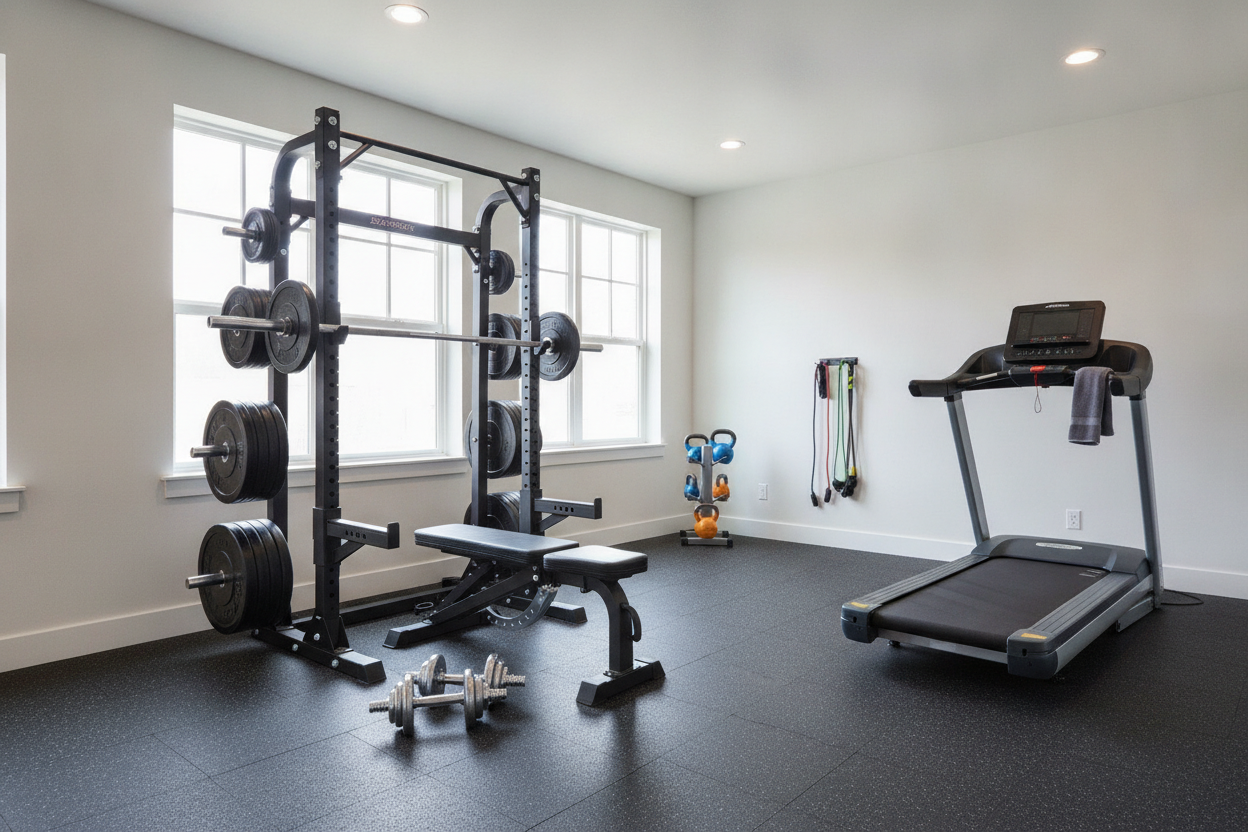
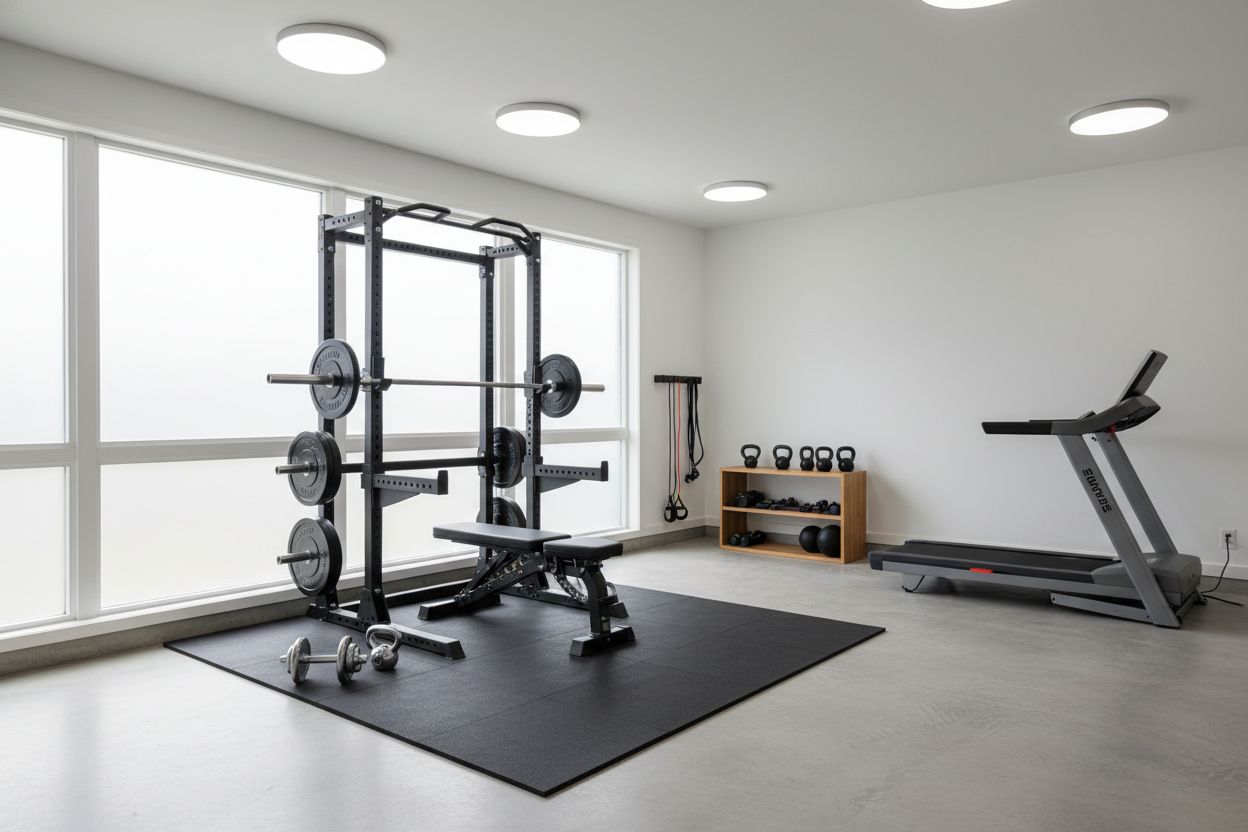
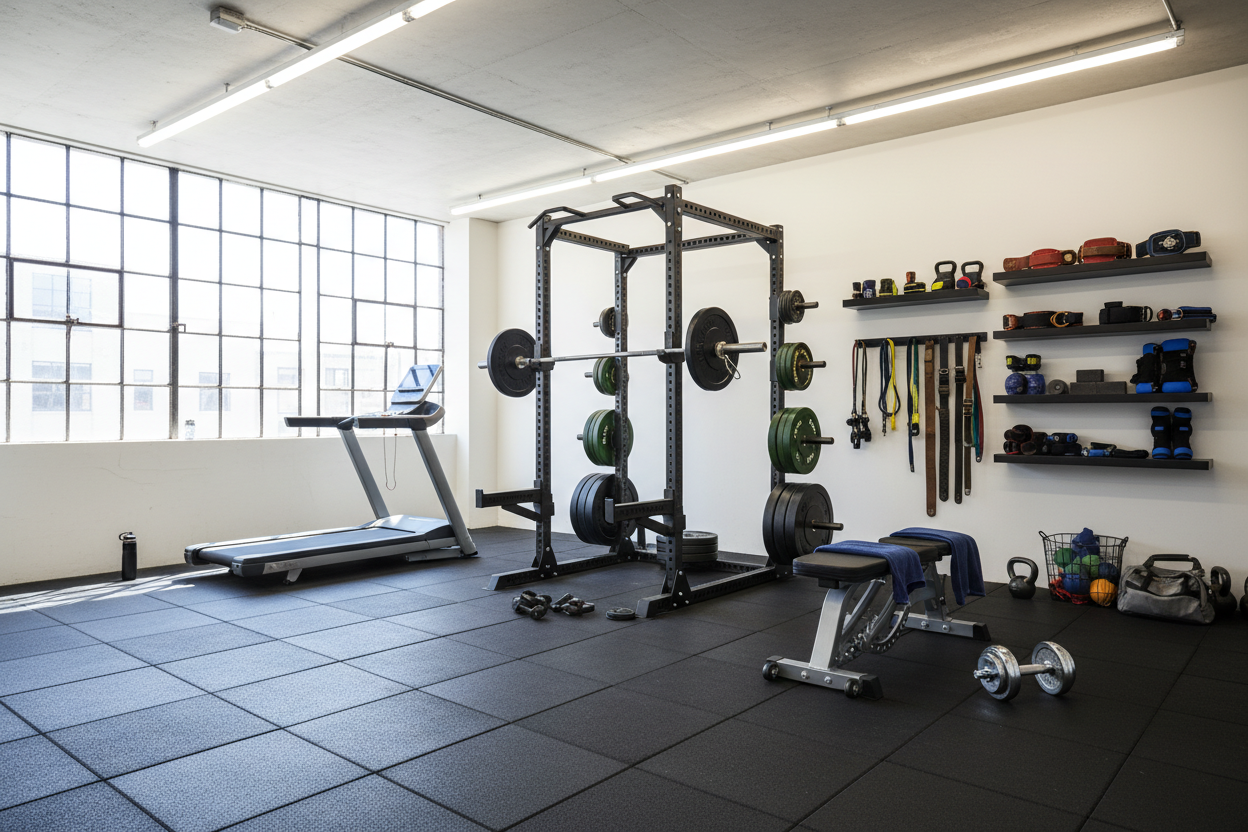
Even the most bulletproof gear will not save your garage floor. If you are pulling 500 pounds and dropping it on thin rubber or bare concrete, your slab is going to crack eventually. I learned this the hard way after seeing a spiderweb crack develop under my squat rack. You need a solid base, like the best large exercise mat or a dedicated lifting platform, to absorb that kinetic energy.
Think of your flooring as part of your gear kit. It protects your plates from chipping and your floor from shattering. A 3/4-inch stall mat is the gold standard here. Anything thinner is just a yoga mat with a tough guy name.
When Should You Finally Upgrade Your Gym Bag?
Do not buy a belt to fix a soft core. If you cannot brace your own spine without gear, you are asking for a herniated disc. I often tell people to spend more time on unilateral lifting workouts to shore up those stability gaps before they go hunting for the best weightlifting accessories. Gear should enhance your existing strength, not replace your structural integrity.
Once you can move twice your bodyweight with good form, that is when the high-end gear pays off. It allows you to push past your grip or your bracing limits to tax the prime movers. Just make sure when you buy, you buy once. I have a leather belt that is ten years old and looks better today than the day it arrived. That is the goal.
FAQ
10mm or 13mm belt?
10mm is plenty for 90% of lifters and is much easier to break in. 13mm is for dedicated powerlifters who need maximum rigidity and do not mind the 'bruised ribs' phase of breaking it in.
Are figure-8 straps better than standard straps?
Figure-8s are more secure for max-effort deadlifts because they lock you to the bar, but they are harder to ditch quickly if a lift goes wrong. Standard 'lasso' straps are more versatile for rows and pull-downs.
When should I replace my knee sleeves?
When the stitching starts to pull apart or they lose their 'snap' and start sliding down your shins during a set. For most heavy lifters, a good pair lasts 2-3 years.