I Rebuilt My Gym Set Up From Scratch (Here Is What I Changed)
I remember standing in my garage three years ago, looking at a graveyard of rusted Craigslist plates and a bench that wobbled every time I hit 185. I spent more time moving cardboard boxes just to find a spring collar than I did actually lifting. My gym set up was a mess of impulsive purchases that didn't talk to each other, and it was killing my motivation to train.
I finally hit a breaking point when I realized I was paying for a commercial membership just because I hated being in my own garage. I tore it all down and started over. If you are building a space today, learn from my expensive mistakes before you bolt anything to the floor.
Quick Takeaways
- Measure for barbell clearance (7.2 feet) plus at least 1.5 feet on each side for loading plates.
- Prioritize a single, heavy-duty flooring surface over cheap interlocking tiles.
- Choose a rack system with standard hole spacing (2x3 or 3x3) to ensure attachment compatibility.
- Empty floor space is an asset for mobility work and versatile movements.
The Trap of the Frankenstein Garage Gym
The biggest mistake I made the first time around was buying gear based on what was on sale that week. I had a rack from one brand, a cable attachment from another, and a bench that was too tall for my foot drive. It was a 'Frankenstein' gym—cluttered, mismatched, and frustrating to use. When you treat your equipment as isolated pieces, you end up with a layout that feels cramped and unusable.
Thinking about a whole gym set for home from the jump is a better move. It ensures that your safety arms, dip bars, and plate storage all work together. I wasted hundreds of dollars on 'universal' attachments that didn't actually fit my uprights. Buy into an ecosystem, not just a product.
Mapping Out Your Footprint Before Buying Heavy Iron
Most guys measure the width of the rack and think they're good. They forget that an Olympic barbell is 86 inches long. If you don't account for the 'swing' space needed to slide a 45-lb plate onto the sleeve, you're going to be punching holes in your drywall or hitting your water heater. I recommend a minimum of 10 feet of width for any lifting area.
Before you even look at steel, you need to prep the deck. I made the mistake of putting my rack directly on the concrete, which eventually led to spiderweb cracks. Laying down a large exercise mat for home gym gives you a defined footprint. It protects the slab, kills the noise, and tells you exactly where your boundaries are before you start drilling lag bolts into the floor.
Picking a Gym System That Actually Fits Your Programming
Don't buy a massive 6-post power rack if you mostly do kettlebell work and burpees. Conversely, don't try to hit a 500-lb squat inside a flimsy folding rack that shakes when you rack the bar. You need a gym system that matches how you actually move. If you're a bodybuilder, you want integrated cables. If you're a powerlifter, you want 11-gauge steel and 1-inch hardware.
I switched to a modular setup that allowed me to add a lat pulldown later. Looking at a complete gym set for home helps you visualize how the pieces grow with you. I used to think I'd never need a cable crossover, but six months into a hypertrophy block, I was kicking myself for buying a rack that didn't support one.
The Core Foundation of a Real Home Gym for Men
If you have a limited budget, put 80% of it into three things: the rack, the bar, and the bench. This is the heart of any home gym for men. Cheap bars have passive knurling that slips when your hands get sweaty, and cheap benches have a 2-inch gap between the seat and backrest that ruins your setup. I've used mens home gym equipment that felt like toys; you want gear that feels like it belongs in a D1 weight room.
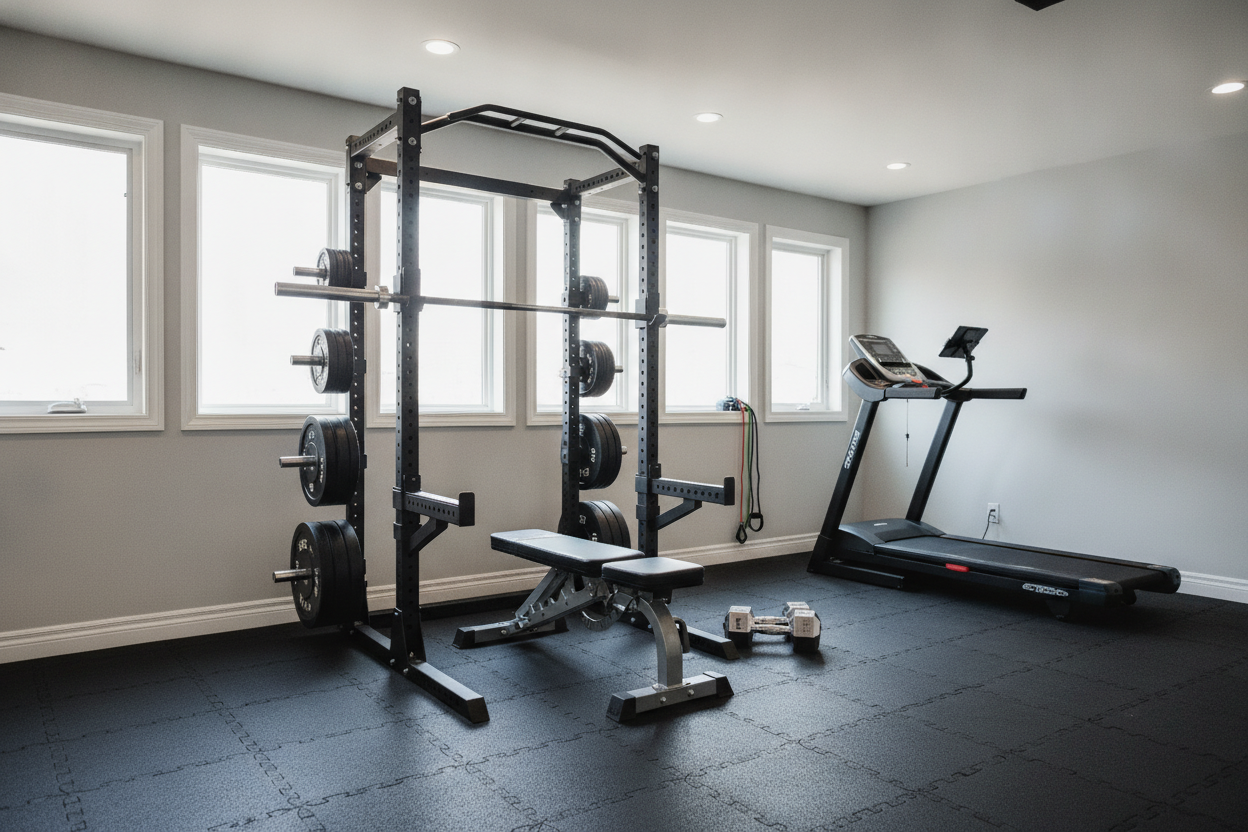
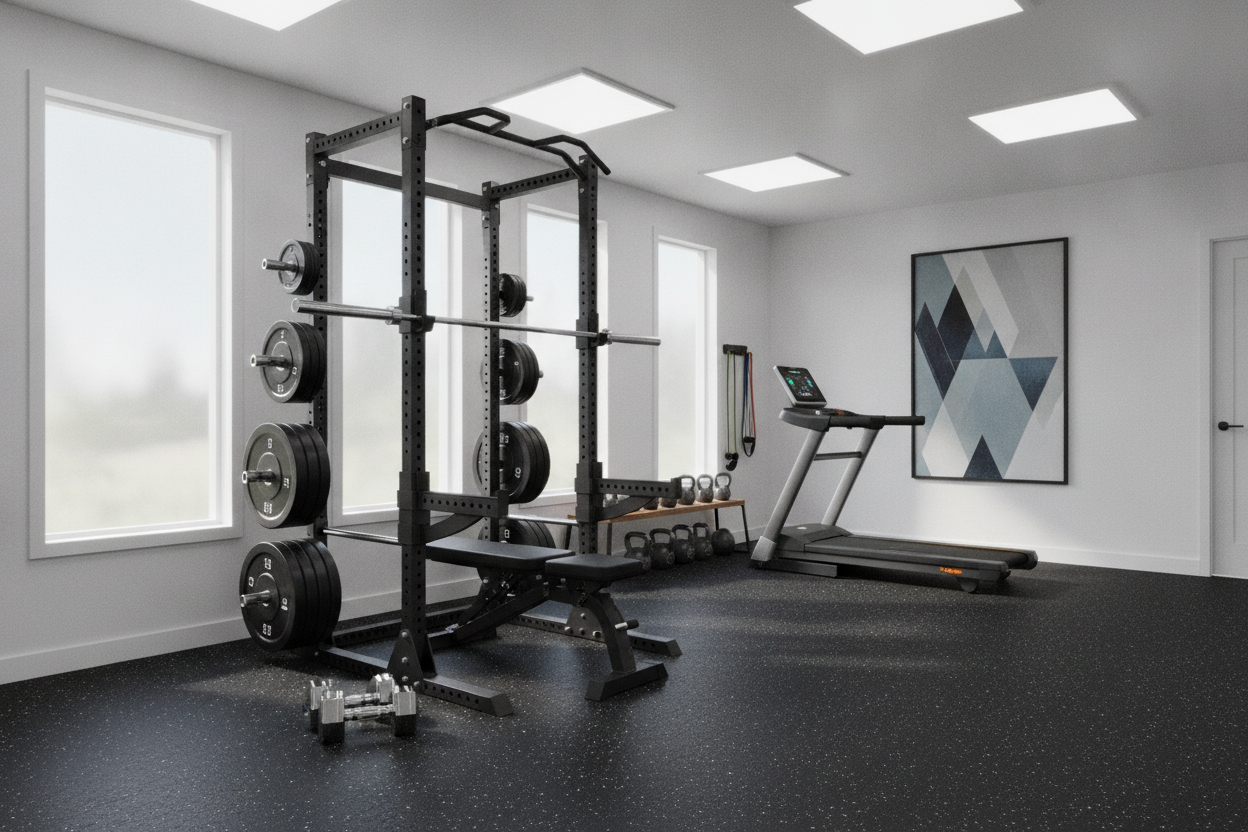
A solid 3-piece gym set for home—a squat stand, an adjustable bench, and a 20kg barbell—replaces almost every machine at the local big-box gym. I stopped buying 'specialty' machines that only did one thing. If it doesn't help me squat, bench, or pull, it doesn't get floor space in my house.
Don't Skimp on the Ground You Stand On
I started with those cheap foam puzzle mats from a big-box store. Within a month, they were separating and sliding under my feet during lunges. Even worse, they compressed under a heavy load, making my stance feel like I was standing on a marshmallow. For a serious mens home gym, you need density.
I eventually ripped them out and replaced them with a single 6x8ft exercise mat. It stays put, it doesn't smell like a tire factory, and it provides enough friction for explosive movements. If you're dropping heavy deadlifts, thin flooring is a recipe for a cracked foundation and a very angry spouse.
Leave Room to Grow (Why Empty Space is a Feature)
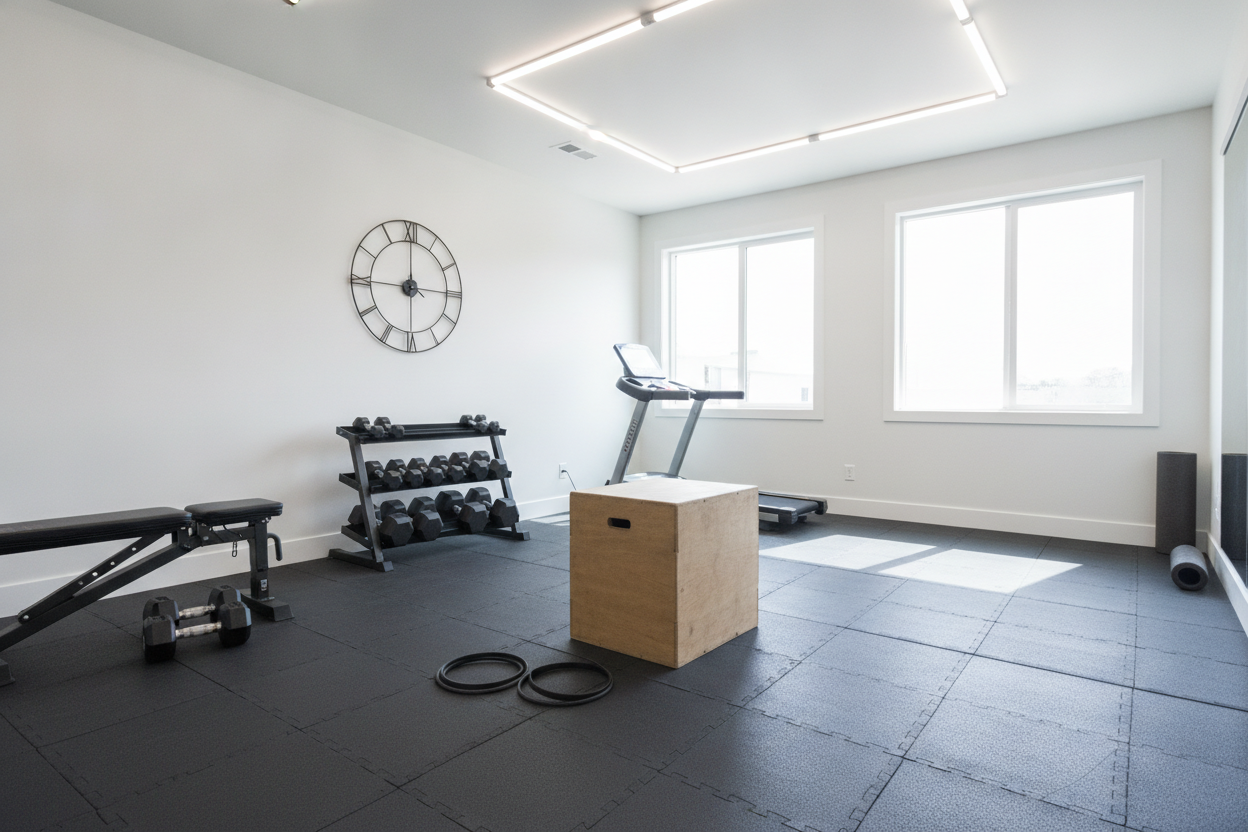
The temptation is to fill every square inch of your garage with gear. Resist it. Empty floor space is actually a premium feature of a good gym set up. You need room to stretch, room to swing a mace, and room to just breathe between sets. My current layout has a dedicated 4x6 area that is completely clear. It’s the most used part of my gym because it’s where I do the boring-but-necessary mobility work that keeps me lifting heavy at 40.
FAQ
Is 8 feet of ceiling height enough for a power rack?
Usually, yes. Most standard racks are about 80 to 90 inches tall. However, if you plan on doing pull-ups, you need about 12 inches of clearance above the bar so you don't scalp yourself on the ceiling joists.
Do I really need to bolt my rack to the floor?
If it’s a 4-post rack with a wide base, you might get away without it for most lifts. But if you’re doing heavy band work or kipping pull-ups, bolting it down is a non-negotiable for safety. If you can't drill into the floor, look for a 'flat-foot' rack design.
How do I stop my weight plates from rusting in a garage?
Keep a dehumidifier running and wipe your bars and plates down with a light coat of 3-in-1 oil or specialized equipment cleaner once a month. Avoid cheap decorative chrome—it flakes off and leaves the raw steel exposed to moisture.