I Quit Leg Day For This All Over Body Workout Female Routine
I spent my twenties chasing the perfect five-day split. I had a color-coded calendar, a gallon jug of water I dragged around like a security blanket, and enough pre-workout in my system to vibrate through walls. But then life actually happened—late meetings, house repairs, and the general fatigue of being an adult. I realized that missing one 'Leg Day' threw my entire month out of whack, leaving me with a weirdly imbalanced physique and a lot of guilt.
I finally stopped trying to train like a pro bodybuilder with zero responsibilities and switched to a sustainable all over body workout female lifters can actually maintain. It turns out, you don't need to live in the gym to look like you do. If you have a decent barbell, a few plates, and thirty minutes of focused effort, you can get more done in three days than most people do in six.
- 3-day full-body sessions beat 5-day isolation splits for 90% of home gym owners.
- Focus on five movement patterns: Push, Pull, Hinge, Squat, and Carry.
- Compound movements burn more calories and build more functional strength than machines.
- Recovery is where the actual muscle growth happens, not the gym floor.
Why I Finally Ditched the Exhausting 'Leg Day' Paradigm
The traditional 'Leg Day' is a trap. We've been told for decades that we need to dedicate an entire 90-minute session to smashing our quads and glutes until we can't walk down the stairs. For a long time, I wore that soreness like a badge of honor. But here is the reality: if you're so sore on Tuesday that you can't move until Friday, your weekly volume for every other muscle group is going to suffer. You're not a specialist; you're someone trying to be fit and strong.
When I switched to a total-body approach, my recovery skyrocketed. Instead of hitting legs once a week with 20 sets, I started hitting them three times a week with 5-6 sets. The total weekly volume stayed the same, but my intensity stayed higher because I wasn't reaching absolute failure on exercise number twelve. Plus, if I missed a Wednesday session because of a work crisis, it didn't matter. I just picked it up on Thursday. The 'all or nothing' mindset of the 5-day split is the fastest way to burn out.
I also noticed that my 'lagging' areas—mostly my shoulders and back—finally started filling out. In a split, those are often relegated to a quick 'accessory' day. In a full-body routine, they get the attention they deserve alongside the big lifts. I stopped being a person who 'did legs' and started being an athlete who trained her whole body.
The Anatomy of a Routine That Actually Saves Time
The secret to a 45-minute session that actually works is ruthless prioritization. Most commercial full body workout for women in gym plans are designed to keep you moving between machines because it’s easy for the gym to manage traffic. But in a home gym, you don't have time to wait for a cable crossover or a leg press. You need to focus on compound movements that recruit the most muscle fibers per rep.
I structure every session around supersets. Not the 'run across the gym and hog three machines' kind of supersets, but logical pairings. I’ll pair a heavy press with a heavy row. While my chest is recovering, my back is working. This keeps the heart rate up and cuts your rest time in half without sacrificing the weight on the bar. It’s about density, not just duration.
Most plans fail because they try to do too much. You don't need four different types of bicep curls. You need one solid row and one solid pull-up variation. If you’re training in a garage or a spare bedroom, space is a premium. You want movements that only require a barbell or a pair of dumbbells. This efficiency is why full-body training is the gold standard for anyone who isn't trying to step on a stage in a bikini and clear heels.
My 3-Day Blueprint (That Doesn't Require 40 Machines)
This is the exact skeleton I use for my training. I rotate between two 'days' (A and B) and perform them on Monday, Wednesday, and Friday. It’s simple, it’s boring, and it works better than any 'shred' program I’ve ever bought. You can explore our workout hub for specific exercise variations, but the core remains the same: one squat, one hinge, one push, one pull, and one carry.
Day A starts with a Barbell Back Squat. I’m looking for depth and control. I follow that with an Overhead Press to build those capped shoulders. Then, I move into a Pendlay Row—the most underrated back builder in existence. I finish with a heavy Farmer’s Carry. If you aren't carrying heavy things, you're missing out on the best core and grip work there is. It’s functional, it’s brutal, and it builds a level of toughness that planks just can't touch.
Day B swaps things around. I start with a Conventional Deadlift. This is the king of the 'hinge' pattern. I pair this with a Floor Press—great for those of us who don't have a full bench or want to save our shoulders from over-extension. I add in some Pull-ups (or lat pulldowns if the pull-up bar is feeling like an enemy that day) and finish with Goblet Squats for higher reps. The goal isn't to reinvent the wheel; it's to keep the wheel turning with more weight over time.
Protect Your Floors (And Your Joints)
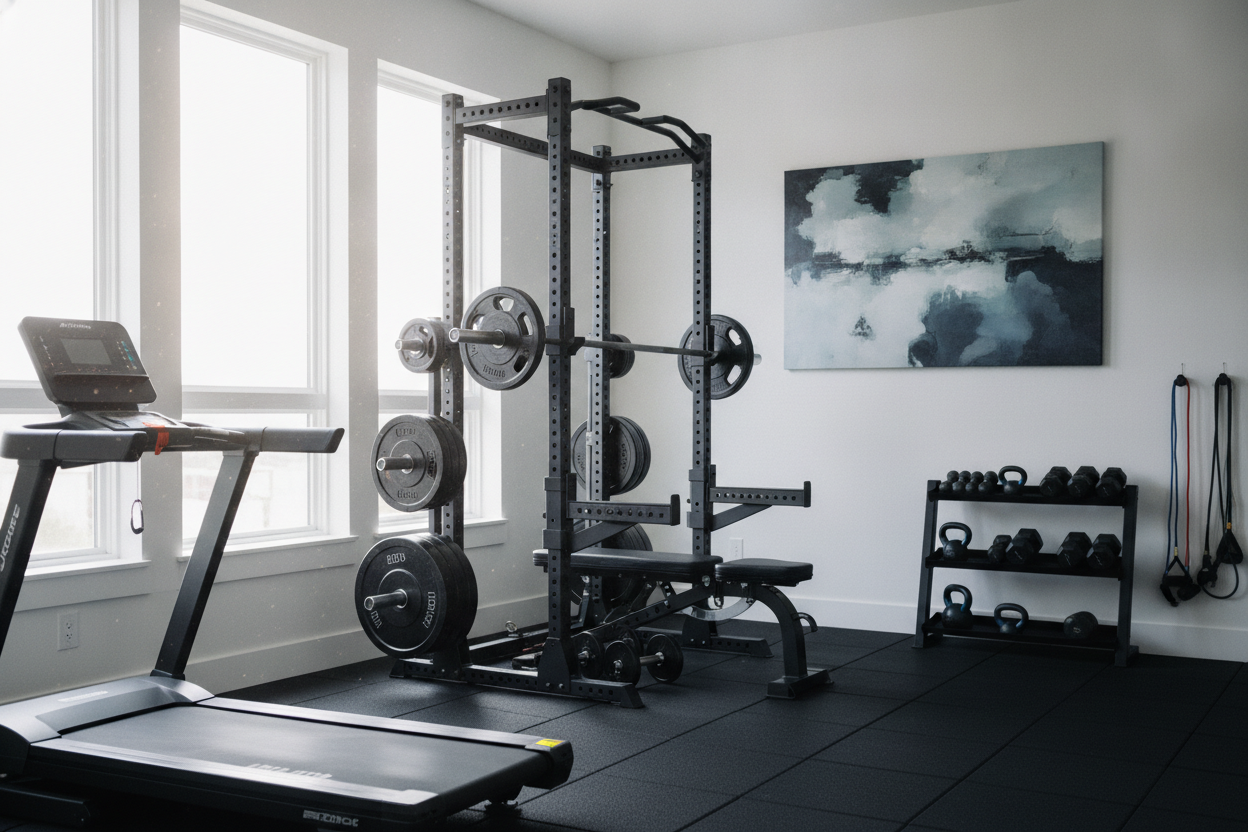
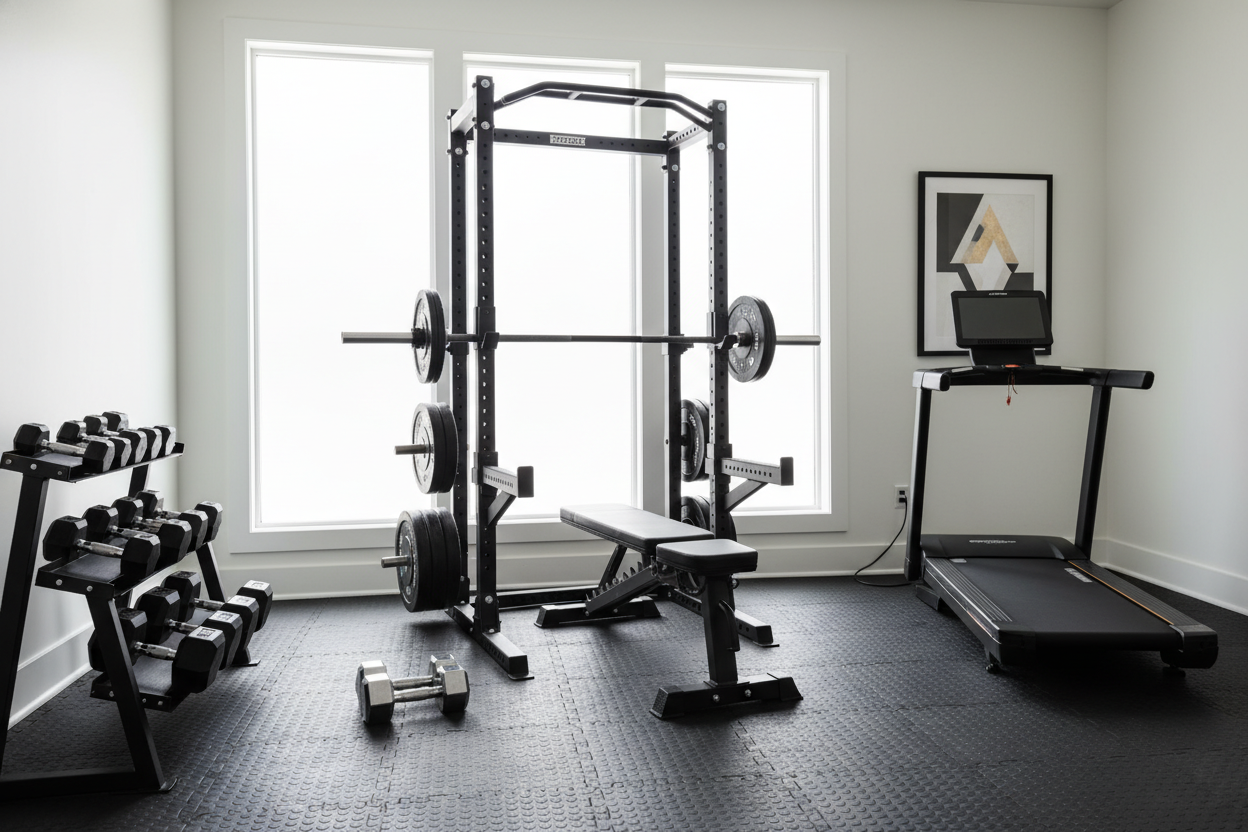
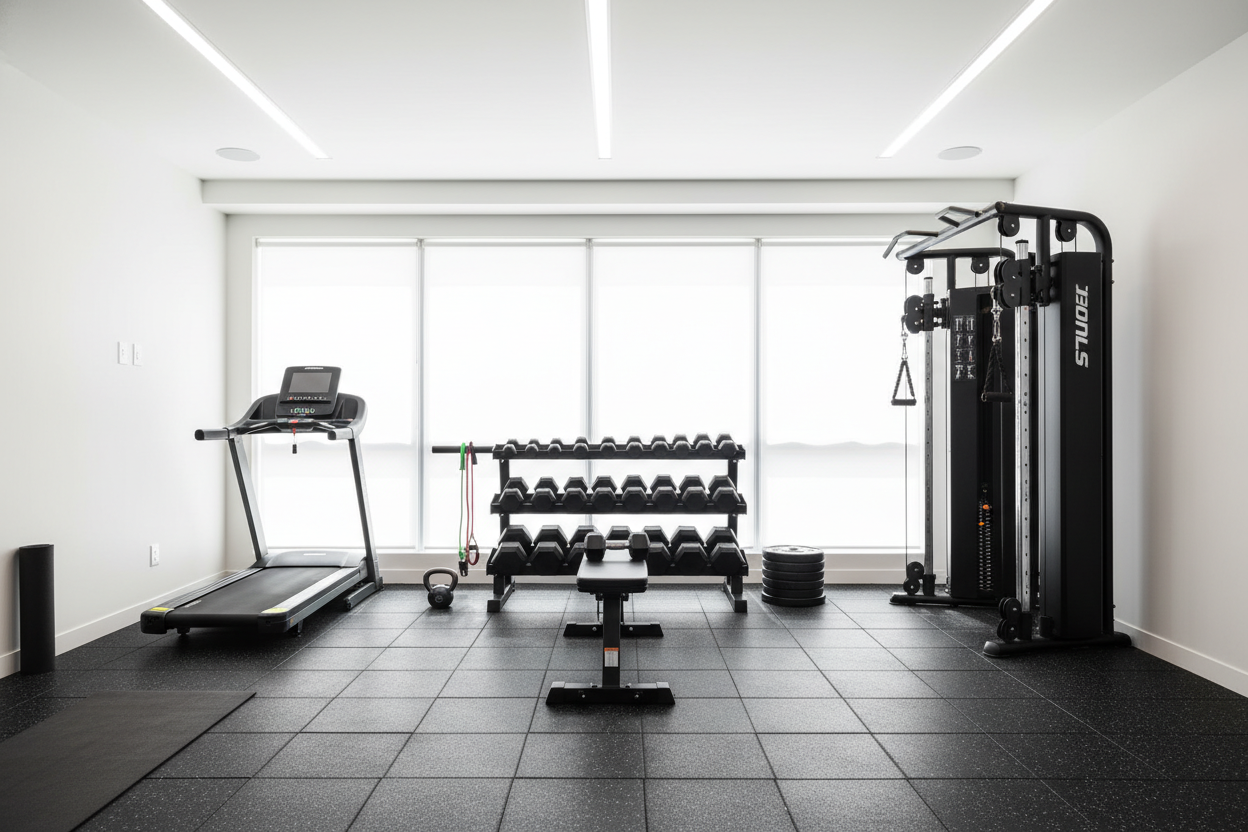
If you're doing this right, you're going to be dropping some weight. Whether it's a heavy set of deadlifts or just setting down a pair of 50-lb dumbbells after a row, your subfloor is at risk. I learned this the hard way after cracking a tile in my basement. You need a dedicated space with high-density foam or rubber. I personally use a large exercise mat gym flooring setup because it provides enough real estate for the bar and my feet without sliding around during dynamic movements. Plus, it saves your knees during floor presses and bird-dogs.
The 'Burn Fat' Trap We Keep Falling For
We've been conditioned to think that 'cardio' is for fat loss and 'weights' are for bulk. It's a lie that keeps women on the treadmill for hours. A heavy, multi-joint full body weight training workout for fat loss is actually more effective for body recomposition than steady-state cardio. When you squat 135 pounds for reps, your metabolic rate stays elevated for hours—sometimes days—as your body repairs that tissue.
I stopped doing dedicated 'cardio days' years ago. Instead, I keep my rest periods tight during my full-body lifts. If you’re huffing and puffing after a set of deadlifts, that’s your cardio. By hitting every major muscle group in a single session, you're demanding a massive amount of energy from your system. It’s like turning your body into a furnace. You’ll find that you lean out faster and keep the muscle you’ve worked hard to build.
Don't get me wrong, I still go for walks and hike on the weekends, but I don't treat the elliptical like a second job anymore. I treat the barbell like my primary tool for health. The 'burn' you feel during a high-rep circuit is nothing compared to the systemic fatigue of a heavy compound session. One builds a better engine; the other just burns fuel.
How to Tell if the Program is Actually Working
Stop looking at the scale every morning. It’s a dirty liar that fluctuates based on how much salt you had for dinner or where you are in your cycle. If you’re doing a full-body routine, you’re likely gaining muscle while losing fat, which means the scale might not move at all even as your clothes start fitting differently. Look for real-world metrics instead.
Is your grip strength improving? Are you able to carry all the groceries in one trip without your forearms screaming? That’s progress. Is your resting heart rate dropping? That’s a sign your heart is becoming more efficient from those heavy lifts. Most importantly, how do you feel? If you can get through a workday and still have the energy to play with your kids or work in the garden, the program is doing its job. Strength is the floor that supports everything else in your life.
FAQ
Is 3 days really enough?
Yes, if the intensity is high. If you're just going through the motions, 7 days wouldn't be enough. But if you're adding weight to the bar or doing more reps each week, 3 days is plenty for significant growth and fat loss.
Do I need a squat rack for this?
A rack is the gold standard for safety and heavy loading, but you can get a lot done with a heavy pair of adjustable dumbbells or a trap bar. The movement pattern matters more than the specific implement.
Will I get bulky?
I’ve been trying to get 'bulky' for ten years and I still just look like someone who fits well in a t-shirt. Women don't have the testosterone levels to accidentally turn into the Hulk. You'll just look 'toned,' which is really just code for having muscle and low body fat.