I Quit Chasing a Pump to Learn Real Strength Lifting
I spent three years chasing a pump that never stuck. I would do four sets of 12 on the bench, get a nice chest swell for an hour, and then go home wondering why my one-rep max had not budged in six months. I was confusing being tired with being capable. It took a humbling session with a powerlifter in a dusty garage to realize I was not actually strength lifting.
- Fatigue is a byproduct, not the goal of a strength session.
- Strength is a skill of the nervous system, not just muscle size.
- Reps above five are mostly for hypertrophy, not max force production.
- Rest periods of three to five minutes are mandatory for CNS recovery.
The Day I Realized Fatigue Does Not Equal Force
I used to think if I was not gasping for air between sets, I was not working hard enough. I would jump from the bench to the pull-up bar, keeping my heart rate at 160 bpm. If you want a 60 Min Fat Killer Hiit Strength Workout Hiit Cardio Total Body Sculpt For Fast Weight Loss Abs, that approach is fine. But that is conditioning, not strength.
Strength is about force production. You cannot produce maximum force when your lungs are burning and your heart is beating out of your chest. I had to learn to sit down, set a timer for four minutes, and actually let my body recover so I could attack the next set with 100% intensity.
Wait, So How Does Strength Work?
So, how does strength work? It is less about the size of the engine and more about the tuning of the computer. Your Central Nervous System (CNS) has to learn how to recruit motor units simultaneously. When you first start lifting heavy, your brain actually holds you back to prevent you from snapping a tendon.
True strength training is the process of teaching your brain that it is safe to fire every muscle fiber at once. This is why you see 180-pound lifters out-squatting 250-pound bodybuilders. Their 'wiring' is simply more efficient at mobilizing the muscle they already have.
The Brutal Truth About Weight Lifting for Strength
Lifting for strength requires a massive ego check. You have to move heavy loads—usually 85% to 95% of your one-rep max—for very few repetitions. If you can do six reps, the weight is too light. We are talking about the one-to-five rep range where every inch of the lift feels like a battle.
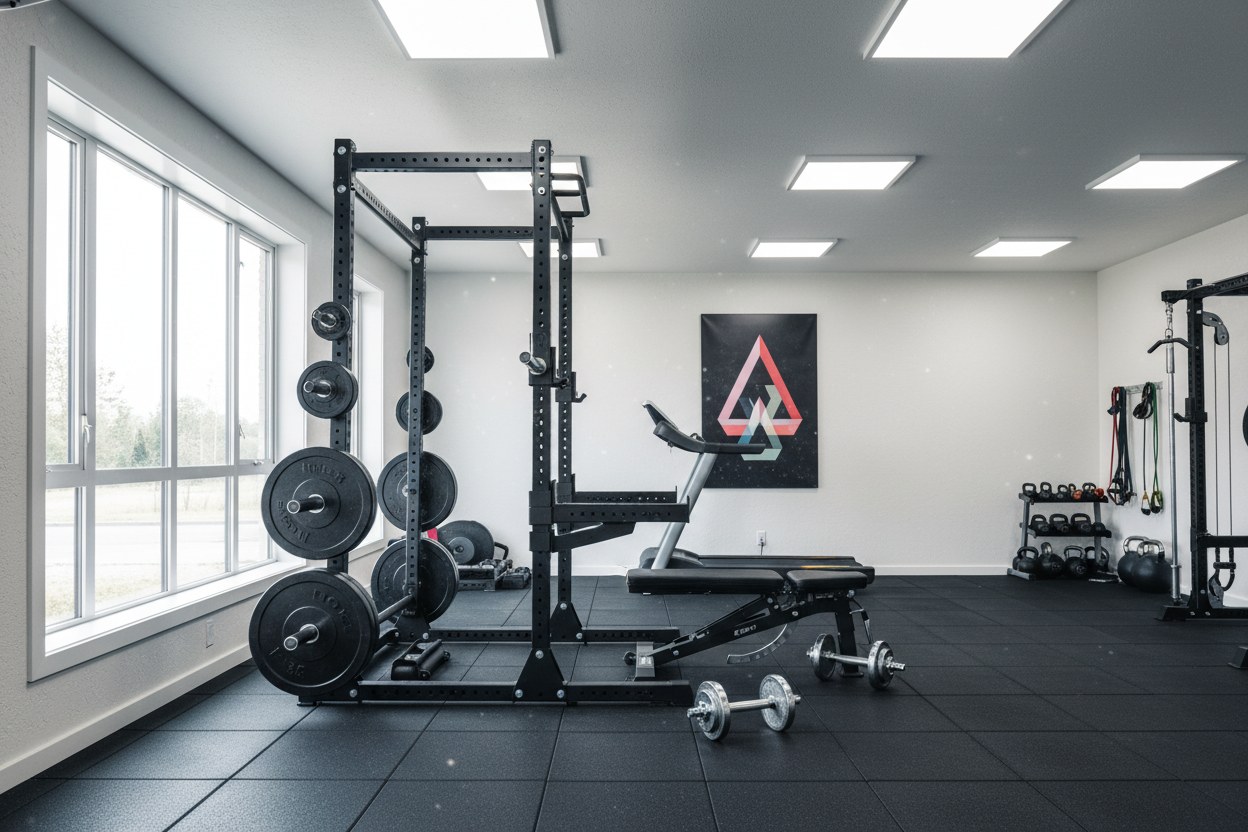
This is why weight lifting for strength demands high-quality gear. You do not want to find the limit of your squat rack while you are pinned under a personal record. I always tell people to invest in serious Strength Equipment before they start chasing heavy triples. Cheap racks flex under load, and that wobble kills your confidence when there is 400 pounds on your back.
How to Weight Train for Strength Without Breaking
Learning how to weight train for strength is about mastering internal tension. You are not just moving a bar from point A to point B; you are turning your entire body into a rigid, unyielding pillar. If your core is not braced like you are about to take a punch, you are leaking power through your spine.
For those moving from machines to heavy barbell work, Choosing The Best Strength And Weight Training Equipment For Your Goals means looking for stability. You want 11-gauge steel and 1-inch hardware. When the weights get heavy, the equipment needs to be the last thing on your mind.
You Need to Respect Your Foundation
Nothing kills a heavy bench press faster than a wobbly seat. I once tried to max out on a cheap department store bench and felt the front leg shift mid-rep. It was terrifying and nearly ended my lifting career. A rock-solid foundation like the Gxmmat Adjustable Weight Bench makes a massive difference because it stays put.
When you are not worried about the bench collapsing or sliding across the floor, you can actually focus on leg drive and chest expansion. Stability equals strength. If your gear moves, your numbers won't.
Strength Lifting FAQ
Why do I need to rest 5 minutes between sets?
Your ATP-CP energy system—the fuel for short, explosive movements—takes about three to five minutes to fully recharge. If you go too soon, you are testing your endurance, not your strength.
Will strength lifting make me too bulky?
Size follows strength to an extent, but getting 'bulky' requires a massive caloric surplus. Most people find they actually look harder and more dense because of the increased muscle tone and CNS efficiency.
Can I train for strength every day?
No. Your muscles might feel fine, but your nervous system takes about 48-72 hours to recover from true max-effort work. Three to four heavy sessions a week is the sweet spot for most mortals.