I Quit 'Bulking' to Learn How Gain Lean Muscle Mass Works
I remember the first time I decided to 'get huge.' I followed the standard advice: eat everything that isn't nailed down and lift until you see stars. Six months later, I had a 315-pound squat, but I also had a gut that hung over my belt and a face like a harvest moon. I wasn't building a powerhouse; I was just getting fat. If you want to know how gain lean muscle mass without the soul-crushing realization that you've just spent a year getting out of shape, you need to stop eating for the sake of the scale and start eating for the sake of the tissue.
- Surpluses should be surgical (200-300 calories), not accidental.
- Compound movements are the only way to trigger real systemic growth.
- Floor stability is a non-negotiable for force production.
- Tension and progressive overload beat 'the pump' every single time.
The 'See-Food' Diet Is Keeping You Soft
The traditional bulk-and-cut cycle is a relic of the golden era that doesn't work for 95% of natural lifters. When you're not on 'assistance,' your body has a hard physiological ceiling on how much muscle it can build in a day. For most of us, that's a few ounces a week at best. When you shove 4,000 calories down your throat in hopes of putting on lean muscle, your body doesn't magically speed up protein synthesis. It just gets really efficient at storing adipose tissue. Most guys realize dirty bulking is a scam only after they've spent four months cutting just to see a hint of an abdominal muscle.
Gaining lean body mass is a slow, boring process of incremental wins. If you're gaining more than 0.5 to 1 pound of body weight per week, I hate to break it to you, but a significant portion of that is water and fat. By keeping your surplus tight, you stay within the biological limits of hypertrophy. This prevents the metabolic damage and systemic inflammation that comes with carrying excess body fat, making it much easier to stay lean and gain muscle simultaneously.
The Biological Math of a Real Lean Bulk
The math of how to put on lean muscle mass fast is actually pretty simple, but it requires discipline. You need a surplus of about 200 to 300 calories above your maintenance. That’s essentially a large apple and a scoop of protein powder, not a whole extra pizza. This 'lean bulk' approach provides enough fuel to power through heavy sessions and recover, without the spillover that ruins your physique. These lean muscle building tips aren't about being a prisoner to your kitchen scale; they're about consistency.
To build solid muscle, focus on your macros without overcomplicating it. Aim for 1 gram of protein per pound of body weight. The rest of your calories should come from high-quality carbs to fuel your workouts and healthy fats for hormonal health. If you're struggling with how to put on lean mass, look at your peri-workout nutrition. Carbs before and after you train are the best way to put on lean muscle because they drive insulin—the most anabolic hormone in the body—exactly when your muscles are primed to receive it.
Why Your Legs Are the Engine for Total Body Growth
If your training program is 80% chest and arms, you’re failing at how to build a lean muscular body. Your legs and back contain the largest muscle groups in your body. Training them with heavy compound movements like squats, deadlifts, and rows creates a massive stimulus that forces your entire body to adapt. This is how to build solid muscle that actually looks dense and powerful, not just 'puffy' from high-rep isolation work. Heavy lower-body work increases systemic growth hormone and testosterone levels more than any bicep curl ever will.
For those of us training in a garage or basement, safety is often the biggest hurdle to intensity. If you don't have a spotter, you might find yourself sandbagging your sets. Using a lower body strength machine like a dedicated leg press or a hack squat allows you to push your quads to absolute failure without the risk of a barbell crushing your spine. These machines are essential for building strong lean muscle because they provide the stability required to move maximum weight safely, which is the cornerstone of hypertrophy.
You Can't Build Solid Muscle on a Slippery Floor
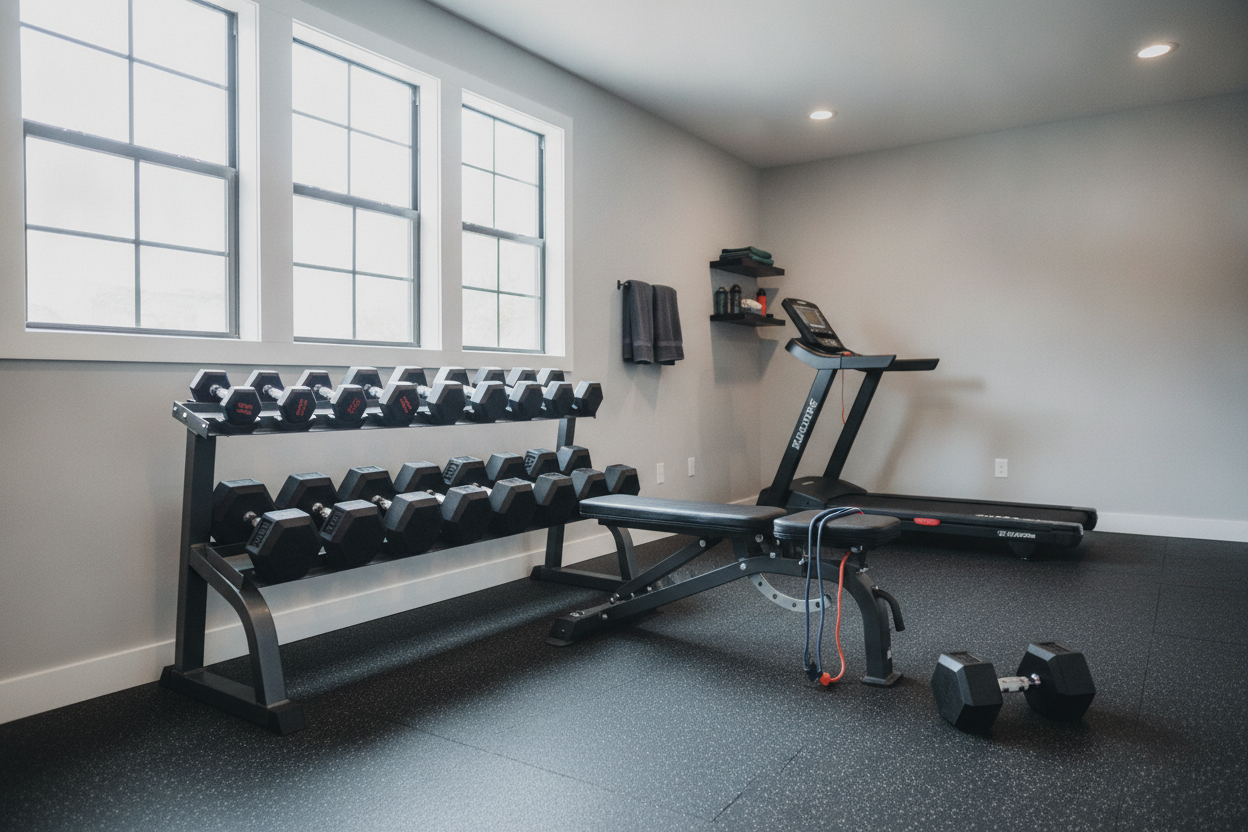
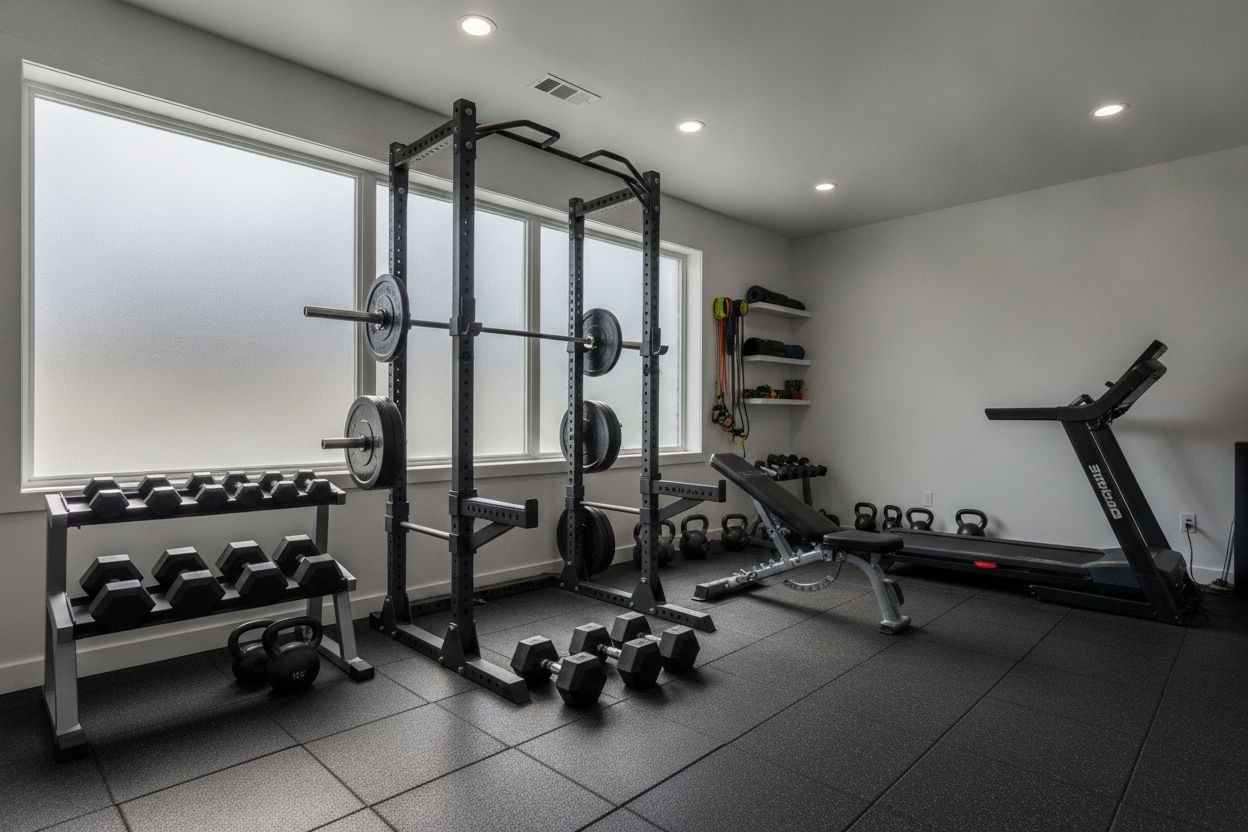
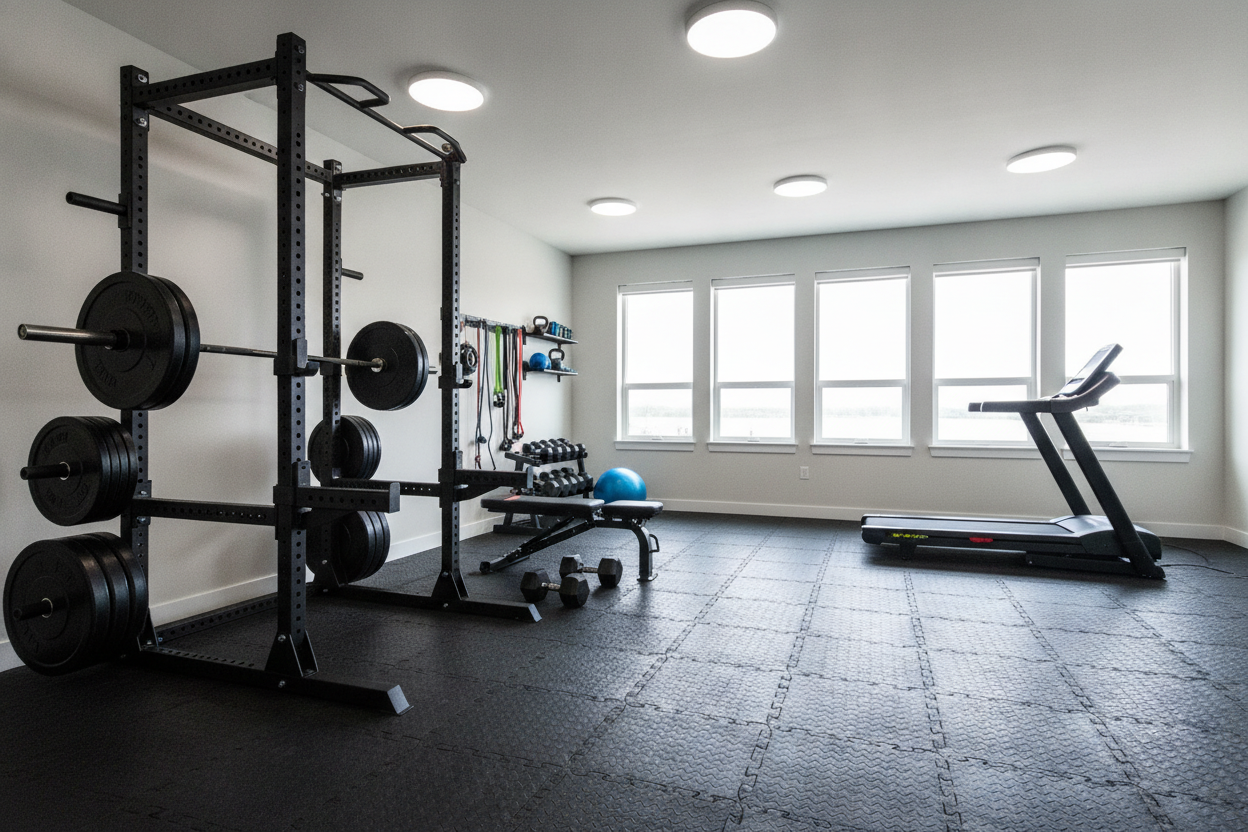
One of the most overlooked factors in how to build lean muscle mass quickly is your environment. Specifically, your floor. If you're lifting on dusty concrete or those cheap 1/2-inch foam puzzle mats from a big-box store, you're killing your gains. When you squat or deadlift, your central nervous system (CNS) is constantly sensing your stability. If your feet are shifting or the floor is compressing unevenly, your CNS will 'throttle' your power output to prevent injury. You can't produce 100% force on a 50% stable surface.
This is why high-quality flooring is a performance tool, not just a floor protector. Investing in high-traction gym flooring ensures that every ounce of force you generate through your legs goes directly into the bar, rather than being dissipated by a sliding mat. This stability is crucial for anyone trying to learn how to get lean muscle fast. When you feel 'locked in' to the ground, you can move more weight, and more weight equals more mechanical tension, which is the primary driver of growth.
Stop Chasing the Pump, Start Chasing Tension
We’ve all seen the guy in the gym doing 20 sets of cable flyes until his chest is red and swollen. He’s chasing 'the pump,' but he hasn't added five pounds to the bar in three years. If you want to know how to get a lean muscular body male or female, you have to prioritize mechanical tension. This means lifting heavy weights through a full range of motion and progressively adding weight or reps over time. The pump is a temporary metabolic byproduct; tension is a permanent structural demand.
Don't be afraid to go heavy. There's a common myth that heavy weights are only for powerlifters and that bodybuilders should stick to the 10-12 rep range. In reality, you need to understand how heavy you actually need to lift to see real changes in muscle density. For most, that means spending a lot of time in the 5-8 rep range on your primary lifts. This builds the 'solid' look that separates the seasoned lifter from the guy who just does cardio with weights. Tips for building lean muscle always come back to the same thing: if you aren't getting stronger, you aren't growing.
My Personal Hard Lesson
I spent two years stuck at 185 pounds, terrified of losing my abs. I was eating 'clean' but not enough. When I finally committed to a 250-calorie surplus and stopped doing 15 different variations of lateral raises, I finally saw my frame change. My mistake was thinking that more volume was the answer. It wasn't. The answer was more weight on the bar and enough steak to recover from it. I also learned the hard way that lifting in running shoes on a slick garage floor is a recipe for a hip tweak. Once I got real mats and some flat-soled shoes, my squat jumped 40 pounds in a month.
FAQ
How long does it take to see lean muscle growth?
If you're doing everything right—training, eating, and sleeping—you can expect to see noticeable changes in 8 to 12 weeks. Real, dense muscle tissue takes time to build. Don't trust anyone promising a 'transformation' in 14 days.
Can I gain muscle while losing fat?
This is called body recomposition. It's possible for beginners or those returning from a long break, but for intermediate lifters, it's much more efficient to focus on a slight surplus to build muscle, then a slight deficit to reveal it.
Do I need supplements to get lean muscle?
Supplements are the last 5%. Focus on whole foods first. Creatine monohydrate is the only supplement with mountains of data proving it helps with power output and cell hydration, which aids in building lean muscle fast.