I Programmed the Best Workouts for Women Over 60 Using Just 3 Moves
I’ve spent the last decade watching women in their 60s get babysat by trainers who treat them like they’re made of glass. It’s patronizing. You walk into a commercial gym and they point you toward the recumbent bike or a 2-pound pink dumbbell, as if your bones are going to turn to dust if you actually pull something heavy off the floor. I’ve tested every piece of gear from 100-lb sandbags to $3,000 power racks, and I can tell you that the best workouts for women over 60 don't look all that different from the ones I’d give a 30-year-old athlete. The weights are different, but the principles of physics and biology remain the same.
The truth is, most 'senior' fitness plans are either too easy or weirdly complicated. I’m tired of seeing over-complicated, 12-step circuits that do nothing but make you dizzy and keep you weak. We need to strip away the fluff and focus on what actually builds real-world capability.
- Stop doing 'balance tricks' on wobbly balls; they don't build strength.
- Focus on three core patterns: Push, Pull, and Carry.
- Ditch the machines for free weights to build real-world stability.
- Lift heavy enough that the last two reps of every set feel genuinely difficult.
- Use a supportive floor surface to protect your joints during floor-based movements.
Why 'Senior Fitness' Routines Make You Weaker
The fitness industry has a weird obsession with making things complicated for older adults. They think the best exercise for over 60 involves standing on a Bosu ball while doing bicep curls with a light resistance band. It looks fancy, but it’s mostly theater. If you’re constantly trying not to fall over on a wobbly surface, you can’t actually lift enough weight to trigger muscle growth. Your body needs mechanical tension to keep your bones from becoming brittle, and you just don't get that from a 2-pound plastic weight. I’ve seen trainers spend 45 minutes on 'mobility flows' that have no resistance at all. While moving is good, moving against a load is what actually changes your physiology.
When we treat women like they’re one step away from a hip fracture, we rob them of the very strength that prevents those fractures in the first place. Complicated choreography actually hinders strength progression. If you’re spending all your mental energy remembering if your left foot goes behind your right on the third beat, you aren't focusing on bracing your core or driving through your heels. We need to stop equating 'complex' with 'effective.' You don't need a circus act; you need tension, resistance, and a clear path to getting stronger every week. The best exercise for over 60 isn't a dance routine; it's a fundamental movement done with enough weight to matter.
The 3 Non-Negotiable Movements for Your Sixties
When I program for clients over 60, I strip everything down to three pillars: the push, the pull, and the carry. This isn't just about looking good in a sleeveless shirt; it’s about being able to get yourself up off the floor, pull a heavy suitcase out of an overhead bin, and carry your own groceries without needing a break. This simplicity is the best exercise for over 60s who want to maintain independence. If you can master these three patterns, you’ve won 90% of the battle against age-related muscle loss.
The 'carry' is the most underrated tool in the shed. Whether it’s a suitcase carry or a goblet carry, it builds grip strength and core stability simultaneously. I’ve written before about why a heavy carry beats endless cardio, and that holds even truer as the years tick by. If you can carry 20 pounds in each hand for 40 yards, you’re ahead of almost everyone in your age bracket. This builds the kind of functional 'armor' that protects your spine and hips. The push and pull movements round this out by ensuring your upper body remains mobile and strong enough to handle daily tasks without strain.
Setting Up a Space to Actually Do the Work
You don't need a $5,000 cable machine that takes up half the garage. In fact, you should ditch the clunky gym machines entirely. They lock you into a fixed path of motion that doesn't translate to how your body moves in the real world. A pair of adjustable dumbbells or a few kettlebells is plenty. When you use free weights, your 'stabilizer' muscles have to work to keep the weight on track. This is exactly what you need to prevent falls and maintain balance as you age.
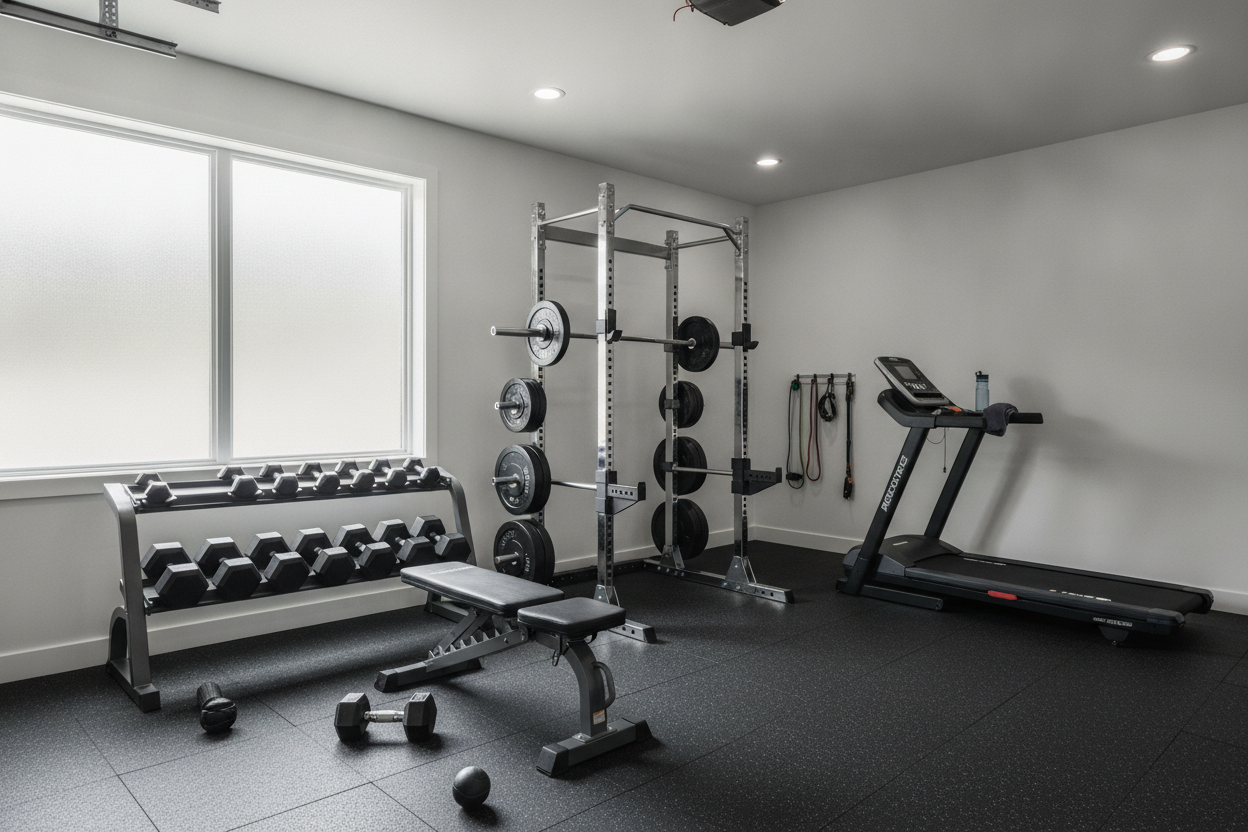
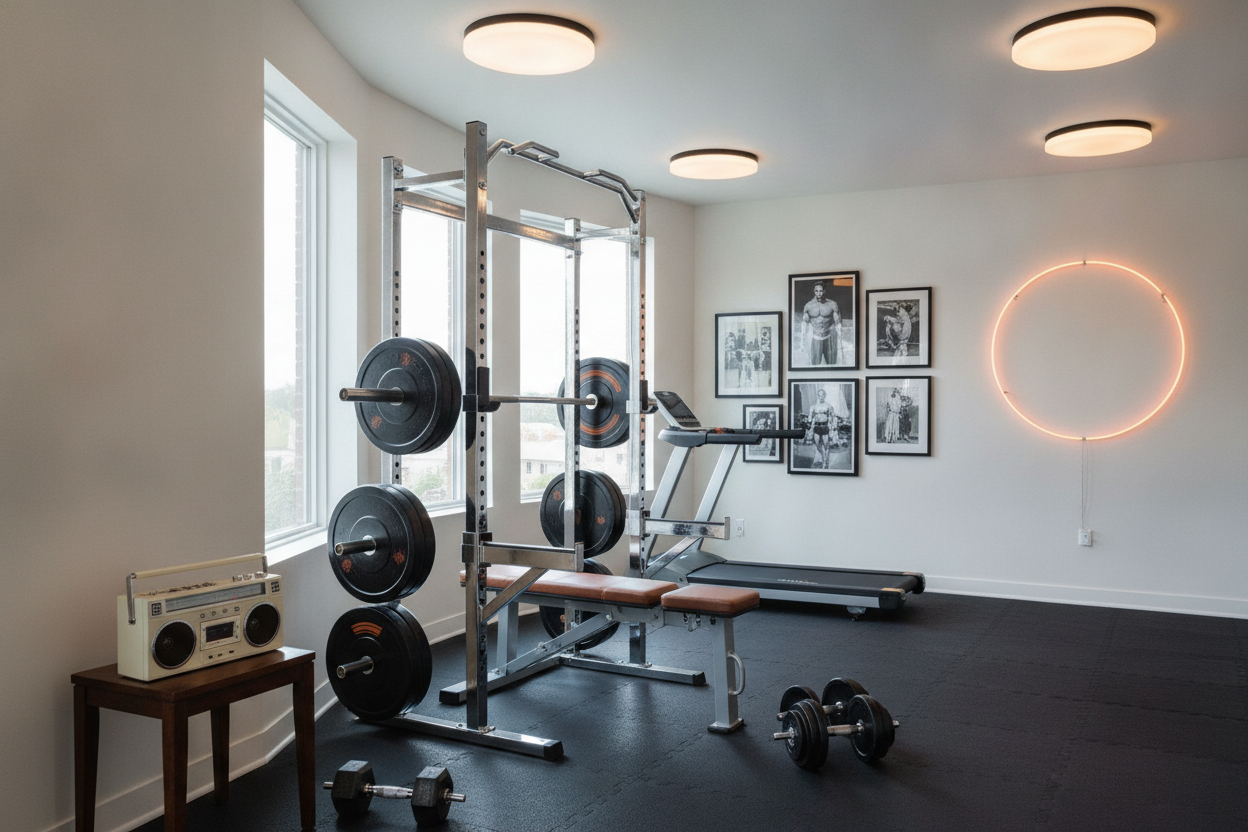
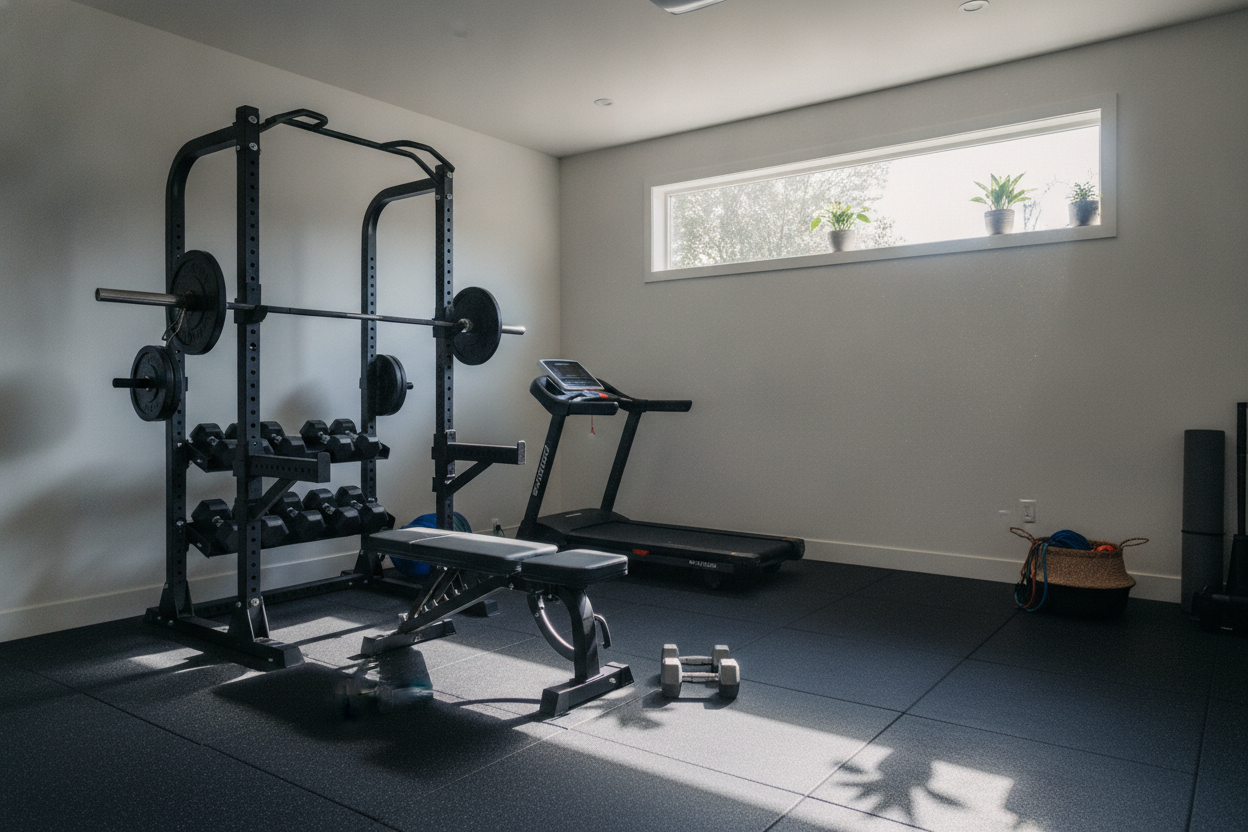
What you do need is a solid foundation. Lifting on a plush carpet or a slippery hardwood floor is a recipe for a rolled ankle. I always recommend a high-quality large exercise mat that provides enough grip for your feet and enough cushion for your joints without being so squishy that you lose your balance. You want something that stays put when you’re pushing a heavy weight overhead. A good mat should be at least 6mm or 7mm thick—anything thinner and your knees will complain during floor rows; anything thicker and you’ll feel like you’re standing on a marshmallow.
The 3-Day Barebones Blueprint
This is the skeleton of the program. We do this three times a week with a rest day in between. We aren't reinventing the wheel here, just executing the best exercises over 60 with precision. On a heavy-duty 6x8ft exercise mat, you have all the space you need for these movements without worrying about scuffing your floors or slipping.
The Routine:
1. Goblet Squats (The Push): 3 sets of 8-10 reps. Hold a dumbbell at your chest and sit back like you're sitting in a chair. This is the best exercise for over 60 for maintaining leg strength.
2. Three-Point Dumbbell Rows (The Pull): 3 sets of 10 reps per side. Brace one hand on a sturdy chair or bench and pull the weight toward your hip.
3. Farmer’s Carries: 3 sets of 40 yards. Pick up the heaviest weights you can safely hold and walk tall. Keep your shoulders back and down.
These are the best exercises for over 60 because they cover every major muscle group without putting unnecessary sheer force on the spine. If 10 reps feel easy, the weight is too light. Period. You should be using a weight that makes those last few reps a challenge to finish with good form.
How to Know if You're Actually Pushing Hard Enough
We use a simple scale called RPE—Rate of Perceived Exertion. On a scale of 1 to 10, where 1 is sitting on the couch and 10 is an all-out sprint for your life, your lifting sets should land around a 7 or 8. You should finish a set feeling like you could have done maybe two more reps, but certainly not ten more. Most people, especially older women, vastly underestimate how much they can lift.
If you finish a set of squats and you aren't breathing a little heavy, pick up a heavier bell. Safety is paramount, but 'safe' doesn't mean 'easy.' Your body only keeps the muscle it thinks it needs. If you don't give it a reason to stay strong, it won't. Progressive overload—gradually increasing the weight over time—is the only way to see actual results.
My Personal Experience: The 'Mom' Test
When I started training my own mother, she was terrified of the dumbbells. She thought she’d hurt her back because that's what society told her would happen. We started with the basics on a 7mm rubber mat in her garage. The biggest mistake we made? Starting too light. She spent three weeks lifting weights that were basically toys. Once we moved her to a 15-pound kettlebell for her carries, her nagging hip pain actually disappeared. Her body finally had enough tension to stabilize the joint. She went from struggling with groceries to deadlifting a 35-pound kettlebell in two months.
FAQ
Can I do these exercises if I have arthritis?
Yes, and you probably should. Strength training lubricates the joints and strengthens the muscles around them, taking the load off the bone. Just start with a range of motion that doesn't cause sharp pain and build up slowly.
How much weight should I start with?
Start with a weight you can move comfortably for 12 reps. Once you can do that with perfect form, move up. For most women over 60, an 8lb or 10lb dumbbell is a safe starting point for rows, while a 15lb or 20lb weight is often appropriate for carries.
Do I need to wear shoes?
If you have a grippy, supportive mat, lifting barefoot can actually help strengthen your feet and improve balance. If you're on a hard, slippery floor, wear flat-soled shoes like Chuck Taylors or dedicated lifting shoes to ensure you don't slide.