I Only Do Two Delt Exercises for Mass (And They Grew)
I spent three years staring at my reflection in a garage gym mirror, wondering why my t-shirts still hung off my collarbones like they were on a wire hanger. I was doing everything by the book: four sets of side raises, three sets of front raises, and enough face pulls to make my cable machine smoke. It was a classic delt exercises for mass routine that yielded exactly zero mass. My shoulders were healthy, sure, but they were flat. I was treating my delts like delicate ornaments instead of the powerful, multi-functional muscles they are.
The shift happened when I got fed up with the fluff. I realized that while I was deadlifting 400 pounds and squatting 300, I was still playing around with 20-pound dumbbells for my shoulders. I stripped my entire routine down to just two heavy barbell movements. No circuits, no super-sets, and no fluff. Within four months, my shoulders finally started to round out, and my overhead strength skyrocketed. If you are tired of the 'pump' that disappears twenty minutes after your workout, it is time to simplify.
- Focus on heavy compound movements rather than isolation.
- Use a power rack to eliminate momentum and the stretch reflex.
- Incorporate explosive pulls to target the lateral and rear delts simultaneously.
- Prioritize progressive overload with a barbell over high-rep dumbbell work.
The Junk Volume Trap Most Home Gym Owners Fall Into
Most home gym owners fall into the trap of over-complicating their shoulder day. We see the pros doing six different variations of a lateral raise and assume that is the secret sauce. What we forget is that those guys already have a massive base of strength. For the rest of us, doing five different isolation movements usually just leads to joint fatigue and tendonitis rather than actual muscle growth. You are essentially throwing pebbles at a brick wall hoping to knock it down.
Junk volume is any set that doesn't force an adaptation. If you are doing 15 reps of side raises but your form is breaking down by rep 8, you are just swinging weights. In a home gym setting, where we often have limited equipment or time, this is a death sentence for progress. You end up with 'busy' shoulders—joints that feel worn out but muscles that look exactly the same as they did last year. The goal is to maximize the tension on the deltoid fibers, and that requires moving significant weight.
By cutting out the fluff, you allow your central nervous system to focus on the moves that actually move the needle. You stop being a collector of exercises and start being a builder of muscle. When I stopped doing 'shoulder days' and started doing 'heavy pressing days,' everything changed. My delts didn't need more variety; they needed more load.
Why I Threw Out My 6-Move Delts Workout for Mass
I used to hit shoulders with the same high-volume approach I used for arms. I’d spend 45 minutes chasing a pump with light dumbbells and cables. But then I looked at my training log. My overhead press hadn't moved in two years. Just like a huge quads workout the definitive guide for mass requires you to stop playing with the leg extension and start loading the barbell, your shoulders need that same heavy-load mentality. You cannot build boulders with pebbles.
I realized that a simplified barbell chest workout you need for serious mass works because it focuses on the big rocks first. Why should the shoulders be any different? I threw out the front raises (your front delts get plenty of work from benching), the seated dumbbell presses (too much stability required), and the cable flyes. I replaced them with two moves that allowed me to move the most weight possible through a safe range of motion.
This isn't about being lazy; it's about being efficient. When you only have two moves to get the job done, you approach those sets with a level of intensity that is impossible to maintain over a 6-move circuit. You stop 'saving yourself' for the next exercise and start putting every ounce of effort into the barbell in front of you. That intensity is what triggers the hypertrophy you have been missing.
Move 1: The Dead-Stop Pin Press (No Momentum Allowed)
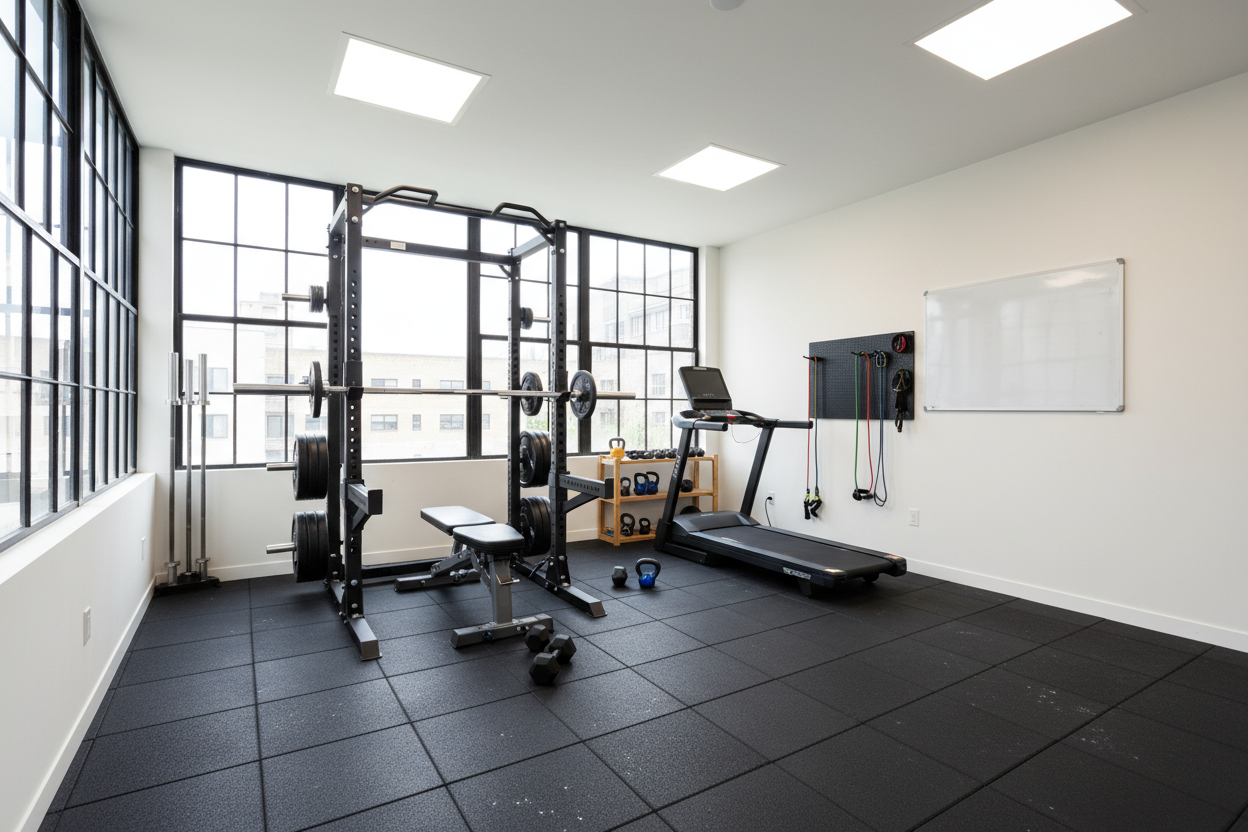
The seated pin press is the king of deltoid exercises for mass. By setting the barbell on the safety pins of your power rack at roughly chin level, you force the muscle to contract from a dead stop. This eliminates the stretch reflex—the 'bounce' at the bottom—that most people use to cheat the weight up. It forces your front and medial delts to do 100% of the work from the most difficult point of the lift.
I prefer doing these seated with a slight back incline (about 80 degrees). This takes the stress off the lower back and allows you to drive through the floor with your legs to stabilize the torso. When you press from the pins, the first two inches are pure hell. That is where the growth happens. You aren't just moving weight; you are overcoming static inertia. This build-up of tension is far superior to standard overhead pressing for pure muscle thickness.
Keep your elbows tucked slightly forward, not flared out to the sides. Grip the bar just outside shoulder width. When you press, think about driving your head through the 'window' created by your arms as the bar clears your forehead. Lower the bar under control until it settles completely on the pins. Take a full breath, let the weight settle, and then explode again. This is a deltoid workout for mass staple because it builds that 'thick' look from the front.
How to set your rack height to save your rotator cuffs
Finding the right hole on your rack is the difference between a PR and a trip to the physical therapist. If the pins are too low, you are starting the lift in a position of extreme shoulder internal rotation, which is a recipe for impingement. If they are too high, you are basically doing a partial rep that only hits the triceps. Aim for the bar to sit right at chin or nose level. This allows for a full range of motion for the delts while keeping the shoulder joint in a mechanically strong position.
Move 2: Snatch-Grip High Pulls for a Yoked Upper Back
The second move in my minimalist delts workout for mass is the snatch-grip high pull. Most people think of this as a trap exercise, but with a wide 'snatch' grip, it becomes an absolute powerhouse for the lateral and rear delts. It is essentially a heavy, explosive upright row without the wrist and shoulder impingement issues. You are using your hips to generate power, which allows you to move significantly more weight than a strict lateral raise.
The wide grip forces the elbows high and out, which is the exact function of the lateral deltoid. Because you are moving the weight explosively, you are recruiting the high-threshold motor units—the ones with the most potential for growth. Standing on a large exercise mat for home gym is a good idea here, as you'll want a stable surface that can handle the vibration if you have to drop the bar after a heavy set. This move builds the 'shelf' on the back of your shoulders that makes you look wide from the side and behind.
The cue here is to 'paint your shirt' with the bar. Keep it close to your body. Explode with the hips, shrug hard, and pull your elbows toward the ceiling. The bar should reach chest height before you guide it back down. Do not try to catch the bar at the top; let it fall back to the hang position under control. This is the secret to that 'yoked' look that isolation moves simply cannot replicate.
How to Program This Minimalist Deltoid Workout for Mass
You don't need to do these every day. In fact, because they are so taxing on the nervous system, twice a week is the sweet spot. I like to pair the Pin Press with a 'Push' day and the High Pulls with a 'Pull' day, or just do them together on a dedicated shoulder day if you prefer a 'Bro Split.' Keep the volume low but the intensity red-lined.
- Pin Press: 3 sets of 5-8 reps. Focus on the explosion from the pins.
- Snatch-Grip High Pulls: 4 sets of 6-10 reps. Focus on hip drive and elbow height.
- Rest: 2-3 minutes between sets. You need your strength back to move the heavy iron.
Progressive overload is non-negotiable. If you did 135 lbs on the pin press last week, aim for 140 lbs this week or an extra rep. Because you are only doing two moves, you have no excuse not to track your numbers meticulously. When these two lifts go up, your shoulder size will follow. It is a simple correlation that people love to ignore in favor of 'muscle confusion.'
Personal Experience: My Ego vs. My Delts
I’ll be honest: when I first started high pulls, I tried to use 225 lbs because I wanted to look cool in the garage. I ended up just doing a weird, ugly power clean and nearly took my chin off with the bar. I had to swallow my pride, drop to 135 lbs, and actually learn to use my delts and traps to move the weight. The lesson? Heavy is relative. The weight should be heavy enough to challenge you, but not so heavy that your form turns into a circus act. Once I dialed in the form, my rear delts grew more in two months than they had in the previous two years of face pulls.
FAQ
Can I do these with dumbbells?
You can do a seated press with dumbbells, but you lose the 'dead-stop' advantage of the pins. The high pull really requires a barbell to get the necessary grip width and explosive power. Stick to the bar for these.
Will high pulls hurt my shoulders?
If you use a narrow grip like a traditional upright row, yes, it might. But the snatch-grip (wide) keeps the shoulder joint in a much safer position. Start light and focus on the hip drive.
How long until I see results?
If you are eating in a surplus and adding weight to the bar, you’ll notice a difference in how your shirts fit in about 6 to 8 weeks. Your strength will likely jump much sooner.