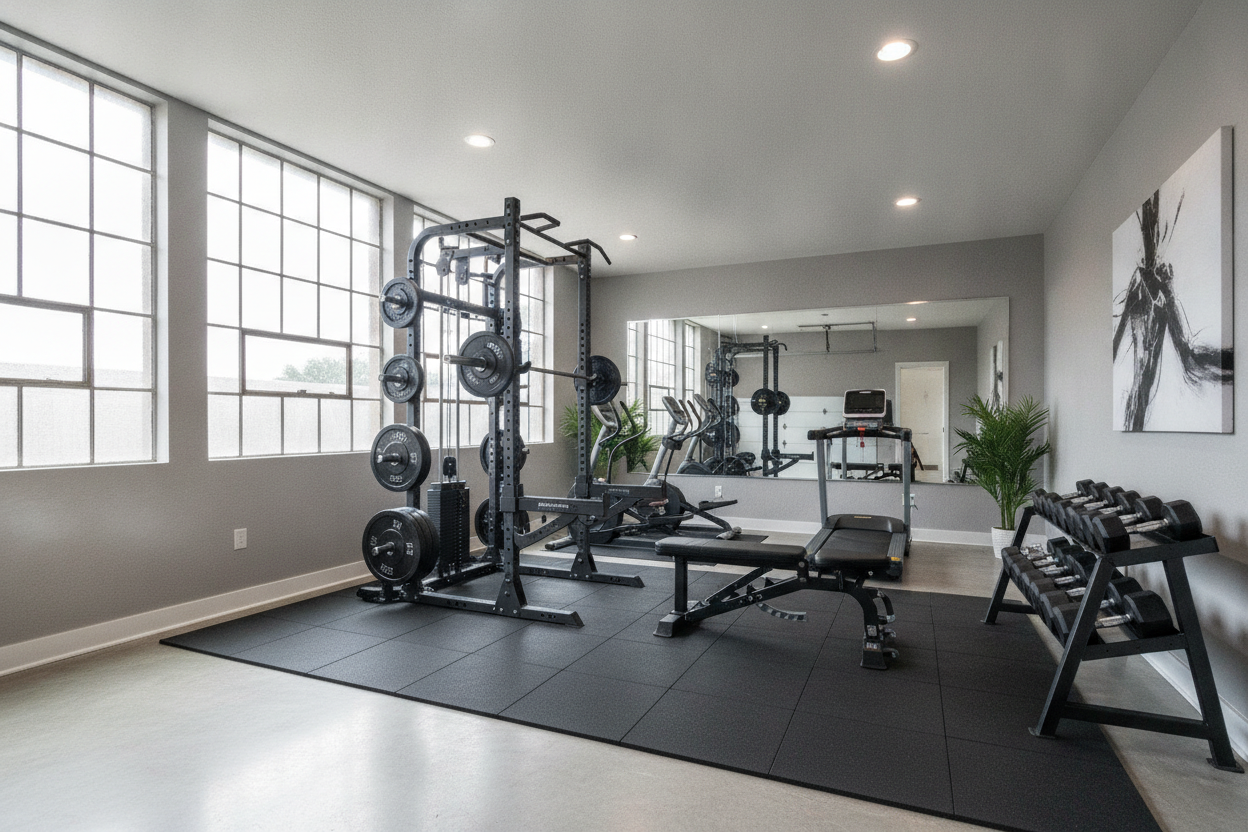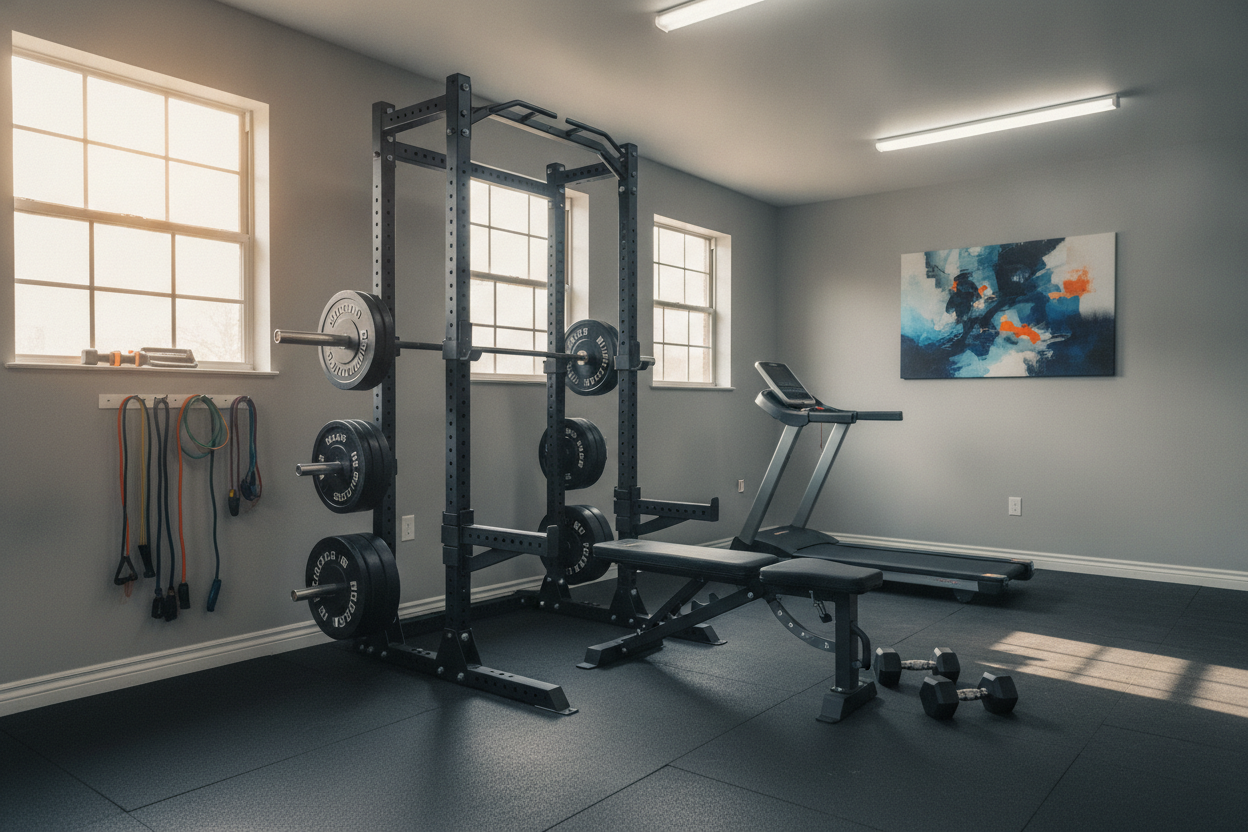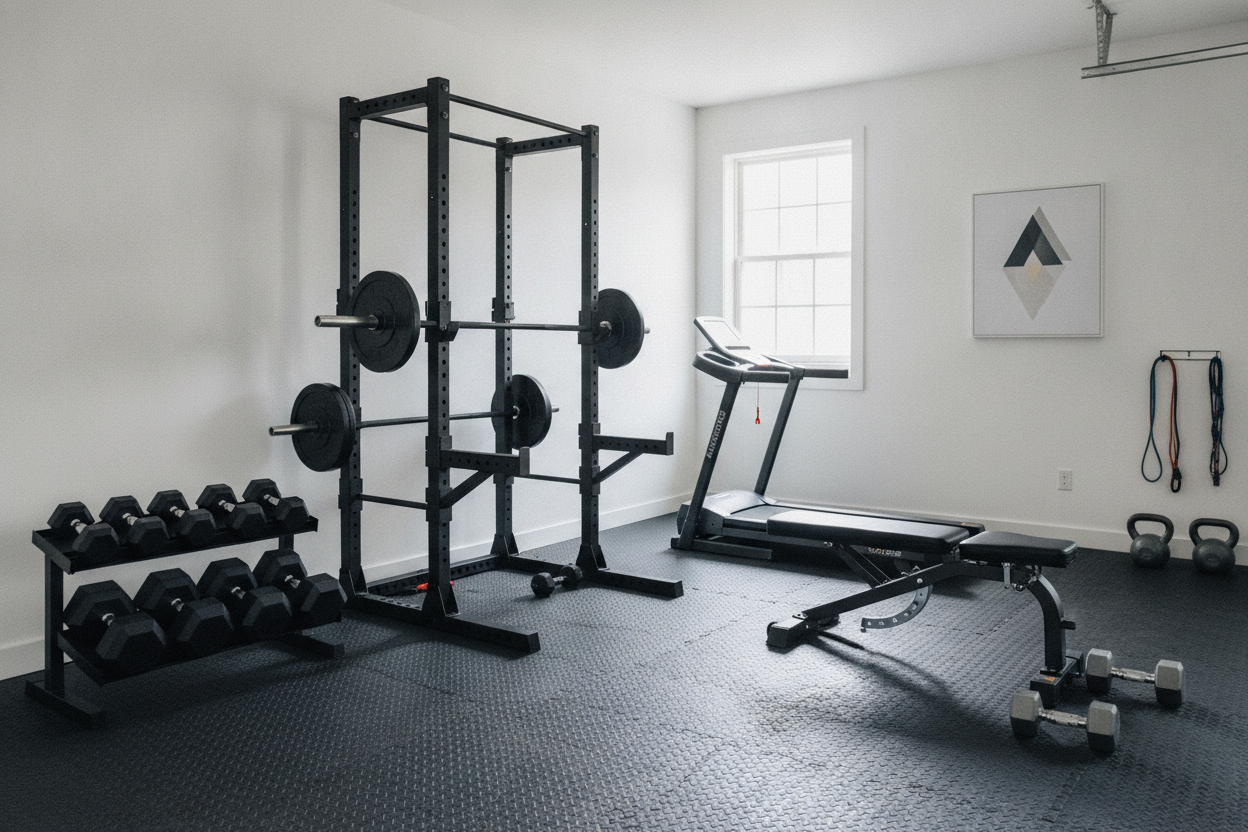
I Narrowed My Home Exercise Equipment List to Just 6 Items
I remember sitting on my floor three years ago, staring at a 47-item 'essential' guide while my local gym hiked its monthly dues for the third time. Half that gear was fluff—cheap plastic sliders, 'smart' mirrors that cost more than my first car, and resistance tubes that snap the moment you actually get strong. I wasted three grand on a 'complete' setup before realizing I only used the same six things every single day.
You don't need a massive commercial footprint to get elite results. You need a home exercise equipment list that prioritizes structural integrity over gadgets. If it can't handle a 400-pound drop or a decade of sweat, it doesn't belong in your garage.
Quick Takeaways
- Focus on a 'Core Three' foundation: Rack, Bar, and Plates.
- Ditch the single-use machines; they are space killers.
- Buy once, cry once—cheap steel is a safety hazard.
- Adjustable gear is the only way to save floor space in a standard garage.
Most Online Gear Checklists Are Just Affiliate Traps
Most of the lists you find online are written by people who have never actually hit a PR in their spare bedroom. They want you to buy 50 different items because they get a commission on every single one. That is how you end up with a room full of clutter and no space to actually move. A minimalist approach isn't just about saving money; it is about focus.
When you have a lean inventory of high-quality gear, your workouts become more efficient. You aren't hunting for a specific attachment or clearing a path through junk just to set up for squats. I have found that the fewer pieces of equipment I own, the more creative and intense my training becomes. You want tools, not toys.
The Core Three: Where Your Budget Needs to Go
When people ask me what is the best equipment for a home gym, I always point to the Holy Trinity of strength: a power rack, a barbell, and plates. This is where 70% of your budget belongs. If you buy a cheap rack with thin 14-gauge steel, it will wobble every time you re-rack a bench press. Look for at least 11-gauge steel and 3x3 or 2x3 uprights. This ensures the rack stays anchored and can grow with you via attachments.
The barbell is your primary point of contact with the weight. Don't settle for a mystery-meat bar from a big-box store. You want a 20kg bar with a 190,000 PSI tensile strength and decent knurling that won't cheese-grate your palms but won't slip when you sweat. During my hunt for the best at home exercise equipment, I learned that a bad bar is the fastest way to ruin a session. Finally, get iron or bumper plates. Iron is cheaper and thinner, letting you stack more weight; bumpers are essential if you plan on dropping cleans or snatches on your concrete floor.
The Secondary Add-Ons That Actually Get Used
Once the foundation is set, you need versatility. So, what home gym equipment should i buy next? The answer is an adjustable bench, a pair of adjustable dumbbells, and a set of loop resistance bands. An adjustable bench should have a minimal gap between the seat and the backrest and a weight capacity of at least 600 pounds. If it feels like a lawn chair, send it back.
Adjustable dumbbells, like PowerBlocks or Ironmasters, replace an entire rack of fixed weights, saving you about 20 square feet of floor space. I prefer the ones that feel like traditional dumbbells in the hand. Rounding this out with heavy-duty resistance bands gives you a way to add accommodating resistance to your lifts or handle accessory work like face pulls and tricep extensions without needing a dedicated cable machine.
What Workout Equipment Should I Buy for Home First?
If you have a limited budget, do not try to buy everything at once. I tell people to buy basic exercise equipment for home in stages. Start with a barbell and plates. You can do deadlifts, rows, overhead presses, and floor presses with just those two items. It is enough to build a massive base of strength while you save up for the next piece.
Next, get the rack. This unlocks squats and safe bench pressing. The bench and dumbbells are the 'finishers' that allow you to round out your physique and add variety. Following this order prevents you from being the person with a $2,000 treadmill and a $500 'all-in-one' gym that both end up as coat racks because they aren't fun or effective to use. What workout equipment should i buy for home first is always the stuff that allows for the most compound movements.
The Gimmicks You Should Leave at the Store
When you are deciding what exercise equipment should i buy for home, ignore anything that only does one thing. Those 'as-seen-on-TV' ab machines, vertical climbers that feel like they are made of soda cans, and cheap folding treadmills are a waste of resources. If a piece of gear promises to make the workout 'easy' or 'fun,' it is usually garbage. Training is supposed to be hard.
Avoid 'standard' 1-inch hole plates and bars. They aren't compatible with 99% of the high-quality attachments on the market, and you will eventually have to sell them for a loss when you want to upgrade to Olympic-sized gear. Stick to the basics. A heavy sandbag is a better investment than a fancy electronic core-twister any day of the week.
Personal Experience: The 'Budget' Rack Mistake
I once bought a $200 bolt-together rack from a generic sporting goods store. It looked fine in the photos. In reality, the holes were slightly off-center, and the whole thing swayed three inches to the left every time I racked 225 pounds. I spent the whole set worried about the rack collapsing rather than focusing on the lift. I eventually sold it for $50 and bought a real 3x3 rack. I lost $150 and a lot of sleep. Buy the heavy steel the first time; your safety is worth the extra couple hundred bucks.
FAQ
Do I need a platform for my home gym?
If you are deadlifting or using bumper plates, at least get some 3/4-inch horse stall mats. They protect your concrete and dampen the noise so your neighbors don't hate you.
How much space do I actually need?
A standard 8x8 foot area is enough for a full power rack setup. If you use adjustable dumbbells, you can fit a world-class gym in half of a one-car garage.
Is a belt squat or cable machine necessary?
Necessary? No. They are 'nice-to-haves.' You can mimic most of those movements with a barbell, some bands, and a little creativity. Build the core of your gym first.